A lot of what we see in the natural world is taken for granted. The amazingness of the world around us tends to go unnoticed, and that’s a shame.
advertisement
#1 Sun Dogs
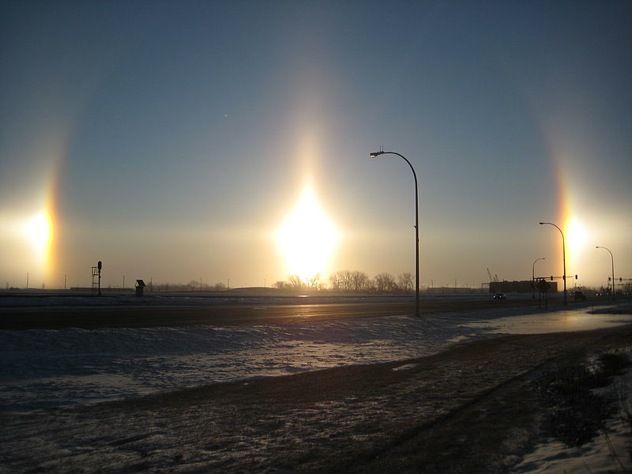
Sun dogs are massive halos in the sky as a result of light refractionthough in this case, they appear to actually encircle the sun. Sun dogs can be recognized by the two distinctive bright spots on either side of the haloif these blips are bright enough, it can even look like there are three suns in the sky, all side by side.
#2 Frost Flowers
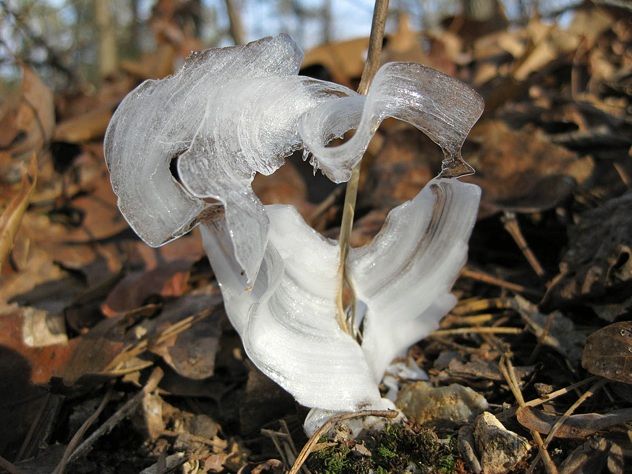
Frost flowers are buildups of ice particles around the base of certain plants and types of wood. When the temperature outside the plant is below freezing and the temperature within them is not, then water is pulled to the surface in a process similar to transpiration. This leads to a fragile chain of ice being pushed outward, which ends up forming sprawling, delicate formations.
advertisement
#3 Brinicles
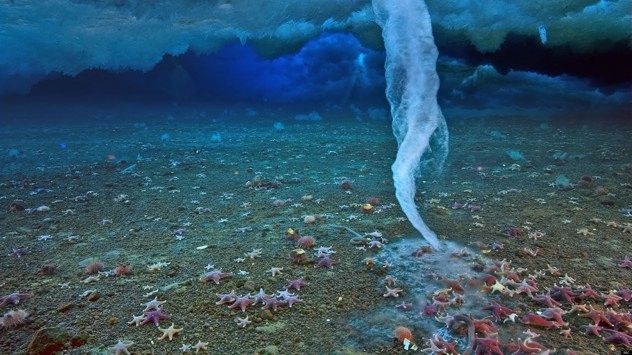
When the surface of the sea freezessuch as around the north and south polesit does so in a way that forces pockets of especially cold and salty seawater to gather on the underside of the ice. This mixture of brine is denser than the seawater below it, and as a result it tends to slowly sink to the bottom. Now, because it's so cold, the fresher water below the brine actually freezes around it as it falls, which results in a giant icicle under the surface. The technical name for this sort of thing is ‘ice stalactite,' but what kind of boring title is that for such a breathtaking phenomenon? Hence the need for their cool nickname, ‘brinicles.' Regular English didn't have a good enough word, so we had to come up with a whole new one (or, more accurately, sloppily mash together two old ones).
#4 Supercells
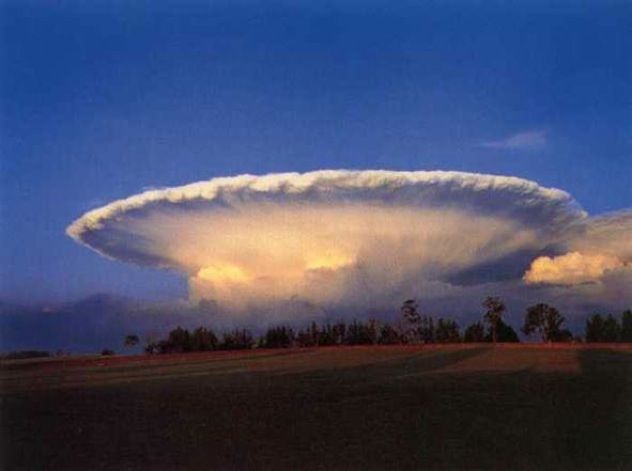
If Superman is basically a stronger, more flight-enabled version of a regular man, then a supercell is basically a stronger, more tornado-enabled version of a regular storm cell. This is becausemuch like tornadoessupercells have the tendency to spin around a lot, but alsoand more importantlybecause supercells can actually create tornadoes. If you remember one thing after reading this article, let it be this: stay the hell away from things that can do that.In case it needed to be mentioned, supercells are the most dangerous of the four major storm types, in addition to being the scariest to look at.
advertisement
#5 Waterspouts
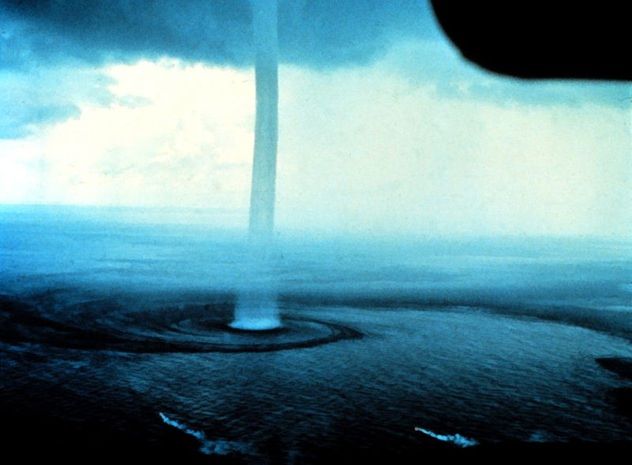
Waterspouts are exactly what they look like, and exactly as awesome as they sound: they're tornadoes that form over water. These things can achieve speeds of up to 190 miles (305 kilometers) per hour. They can occur anywhere over water, but are especially prevalent in the Florida Keys, where there can be 400 or 500 waterspouts a year.
advertisement
#6 Volcanic Lightning
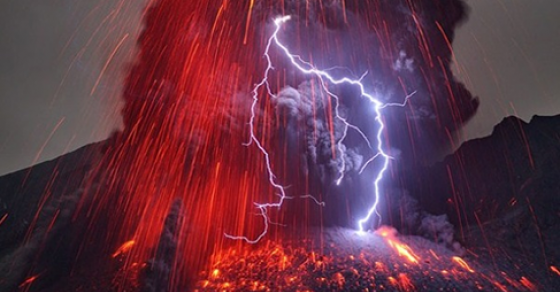
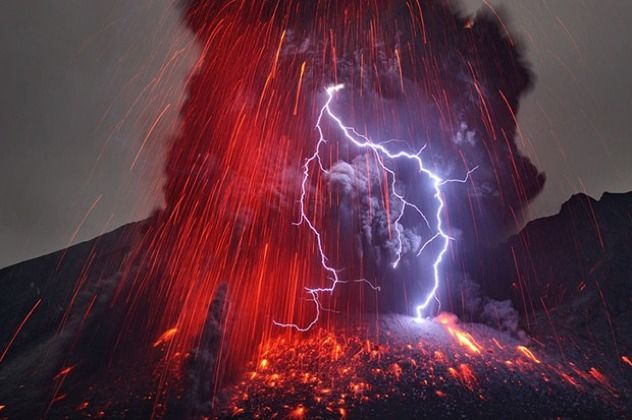
Volcanic lightning is a lightning storm that takes place in the middle of a volcanic eruption. Scientists aren't 100% sure why this happens, but the primary theory goes that when a volcano erupts, it projects positively-charged debris into the atmosphere. These charges then react with negative charges already present, which results in 1) a bolt of lightning, and 2) a really cool picture.
advertisement
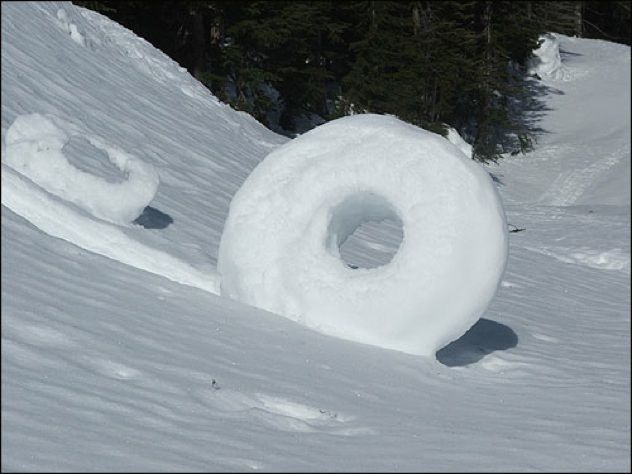
#7 Snow Donuts
Nature has its own way of rolling snowballs: snow donuts. These rare shapes are formedunder perfect temperature conditions onlywhen a mass of snow either falls or is blown by the wind. If it manages to catch on to some other snow, and gravity or the wind is in its favor, then the new snowball will roll itself in the exact same way we all used to. In this case, though, the middles tend to collapse to create a donut shape, which can end up as tall as 26 inches (66 centimeters).
advertisement
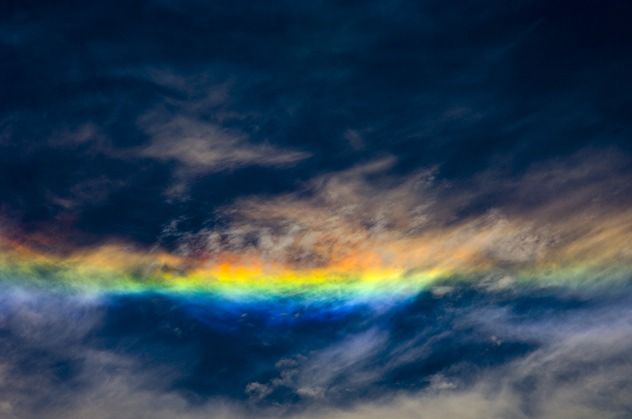
#8 Fire Rainbows
These colorful offshoots can often be seen during the summers of middle-latitude areas, such as most of the United States. They are a large halo of refracted light, and despite their nickname, they have nothing to do with either fire or rainbows. They only occur when the sun is at least 58 degrees above the horizon, and when there are cirrus clouds in the sky that are filled with plate-shaped ice crystals. The refraction of light is always parallel to the horizon, and because the arcs are so big, only sections of them are ever commonly seenwhich is why it can look like certain patches of cloud are on fire (or throwing a rave). The proper name for these things, in case you ever need to impress a scientist, is ‘circumhorizontal arc.'
advertisement
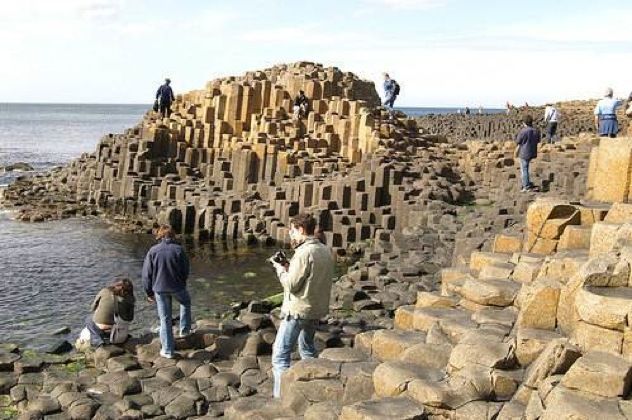
#9 Columnar Basalt
The unique formations are a result of lava flows cracking as they cool, in a perpendicular direction to the original flow. Columnar basalt clusters can be found all over the worldand then, naturally, climbed.
advertisement
#10 Penitentes
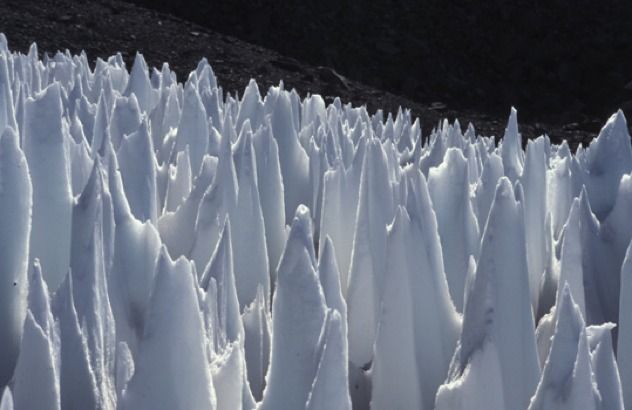
These spiky fields of ice are called penitentes, and each individual shard can be up to a whopping 13 feet (4 meters) high. These intimidating snow structures are formed in high-altitude areas with low humidity, such as the glaciers of the Andes mountains. If the conditions are right, the sun's rays are so hot that they can actually sublimate fields of snowmeaning that the frozen water vaporizes without ever becoming a liquid. This leads to slight pockets in the ice, whichthanks to their shapeactually end up attracting even more heat. The sharp spikes, then, are just the lucky parts of the snowfield that the sun didn't target for complete and utter annihilation.