You wouldn't dream of putting in a very hard day's work for 16¢ an hour, but that's exactly what they did in 1916.
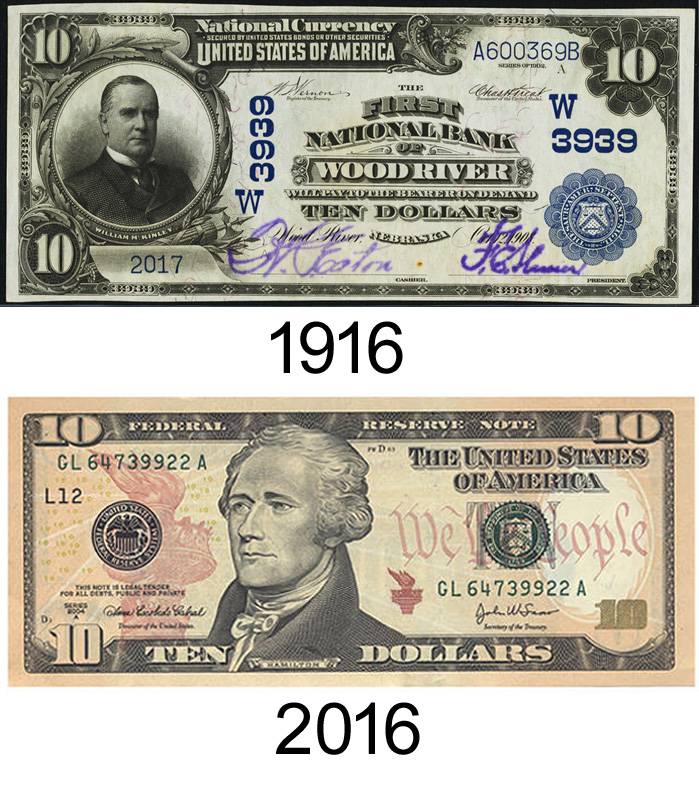
100 Years Ago, In One Year People Earned What Most Earn In A Month In 2016.
By
Editorial Staff in
Facts
On 21st August 2016
advertisement
Wages
In 1916, depending on what your trade was - household incomes averaged $1,500 a year. That is just $125 a month. Most rentals averaged about $25 a month, the rest of the monthly budget might have looked something like this for a family of 5, $28 for food, life insurance $1, $1.50 for your car, $4 for utilities, to include ice for the icebox, $9 clothing allowance and $1 for miscellaneous household expenses, which with today's prices would be about $250 a month for odds and ends expenses.
In 2016 again depending on your trade, the "average" yearly income is about $51,000 after taxes. Rents and mortgages are about equal at around $1,000 - $1,400 a month. $750 is spent on transportation (gas - insurance - car payment) $550 on food, with almost $220 on that on eating out. $460 for insurances and pensions, and over $130 each month on clothes. Entertainment costs per month are about $200. $300 a month on health care and over $250 on miscellaneous expenses through out the month. And that was just for a family of 3.
Loaf of Bread
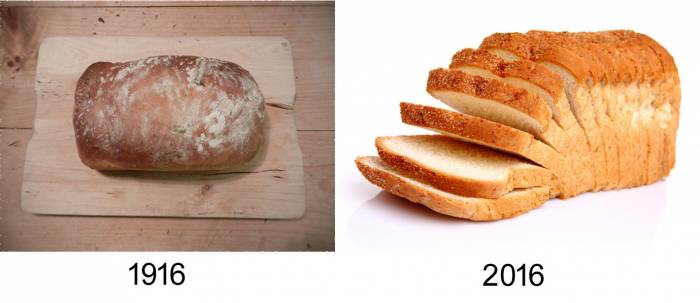
In 1916 a loaf of bread would cost .07¢. A loaf of bread now in 2015 is almost 35 times that with an average loaf costing $2.32.
A little fun fact about bread, it wasn't until 1930 that bread was sold sliced. Wonder Bread can be thanked for that.
advertisement
Coffee
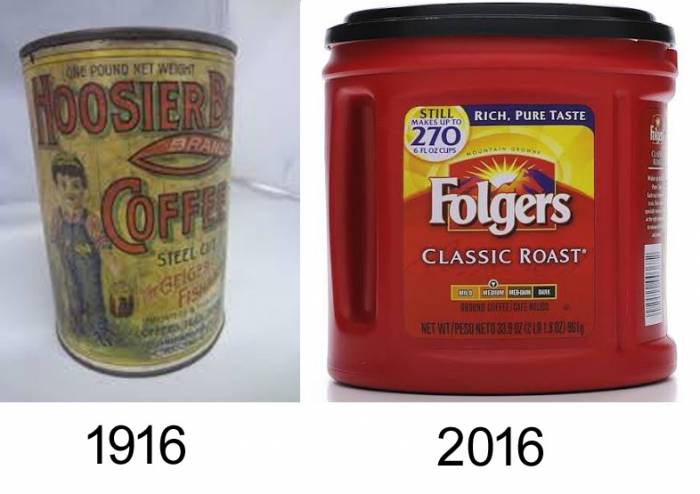
Coffee has always seemed a bit expensive. In 1916 a pound of coffee sold for .15¢. It was packaged in a tin can with a paper label. Now coffee comes in plastic containers although we still have the paper labels and costs about $3.00 a pound. A lot of people reuse the plastic containers for their craft projects. Coffee also comes in individual single serving containers and in an array of different flavors.
Milk
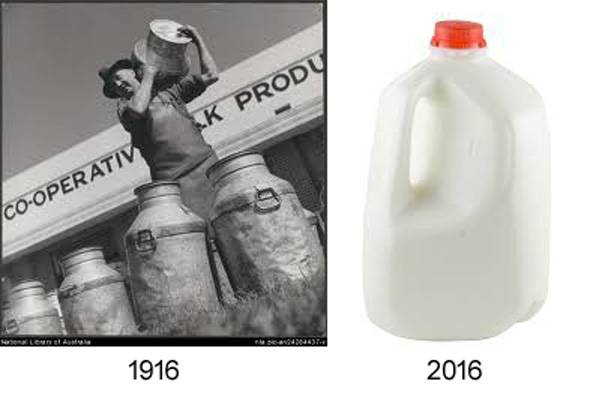
In 1916 milk came in these 5 gallon Metal Hood Milk Jugs and costs .36¢ a gallon. I bet it was farm fresh too! Not in-route to us for 2 weeks before it even hits the store shelves like today.
In 1916 the City of Des Moines, IA revised Ordinances which put in place stricter rules and regulations in the handling, storing and sale of milk. There had been a break out of scarlet fever and they wanted to assure that it doesn't get spread through the cows.
Today in 2016 you can expect to pay close to $3 per gallon and they now come in plastic jugs.
advertisement
Postage stamp
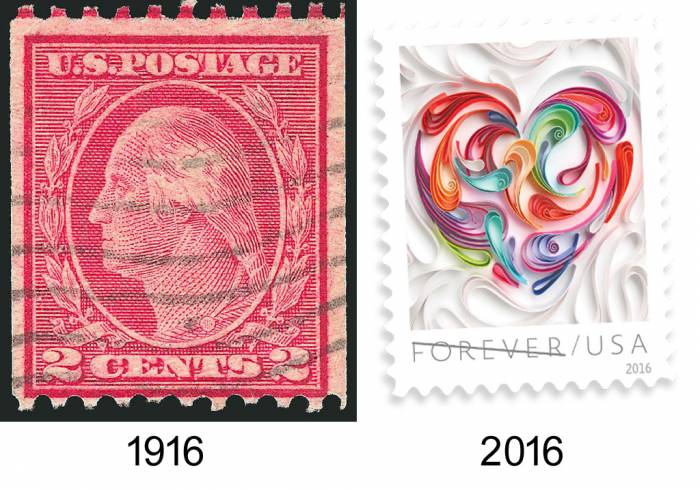
.02¢ is what the cost of a postage stamp cost in 1916 and mail took a lot longer to travel to its destination than it does today. A letter traveling from one side of the United States to the other could take 7-10 days or more. Today however it is possible to have it there over night. But if traveling first class it takes about 3 days. A postage stamp now costs .47¢ which is actually .02¢ cheaper than it was just 2 years ago. With the way technology is today I'm sure the postal services struggles to keep out of the red but most don't use the postal service the way they used to - whether it be writing a friend or paying bills, it is all done online now.
advertisement
Cars
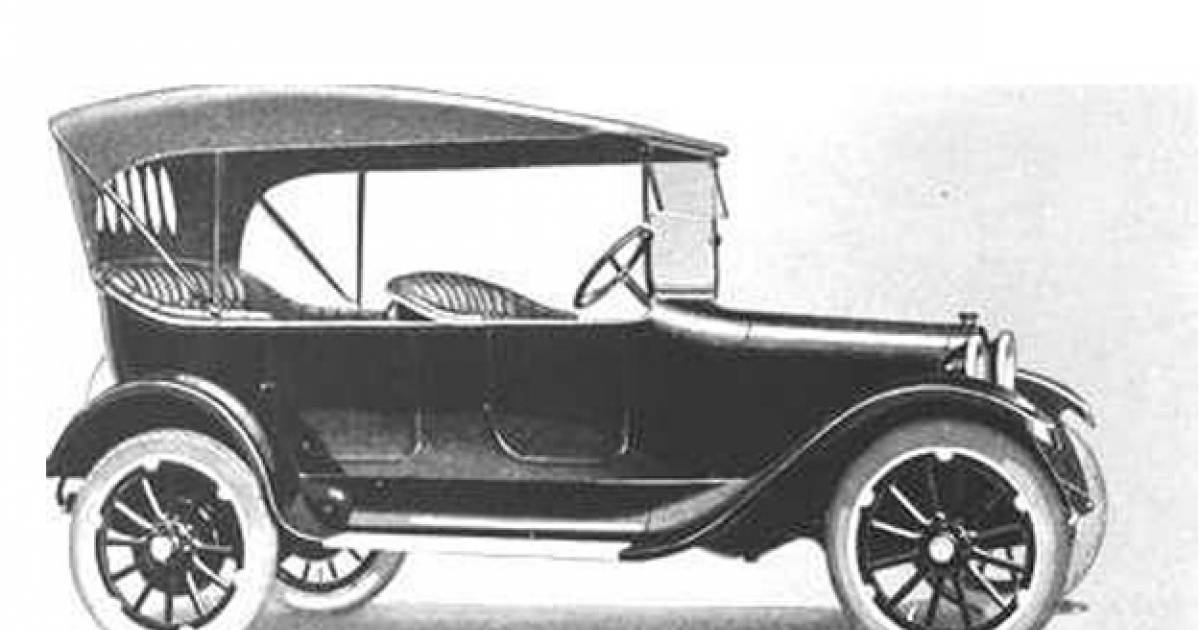
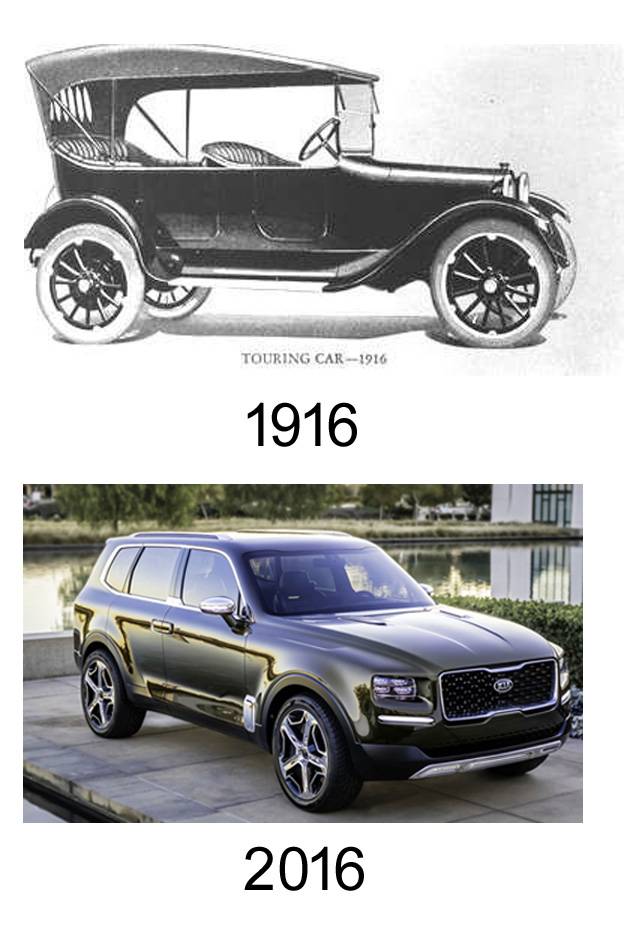
Can you imagine paying just $400 for a car? That's what one costs on average in 1916. For most of is now that is a one month car payment! Cars cost on average for a new 2016 is around $20k - $30k. People had to bundle up when riding in a car back then. As most didn't side or back windows, just the windshield. Now cars come with practically every comfort of home. Heaters, A/Cs, Stereos, Televisions, and even phones! A person can probably and quite literally, live in their cars for a short time if need be.
advertisement
Sugar
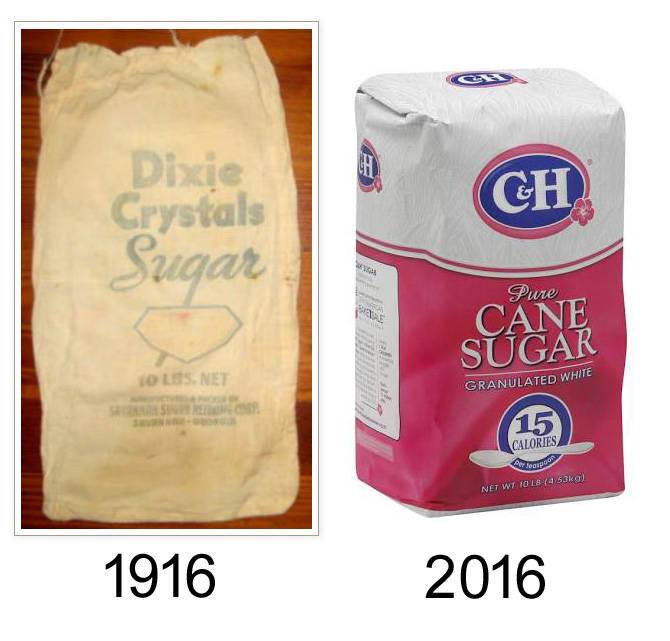
Sugar costing .04¢ a pound in 1916 and .64¢ in 2016.
As far back as the 1700's and probably even further back, sugar was only for the wealthy. Americans back then consumed about 4 pounds a year. In the 1900's the consumption jumped to 90 pounds a year. Now in 2016 Americans consume just under 150 pounds of sugar a year. That is just insane!
advertisement
Homes
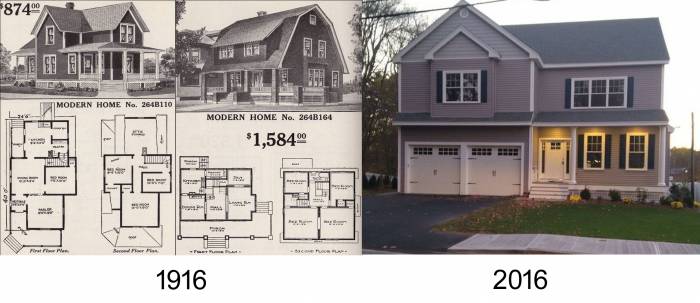
Homes back in the 1900's cost what most Americans pay for their rent or monthly mortgage! Sears And Roebuck sold them through their catalog in kits! Costing on average between $800 & $1,00, some could pay up to $5,000 but that is more for the wealthy of course. The kits would include everything needed to build them, except for the tools and man power.
In 2016 the average middle class American home goes for between $250k - $350k.