
Have you ever felt like you were smarter when you were younger? You may be right! There are things we do everyday that deplete our cognitive functions and literally kill brain cells. Activities like chewing gum, going to the meetings and working with the window shut that we deem ordinary, are making us stupid.
advertisement
#1. Going to Meetings
Research from the Virginia Tech Carilion Research Institute found that small-group dynamics - such as jury deliberations, collective bargaining sessions, and cocktail parties - can alter the expression of IQ in some susceptible people. "You may joke about how committee meetings make you feel brain dead, but our findings suggest that they may make you act brain dead as well," said Read Montague, director of the Human Neuroimaging Laboratory and the Computational Psychiatry Unit at the Virginia Tech Carilion Research Institute, who led the study.

#2. Being Obese
According to researchers at Carnegie Mellon University, the brains of obese people work harder than those of average-weight people to achieve the same results. The connections between the brain parts responsible for memory and decision-making were hyperactive in overweight people, but functioned normally in average-weight people, says study author Timothy Verstynen, Ph.D., a professor at Carnegie Mellon. High blood pressure and inflammation irritate your brain's communication systems, making it harder for messages to come through, says Verstynen.

advertisement
#3. Using the Internet
Web use is affecting our ability to remember things. No longer are we forced to rely on our memory for basic info, we can just Google it. A Columbia University study shows people have lower rates of recall of the information itself and enhanced recall instead for where to access it. The internet has become a primary form of external memory, where information is stored collectively outside ourselves.

#4. Not Getting Enough Sleep
An NIH study shows that sleep deprivation effects cognitive performance, especially memory consolidation, and activates the sympathetic nervous system, which can lead to a rise of blood pressure. People who are exposed to sleep loss usually experience a decline in cognitive performance and changes in mood.

advertisement
#5. Staring at Your Facebook Profile
A study published in the journal Media Psychology found that a brief exposure to one's own profile raised self-esteem, but that prolonged viewing hampered performance by decreasing one's motivation to perform well.

advertisement
#6. Shared Office Space, Poor Ventilation
The Department of Energy's Lawrence Berkeley National Laboratory (Berkeley Lab) have found that moderately high indoor concentrations of carbon dioxide (CO2) can significantly impair people's decision-making performance. In test subjects, the most dramatic declines in performance were for taking initiative and thinking strategically. The primary source of indoor CO2 is humans. So, a lot of people crammed in a small space produces too much Carbon Dioxide, brains aren't getting as much oxygen as they need. So spread out or open some windows to improve ventilation (and brain function).

advertisement
#7. Eating Junk Food
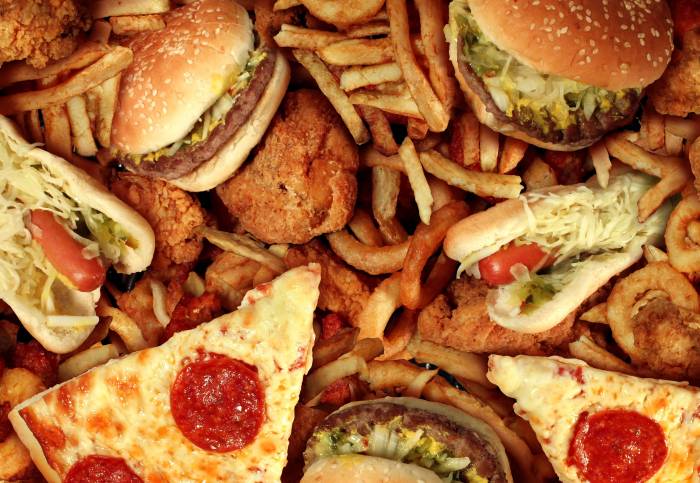
Harvard research shows what we eat has an impact on our ability to remember and our likelihood of developing dementia as we age. Junk food or any foods loaded with saturated fat raise blood levels of unhealthy low-density lipoprotein (LDL) cholesterol. Other kinds of fats, such as trans fats, do the same thing to LDL. LDL cholesterol builds up in, and damages, arteries. Diets high in cholesterol and fat might speed up the formation of beta-amyloid plaques in the brain. These sticky protein clusters are blamed for much of the damage that occurs in the brains of people with Alzheimer's.
advertisement
#8. Stories About Stupid People
Sorry, reality TV and tabloid fans. Research suggests watching something dumb or reading about something dumb might make you dumber. It's called media priming - the idea that the things we watch, listen to or read influence our emotions and our behavior. So if watching or reading about stupid people makes you dumb, imagine what spending time with real-life stupid people can do.

advertisement
#9. Sugar
A UCLA study is the first to show how a diet steadily high in fructose slows the brain, hampering memory and learning - and how omega-3 fatty acids can counteract the disruption.

advertisement
#10. Whiners and Negativity
Being exposed to too much complaining can actually make you dumb. In self-help book Three Simple Steps: A Map to Success in Business and Life, author Trevor Blake cites research that shows exposure to 30 minutes or more of negativity - including viewing such material on TV--actually peels away neurons in the brain's hippocampus. "That's the part of your brain you need for problem solving," says Blake. "Basically, it turns your brain to mush."

advertisement
#11. Smoking Weed
Smoking marijuana consistently from adolescence causes "neuropsychological decline broadly across domains of functioning, even after controlling for years of education," according to research from Duke University. Even stopping the habit for a long period of time "did not fully restore neuropsychological functioning among adolescent-onset cannabis users. Findings are suggestive of a neurotoxic effect of cannabis on the adolescent brain."

advertisement
#12. Stress
A study from the Yale Stress Center, which researched the cumulative effect of experiencing stressful life situations, concluded that stress can reduce the number of connections between neurons in the brain and impair the ability of managing tense events in the future. The study found that higher levels of cumulative stress were associated with less gray matter in the prefrontal cortex. A decrease in gray matter, or in the number of connections between neurons, can impair the brain's ability to store information and respond to the environment.

#13. Worrying About Money
Financial worries tax the brain of those with low incomes, reducing their IQ by up to 13 points, scientists have found. As a result, those with limited means are more likely to make bad decisions, such as taking on too much debt. "Our results suggest that when you're poor, money is not the only thing in short supply. Cognitive capacity is also stretched thin," said Harvard economist Sendhil Mullainathan.