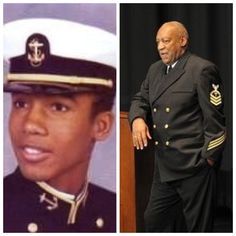
#1 Bill Cosby
While serving in the Navy as a Hospital Corpsman for four years, Cosby worked in physical therapy with some seriously injured Korean War casualties. He finished his equivalency diploma via correspondence courses. He then won a track and field scholarship to Philadelphia's Temple University in 196162 and studied physical education while running track and playing fullback on the football team.
#2 Chuck Norris
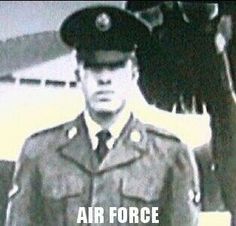
He joined the United States Air Force as an Air Policeman in 1958 and was sent to Osan Air Base, South Korea. It was there that Norris acquired the nickname Chuck and began his training in Tang Soo Do (tangsudo), an interest that led to black belts in that art and the founding of the Chun Kuk Do ("Universal Way") form. When he returned to the United States, he continued to serve as an AP at March Air Force Base in California.
Norris was discharged in August 1962. He worked for the Northrop Corporation and opened a chain of Karate schools including a storefront school in his then-hometown of Torrance on Hawthorne Boulevard. Norris' official website lists celebrity clients at the schools; among them Steve McQueen, Chad McQueen, Bob Barker, Priscilla Presley, Donny Osmond and Marie Osmond.
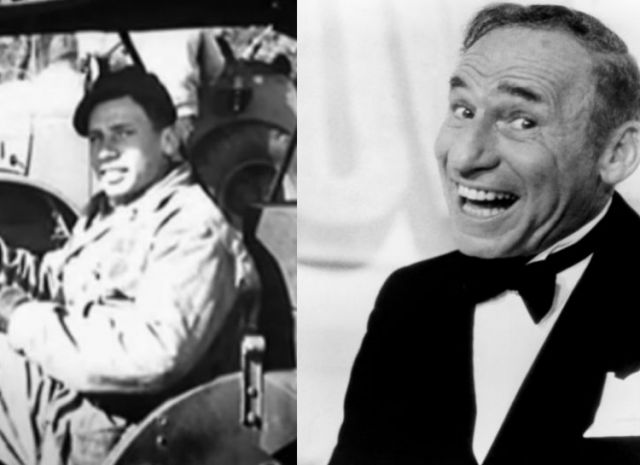
#3 Mel Brooks
After attending Abraham Lincoln High School for a year, Brooks graduated from Eastern District High School and then spent a year at Brooklyn College as a psychology major before being drafted into the army. He attended the Army Specialized Training Program conducted at the Virginia Military Institute (although not actually as a VMI cadet), and served in the United States Army as a corporal in the 1104 Engineer Combat Battalion, 78th Infantry Division defusing land mines during World War II.
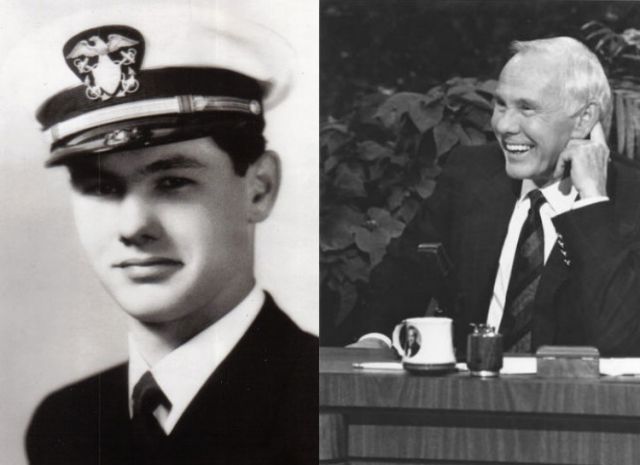
#4 Johnny Carson
Carson joined the Naval Air Corps on June 8, 1943, received V-12 officer training at Columbia University and Millsaps College. Commissioned an ensign late in the war, Carson was assigned to the USS Pennsylvania in the Pacific. While in the Navy, Carson posted a 100 amateur boxing record, with most of his bouts fought on board the USS Pennsylvania. He was en route to the combat zone aboard a troop ship when the bombing of Hiroshima and Nagasaki ended the war. Carson served as a communications officer in charge of decoding encrypted messages and he said that the high point of his military career was performing a magic trick for United States Secretary of the Navy James V. Forrestal. Carson's most important military experience was a conversation with James Forrestal, Secretary of the Navy, who asked Carson if he planned to stay in the navy after the war. In response, Carson said no and told him he wanted to be a magician. Forrestal asked him to perform, in which Carson did with a card trick. Although, Carson created more than just magic that day, more like a promise for the future. The most important thing that Carson experienced that day was his discovery that he could entertain and amuse someone as cranky and sophisticated as Forrestal.
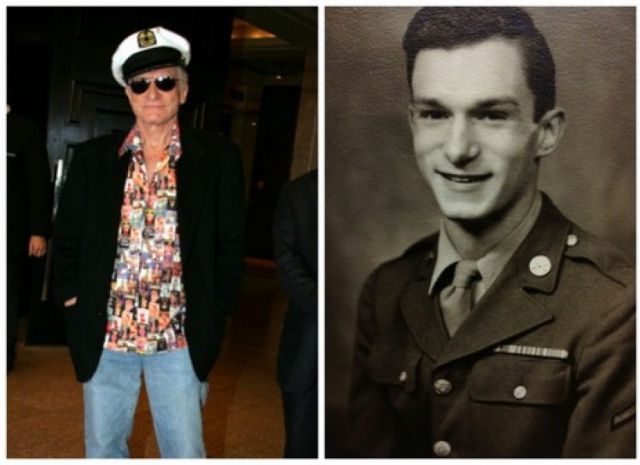
#5 Hugh Hefner
Hefner served as a writer for a military newspaper in the U.S. Army from 1944 to 1946. He later graduated from the University of Illinois at Urbana Champaign with a B.A. in psychology with a double minor in creative writing and art in 1949, earning his degree in two and a half years.
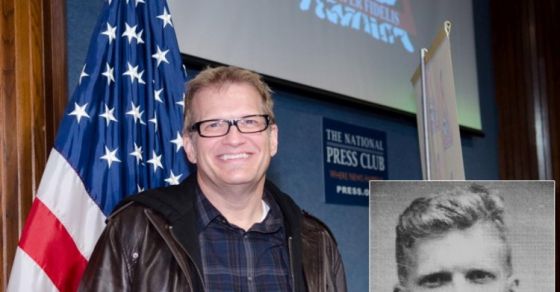
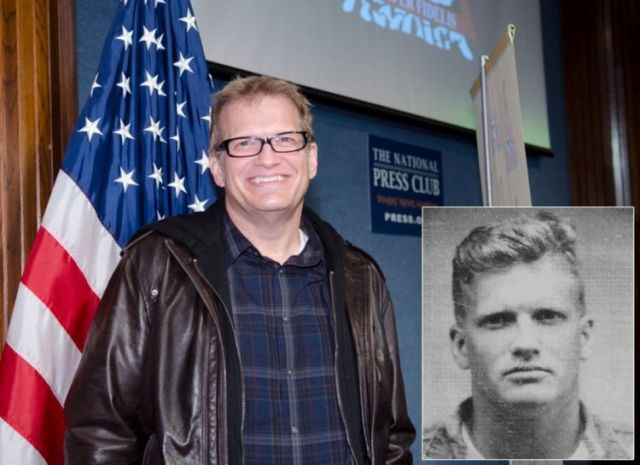
#6 Drew Carey
When Drew was eight years old, his father died from a brain tumor. He played the cornet and trumpet in the marching band of James Ford Rhodes High School, from which he graduated in 1975.
He continued on to college at Kent State University (KSU) and was expelled twice for poor academic performance. He left KSU after three years. After leaving the university, Carey enlisted into the United States Marine Corps Reserve in 1980 and served for six years. He relocated to Las Vegas for a few months in 1982, and for a short time worked as a bank teller and a waiter at Denny's.
#7 Tony Bennett (Anthony Dominick
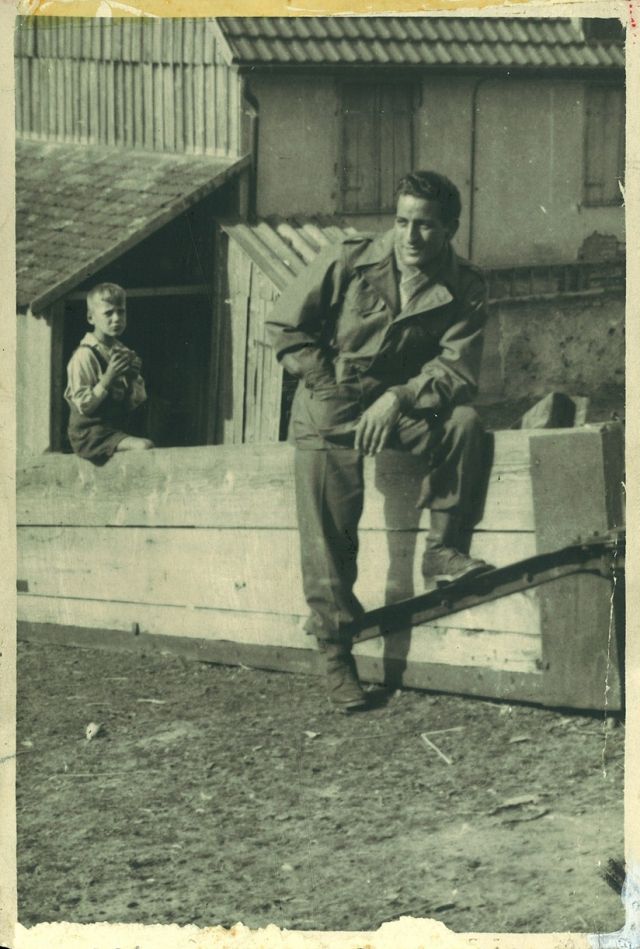
Benedetto was drafted into the United States Army in November 1944, during the final stages of World War II. He did basic training at Fort Dix and Fort Robinson as part of becoming an infantry rifleman. Benedetto ran afoul of a sergeant from the South who disliked the Italian from New York City and heavy doses of KP duty or BAR cleaning resulted. Processed through the huge Le Havre replacement depot, in January 1945, he was assigned as a replacement infantryman to the 255th Infantry Regiment of the 63rd Infantry Division, a unit filling in for the heavy losses suffered in the Battle of the Bulge. He moved across France, and later, into Germany. As March 1945 began, he joined the front line and what he would later describe as a "front-row seat in hell."
As the German Army was pushed back to its homeland, Benedetto and his company saw bitter fighting in cold winter conditions, often hunkering down in foxholes as German 88 mm guns fired on them. At the end of March, they crossed the Rhine and entered Germany, engaging in dangerous house-to-house, town-after-town fighting to clean out German soldiers; during the first week of April, they crossed the Kocher River, and by the end of the month reached the Danube.During his time in combat, Benedetto narrowly escaped death several times. The experience made him a pacifist; he would later write, "Anybody who thinks that war is romantic obviously hasn't gone through one," and later say, "It was a nightmare that's permanent. I just said, 'This is not life. This is not life. At the war's conclusion he was involved in the liberation of a Nazi concentration camp near Landsberg, where some American prisoners of war from the 63rd Division had also been held.
#8 Elvis Presley
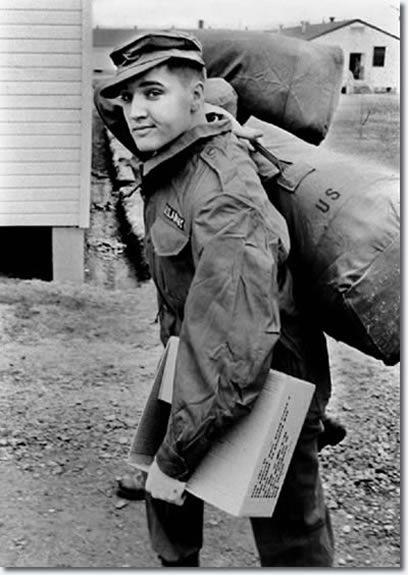
On March 24, Presley was inducted into the U.S. Army as a private at Fort Chaffee, near Fort Smith, Arkansas. His arrival was a major media event. Hundreds of people descended on Presley as he stepped from the bus; photographers then accompanied him into the fort. Presley announced that he was looking forward to his military stint, saying he did not want to be treated any differently from anyone else: "The Army can do anything it wants with me."
#9 George Carlin
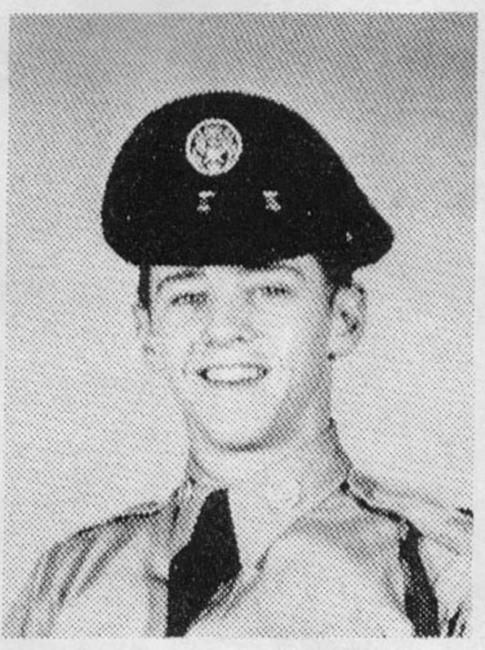
Carlin joined the United States Air Force when he was old enough, and was trained as a radar technician. He was stationed at Barksdale Air Force Base in Bossier City, Louisiana. He also began working as a disc jockey at radio station KJOE, in nearby Shreveport. Labeled an "unproductive airman" by his superiors, Carlin was discharged early on July 29, 1957. During his time in the Air Force he had been court Martial three times, and also received many nonjudicial punishments.
#10 Clint Eastwood
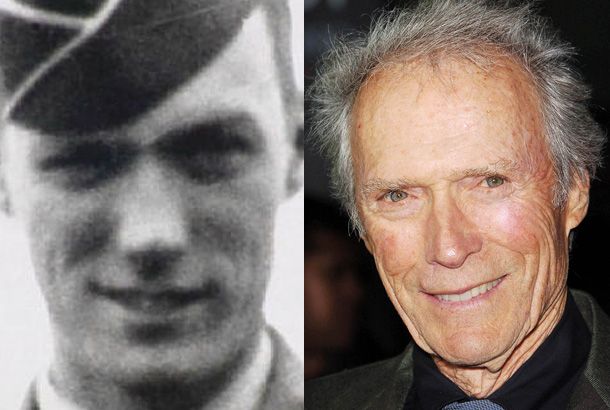
In 1951, Eastwood enrolled at Seattle University but was then drafted by the United States Army and assigned to Fort Ord in California, where he was appointed as a lifeguard and swimming instructor. In Patrick McGilligan's unauthorized biography Clint: The Life and Legend, high school friend Don Loomis alleged Eastwood avoided being sent to combat in the Korean War by "romancing one of the daughters of a Fort Ord officer, who might have been entreated to watch out for him when names came up for posting". While returning from a weekend visit to his parents in Seattle, Washington, he was a passenger on a Douglas AD bomber that ran out of fuel and crashed into the ocean near Point Reyes. Escaping from the sinking aircraft, he and the pilot swam 3 miles (5 km) to safety.
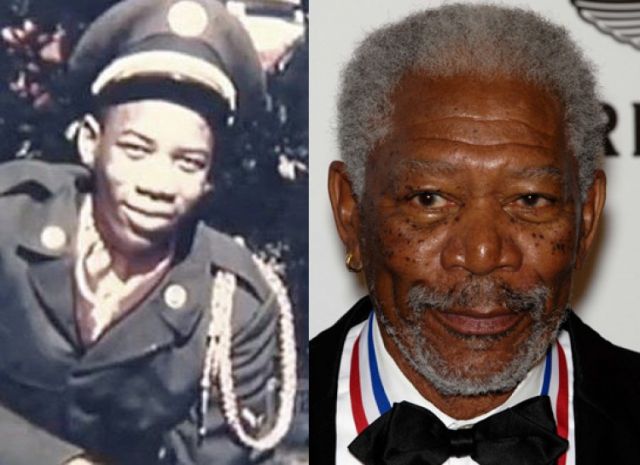
#11 Morgan Freeman
Freeman made his acting debut at age nine, playing the lead role in a school play. He then attended Broad Street High School, a building which serves today as Threadgill Elementary School, in Greenwood, Mississippi. At age 12, he won a statewide drama competition, and while still at Broad Street High School, he performed in a radio show based in Nashville, Tennessee. In 1955, he graduated from Broad Street, but turned down a partial drama scholarship from Jackson State University, opting instead to enlist in the United States Air Force. Freeman served in the U.S. Air Force as an Automatic Tracking Radar Repairman and rose to the rank of Airman 1st Class.
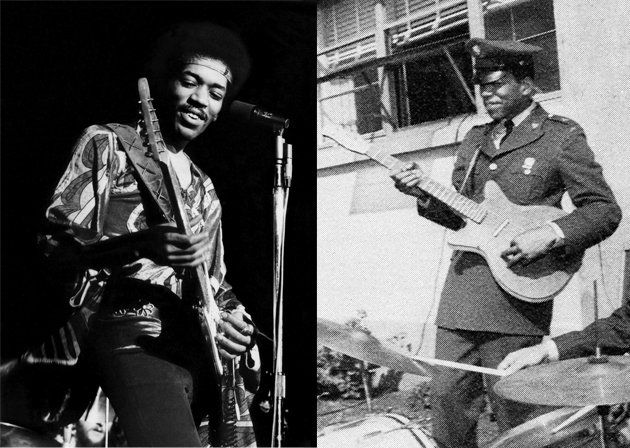
#12 Jimi Hendrix
Before Hendrix was 19 years old, law enforcement authorities had twice caught him riding in stolen cars. When given a choice between spending time in prison or joining the Army, he chose the latter and enlisted on May 31, 1961. After completing eight weeks of basic training at Fort Ord, California, he was assigned to the 101st Airborne Division and stationed at Fort Campbell, Kentucky. He arrived there on November 8, and soon afterward he wrote to his father: "There's nothing but physical training and harassment here for two weeks, then when you go to jump school ... you get hell. They work you to death, fussing and fighting. In his next letter home, Hendrix, who had left his guitar at his girlfriend Betty Jean Morgan's house in Seattle, asked his father to send it to him as soon as possible, stating: "I really need it now. His father obliged and sent the red Silvertone Danelectro on which Hendrix had hand-painted the words "Betty Jean", to Fort Campbell. His apparent obsession with the instrument contributed to his neglect of his duties, which led to verbal taunting and physical abuse from his peers, who at least once hid the guitar from him until he had begged for its return.
#13 Mr. T
Mr. T enlisted in the United States Army and served in the Military Police Corps. In November 1975, Tureaud was awarded a letter of recommendation by his drill sergeant, and in a cycle of six thousand troops Tureaud was elected "Top Trainee of the Cycle" and was also promoted to squad leader. In July 1976, Tureaud's platoon sergeant punished him by giving him the detail of chopping down trees during training camp at Fort McCoy in Wisconsin, but did not tell him how many trees, so Tureaud single-handedly chopped down over seventy trees from 6:30 am to 10:00 am, until a shocked major superseded the sergeant's orders.
After his discharge, he tried out for the Green Bay Packers of the National Football League, but failed to make the team due to a knee injury.
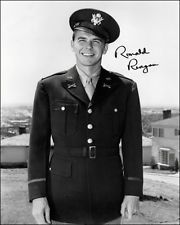
#14 Ronald Reagan
After completing fourteen home-study Army Extension Courses, Reagan enlisted in the Army Enlisted Reserve on April 29, 1937, as a private assigned to Troop B, 322nd Cavalry at Des Moines, Iowa. He was commissioned a second lieutenant in the Officers Reserve Corps of the cavalry on May 25, 1937.
Reagan was ordered to active duty for the first time on April 18, 1942. Due to his poor eyesight, he was classified for limited service only, which excluded him from serving overseas. His first assignment was at the San Francisco Port of Embarkation at Fort Mason, California, as a liaison officer of the Port and Transportation Office. Upon the approval of the Army Air Force (AAF), he applied for a transfer from the cavalry to the AAF on May 15, 1942, and was assigned to AAF Public Relations and subsequently to the First Motion Picture Unit (officially, the "18th Army Air Force Base Unit") in Culver City, California. On January 14, 1943, he was promoted to first lieutenant and was sent to the Provisional Task Force Show Unit of This Is The Army at Burbank, California. He returned to the First Motion Picture Unit after completing this duty and was promoted to captain on July 22, 1943.
#15 Mickey Rooney
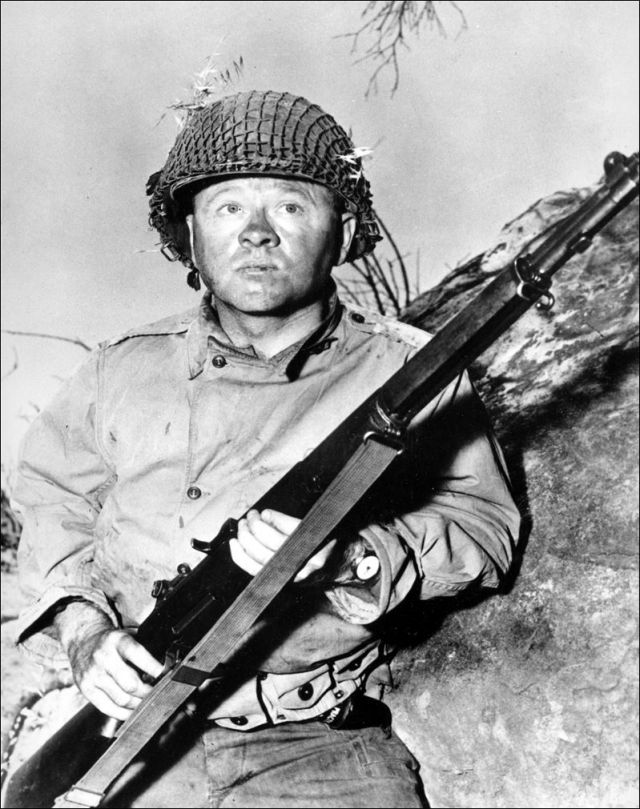
In 1944, Rooney was drafted into the United States Army. He served more than 21 months, until shortly after the end of World War II. During and after the war he helped entertain the troops in America and Europe, and spent part of the time as a radio personality on the American Forces Network and was awarded the Bronze Star Medal for entertaining troops in combat zones. In addition to the Bronze Star Medal, Rooney also received the Army Good Conduct Medal, American Campaign Medal, European-African-Middle Eastern Campaign Medal, and World War II Victory Medal, for his military service.