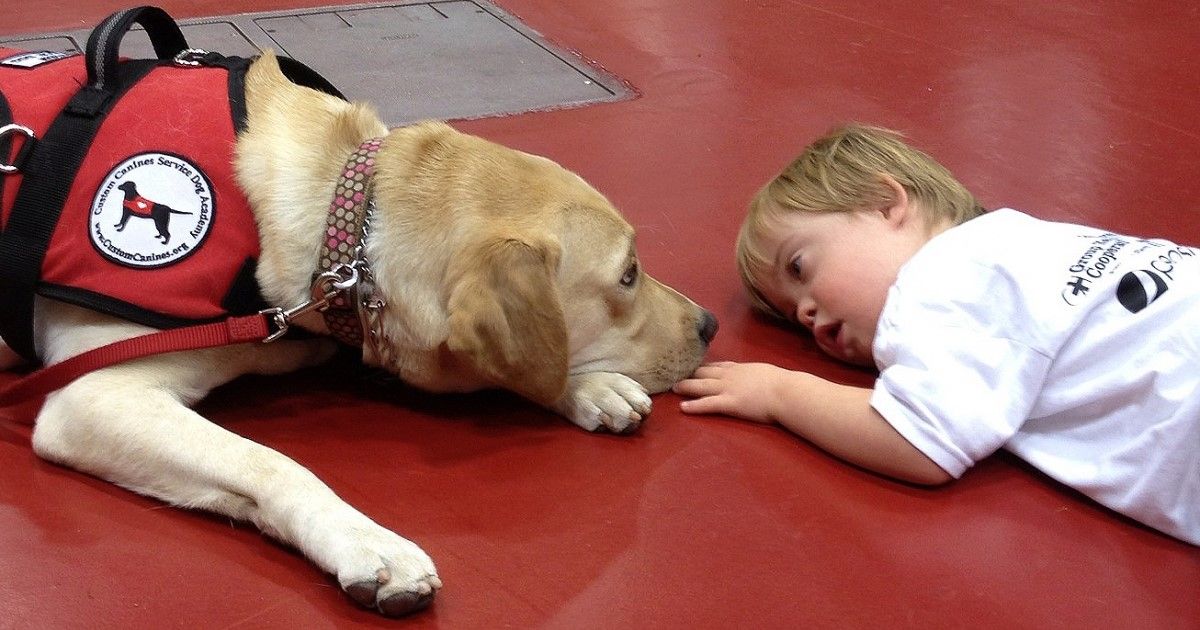
For many people with disabilities, their service animal is as integral to their life as your hands.
Heck, for many people, their service animal is their hands.
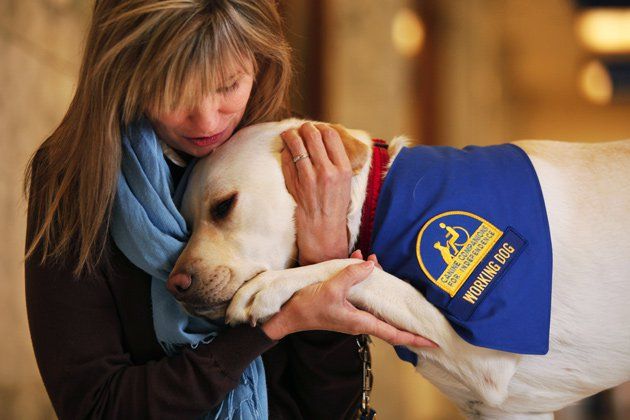
While everyone knows that service animals help people with disabilities,
there are many things about these incredible animals that people don't know.
SERVICE ANIMALS ARE FOR PHYSICAL PROBLEMS
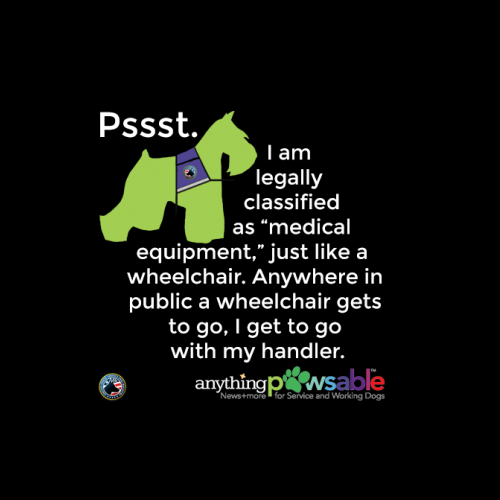
There are three main types of animals that help people with disabilities. The first are service animals, which are usually dogs and sometimes mini horses. Training for a service animal takes 18-24 months, and they're actually considered medical equipment. Because of that, they're allowed in places pets aren't usually allowed.
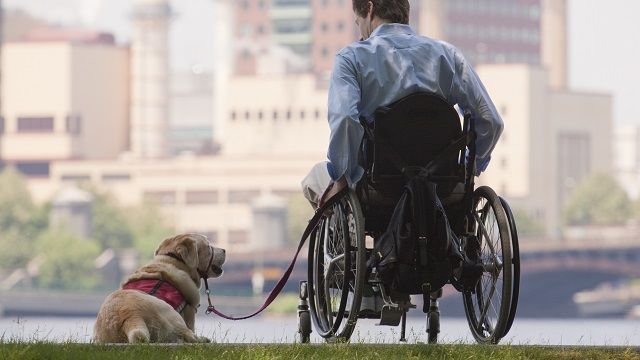
EMOTIONAL SUPPORT ANIMALS ARE FOR MENTAL HEALTH
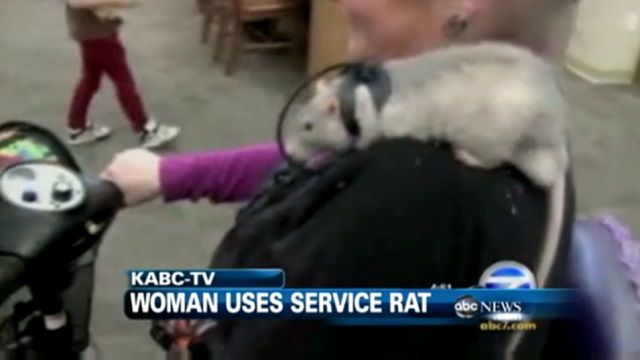
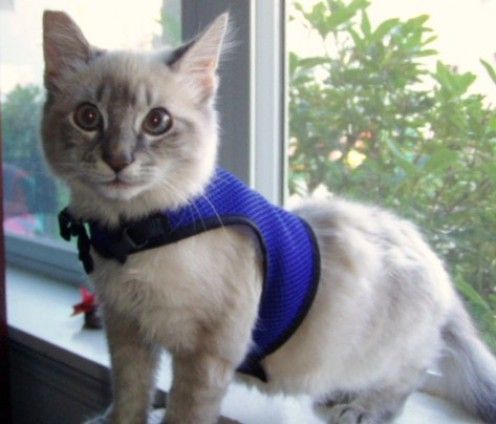
Emotional support animals are very different than service animals. They're prescribed to help a person's mental health, and because of that, they're allowed to keep them in housing where pets aren't allowed. However, they have no more right than regular pet owners when it comes to taking the animal into businesses. They can, however, take them in the cabin of a plane. Any animal can be a service animal, including parrots, snakes, cats and dogs.

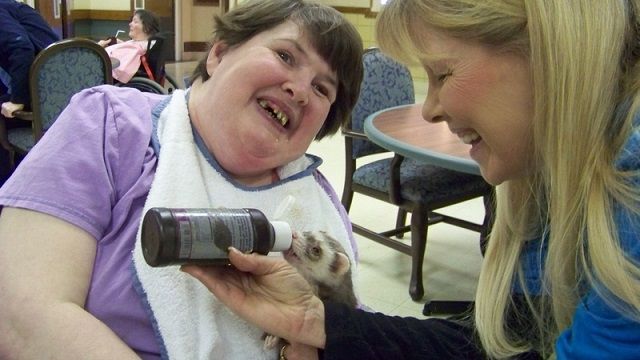
THERAPY ANIMALS VISIT NURSING HOMES AND HOSPITALS
The third type of service animal is a therapy animal. These specially trained critters spend about 8 weeks in training, and are taken to places like nursing homes and hospitals to make the residents and patients feel better. Therapy animals can be any animal, including ducks, donkeys and dogs.
SERVICE ANIMALS DON’T GIVE YOU PERMISSION TO PRY
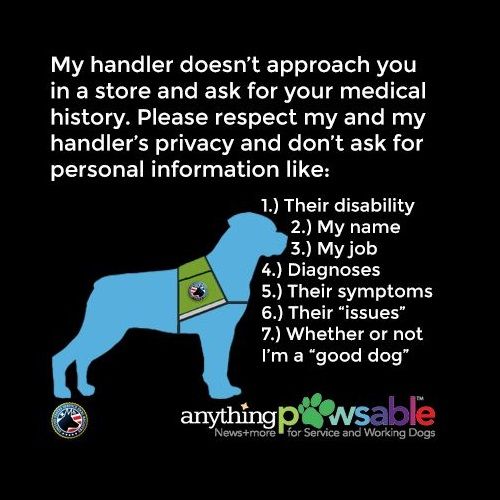
Just like it's rude to ask an amputee how they lost their limb, it's exceedingly rude to ask somebody with a service dog why they need them. Don't try to guess the service the animal provides, and don't ask. It's really none of your business.
THERE ARE THREE TRADITIONAL SERVICE DOG BREEDS
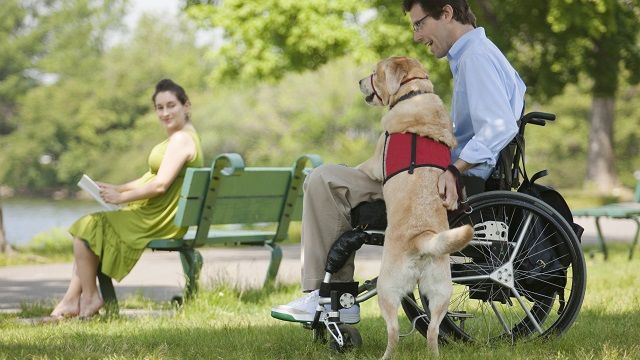
All different breeds are used for service animals, but traditionally, there have been three breeds used. Dobermans, golden retrievers and Labradors were most commonly used for their temperament, receptiveness to training and size.
UNUSUAL BREEDS ARE NOW USED FOR SERVICE DOGS TOO
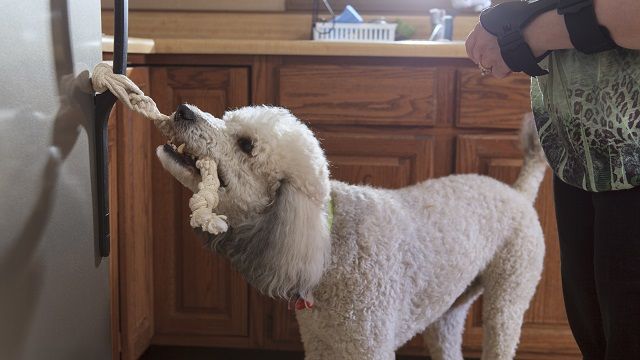
Different breeds have different uses as therapy animals. Chihuahuas are used to detect seizures, mastiffs are used to help pull the disabled in wheelchairs and corgis can help the hearing impaired. Most breeds, if they possess the right size and temperament, can be used.

PUGS AND BULL DOGS ARE RARELY USED
There are always exceptions to the rule. While most breeds can be trained to be service animals, pugs and bull dogs are rarely used. Their flat faces give them a lot of breathing problems, so they can't walk for very long, and the breeds tend to be too short lived for the time, money and emotion invested in service dogs.
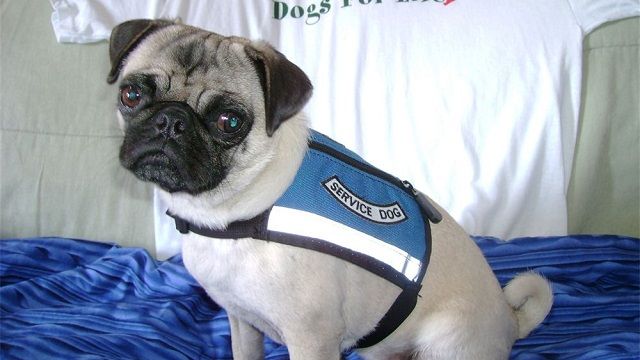
SERVICE ANIMAL VESTS ARE OPTIONAL
The Americans With Disabilities Act does not require service animals to wear markers, but most service animal associations recommend it highly. It helps destigmatize the use of service animals and normalizes it, and it also makes life easier for the disabled. Without a vest, the animals tend to draw a lot of attention; it saves time and energy.
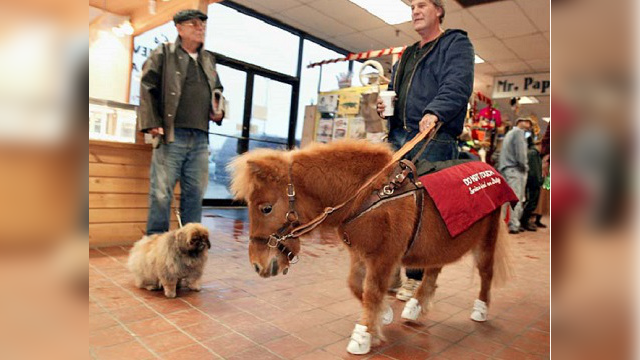
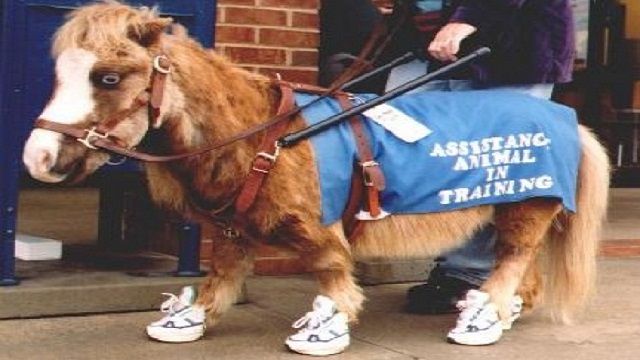
MINI HORSES ARE BECOMING POPULAR SERVICE ANIMALS
Dogs are traditionally used as service animals, but mini horses are becoming a popular choice. They're strong, well mannered, receptive to training and, perhaps most importantly, extremely long lived. A service horse can live decades longer than a dog, and when you spend every moment with and relying on an animal like that, you form a special bond. It's painful when that animal dies, and with a dog that only lives a decade or so, you'll have to go through it a lot.
THERE’S AN EPIDEMIC OF PEOPLE PASSING OFF PETS AS SERVICE ANIMALS
Recently, people who really need service animals have been facing scrutiny from business owners and business patrons because a number of people have been passing off their pets as service animals. Those little red vests are easy to come by online, and people who put them on their untrained animals who misbehave give people who actually need their animals a bad name.
HERE’S WHY YOU SHOULDN’T PET A SERVICE ANIMAL
Ever wondered why you shouldn't pet a service animal? The usual response is because it's working, but what does that really mean? Service animals are still animals, and distractions can pull them out of their job and keep them from performing it, which may be keeping a nose out for a life-threatening seizure.
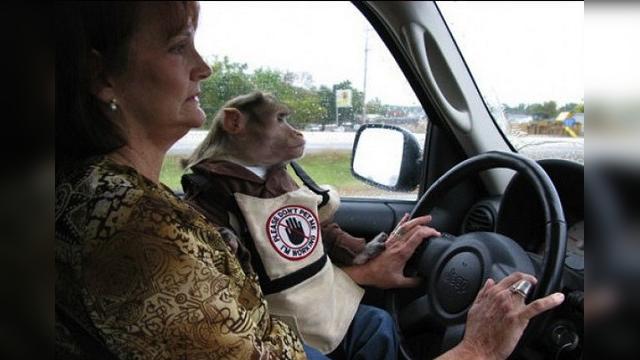
TRAINING A SERVICE ANIMAL COSTS ABOUT $25,000
And that doesn't even count the cost of food and healthcare for a dog or horse's lifetime. The lengthy training time is extremely expensive, as is the special type of training they have to go through, including neuromuscular stimulation from as early as two days old, to help prepare them for "stressful situations."
THERE ARE THREE MAIN LAWS THAT DEFINE “SERVICE ANIMALS”
The main law that outlines and protects service animals is the Americans With Disabilities Acts. This is the law that states that only two questions can be asked of a person with a service animal. It's also the law that states that only dogs and miniature horses can legally be service animals. Additionally, the Fair Housing Act allows service animals to live in a home that may normally prohibit animals. Finally, the Air Carrier Access Act outlines allows people with disabilities to fly with their animals in the cabin of a plane.

ONLY TWO QUESTIONS CAN BE ASKED OF A PERSON WITH A SERVICE ANIMAL
Service animals are allowed anywhere the public is allowed. Business owners are only allowed to ask the person accompanied by a service animal two questions to determine if it is a service animal: one, "Is the dog a service animal required because of a disability?" and two, "What task is the dog trained to perform?" They're not allowed to ask for paperwork or "proof" that the animal is a service animal.
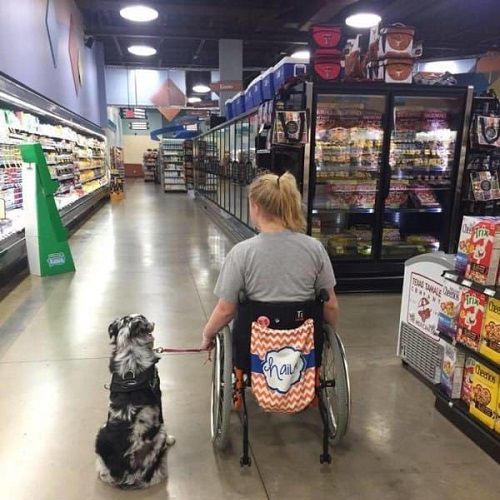
DON’T CALL SERVICE ANIMALS “PETS”
Don't call somebody's service animal a "pet." They're medical equipment and considered "an extension of the person who has the disability." For this same reason, you shouldn't pet a service animal, especially without permission.