Here are some of the most dangerous and potentially deadly foods from around the world.
advertisement
#1 Fugu (Pufferfish)
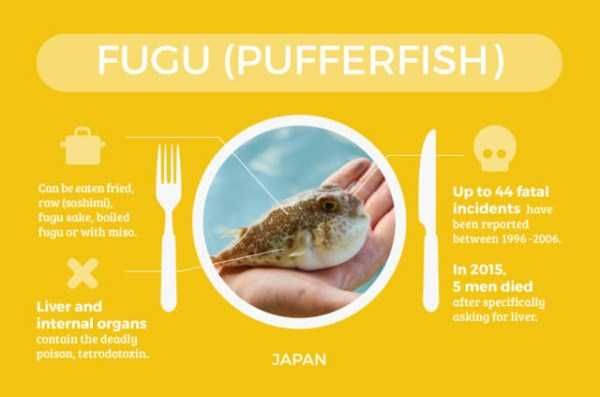
Served in paper-thin slices by expert chefs, fugu combines luxury with a high-stakes gamble. The intestines, ovaries and liver of fugu (or blowfish) contain a poison called tetrodotoxin, which is 1,200 times deadlier than cyanide. The toxin is so potent that a lethal dose is smaller than the head of a pin, and a single fish has enough poison to kill 30 people. Because of the high risk, chefs must undergo two to three years of training to obtain a fugu-preparing license, and such expertise raises the price of a fugu dish to up to $200. But this hasn't stopped the Japanese about 40 kinds of fugu are caught in Japan, and people consume 10,000 tons of the fish every year.
#2 Bullfrog
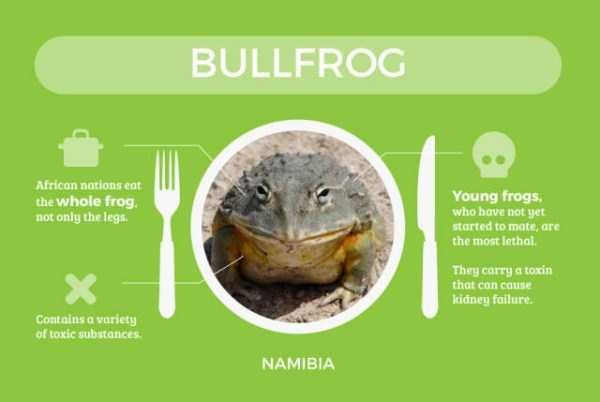
Oshiketakata diseasewait, what? Yes, that is what you call the result of eating a bullfrog which hasn't matured. In Namibian traditional cuisine, one of their delicacies is the massive bullfrog. Eaten whole but with a lot of risks, the bullfrog's skin and organs are dangerous and if you are unlucky, eating the toxic portions will give you kidney failure. If you dare to try it out, waiting until the "third rain of spring" preferably after mating season, and when it starts to croak, is the best time to catch it. I won't double dare you.
advertisement
#3 Ackee
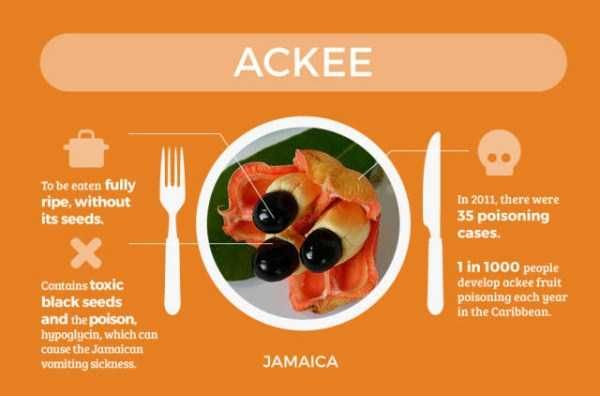
In Jamaica, the ackee fruit is a mixed blessing. Though originally native to West Africa, it migrated to Jamaica in 1778 and is now the country's national fruit. If improperly eaten, though, ackee can cause what has been dubbed the Jamaican Vomiting Sickness which, other than the self-explanatory symptoms, can lead to coma or death. Unripe ackee fruit contains a poison called hypoglycin, so preparers must be careful to wait until the fruit's protective pods turn red and open naturally. Once open, the only edible portion is the yellow arilli, which surround always-toxic black seeds. With all that risk comes a delicious payoff Jamaica's national dish is ackee with codfish.
#4 Sannakji
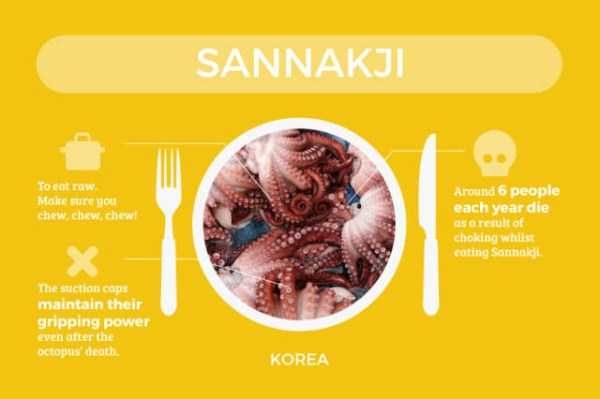
Most of us prefer our food to be dead when it reaches our plate but not in Korea. There you can order live octopus, which is chopped up and seasoned while still alive. The danger is the suction cups, which are still active and can stick to your throat, potentially suffocating you.
advertisement
#5 Blood Clams
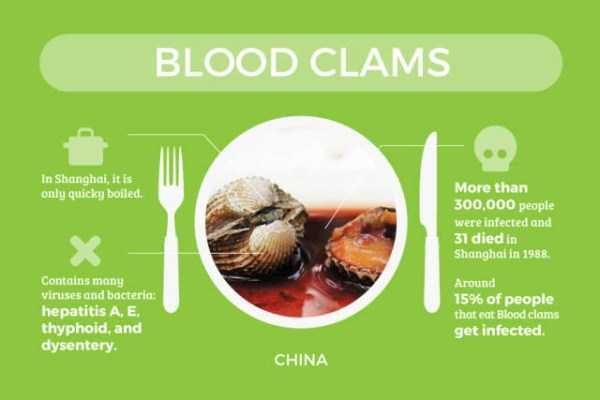
When in Shanghai, avoid eating Blood Clams, regardless if they're a delicacy. Known to cause hepatitis A & E, typhoid and dysentery, these red clams have been banned there since 1988. Should you encounter them in Japan as sushi, where it is called akagai, you can be assured of its safety as long as you have proof that they were safely cultivated! Illegal imports of the clams are found in New York's Chinatown though, so be forewarned!
advertisement
#6 Hakari
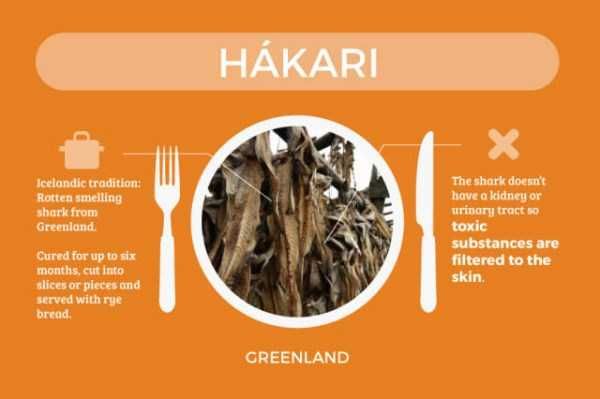
Hákarl - shark meat that's been buried to ferment in its own fluids then hung up to dry - is prized in Greenland. The problem is that the animal doesn't have a urinary tract, which means potentially toxic substances are stored in its meat.
advertisement
#7 Casu Marzu
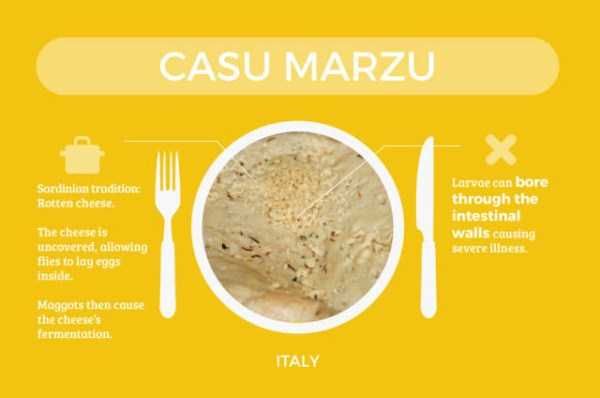
This sheep's milk cheese, made in Sardinia, Italy, is crawling with live insect larvae. Introduced to help ferment the cheese, the larvae can cause intestinal lesions as well as pain, nausea, diarrhea, and vomiting. It shouldn't be hard to avoid this, though, as Casu Marzu is illegal in the EU.
advertisement
#8 Echizen Kurage
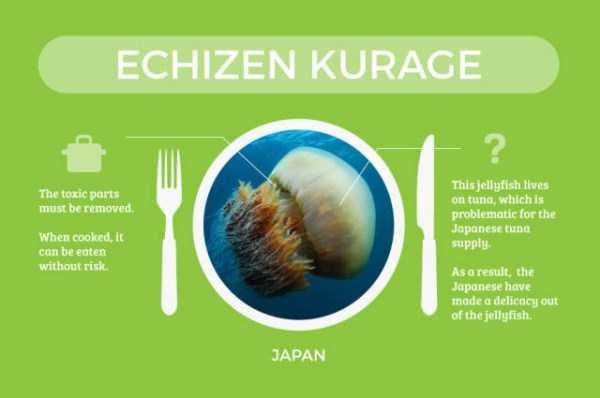
This poisonous jellyfish lives on tuna, problematic for the Japanese tuna supply. The solution? Make the jellyfish into a delicacy. The toxic parts must be removed, and the jellyfish cooked so as to be eaten without risk.
advertisement
#9 Pangium Edule
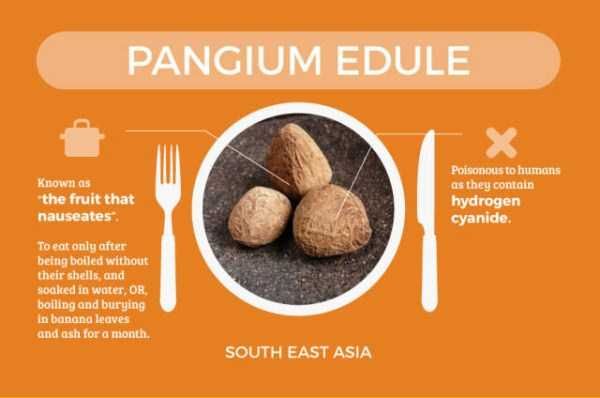
Pangium edule, the fruit from a tree native to Southeast Asia, is poisonous to humans due to the hydrogen cyanide it contains.(It's known as "the fruit that nauseates.") The seeds are eaten after either being boiled without their shells and soaked in water, or after boiling and burying them in banana leaves and ash for a month or two to release the cyanide.
advertisement
#10 Fesikh
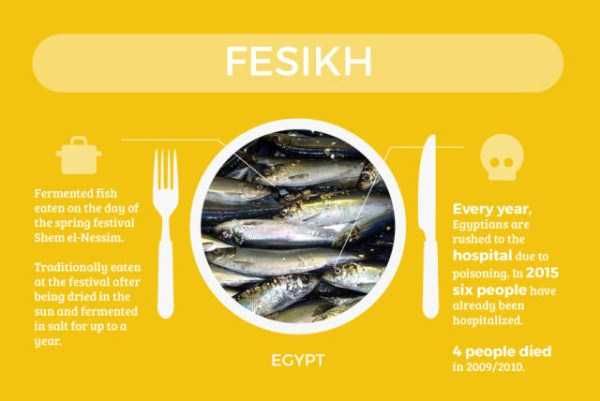
Simply put, fesikh is fermented grey mullet that has been dried in the sun and then salted to levels that are probably dangerous to any person's blood pressure. There's a certain art to making good fesikh as there's a very thin line between fermentation and rot. Dancing around that line, may have fatal health consequences. The warnings that the Ministry of Health releases every year regarding the consequences of eating bad fesikh are yet to unnerve the Egyptian people who refuse to let go of this very stinky yet apparently tasty dish.
advertisement
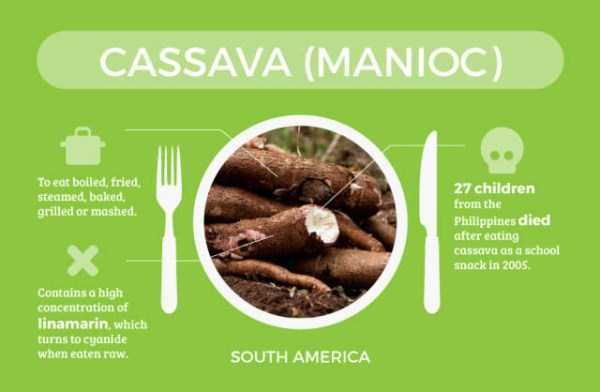
#11 Cassava (Manioc)
Better known to Americans as tapioca, the pudding favorite is produced from the roots of this bush-like plant. But the crop can have deadly consequences. If prepared incorrectly, the cassava plant can produce cyanide, a deadly compound when consumed. A small number of people are also allergic to the plant the American Cancer Society warns that those with a latex rubber allergy might be more susceptible and should consider opting for a different dessert.
advertisement
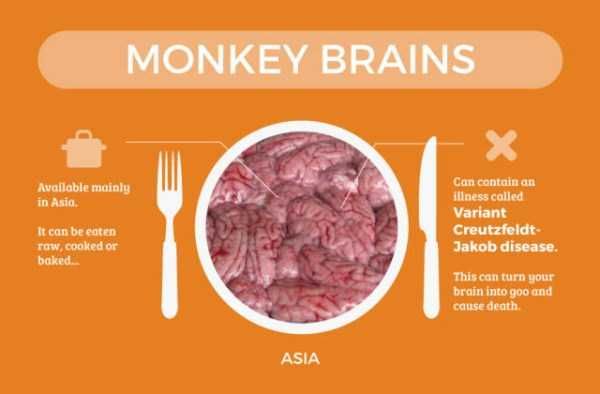
#12 Monkey Brains
Though not as common as some of the other food on this list, eating monkey brains could cause serious damage to your own cranial stuff. Creutzfeldt-Jakob disease, better known as Mad Cow Disease, is present in some monkeys. This disease causes dementia, neurological deterioration, and, eventually, death. Stay away from the monkeys next time you're in Asia.
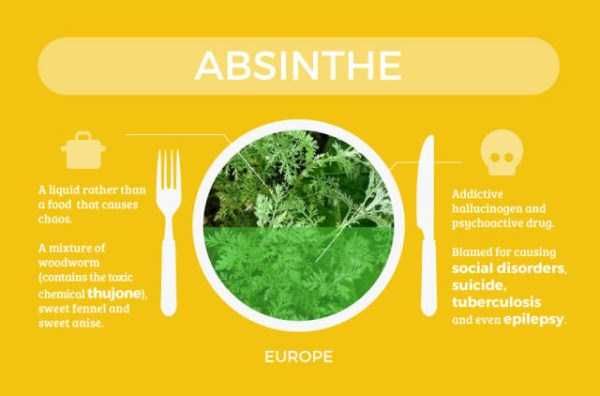
#13 Absinthe
Wormwood is used in some alcoholic beverages. Vermouth, for example, is a wine beverage flavored with extracts of wormwood. Absinthe is another well-known alcoholic beverage made with wormwood. It is an emerald-green alcoholic drink that is prepared from wormwood oil, often along with other dried herbs such as anise and fennel. Absinthe was popularized by famous artists and writers such as Toulouse-Lautrec, Degas, Manet, van Gogh, Picasso, Hemingway, and Oscar Wilde. It is now banned in many countries, including the U.S. But it is still allowed in European Union countries as long as the thujone content is less than 35 mg/kg. Thujone is a potentially poisonous chemical found in wormwood. Distilling wormwood in alcohol increases the thujone concentration.
advertisement
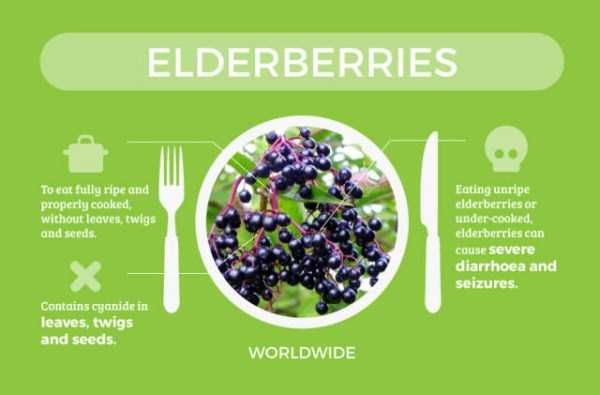
#14 Elderberries
Elderberries, delightful as marmalade, wine and pancake syrup, have a dark secret hidden in its branches: cyanide. But fear not! For only its leaves, twigs, seeds and roots contain the deadly toxin. Take caution though when drinking herbal teas made of elderberry leaves, and don't even think about eating the unripe fruits and flowers that contain a toxic alkaloid.
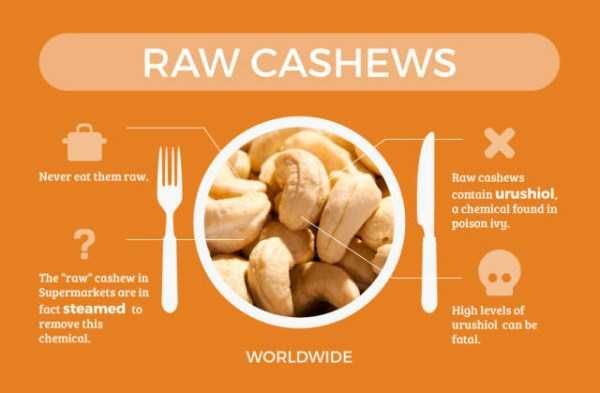
#15 Raw Cashews
Even if you don't have a nut allergy, never eat a cashew nut from the tree. Raw cashews contain a toxic substance that can be fatal if eaten in large quantities. The raw cashews in supermarkets have been steamed to remove the dangerous chemical.
advertisement
#16 Rhubarb Leaves
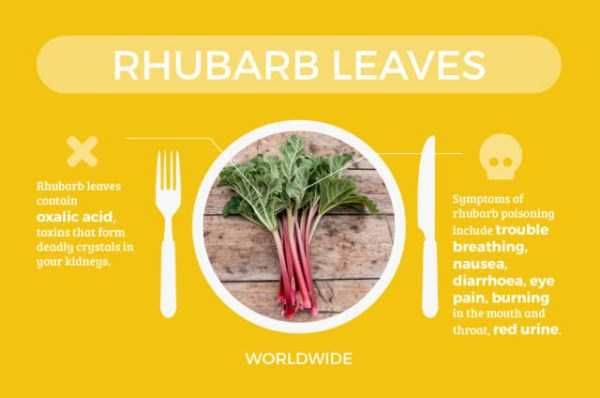
Rhubarb, the vegetable so celebrated for its role in pastries that it's also known as the "pie plant," has a kick to it. While rhubarb has a medicinal history originating in Asia, ingesting a large amount of the leaves can cause poisoning. The CDC warns that neither cooked nor raw rhubarb leaves should be consumed, owing to the toxins (including oxalate) they contain. Stick with the stalk
#17 Star Fruit
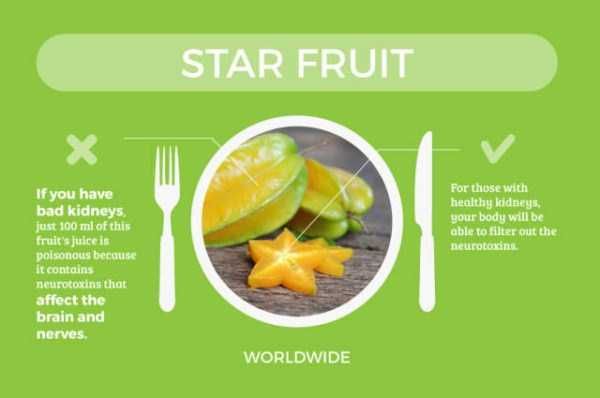
Just 100 ml of this fruit's juice is poisonous for people with bad kidneys -- it contains neurotoxins that affect the brain and nerves. If you have healthy kidneys, have no fear. Your body will be able to filter out the neurotoxins.