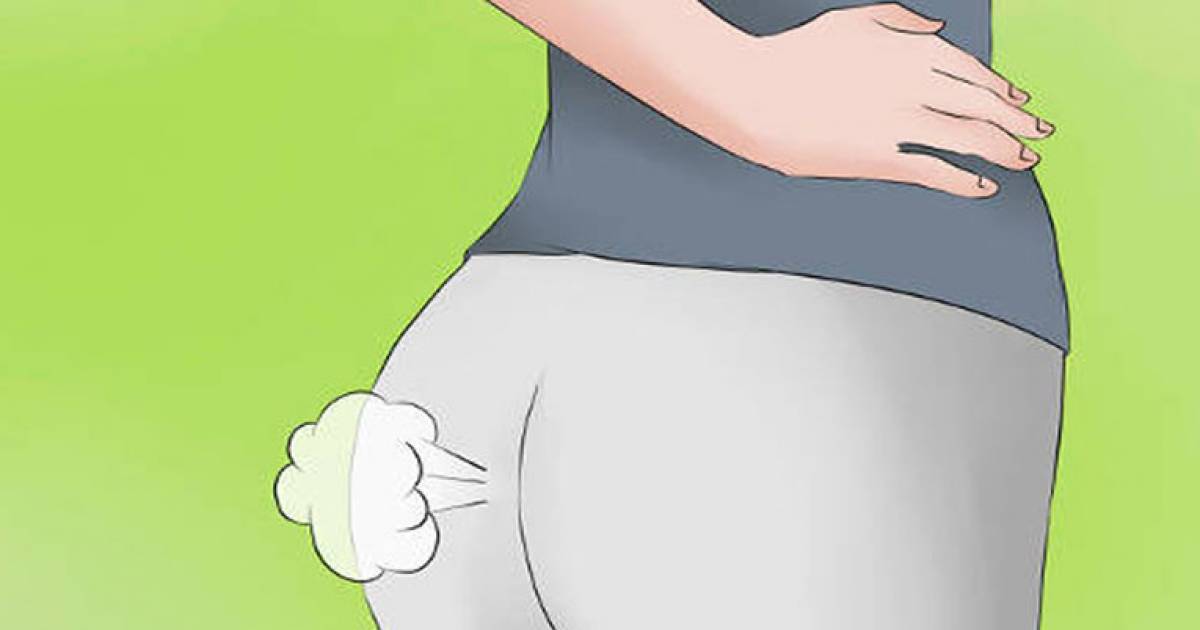
An average person farts 14 times a day… Luckily, the majority of your farts take place at night while sleeping. Being gassy is never fun, especially when you’re surrounded by other people but it happens to the best of us.
advertisement
#1 Introduction:
Why do we fart? Why do farts smell? Passing gas may be embarrassing for most of us, but it might make you feel better to know that it's one of the most common bodily functions of all time. Everyone does it, from Halle Berry to the Queen of England. In fact, the word "fart" is one of the oldest words in the English language!
Read on to discover more fascinating facts about about cutting the cheese.
#2 The average human being farts 14 times a day.
How many times they do it in front of others will determine exactly how "human"actually, "inhumane"they are.
advertisement
#3 You fart enough every day to fill a balloon.
The average human toots about 700ml of flatus dailyenough to blow up a birthday balloon!

#4 The speed of farts.
Farts exit the anus and enter the world at a speed of 10 feet per second, or slightly less than seven miles per hour.

advertisement
#5 What the hell is that smell?
Truth be told, only 1% or less of the gas in your average, everyday, run-of-the-mill fart has any odor whatsoever. The main culprit is hydrogen sulfide, which generates those rancid "rotten egg" notes that make farts the bane of the world's nostrils.

advertisement
#6 Women’s farts smell worse than men’s.
Sure, there's a certain breed of male idiot who thinks it's funny to fart in front of others, and to be fair, women don't tend to be afflicted with that special strain of sadism. But before they start getting all high and mighty, they should realize that female farts have a higher hydrogen sulfide concentration than male ones and thus, fart-for-fart, they're smellier than dude farts.

advertisement
#7 A fart by any other name would smell as stinky.
The word "fart" is considered a "vulgarism" andjust like farting itselfis not recommended for use in polite company. The polite noun is "flatus," even though almost no one uses it. The word "fart" is said to have been coined in 1632 and defined as "to send forth wind from the anus." "Fart" is derived from the Old English word "feortan," which means "to break wind."

advertisement
#8 Farting among the ancients.
Roman Emperor Claudius declared that "all Roman citizens should be allowed to pass gas whenever necessary," which is an ancient variant of the modern maxim, "Wherever you be, let the wind blow free." The ancient Japanese were said to have held "farting contests" to see who could break wind the loudest and longest. The Greek physician Hippocrates decreed that "Passing gas is necessary to well-being."

advertisement
#9 The oldest one-liner in recorded history is a fart joke.
Professor Paul McDonald of the University of Wolverhampton tags a Sumerian joke from 1900 BC as the world's oldest recorded one-liner. The joke:
Something which has never occurred since time immemorial; a young woman did not fart in her husband's lap.

advertisement
#10 Farts are sprinkled throughout literary history.
Despite our modern revulsion for human flatulenceit is a topic so unspeakable, it may qualify as a form of pornographyliterary masters of antiquity suffered no such hangups. Literary luminaries who mentioned farting include William Shakespeare (flatulence is mentioned five times in his plays), Jonathan Swift (who penned a 1722 essay titled "The Benefit of Farting Explain'd"), Geoffrey Chaucer (whose Canterbury Tales include a line about a man who "let fly a fart as loud as it had been a thunder-clap"), Dante Alighieri (whose Inferno mentions a demon who used "his ass as a trumpet"), and Founding Father Ben Franklin, who wrote a whole essay titled "Fart Proudly."
advertisement
#11 Hitler had terrible gas.
Not only was the infamous Nazi dictator a speed freak, he also suffered from hepatitis and gastrointestinal cramps, which led to a condition of chronic flatulence for which he took 28 different medications. It is almost certain that no one complained to Hitler about the smell.

advertisement
#12 What exactly is a fart?
Flatulencewhich occurs in nearly all living organismsis a mixture of hydrogen, nitrogen, oxygen, carbon dioxide, sulfur dioxide, and in some cases, methane. These gases are produced as the byproduct of the trillions of bacteria that break down food during the digestive process.

#13 Can farts be measured?
Yes, indeed, they canusing a "rectal catheter," researchers are able to shove a tube up a patient's poop chute to determine the volume of gas that is produced during the sacred act of farting.

advertisement
#14 Holding Farts In Could Be Bad For Your Health
Doctors disagree on whether or not holding in a fart is bad for your health. Some experts think that farts are a natural part of your digestive system, so holding them in won't harm you. Others think that at best, holding them in can cause gas, bloating, and other uncomfortable symptoms, and at worst, repressing gas can cause hemorrhoids or a distended bowel

#15 For Some Cultures, Farting Is No Big Deal
While most cultures feel that farts should be suppressed in polite company, there are some cultures that not only don't mind letting them fly in public, but they actually enjoy it. An Indian tribe in South America called the Yanomami fart as a greeting, and in China you can actually get a job as a professional fart-smeller!
In ancient Rome, Emperor Claudius, fearing that holding farts in was bad for the health, passed a law stating that it was acceptable to break wind at banquets.

advertisement
#16 Farts Are Flammable
As stated above, the methane and hydrogen in bacteria-produced farts make your gas highly flammable. This is why some people think it's a fun party trick to hold a lighter up to their bums and let one fly; doing so produces a big burst of flame, but is obviously very dangerous.
In rare cases, a build-up of flammable gasses in the intestines have caused explosions during intestinal surgeries!

#17 Termites Produce The Most Farts Of Any Other Animal
It's hard to believe that the tiny termite is responsible for a great deal of our global warming problem on the planet. Termites fart more than any other animal, which produces methane gas. According to the Environmental Protection Agency, "Global emissions of methane due to termites are estimated to be between 2 and 22 Tg per year, making them the second largest natural source of methane emissions. Methane is produced in termites as part of their normal digestive process, and the amount generated varies among different species."

advertisement
#18 If You Hold Them In, They'll Just Come Out When You Sleep
Even if you clenched your butt and held them in all day, the gas will escape once you relax. What's more relaxing than sleep? (Source | Photo)

#19 People Even Fart After Death
Here's proof that you can't escape passing wind, even after you're dead! Up to three hours after the body dies, gasses continue to escape from both ends of the digestive tract, resulting in burping or farting noises. This phenomenon is due to muscles contracting and expanding before rigor mortis sets in.