Nowadays there are so many discussions about healthy diets, and there are a lot of different opinions about what to eat, when to eat, and how much to eat. Some recommendations sound suspicious, and so we start doubting their truth.
18 Myths About A Healthy Diet You Need To Stop Believing
By
Editorial Staff in
Health and Fitness
On 6th June 2016
advertisement
#1 Meal timing
All Raw Foods are Much Healthier Than Cooked Foods
This is often touted by raw or plant-based diet followers as the reason their diet is superior to other diets. The raw food argument states that cooking destroys the enzymes in plants, and that this results in nutritionally inferior food.
It's true that cooking destroys enzymes, but the enzymes in plants were created for the plant's benefit. As humans we have our own enzymes that allows us to digest both raw and cooked foods, and the process of cooking can maintain or even improve upon the nutrition of its raw counterpart in many cases (though it's true that some vegetables lose nutrition when cooked, depending on the cooking method)
Raw fruits and vegetables are absolutely still healthy and can even be more nutritious (depending on the vegetable) than cooked foods and shouldn't be avoided. But raw does not universally mean better, and cooking does much to improve the appearance and texture of fruits and vegetables which makes them much easier to consume.
Cooking, quite simply, is good for you
Eat fruits and vegetables raw or eat them cooked. Both ways are healthy and whatever gets you eating more fruits and vegetables is a good thing.
#2 Bran Bread
All Calories are the Same
This is a myth that is often brought up when skinny people don't understand why the overweight and obese have trouble losing weight.
"All calories are the same. Eat less, move more. Problem solved."
But it's not nearly that simple. The truth is that calories are not created equal; different foods impact the body metabolically in different ways
What you eat matters, not just how much you eat. It is still the case that how much you eat matters, the point is that foods impact your body in many different ways, with calorie load being just one of those ways
Both food quantity and food quality matters.
Your overall health varies drastically with the foods you choose to consume (for example, highly inflammatory processed vegetable oils versus universally healthy olive oil).
Avoid processed foods as much as you can (by sticking to the edges of the grocery store) and cook at home as much as possible to ensure that you eat high quality calories.
advertisement
#3 Fresh juice
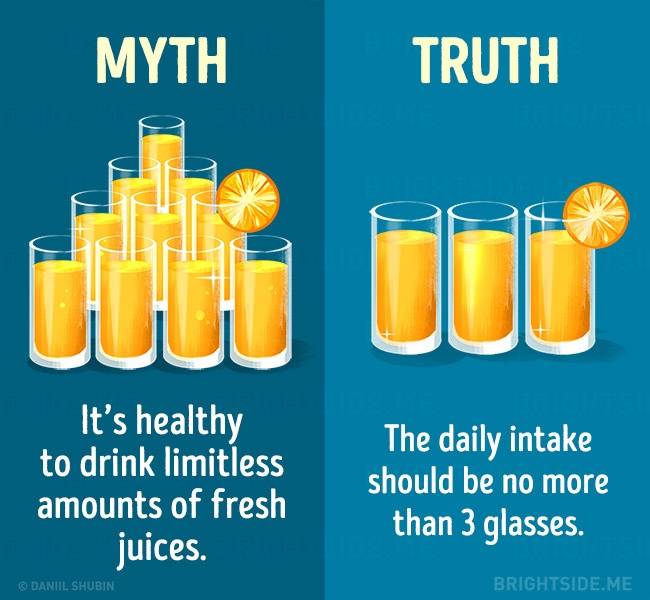
Fruit Juice is Healthy
Though fruit juice does contain all of the vitamins and minerals found in the fruit itself, it also contains massive amounts of sugar. Not only that, but fruit juice delivers all the sugar found in the fruit, without the fibre.
As fibre helps to slow the absorption of sugar and blunts the body's insulin response, drinking fruit juice without the fibre is equivalent to consuming 40+ grams of sugar (the same amount as a sugar-filled soda)
This causes big spikes in insulin and may even lead to insulin resistance, which is one step down the path of metabolic syndrome, obesity and diabetes.
Small amounts of fruit juice are totally fine. But you may want to change how you think of fruit juice put it in the "treat" category instead of the "healthy" category (especially considering the process they use to make fruit juiceyuck).
It's much better to eat fruit than to drink fruit juice. But you can still enjoy fruit juice in small amounts.
Try to choose fruit juice that has been freshly squeezed and that contains pulp (this adds some fibre to the drink). Store bought fruit juice, whether it's from concentrate or "all natural", is essentially flavoured sugar water.
#4 Chocolate
Dark Chocolate Will Help You Lose Weight
If it sounds too good to be true, it usually is.
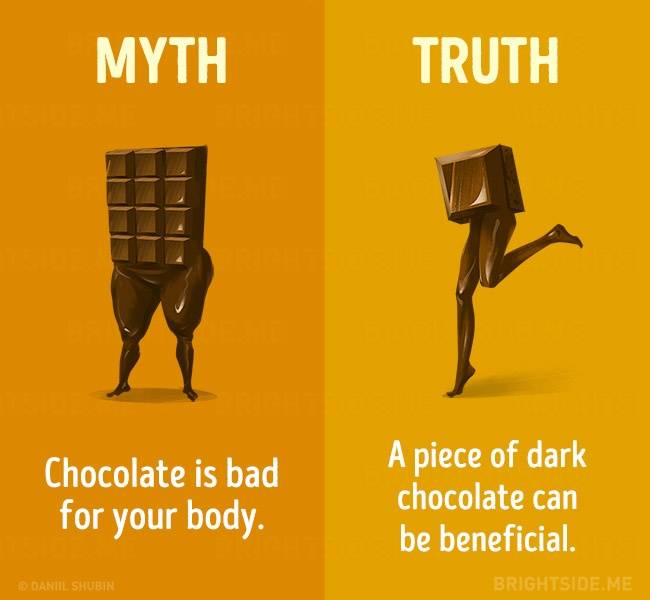
In the case of dark chocolate, it does contain many compounds that are healthy (such as fibre, Iron, Magnesium, Copper, and so on) and should be consumed as a small treat every now and then. I know I love to have dark chocolate as a treat every week or so.
But when it comes to weight loss, there is no significant study I have been able to find that proves the weight loss mechanisms of dark chocolate.
In fact, there was recently a "faked" study with the details published here about how one man got large media publications to believe that his study showed significant weight loss benefits of dark chocolate (it didn't). It's a fascinating but frightening look at nutrition "science" and the media, and how things are taken entirely out of context.
Dark chocolate is a great treat that may confer some health benefits due to its high vitamin, mineral, and antioxidant content but that's where science stops. Don't believe the hype about dark chocolate and weight loss.
Dark chocolate is a wonderful food that's delicious and full of healthy vitamins, minerals, and antioxidants. But it also contains plenty of sugar and there's no scientific basis to the urban legend of dark chocolate and weight loss.
Eat it as a treat, and leave it at that.
advertisement
#5 Eating habbits
There is Only One Diet That is Best
Any vocal proponent of one particular diet is missing the point. Humans are omnivores, and have existed and thrived on many very different diets throughout history. Here's a few examples:
Polynesian inhabitants of Tokelau eat huge amounts of saturated fat
The Masai live mainly on high fat dairy
The islanders of Kitava eat mainly tubers, fruit, and vegetables
The Hadza of Tanzania eat mainly fruit and honey
The Inuit eat mainly sea and land mammals, fish, and birds
The list goes on of peoples that are perfectly healthy (much more so than we are) who ate very different diets. Whether you follow a classic, vegetarian, paleo, flexitarian, low-carb, ketogenic, mediterranean,you can do so in a healthy way.
Evidence tells us that the human body is remarkably adaptable to a wide variety of diets. Instead of pushing the hype of your new favourite diet, try to remember that there is no perfect diet and that all diets share more common elements than they disagree on.
There is no perfect diet.
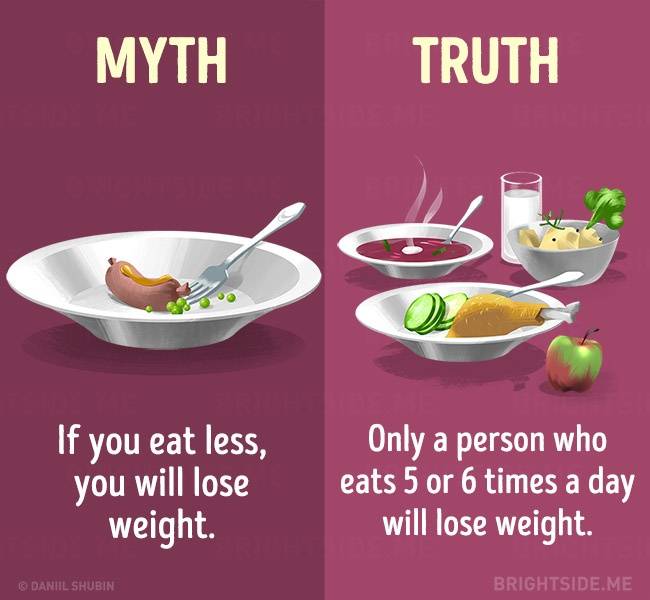
Most diets suggest that you eat the highest quality food you can, avoid overeating (or emotional eating) and eliminate processed foods. Though they diverge in the specifics, it's important to keep these overarching principles in mind.
You'll be fine
advertisement
#6 Drinking Water
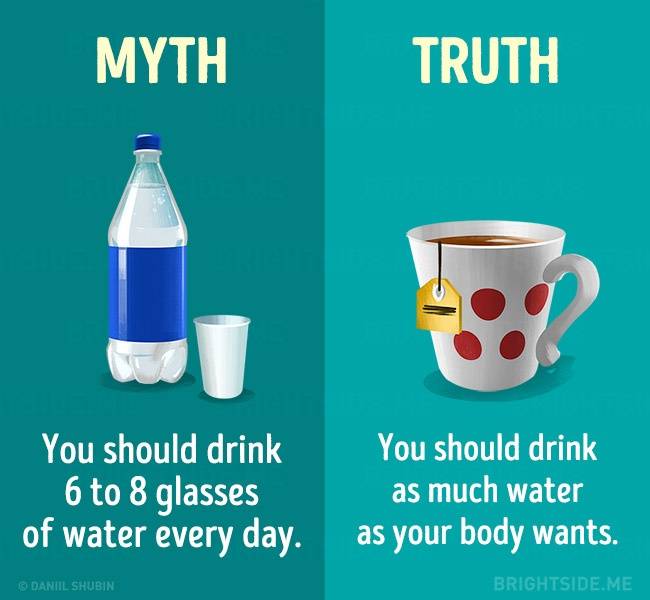
You Need to Drink 8 Glasses of Water Per Day
This myth was perpetuated by doctors who wanted to see people drink less soda. Though their hearts were in the right place, it turns out that there's no magical amount of water that a person should drink.
And this makes sense water is so essential to life that the body has evolved a very sophisticated mechanism to ensure that you drink enough. What is this mechanism? I think you may have heard of it
it's called thirst.
Water is required by life, but the amount of water that each individual requires is vastly different, depending on a huge variety of factors. Instead of sticking to a blanket rule, it's best to simply eat a balanced diet of whole foods and drink water when you're thirsty. Your body knows better than you do how much water you need.
Eat a variety of fresh fruits and vegetables and drink water when you're thirsty. That's pretty much it.
If you do want to carry water with you, here's a couple of great BPA free water bottles:
Best Sports Water Bottle
Basic Water Bottle
advertisement
#7 Fats
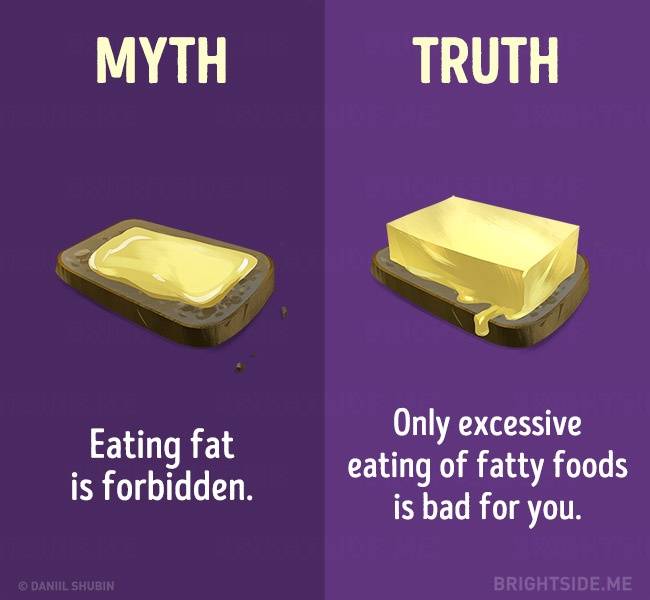
Eating Fat Uniquely Makes You Fat
This dogma came about during the low-fat craze of the 1970's and is only quieting down now. It was thought that because fat is more calorically dense than carbohydrates or protein, eating fat would make you fat.
But research shows that fat is not uniquely or specifically fattening, any more so than the other two macronutrients protein or carbohydrates.
Putting aside the fact that fat is an essential macronutrient (meaning that you need fat in order to survive), fat is also highly satiating which helps to negate the additional calories that they contain. Plus, many vitamins and minerals are fat soluble, meaning that they require fat in order to be used by your body.
If we were talking about overeating fat, we might come to different conclusions regarding weight gain. But in the case of simply eating fat to satiety, there is no evidence that suggests fat contains a unique weight gain mechanism.
There's no reason to think that fat is uniquely fattening. Fat is an essential macronutrient and eating healthy fats is very important to living a healthy life.
advertisement
#8 Oil
Highly Processed Vegetable Oils are Healthy
Highly processed vegetable oils like:
Soy
Corn
Cottonseed
Canola
Sunflower
Margarine
are everywhere nowadays. Unfortunately for us, they contain extremely high amounts of omega-6 polyunsaturated fats which are pro-inflammatory and harmful to the body when consumed in excess.
Scientists say that the ideal omega-6 to omega-3 ratio should be between 1-1 and 4-1, but largely due to the consumption of processed vegetable oils, studies have shown that the current omega-6 to omega-3 ratio sits between 16-1 and 25-1
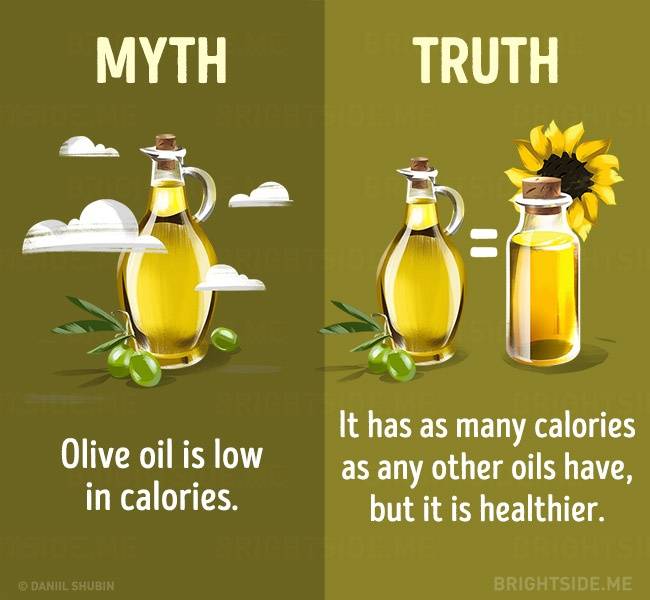
Quite simply, we're consuming way too much of these heavily processed vegetable oils. Instead we should be consuming healthy fats like olive and coconut oils or grass-fed butter.
Stay away from processed vegetable oils as much as you can
Avoid processed vegetable oils as much as you can. Use these oils instead:
Grass-fed butter
Grass-fed ghee (clarified butter)
Extra Virgin Olive Oil
Organic Virgin Coconut Oil
And to combat your (likely) skewed omega-6 to omega-3 ratio, you may want to consider taking a fish oil supplement
advertisement
#9 Carbs
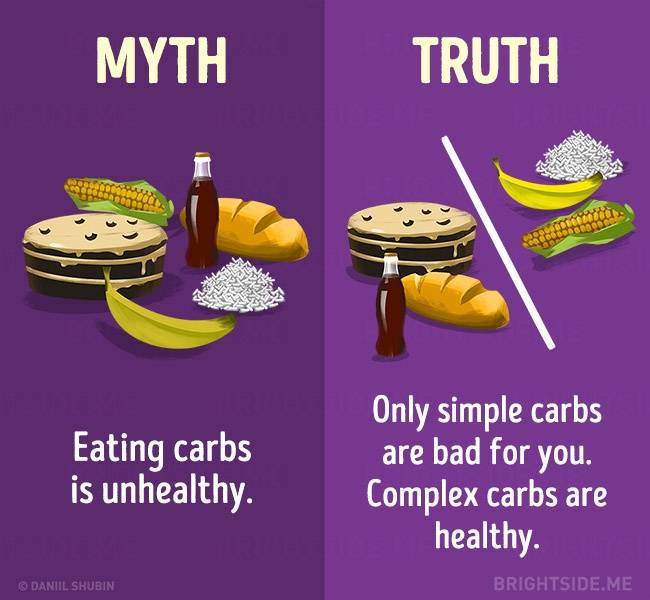
Eating Carbohydrates Uniquely Makes You Fat
Just like the above point about fat, there's a growing body that says eating carbohydrates will make you fat.
In other words, these people are saying that there's some unique property of carbohydrates that leads to fat gain. The problem with this argument is that it ignores civilizations that have prospered for hundreds if not thousands of years living off a relatively high carbohydrate diet (like the islanders of Kitava or Asian rice eaters).
Though carbs aren't inherently fattening, different people do tend to tolerate carbohydrates in different ways. And for the overweight or obese, limiting carbohydrates as a weight loss strategy has evidence to back it up.
But just because something helps you to lose weight doesn't necessarily mean that it caused the weight gain in the first place. This is a logical fallacy, and the evidence of healthy civilizations who eat high carbohydrate diets is at odds with this myth.
You can consume your carbohydrates from fruits and vegetables and be just fine. Or, you can add foods like wheat and rice in to the mix if you find that you can handle them without a problem.
Either way, science doesn't agree with the notion that carbohydrates are inherently fattening and should be avoided entirely. Neither should you.
Carbohydrates aren't inherently fattening, though limiting carbohydrate consumption as a weight loss strategy does have research that proves its effectiveness.
The standard american diet of processed and junk foods, however, contain huge amounts of carbohydrates (like sugar) and should be limited as much as possible.
Here's how:
Try cooking a few times a week at home
Bring a lunch to work instead of buying one
Skip breakfast or make a healthy one in just a few minutes
Build up these healthy habits slowly over time, and you'll have changed your life for the better.
advertisement
#10 Sugar
Natural Sweeteners are Way Healthier than Regular Sugar
You've likely come across some of these so-called "natural" alternatives to sugar:
Agave syrup
Palm sugar
Evaporated cane juice
Coconut sugar
Honey
Maple syrup
Molasses
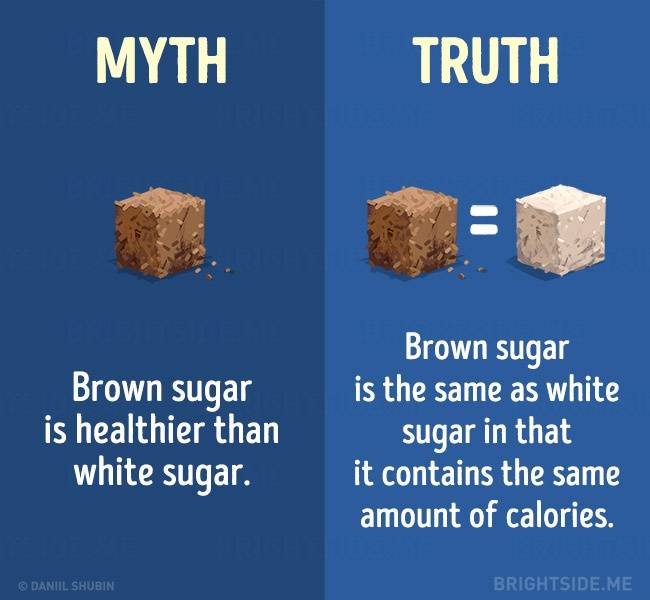
They are often marketed as healthier substitutes for regular sugar, however, these substances behave similarly in the body as "regular" sugar does.
All sugars, whether marketed as "natural" or not, break down in the body as glucose and fructose and illicit an insulin response from the body. The degree of insulin response and the amounts of glucose and fructose will differ depending on which sugar you consume, so it's better to choose lower GI (glycemic index) sugars whenever possible
but this shouldn't give you a free pass to consuming as much sugar ("natural" or not) as you can.
Too much sugar, of any kind, can cause insulin resistance and start you down the path of obesity, metabolic syndrome, diabetes, heart disease, and cancer.
Though sugar isn't dangerous in small amounts, most of us don't consume sugar in small amounts. We go crazy with it. The main takeaway here is to avoid sugar and sugar substitutes as much as possible.
advertisement
#11 Fruit
You Need to Periodically Cleanse and Detoxify Your Body
DetoxificationFood Myth #5: Detox & Cleanses is most often touted as a benefit of juicing. But the idea that your body contains toxins in the first place and that you can influence the toxicity of your blood is suspect at best.
Humans are born with a detoxifying system it's called your liver. Any toxins that make their way into your body are handled by your liver, your kidneys, your colon, your lungs, and even your skin. The acidity of your blood (PH) always stays in a very narrow range, and juicing or cleansing (in the aim of reducing toxicity) has no scientific evidence to back it up.
That being said, it's important to consume fruits and vegetables and juicing may be helpful in our age of little fruit and vegetable consumption. But without consuming the fibrous part of the fruit or vegetable, it also delivers massive amounts of sugar to your body. And with the huge amounts of sugar we're already consuming, this may hurt us instead of helping us.
You don't need to (nor can you) cleanse or detoxify your body with juicing or any other method. Your body takes care this without any help from you.
But the principle behind juicing and cleanses can't be completely faulted. We eat very little fruits and vegetables nowadays the average person could use much, much more. If you like the idea of drinking your vegetables, try vegetable and fruit smoothies instead. At least this way you'll consume the fibre of the plant, which will slow your body's insulin response.
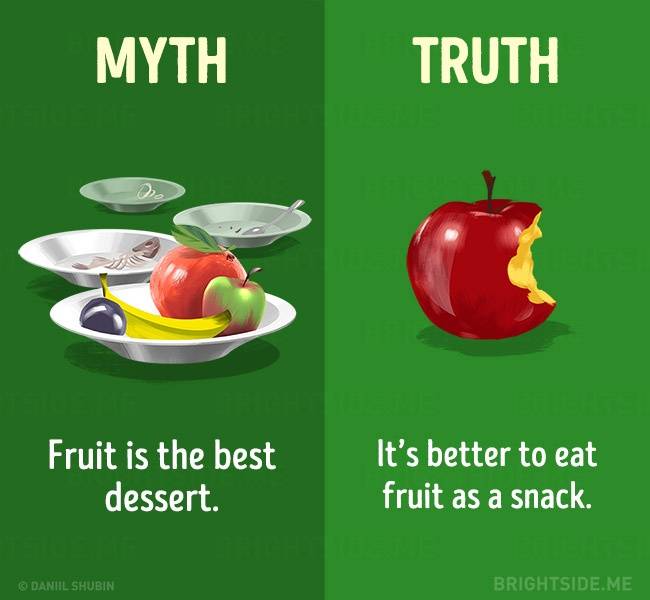
In the end, it's best to simply eat your fruits and vegetables as they are.
advertisement
#12 Breakfast
It's Proven That You Must Eat Breakfast in Order to Lose Weight
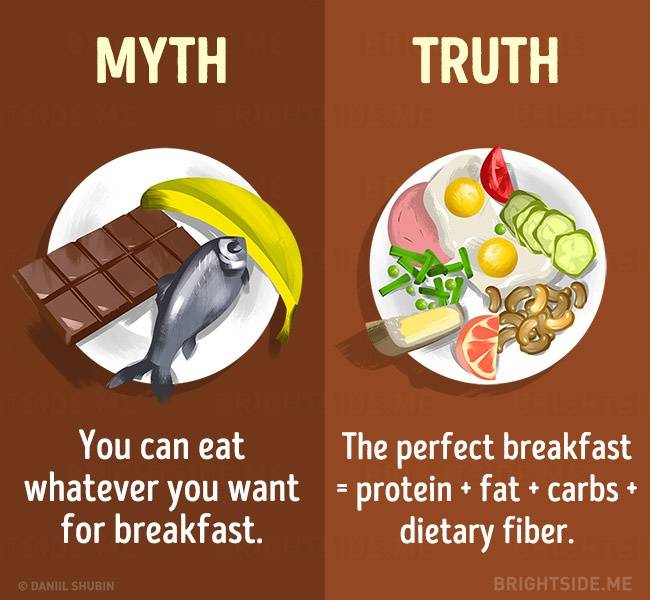
There's nothing wrong with eating breakfast. In fact, eating a healthy breakfast is one of the best ways to start your day with highly nutritious food.
But breakfast isn't magic, and the much touted weight-loss benefits of breakfast have been overhyped by the media as a required step in order to lose weight. Though eating a healthy breakfast may help psychologically with maintaining weight loss over time, breakfast as a weight loss mechanism by itself has not been proven.
Skipping breakfast may even produce a ton of health benefits, as you're extending the "fast" until lunch. The reported benefits of fasting are impressive and, although science still needs time to definitively catch up to the hype, by all extents it appears that intermittent fasting can be a beneficial strategy in your health toolkit
#13 Vegetables
Frozen and Canned Vegetables are Less Nutritious Than Fresh
If you could eat fruit and vegetables the moment they are picked, they'll likely contain more nutrients than their canned counterparts.
But unless you live on a farm or get your produce from your local farmer's market (picked that day), it's not often that you'll consume fruits and vegetables at the height of their freshness (and therefore at the height of their nutrition).
So-called "fresh" fruits and vegetables that sit in your local grocery store's produce section have often been picked early, allowed to ripen, and transported around the world. During this time they've lost many of their nutrients and, believe it or not, often aren't as nutritious as their frozen or canned counterparts.
Why? Because frozen and canned fruits and vegetables are preserved (via being flash frozen or canned) almost immediately after being picked. This "locks in" higher nutrient levels than "fresh" produce that has been around the world before it gets to your plate.
And don't worry about freezing "killing" the nutrients in food. That is a myth.
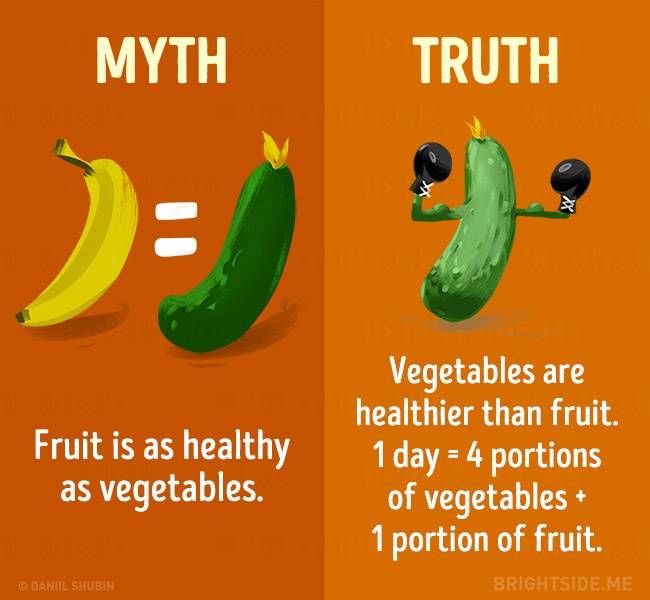
There's no reason to fear frozen or canned fruits and vegetables. They're just as healthy as so-called "fresh" ones in the produce section
with one BIG caveat: make sure there's no added sugar or other ingredients in your canned goods. Some food manufacturers like to add tons of sugar and preservatives to their products to make them last longer, but this turns a healthy food into just another avenue for sugar gluttony.
Do your best to eat fresh local produce as much as you can. But if you can't find fresh, local produce, don't be afraid of supplementing your diet with canned fruits and vegetables.
Frozen and canned produce also makes it easier to prepare dinners and can even limit your food waste (which is a big problem, by the way).
advertisement
#14 Microwaves are Inherently Unhealthy
Microwaves have been unfairly demonized by health bloggers and the media. These people often speak of "radiation" and how microwaves destroy enzymes and the nutrient value of your food. But as it turns out, there's no reason to fear microwaves. Here's why:
Microwaves work by using "microwaves", a form of radiation, to cause the molecules in your food to move quickly. This movement generates heat and cooks your food. However, the amount of radiation a microwave uses is thousands of times smaller than would be needed to produce a negative health effect. Microwaves are perfectly safe.
And microwaves don't uniquely destroy food enzymes or nutrients any type of cooking does this. The method of cooking (whether it's microwaves, ovens, stovetop, etc) doesn't matter in the slightest.
There's no reason to fear microwaves.
The only reason you may want to avoid using microwaves is because they make it much easier to default to eating processed foods. Microwaveable dinners and pre-packaged foods are often full of sugar and other additives that are downright unhealthy and should be avoided as much as possible.

#15 Coffee is Unhealthy
What used to be considered unhealthy to the collective groan of millions of coffee drinkers has now made a definitive comeback, thanks to several large scientific studies
Drinking 3-4 8oz cups of black coffee (not frappa / mocha sugar-filled monstrosities) per day is associated with tons of positive health benefits, and interestingly enough, coffee is where many people get the majority of their antioxidants.
Coffee is a complex substance that is, quite simply, good for you (if you can handle the caffeine). Drink up!
Drink 1-4 8oz cups of black coffee per day without worrying about it.
It may be best to do some research on where to find the highest quality coffee beans and as for taste

advertisement
#16 Eliminating Salt from Home Cooked Meals is the Best Way to Reduce Sodium Intake
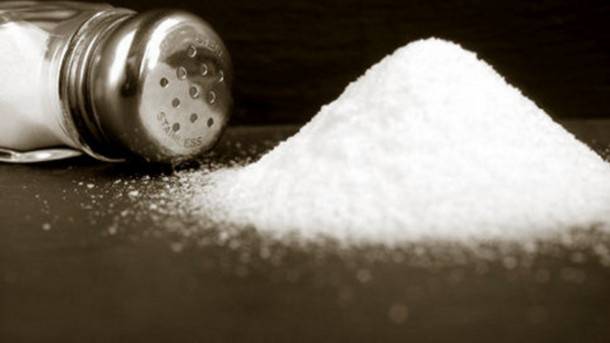
Salt is required by the body for many reasons it's responsible for important functions in cellular metabolism, the nervous system and the digestive system, among others. Just like cholesterol, salt is non-negotiable you need it in order to survive.
The question then becomes: how much salt is too much?
Various health organizations have told us that we shouldn't consume more than 2300 mg of salt per day (approximately one teaspoon). But contrary to what you might think, we don't consume the majority of our salt at home with the salt shaker. Instead, most of the salt we consume is already found in processed foods, as it is added in huge amounts as a preservative and in order to make the food taste better.
If you have hypertension or high blood pressure, science recognizes that lowering your salt intake is a good measure to take
And if your doctor has told you to reduce your sodium intake, there's good news! Simply cutting processed foods and switching to eating whole foods cooked at home will dramatically reduce your sodium intake.
Ease your fears about adding salt to taste on home cooked food and, instead, avoid processed food as much as possible to drastically reduce your overall salt intake.
You need salt in order to survive. But the amounts of salt found in processed foods is generally recognized as too much.
To cut your salt intake, eliminate processed foods and start cooking at home
Once you do this, feel free to add salt to taste to your home cooked meals (this amount of salt is much, much less than what you would consume from processed foods).
Here's a couple of great salts that taste great (note: table salt contains essentially the same minerals as the following salts, but we've found it doesn't taste quite as good):
Pink Himalayan Salt
Sea Salt Flakes
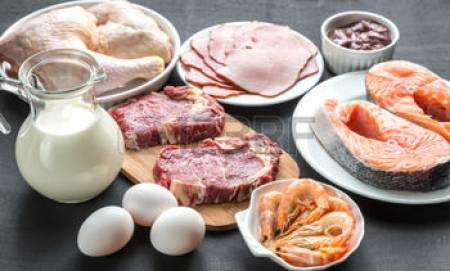
#17 Eating Lots of Protein Will Harm Your Kidneys and Bones
It used to be thought that eating a high protein diet would put undue stress on the kidneys and leech calcium from bones.
There isn't, however, much in the way of science to back up these claims and protein consumption has been found to be highly beneficial to bone health, weight loss, and lean muscle mass.
Though it's true that eating a high protein diet may cause kidney damage to people already living with kidney disease, there's no evidence showing that a high protein diet is harmful to people with healthy kidneys.
Eat your protein without fear between 1g per kg of body weight and 1g per pound of body weight seems to be fine depending on your activity level.
Protein is an essential macronutrient and is vitally important to good health.
Because protein is highly satiating, you can likely eat until satiety as long as you don't exceed approximately 40% of your total calorie intake or 1g per pound of body weight.
advertisement
#18 You Need to Consume Dairy (For Calcium)
Milk is the most nutritious food possible for baby cows. Similarly, breast milk is the most nutritious food for babies. But as we age, many of us lose the ability to break down lactose, found in both types of milk. That's why some 65%-75% of the world can be considered lactose intolerant.
So what can we do? We need calcium from dairy, right?
The dairy industry has shoved the calcium benefits of dairy in our faces for so long that "dairy" is often synonymous with "calcium" and "strong bones". Yes, dairy has calcium, and studies have shown that, if you can handle dairy, it is beneficial for bone health. But calcium is also found in many leafy vegetables, and often in higher amounts.
You can live a perfectly healthy life with no dairy at all. And if you can tolerate dairy, you can live a perfectly healthy life with it. But you do not need to consume dairy in order to have strong bones. Don't fall for the hype.
Milk is a nutritious food, if you can digest it without a problem. But if you have problems with milk, don't worry about avoiding it all together. You can get all of the nutrients in dairy from other food sources.
If you do choose to drink milk, make sure to drink the least processed milk you can find. This will often be full-fat milk from grass fed cows.
And if you are lactose intolerant, that doesn't mean you have to avoid dairy altogether. Hard cheeses contain little lactose, and even yogurt can be handled by some who are sensitive to lactose. Just make sure to choose plain, full-fat, no-sugar added yogurt. Those flavoured yogurts are essentially candy with their sugar content.