200-Year-Old Theory Explaining Why It Gets Dark At Night Is Finally Proven
By
Michael Avery in
Facts
On 3rd March 2017
There are many unsolved mysteries in this world. Why, for example, is JLo dating Drake? How did Donald Trump get his skin that particular shade of orange? And who shot JFK?
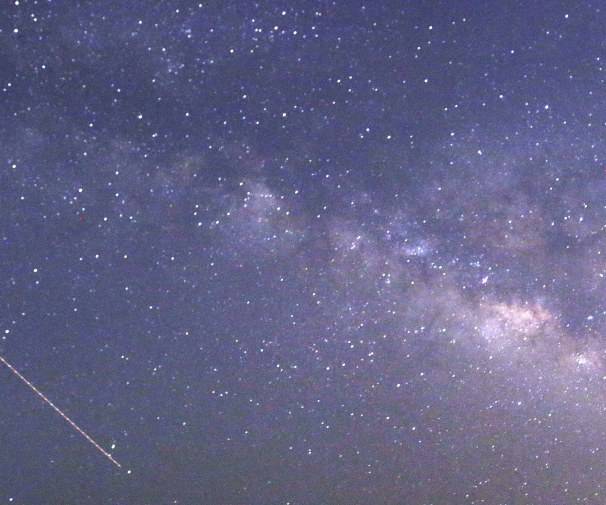
However, there’s one particular mystery that’s been puzzling scientists for centuries, but it may never have occurred to you up until now. The mystery is this: if the universe is infinite, and there’s an infinite number of stars in the sky, why is the night’s sky dark? The sky at night should be illuminated with a blazing light from an infinite number of stars and yet it’s almost completely black.
Why is this night sky dark?
It seems like a silly question — yes the Earth rotates on its axis so only a portion of the globe is facing the sun at any given time. But there are literally tens of trillions of stars in the universe — shouldn't they be illuminating our evenings?
There are about 2 trillion galaxies in the universe. That adds up to about 10,000,000,000,000,000,000,000 stars.
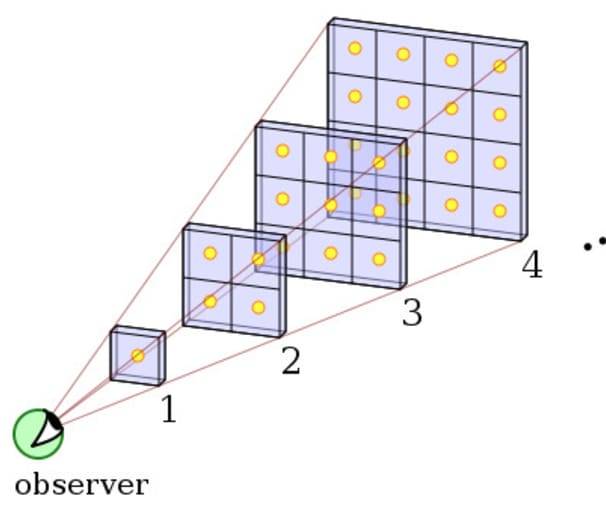
You could potentially even add a couple of zeros to that number! "Stars should overlap each other in the sky like tree trunks in the middle of a very thick forest," explains Dr. Marc Rayman on the NASA Space Place blog.
This question is known as "Olber's paradox" or the "Dark night sky paradox."
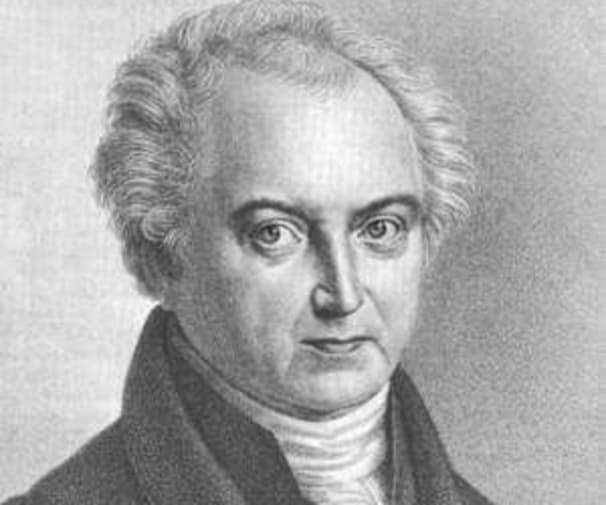
The question was posited as early as the 1500s by Thomas Digges and subsequently by other esteemed astronomers. In 1823, amateur astronomer, Heinrich Wilhelm Olbers of Germany, formally described the paradox which now bares his name.
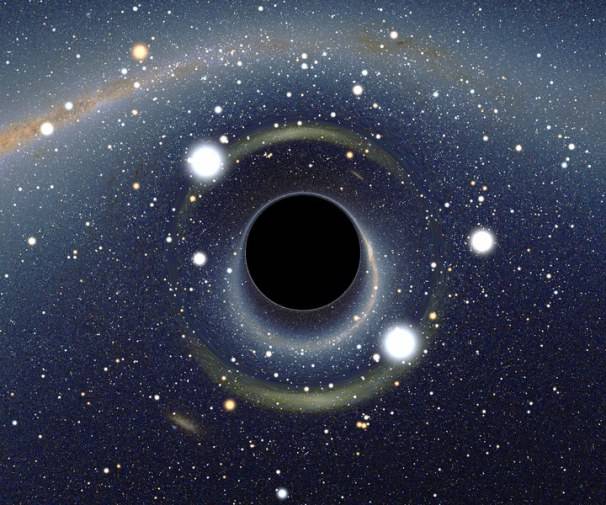
In his paradox, Olber hypothesized that there must be something, perhaps hydrogen gas, that is obstructing light from millions of trillions of stars.
This theory was dismissed for some time, but recently, scientists have examined space with spectrometers and discovered that, indeed, there is hydrogen gas obfuscating our view of distant stars and galaxies.
There are other reasons the night sky is dark, though.
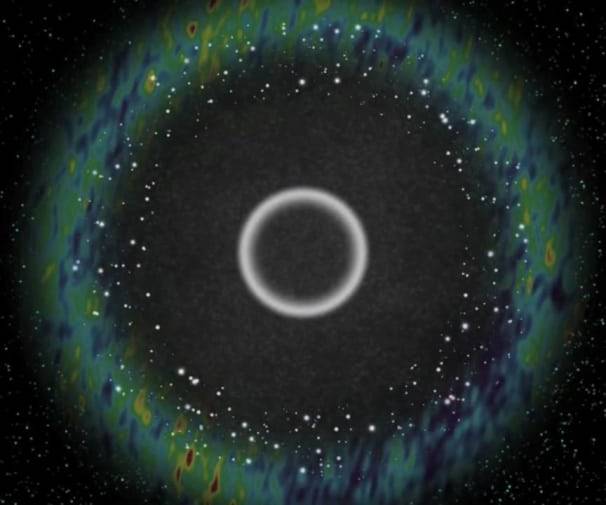
The Big Bang occurred about 15 billion years ago and the universe is still expanding away from the spot of that massive explosion. There may be stars that are too young and too far away for their light to have even reached Earth yet.
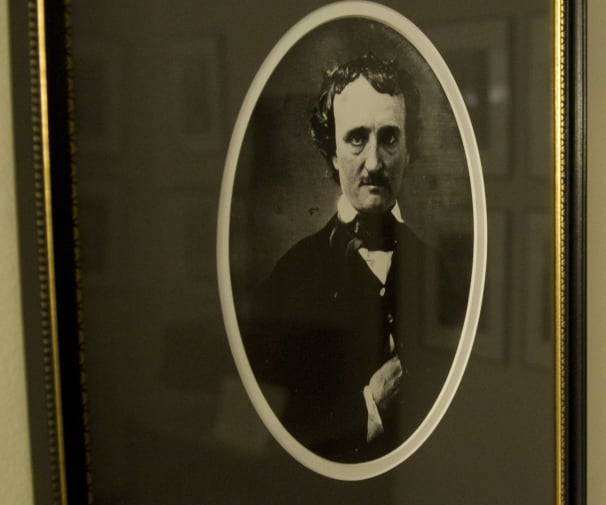
Interestingly, renowned American poet Edgar Allen Poe pondered Olber's paradox.
Poe's hypotheses focused on the finite limits of the universe. Stars have a finite age and finite power, so their light can only travel so far for so long, he posited. Poe also noted that humans can only observe a limited fraction of the universe — known as the observable universe. The poet wasn't way out of bounds, but he could not prove his theories.
There could be other explanations, too!
A Nottingham university astrophysicist, Professor Christopher Conselice, shared some alternative explanations: “There could be multiple universes, there could be stuff behind what’s called the horizon, the limit we can see, which is basically the amount of distance light could have traveled since the beginning of the universe.” So, when someone asks you why the night sky is dark, tell them it's because hydrogen is blocking the light of the millions of trillions of stars, but there's probably more to it, too.