
Sharks can be found in all of Earth’s oceans and here's some facts to keep in mind during your next beach trip!
advertisement
#1 The blacktip shark, Carcharhinus limbatus, is a species of requiem shark, family Carcharhinidae. It is common to coastal tropical and subtropical waters around the world, including brackish habitats.
Why do shark embryos eat each other in the womb? They have different fathers and compete so one father's pup is born and not others.
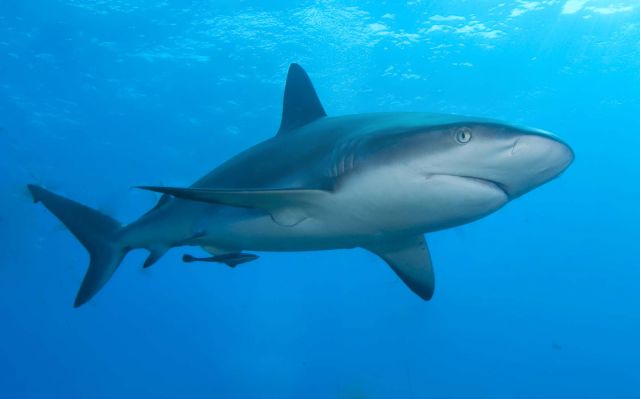
#2 The oceanic whitetip shark, Carcharhinus longimanus, is a large pelagic shark of tropical and warm temperate seas.
As sensational as shark attack newspaper headlines are, the reality is that you are more likely to be bitten by another person than a shark

advertisement
#3 The Caribbean reef shark (Carcharhinus perezi, often misspelled perezii) is a species of requiem shark, family Carcharhinidae. It is found in the tropical waters of the western Atlantic Ocean from Florida to Brazil, and is the most commonly encountered reef shark in the Caribbean.
Frilled sharks are known to have a gestation period of over three and a half years

#4 The Galapagos shark, Carcharhinus galapagensis, is a species of requiem shark, family Carcharhinidae, found worldwide.
Since sharks don't have marrow, in order to produce red blood cells, their red blood cells are made by the spleen or thymus gland.

advertisement
#5 The great hammerhead, Sphyrna mokarran, is the largest of the hammerhead sharks (family Sphyrnidae), attaining a maximum length of 6.1 m (20 ft). It is found in tropical and warm temperate waters worldwide, inhabiting coastal areas and the continental shelf.
There were a confirmed 2,463 confirmed unprovoked shark bites around the world between 1588 and 2011; of these only 471 were fatal.

advertisement
#6 The grey reef shark, Carcharhinus amblyrhynchos (sometimes misspelled amblyrhynchus or amblyrhinchos), is a species of requiem shark, family Carcharhinidae. what One of the most common reef sharks in the Indo-Pacific, it is found as far east as Easter Island and as far west as South Africa.
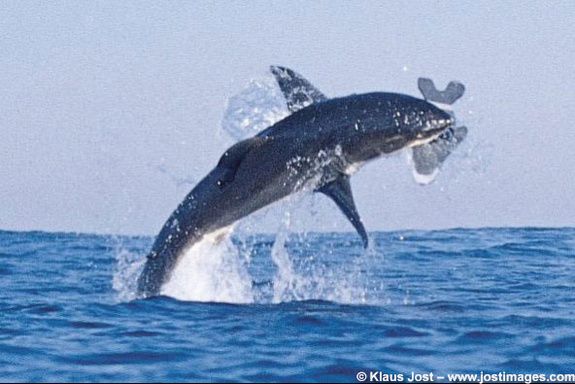
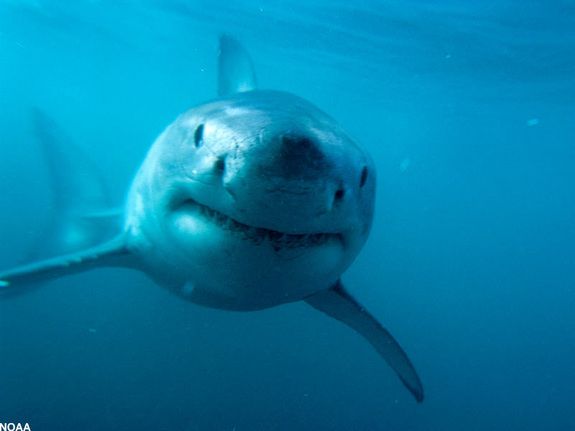
You know the videos of great whites leaping out of the water? This behavior is known as breaching and mostly occurs in South Africa.

advertisement
#7 The horn shark, Heterodontus francisci, is a species of bullhead shark, family Heterodontidae. It is endemic to the coastal waters off the western coast North America, from California to the Gulf of California.
Sharks are predictable, but the number of shark attacks isn't. Human decisions like cage diving and tourism make attacks more likely.
advertisement
#8 The leopard shark, Triakis semifasciata, is a species of houndshark, family Triakidae, found along the Pacific coast of North America from the U.S. state of Oregon to Mazatlán in Mexico.
Every once in a while, a female shark can reproduce without any contact from a male. This act is known as parthenogenesis
advertisement
#9 The nursehound, large-spotted dogfish, greater spotted dogfish, or bull huss, Scyliorhinus stellaris, is a species of catshark, family Scyliorhinidae, found in the northeastern Atlantic Ocean.
The foot of a duck-billed dinosaur was found with a shark tooth inside it, proving that sharks once scavenged or even hunted dinosaurs.

advertisement
#10 The Pacific angelshark, Squatina californica, is a species of angel shark, family Squatinidae, found in the eastern Pacific Ocean from Alaska to the Gulf of California, and from Ecuador to Chile, although those in the Gulf of California and southeastern Pacific may in fact be separate species.
Many small sharks such as blue sharks and angel sharks feed on cephalopods (squid and octopus).
advertisement
#11 The sicklefin lemon shark or sharptooth lemon shark, Negaprion acutidens, is a species of requiem shark, family Carcharhinidae, widely distributed in the tropical waters of the Indo-Pacific.
Unlike humans, whose upper jaw is a fixed part of the skull, sharks can dislocate and protrude their upper jaw to grab and hang onto prey

advertisement
#12 The silvertip shark, Carcharhinus albimarginatus, is a large species of requiem shark found in the tropical Indian and Pacific Oceans.
Large sharks have been known to target smaller, younger sharks that serve as easily attainable prey.

#13 The smalltooth sand tiger or bumpytail ragged-tooth, Odontaspis ferox, is a species of sand shark, family Odontaspididae, with a patchy but worldwide distribution in tropical and warm temperate waters
That's a shark of a different color. Unlike the typical gray or brown, some shark species are pink, yellow or blue.

advertisement
#14 The tawny nurse shark, Nebrius ferrugineus, is a species of nurse shark, family Ginglymostomatidae, and the only extant member of the genus Nebrius.
Dogfish sharks hold the record for the shark species that have the largest estimated population in the world.

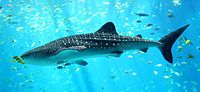
#15 The whale shark, Rhincodon typus, is a slow moving filter feeding shark that is the largest living fish species. It can grow up to 60 ft in length and can weigh up to 13.6 tonnes (15 short tons).
A recent scientific study found that a single litter of sharks can have more than one father in fact, in some cases, up to five!
advertisement
#16
Mako sharks are built for speed; their muscles are like propellers that push their bodies forward.

#17
Sharks have a series of pockets under their skin that contain sensory hair cells that are called pit organs.

advertisement
#18
The ocean's "Permanent Midnight" zone, over 3000 feet deep, is home to sharks. Some swim all the way to the surface for food.

#19
Do sharks have fun? Porbeagle sharks toss around chunks of seaweed to play a shark version of football.
advertisement
#20
Bull sharks swim where people swim in shallow, fresh water. Bulls swam in Lake Pontchartrain after Hurricane Katrina.

#21
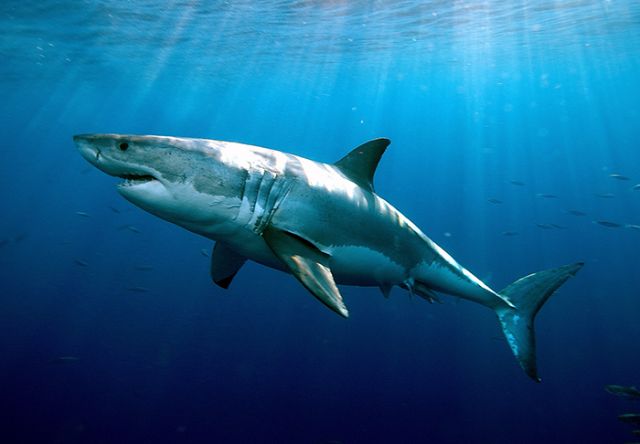
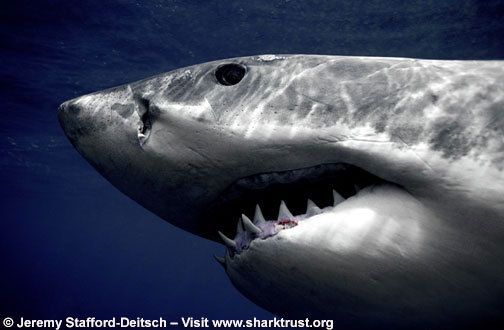
Great white sharks are picky eaters, and can determine after one bite whether or not the meal will satisfy its nutritional needs
advertisement
#22
Galeophobia is the excessive fear of sharks. It comes from the Greek word "galeos", which was a particular type of shark
#23
To show his romantic interest, a male blue shark will bite a female hard. Many shark species use this mating technique.
advertisement
#24
An angelshark can ambush its prey in one-tenth of a second, popping up from its well-concealed hiding spot.

#25
When some shark embryos develop teeth, they eat their unborn siblings until one shark remains. This is known as intrauterine cannibalism