You think times are tough now? Ever wish you had been born in another time, or back in the 'old days'? Well you would have missed a LOT of historical things if you had. Here are just some of the things that came along after the 1800's. Man, did our ancestors have it bad!
25 Random Things You Would Have Missed Had You Been Born Before The 1800's
By
Editorial Staff in
Facts
On 11th November 2015
advertisement
#1 Random Things You Would Surely Miss Had You Been Born Before The 1900's.
Yes, we all would miss the crazy inventions that are sold "As Seen on TV," but then there are some, well thousands, of things that have come along since our ancestors started out, that we just couldn't image ever living without or experiencing. Had we been born before the 1800's we'd have missed all of these things and more...

#2 Gay Equality
With the new laws allowing equal rights for gays, lesbians and bisexual persons, equality is at it's highest level ever for the gay community. It wasn't always the case, as many extreme religions believed (and still do) that homosexuality was a sin. The Stonewall raid and riots in New York in 1969 were just the beginning of a long battle.

advertisement
#3 Gender Equality
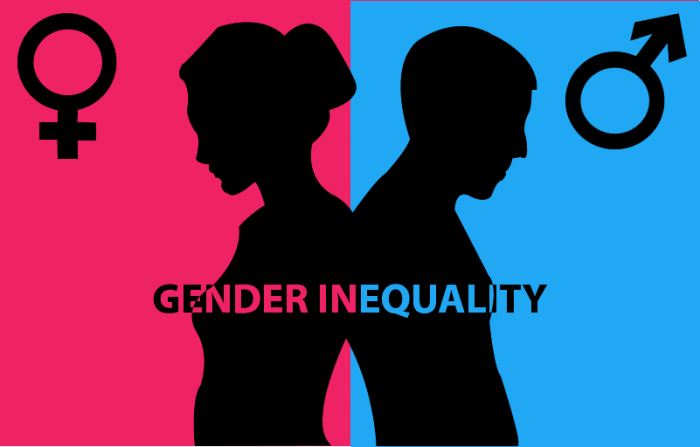
Until the end of the nineteenth century, women were treated as the inferior sex and were excluded from taking part in public life, especially in areas pertaining to politics, education and certain professions. Resistance to the idea of gender equality drew its strength from Stoic and Platonic misogyny, which was reinforced and justified under different intellectual movements, from early Christianity through to the Enlightenment. From the late 1950's to the mid 1970's, women began taking a stand, and laws began to pass securing equal right for women. Still, today, women are paid $.77 for every $1.00 a man earns... there is a lot left to do, but as they old saying goes, "We've come a long way Baby!"
#4 Toilet Paper
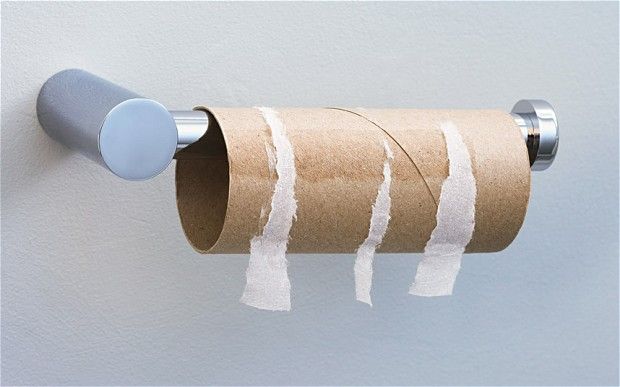
Today it's difficult to imagine life without toilet paper. Rolled and perforated toilet paper as we're familiar with today was invented around 1880. Joseph Gayetty is widely credited with being the inventor of modern commercially available toilet paper in the United States. Gayetty's paper, first introduced in 1857, was available as late as the 1920s. Gayetty's Medicated Paper was sold in packages of flat sheets, watermarked with the inventor's name. After the 1920's, many different manufacturers began producing what we know as a roll of TP.
advertisement
#5 Vaccines
While it is said that Edward Jenner's first smallpox vaccination was invented in 1796. The development of vaccines continued at a fairly slow rate until the last several decades when new scientific discoveries and technologies led to rapid advances in virology, molecular biology, and vaccinology. The first real known vaccine in the form we know today was Louis Pasteurs first used rabies vaccine in humans in 1885. Today, through all the controversy caused by believers in no vaccines, we use them to protect against things like mumps, measles, polio, and more.

advertisement
#6 Running Water
Could you live a day without running water to flush your toilets, wash your hands, dishes, or clothing? The development of a system of indoor plumbing was typical of the technological breakthroughs that simplified everyday life in the late nineteenth century. In the 1860's only about 5 percent of American houses had running water. Not until 1925 did the majority of homes have some form of running water, and even then, most rural homes still used outhouses for going to the bathroom. There are still portions of the USA that do not have an indoor toilet today!

advertisement
#7 Modern Dentistry
It was between 1650 and 1800 that the concepts behind what we now think of as dentistry got its start. The man behind the science was 17th century French Physician, Pierre Fauchard. He is called "The Father of Modern Dentistry", and he was the brains behind many of the procedures still used in today's society. For instance, he was the man behind the thought process for dental fillings, and he also helped to explain that acids from sugar are a major source of tooth decay. In 1840 the first dental school was opened and in 1873 Colgate mass-produced the first toothpaste in a jar, and, just a few years later, in 1885 the first tooth brush was mass produced in America by H.N. Wadsworth. The first real electric toothbrush was produced in 1939, but it was developed in Switzerland. The rest is history!

advertisement
#8 Showers, Soap, and Shampoo
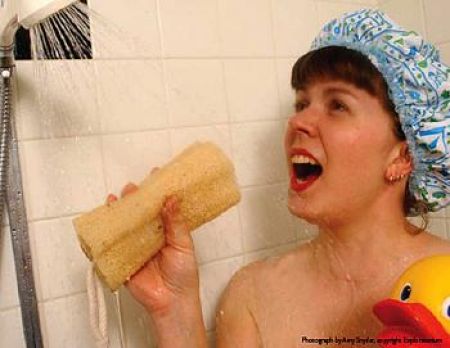
In the mid 19th century middle class homes began to have bathrooms. Having a bath was also made much easier by the development of gas water heaters. The electric water heater was invented in 1889. Working class houses with bathrooms were first built around 1900 and in the 1920's apartment houses were built with bathrooms. However at that time bathrooms were still a luxury. As late as the early 1960s many homes did not have a bathroom. Shampoo and body wash became a thing in the early 1960's. Before that, hand soap was the main use for washing hair and body. Soap was around way back since the early 1700's but today body wash is the most popular way to clean while showering.
advertisement
#9 Antibiotics
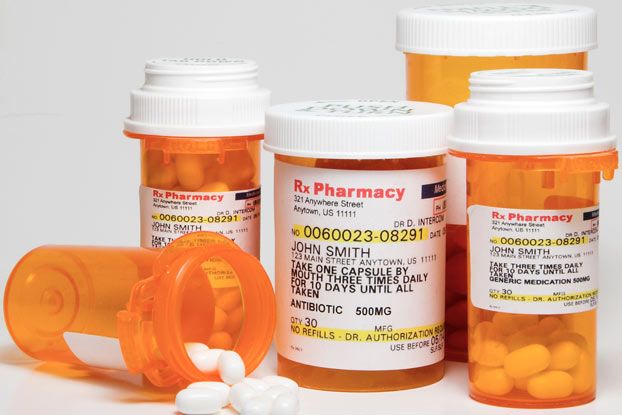
Antibiotics transformed medicine. The discovery of antibiotics began by accident. On the morning of September 3rd, 1928, Professor Alexander Fleming was having a clear up of his cluttered laboratory. Fleming was sorting through a number of glass plates which had previously been coated with staphyloccus bacteria as part of research Fleming was doing. One of the plates had mould on it. The mould was in the shape of a ring and the area around the ring seemed to be free of the bacteria staphyloccus. The mould was penicillium notatum. Fleming had a life long interest in ways of killing off bacteria and he concluded that the bacteria on the plate around the ring had been killed off by some substance that had come from the mould. Long story short.. that's how we got penicillin, which led way to the discovery of numerous other antibiotics. Researchers still work on and develop new antibiotics every year, as diseases become immune to the original anitibiotic.
advertisement
#10 The World Wide Web
Unlike technologies such as the light bulb or the telephone, the Internet has no single "inventor." Instead, it has evolved over time. The Internet got its start in the United States more than 50 years ago as a government weapon in the Cold War. For years, scientists and researchers used it to communicate and share data with one another. Today, we use the Internet for almost everything, and for many people it would be impossible to imagine life without it. Though Vice President Al Gore claimed he invented it, he did not. He did infact help with it's transformation to the product and service we use today in our everyday lives.

advertisement
#11 Child Protective Services
Throughout the history of the United States, the child welfare system has
evolved according to changing beliefs and attitudes about what role government should play in the protection and care of abused and neglected children. By the early 1900's, the first state laws to prevent child abuse and neglect were passed, the first national conference on the needs of dependent children was convened, and the first federal children's bureau was established.
The Social Security Act of 1935 authorized the first federal grants for child welfare services.

advertisement
#12 Television
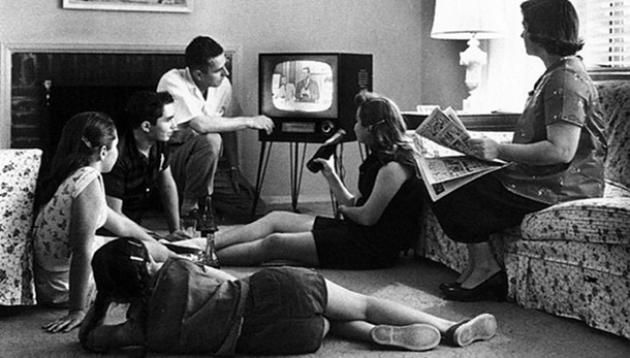
Few inventions have had as much effect on contemporary American society as television. Before 1947 the number of U.S. homes with television sets could be measured in the thousands. By the late 1990s, 98 percent of U.S. homes had at least one television set, and those sets were on for an average of more than seven hours a day. Electronic television was first successfully demonstrated in San Francisco on Sept. 7, 1927. The system was designed by Philo Taylor Farnsworth, a 21-year-old inventor who had lived in a house without electricity until he was 14. RCA paid for a license to use Farnsworth's television patents. By 1949 Americans who lived within range of the growing number of television stations in the country could watch. If you don't know the rest of the story... tune in tomorrow.
#13 Electric Cars
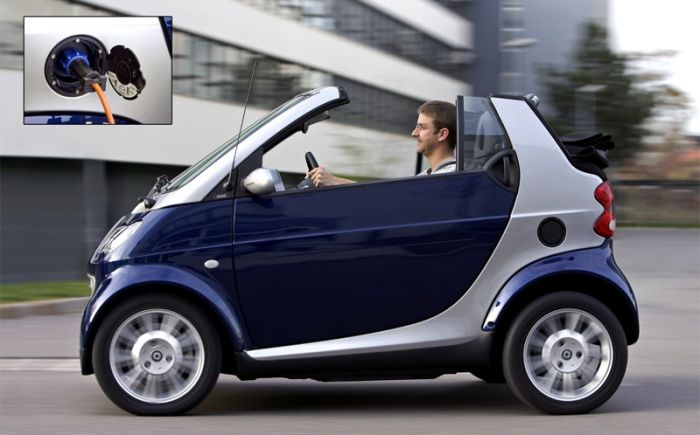
The electric vehicle is not a recent development. In fact, the electric
vehicle has been around for over 100 years, and it has an interesting
history of development that continues to the present. The years 1899 and 1900 were the high point of electric vehicles in America, as they outsold all other types of cars. Electric vehicles had many advantages over their
competitors in the early 1900s. They did not have the vibration,
smell, and noise associated with gasoline cars. Today, with gas powered cars ruling the roads since the late 1890's, the electric car is making a huge comeback. Company's like Tesla, Smart, Toyota, and Ford are all getting on the bandwagon once more and going back to the electric automobiles.
advertisement
#14 Air Conditioning
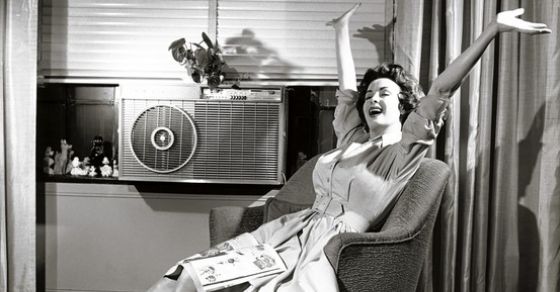
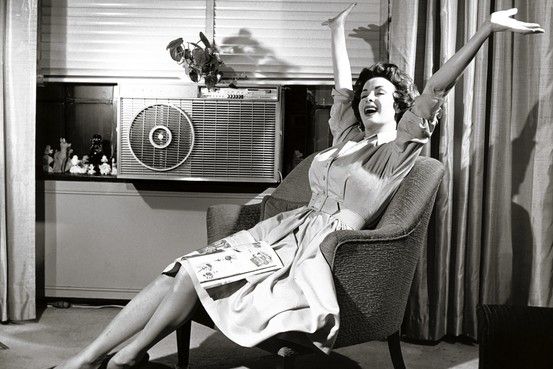
Inventors who came before Willis Haviland Carrier tinkered with cooling machines. But it was Carrier's creation that launched the modern idea of air conditioning. It wasn't until 1902 when Willis Carrier invents the Apparatus for Treating Air for the Sackett-Wilhelms Lithographing and Publishing Co. in Brooklyn, N.Y., taking his idea from a 1870's French inventor. The machine blows air over cold coils to control room temperature and humidity, keeping paper from wrinkling and ink aligned. Finding that other factories want to get in on the cooling action, Carrier establishes the Carrier Air Conditioning Company of America. By the 1970's window units lose cool points as central air comes along. The units consist of a condenser, coils, and a fan. Air gets drawn, passed over coils, and blasted through a home's ventilation system. However, the main coolant, Freon, is pulled from the markets and Carrier and other manufacturers scrambled to come up with an alternative cooling system. Today we all enjoy the cool air in our homes and cars.
#15 The Telephone
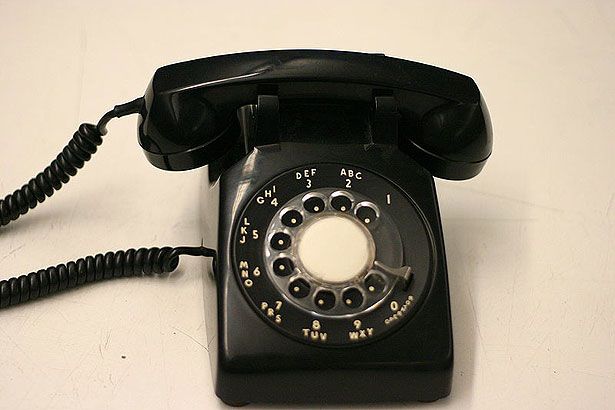
n the 1870s, two inventors Elisha Gray and Alexander Graham Bell both independently designed devices that could transmit speech electrically (the telephone). Both men rushed their respective designs to the patent office within hours of each other, Alexander Graham Bell patented his telephone first. Elisha Gray and Alexander Graham Bell entered into a famous legal battle over the invention of the telephone, which Bell won. On June 2, 1875, Alexander Graham Bell while experimenting with his technique called "harmonic telegraph" discovered he could hear sound over a wire. The sound was that of a twanging clock spring.
Bell's greatest success was achieved on March 10, 1876, marked not only the birth of the telephone but the death of the multiple telegraph as well. The communications potential contained in his demonstration of being able to "talk with electricity" far outweighed anything that simply increasing the capability of a dot-and-dash system could imply. Today we all use smart phones, and we owe all of this to the first Bell telephone.
*Bell also gave us the phonograph. Without which, there would be no recorded music, and we might never have heard the sounds of Elvis, The Beatles, or Miley Cyrus.
advertisement
#16 Prohibition
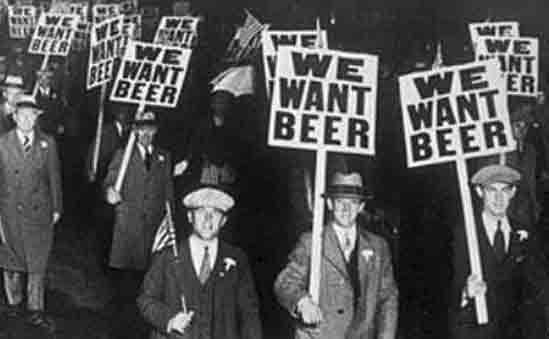
Can you imagine life without beer? Believe it or not, there are still several DRY cities, county's and communities in the US. The ratification of the 18th Amendment to the U.S. Constitutionwhich banned the manufacture, transportation and sale of intoxicating liquorsushered in a period in American history known as Prohibition. The result of a widespread temperance movement during the first decade of the 20th century, Prohibition was difficult to enforce, despite the passage of companion legislation known as the Volstead Act. The increase of the illegal production and sale of liquor (known as "bootlegging"), the proliferation of speakeasies (illegal drinking spots) and the accompanying rise in gang violence and other crimes led to waning support for Prohibition by the end of the 1920's. In early 1933, Congress adopted a resolution proposing a 21st Amendment to the Constitution that would repeal the 18th. It was ratified by the end of that year, bringing the Prohibition era to a close.
#17 The Movie Camera
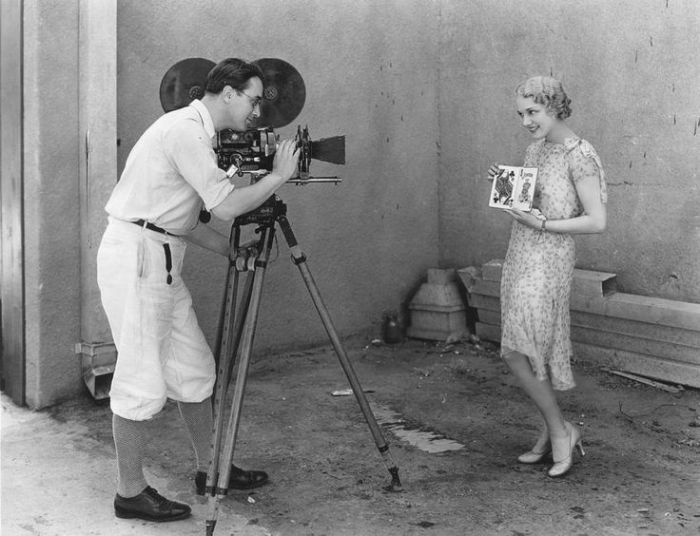
The very first patented film camera was designed in England by Frenchman Louis Le Prince in 1888. He built and patented an earlier 16 lens camera in 1887 at his workshop in Leeds. The first 8 lenses would be triggered in rapid succession by an electromagnetic shutter on the sensitive film; the film would then be moved forward allowing the other 8 lenses to operate on the film. After much trial and error, he was finally able to develop a single lens camera in 1888, which he used to shoot the first sequences of moving film in the world, including the Roundhay Garden Scene and Leeds Bridge. The history of the movie camera is long... but after many years of perfection, we finally got a 20 minute moving picture, which led way to an onslaught of silent films which were the start to movie theaters opening up in the US. By the time talking pictures came around, movies were so popular that any given film would earn the studios a load of money. Cinematography is one of the most artistic forms of genius, and led the way to what we know today as the movie star, and Hollywood.
advertisement
#18 Radio
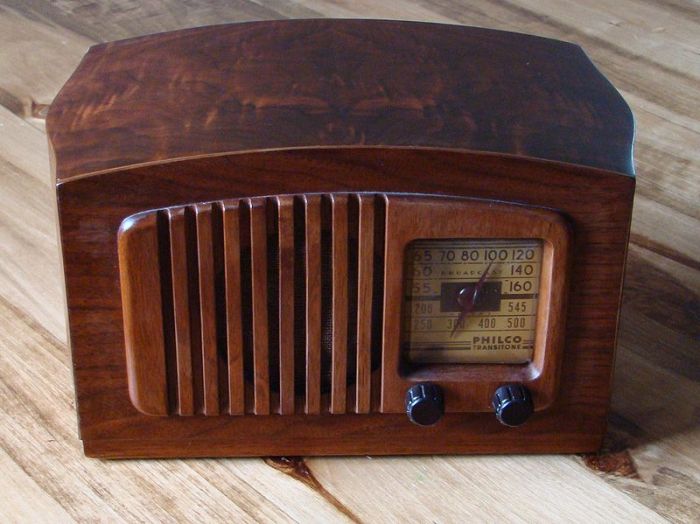
In modern society, radios are common technology in the car and in the home. In fact, in today's world one would be hard pressed to find anyone who has not heard of, seen, or used a radio within his or her life. This was not always the case, however. Before the 19th century, wireless radio communication was a thing of fantasy. Even after the development of the radio in the late 1800s, it took many years before radios went mainstream and became a household fixture. In the 1920's, following the war, radios began to increase in popularity amongst civilians. Radio networks were born, and programming of comedy shows, newscasts, and musicals began. In it's heyday the average radio program had over 2 million listeners at any given time. And this was before every home had access to a radio set.
#19 The Camera
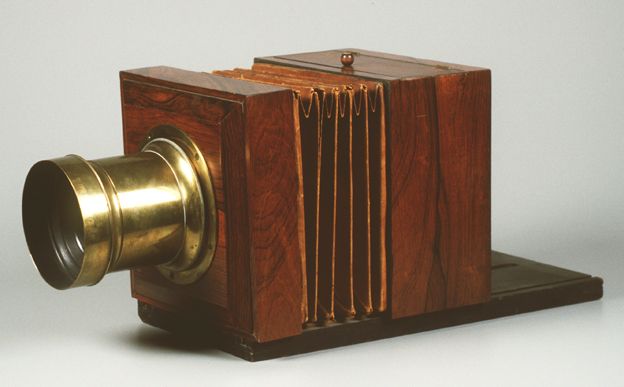
The history of the camera can be traced much further back than the introduction of photography. Cameras evolved from the camera obscura, and continued to change through many generations of photographic technology, including daguerreotypes, calotypes, dry plates, film, and digital cameras. But we don't care about that. The camera we know was pioneered by George Eastman, who started manufacturing paper film in 1885 before switching to celluloid in 1889. His first camera, which he called the "Kodak," was first offered for sale in 1888. It was a very simple box camera with a fixed-focus lens and single shutter speed, which along with its relatively low price appealed to the average consumer. The Kodak came pre-loaded with enough film for 100 exposures and needed to be sent back to the factory for processing and reloading when the roll was finished. By the end of the 19th century Eastman had expanded his lineup to several models including both box and folding cameras. While conventional cameras were becoming more refined and sophisticated, an entirely new type of camera appeared on the market in 1948. This was the Polaroid Model 95, the world's first viable instant-picture camera. In the late 1990's, digital cameras have made film cameras obsolete. Hence, every phone now comes with a digital camera included, but we owe all of this to Kodak.
advertisement
#20 July 20, 1969: One Giant Leap For Mankind
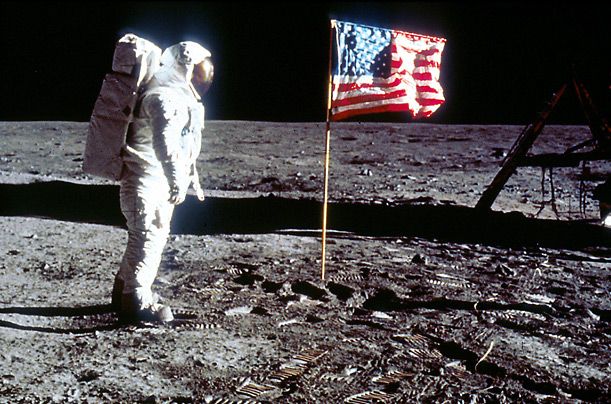
July 1969. It's a little over eight years since the flights of Gagarin and Shepard, followed quickly by President Kennedy's challenge to put a man on the moon before the decade is out. Neil A. Armstrong was a NASA astronaut and the first man on the moon or, more accurately, the first man to set foot on the moon. He was also an accomplished test pilot and a figure so large in American and world history that you can bet many generations from now people will still be talking about him, as well as his moon landing.
#21 The McCarthy Hearings
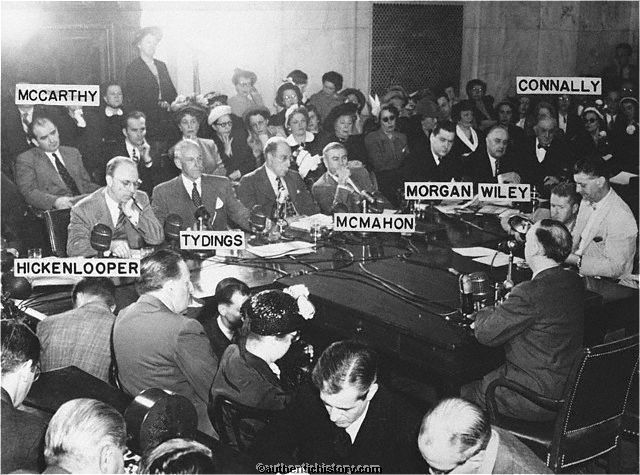
In February 1950, Senator McCarthy charged that there were over 200 "known communists" in the Department of State. Thus began his dizzying rise to fame as the most famous and feared communist hunter in the United States. McCarthy adeptly manipulated the media, told ever more outrageous stories concerning the communist conspiracy in the United States, and smeared any opponents as "communist sympathizers" to keep his own name in the headlines for years. By 1954, however, his power was beginning to wane. The televised hearings accused such people as Lucielle Ball and Desi Arnaz as being Communists and working against the country for the Russians. Nobody bought it. I Love Lucy became even more popular than ever.
advertisement
#22 The Aids Epidemic
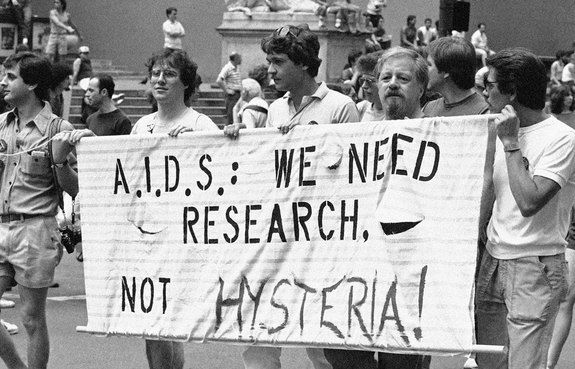
HIV-1 strains were once thought to have arrived in the United States from Haiti in the late 1960s or early 1970s. Though the first known case is believed to have been in 1953 in England, scientists believed that the virus was spread by monkeys then to humans by homosexual activity. By the middle 1980's the epidemic was at it's worst, and people were dying due to ignorance on the spread and precautions of the disease. In June 1982, a report of a group of cases amongst gay men in Southern California suggested that a sexually transmitted infectious agent might be the etiological agent, and the syndrome was initially termed "GRID", or gay-related immune deficiency.
Health authorities soon realized that nearly half of the people identified with the syndrome were not homosexual men. Soon after, with little help from the Reagan government, the virus was pinpointed and renamed. Today researchers work frantically to find a cure and antibiotics to help those infected. Several drugs are on the market, or black market, but the early hysteria has caused research to be slow. People with HIV, the virus which cause AIDS, are now living long happy lives from the drugs.
#23 The Convenience Store
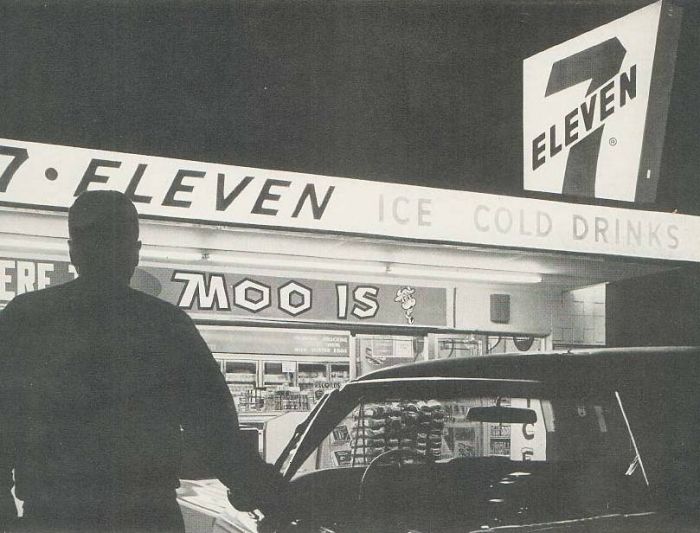
7-11's success prompted many oil marketers to get serious about entering the convenience store market. Mostly they were small service stations selling oil, bulbs, batteries, cigarettes, chewing gum and gasoline. Very few sold grocery items as did 7-11. Gasoline is what brought their customers to their stores. Putting the bathrooms inside the stores created opportunities to display a limited number of retail items for sale. The retail prices were much higher than the same items sold in conventional grocery stores. The employees that worked at these stores evolved from gas station attendants to cashiers. In the late 1970's these gas stations transformed and became convenience stores. That's how we got the super Slurpee!
advertisement
#24 Nuclear Energy
In the post-World War II era, the Atomic Energy Commission was created to explore peaceful opportunities for the same nuclear materials the U.S. used in Japan at the end of the war. Now almost 70 years later, there are 104 nuclear reactors harnessing that same power of atomic fission to meet nearly one-fifth of the U.S.'s commercial energy needs. Although the U.S. does not produce the greatest percentage of its own energy through nuclear power compared to other countries, it still boasts the highest percentage of worldwide nuclear power, as well as the most operating nuclear reactors.

#25 The Light Bulb
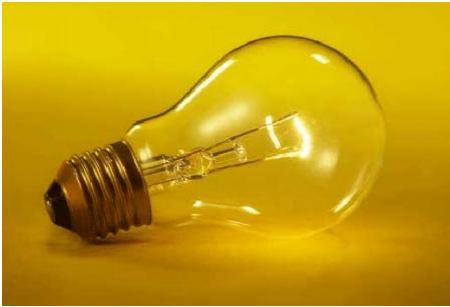
Keeping us out of the darkness.. Like all great inventions, the light bulb can't be credited to one inventor. It was a series of small improvements on the ideas of previous inventors that have led to the light bulbs we use in our homes today. Long before Thomas Edison patented -- first in 1879 and then a year later in 1880 -- and began commercializing his incandescent light bulb, British inventors were demonstrating that electric light was possible with the arc lamp. In 1835, the first constant electric light was demonstrated. Both Thomas Edison and Nikola Tesla experimented with fluorescent lamps in the 1890s, but neither ever commercially produced them. Instead, it was Peter Cooper Hewitt's breakthrough in the early 1900s that became one of the precursors to the fluorescent lamp. The light of the future is the LED. light-emitting diode, for it's efficiency. It's hard to tell where lighting technology will go in the future, but one thing is clear: it won't be your grandfather's light bulb.
advertisement
#26 Viagra
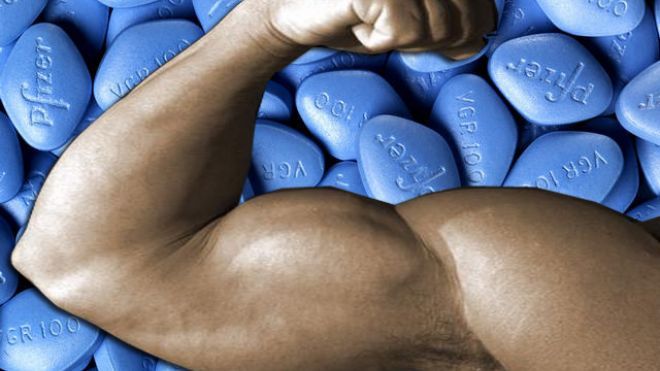
Viagra is one of the most widely-known prescription drug names on the U.S. market. Often dubbed "the little blue pill", it is used to treat erectile dysfunction in men. The discovery that sildenafil could lead to an erection was an unplanned event. The sildenafil compound was originally developed by Pfizer for the treatment of hypertension (high blood pressure) and angina pectoris (chest pain due to heart disease). During the heart clinical trials, researchers discovered that the drug was more effective at inducing erections than treating angina. Pfizer realized ED was an unmet medical need and a major opportunity for financial gain. In 1998, the FDA approved Viagra. 30 % of all men in the United States now use some form of the ED pill for sexual activity.