

This discovery was made possible through advanced artificial intelligence and satellite imagery.
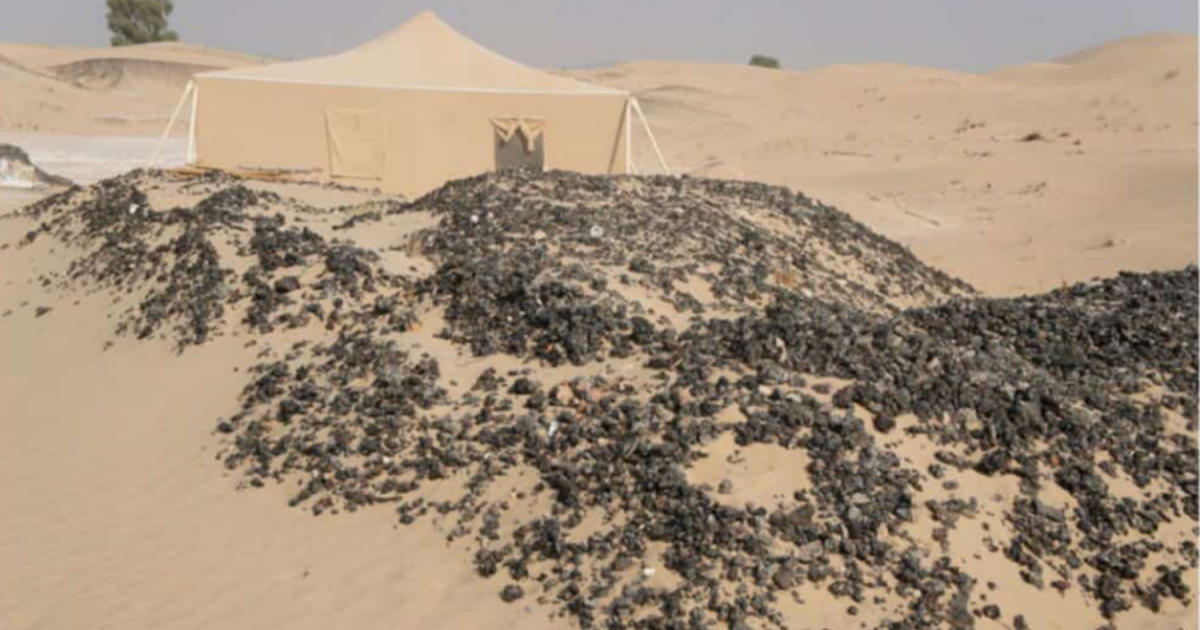
Researchers Uncover A 5,000-Year-Old Civilization Beneath The World's Largest Desert
By
Khadija Pervez in
News
On 16th March 2025
advertisement
Thanks to cutting-edge artificial intelligence, researchers have made a stunning discovery - an ancient civilization hidden beneath the shifting sands of Saudi Arabia.
The groundbreaking find comes from a team at Khalifa University in Abu Dhabi. Using an advanced machine-learning algorithm, they analyzed vast amounts of data to map out previously unknown structures buried deep within the Rub' al-Khali, also called the 'Empty Quarter.'
This desert is an enormous, unforgiving landscape spanning over 250,000 square miles across the Arabian Peninsula. It is the world's largest stretch of continuous sand and has long been considered one of the most inhospitable places on Earth.
Despite its harsh conditions, this desert is home to Saruq Al-Hadid, an archaeological site that has now been confirmed to contain evidence of human activity dating back 5,000 years.
So how did researchers uncover such a monumental find?
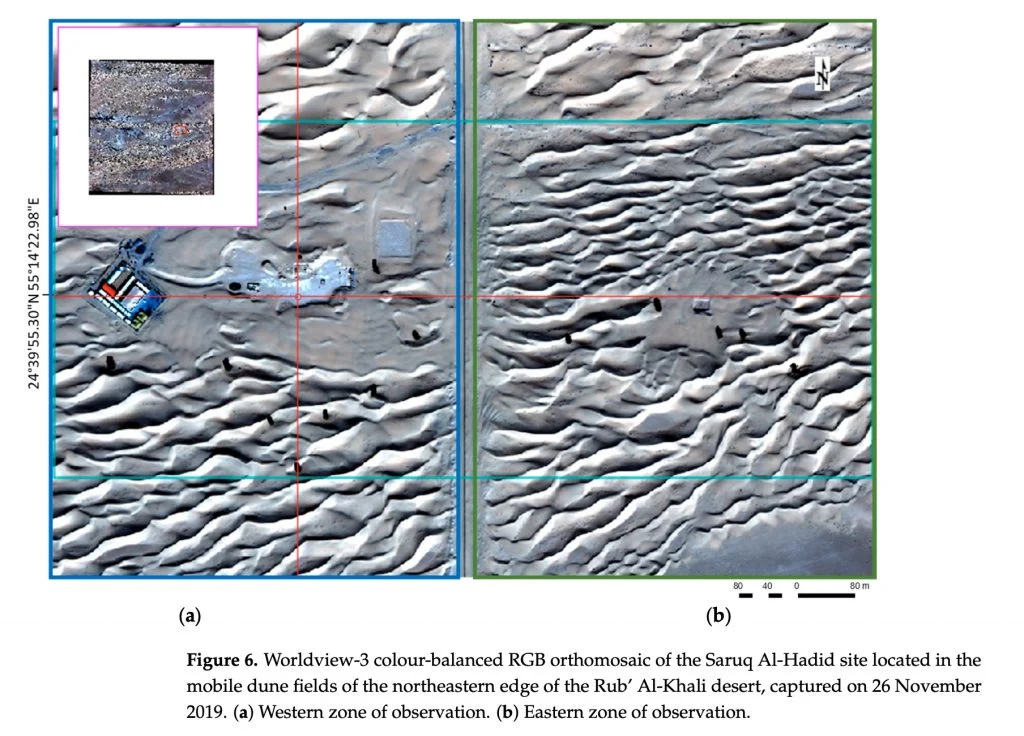
It all comes down to an innovative approach that merges artificial intelligence with satellite imaging.
The technique, developed by the research team, allows for the automated detection and mapping of archaeological features across the UAE and other desert environments.
advertisement
Dr. Diana Francis, head of the Environmental and Geophysical Sciences (ENGEOS) Lab at Khalifa University, explained the significance of this research: "The driving force behind this research was to enable the UAE to discover archaeological sites and features hidden under the sand."
"Given the climate and the fact that much of the country is desert, it was too difficult logistically to inspect the desert from the ground. That's why satellite data was key. Then, we needed to have technology that can see beneath the sand."
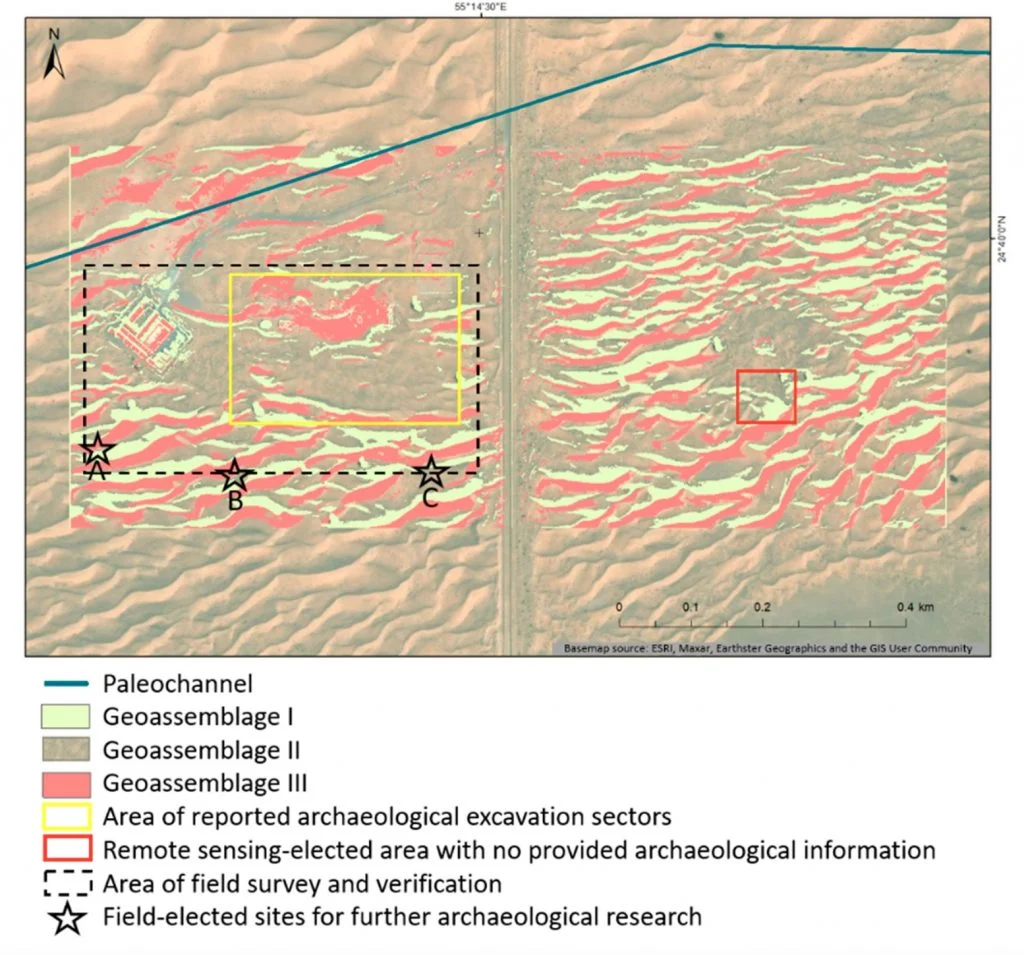
Recognizing the potential of these findings, Dubai Culture - the government agency overseeing archaeological efforts announced plans to begin excavation in the newly identified locations last year.
The researchers believe that the techniques they developed could transform archaeological studies, helping to uncover ancient civilizations hidden beneath arid landscapes worldwide.
Dr. Francis further explained: "This research represents a proof-of-concept on how SAR imagery and machine learning can guide archaeological searches in a desert environment."
"The methods we developed work for all arid regions and it's my hope we can apply it to the whole of the UAE and then take it to other desert areas in the region. These areas are still unexplored but we know they have cultural history."
advertisement
In addition to Dr. Francis, the study was conducted in collaboration with Charfeddine Cherif, Research Associate, and Dr. Steve Griffiths, Professor of Practice and Senior Vice President of Research and Development. They worked alongside Prof. Kosmas Pavlopoulos and Dr. Haifa Ben-Romdhane from Sorbonne University Abu Dhabi, as well as Dr. Hosni Ghedira from Mohamed bin Zayed University of Artificial Intelligence.
Their research findings were published in the scientific journal Geosciences.