

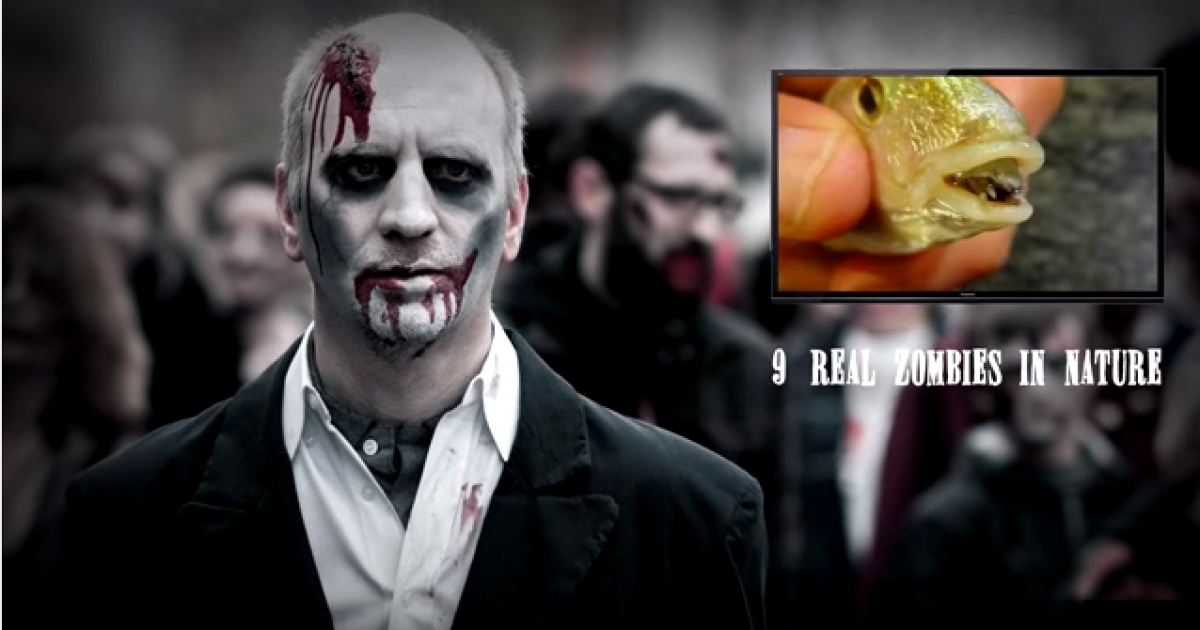
A real zombie apocalypse could be happening in nature now with frightening undead insects to creepy fungus and parasitic hosts that take over the bodies of the living for their own survival purposes in the wild. These are 9 creepy zombie creatures in our world.
advertisement
#1 The Green-Banded Broodsac
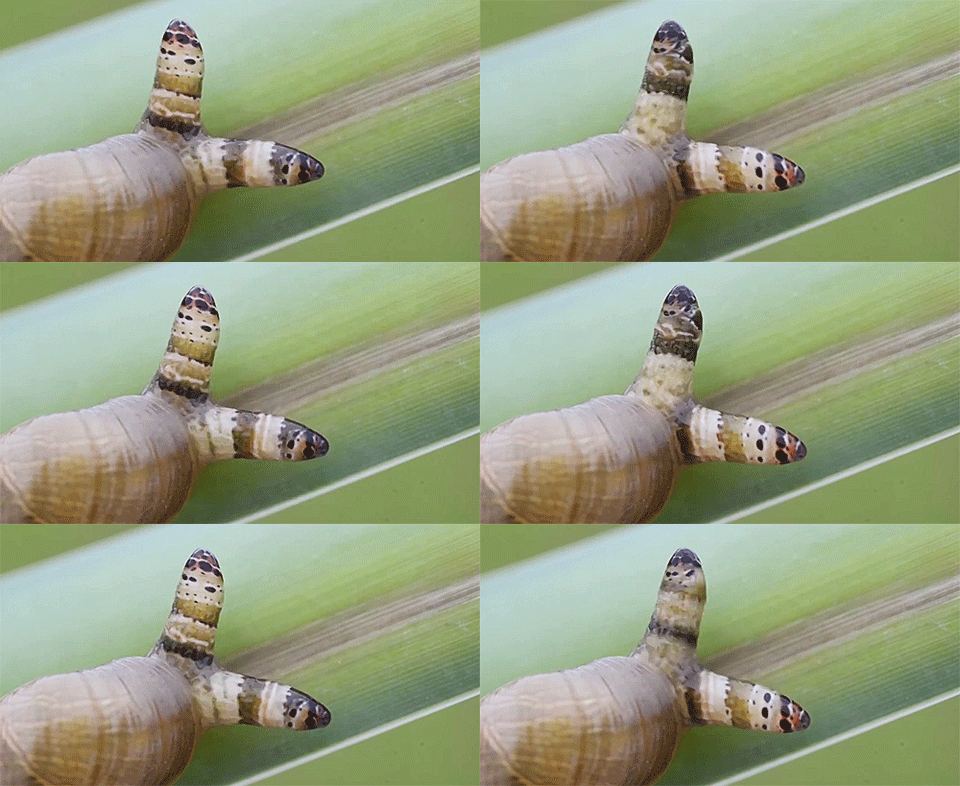
Green-banded broodsac, is a parasitic flatworm (or "helminth") that uses gastropods as an intermediate host. It is typically found in Succinea that live in Europe and North America where it infects the host's eyes making them appear as caterpillars that other birds prey on. Various birds consume these infected gastropods, becoming the definitive host for L. paradoxum to mature and release eggs in the rectum that are later found in the feces of the bird host.
#2 Jewel wasp
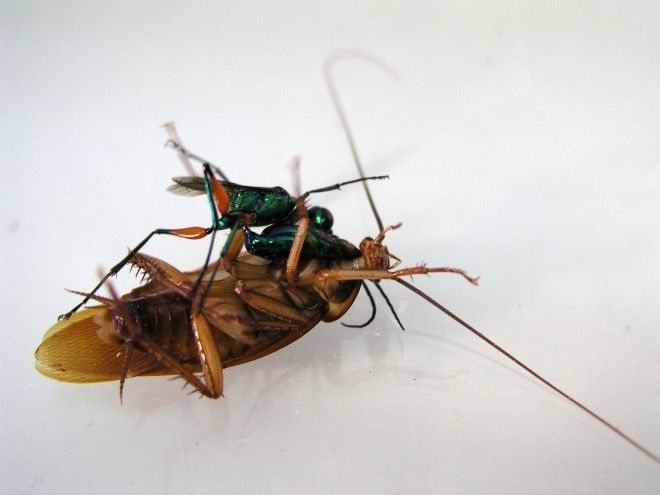
The emerald cockroach wasp or jewel wasp is a solitary wasp of the family Ampulicidae. It is known for its unusual reproductive behavior, which involves stinging a cockroach and using it as a host for its larvae. It thus belongs to the entomophagous parasites.
advertisement
#3 Lymantria dispar multicapsid nuclear polyhedrosis virus
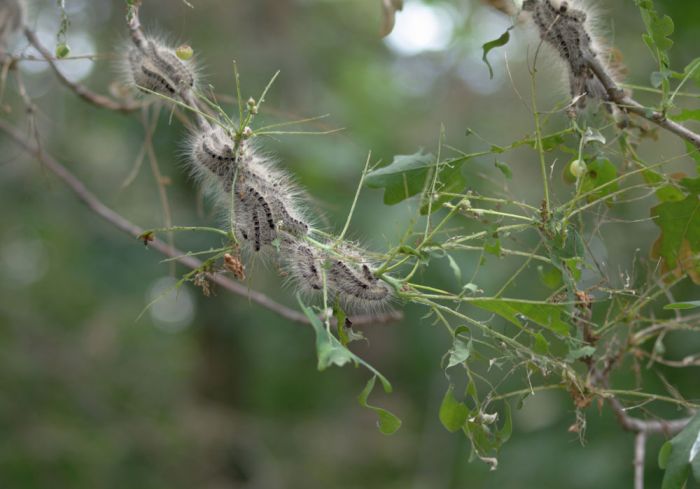
Lymantria dispar multicapsid nuclear polyhedrosis virus or LdMNPV is a well-known and spectacular viral infection of gypsy moths (Lymantria dispar) which causes infected larvae to die and disintegrate. Infected larvae climb to the top of the tree during the day and die. The larvae then melt or disintegrate, falling on the foliage below where they infect more larvae.
#4 Ophiocordyceps unilateralis
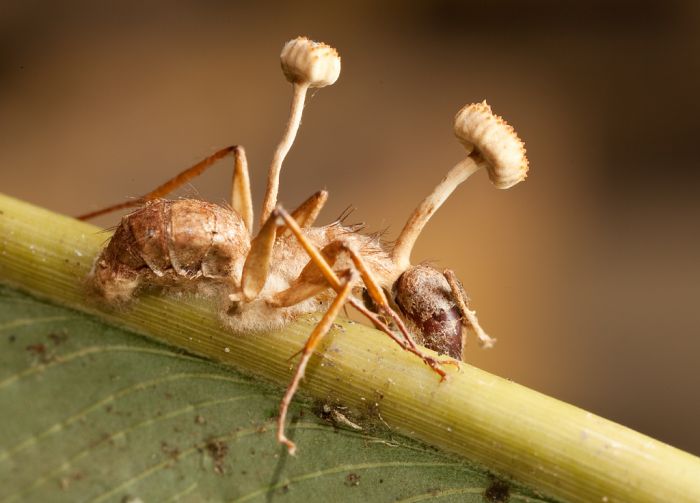
Ophiocordyceps unilateralis is an entomopathogen, or insect-pathogenising fungus, discovered by the British naturalist Alfred Russel Wallace in 1859, and currently found predominantly in tropical forest ecosystems. Ophiocordyceps unilateralis, also referred to as a zombie fungus, infects ants of the Camponotini tribe, with the full pathogenesis being characterized by alteration of the behavioral patterns of the infected ant. Infected hosts leave their canopy nests and foraging trails for the forest floor, an area with a temperature and humidity suitable for fungal growth; they then use their mandibles to affix themselves to a major vein on the underside of a leaf, where the host remains until its eventual death. The process leading to mortality takes 410 days, and includes a reproductive stage where fruiting bodies grow from the ant's head, rupturing to release the fungus's spores. O. unilateralis is in turn also susceptible to fungal infection itself, an occurrence which can limit its impact on ant populations, which has otherwise been known to devastate ant colonies.
advertisement
#5 Apocephalus borealis
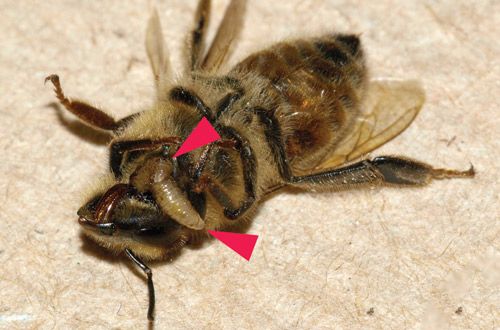
Apocephalus borealis is a species of North American parasitoid phorid fly that parasitizes bumblebees, honey bees, and paper wasps. These flies are colloquially known as zombie flies and the bees they infect are colloquially known as zombees. The association with honey bees has so far only been documented from California, South Dakota, Oregon, and Washington; elsewhere, they are primarily associated with bumblebees and paper wasps, but most recently this species has changed host and has begun to attack the European honey bee. A case was confirmed in October 2013 of an infestation of honeybees in Vermont.
advertisement
#6 Sacculina
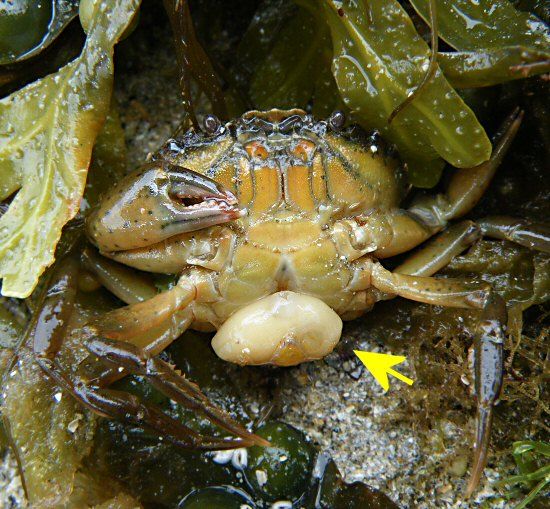
Sacculina is a genus of barnacles that is a parasitic castrator of crabs. The adults bear no resemblance to the barnacles that cover ships and piers; they are recognised as barnacles because their larval forms are like other members of the barnacle class Cirripedia. Depending on the location, the prevalence of this unusual crustacean parasite in its crab host can be as high as 50%.
advertisement
#7 Cotard's syndrome
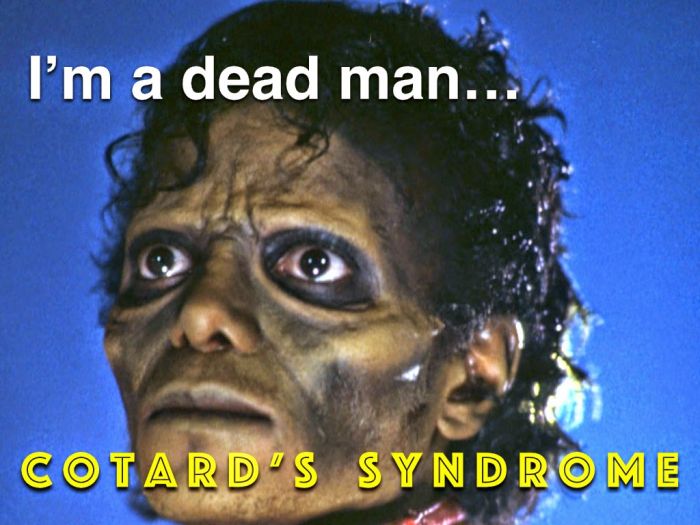
The Cotard delusion (also Cotard's syndrome and walking corpse syndrome) is a rare mental illness in which an afflicted person holds the delusion that they are dead, either figuratively or literally; yet said delusion of negation is not a symptom essential to the syndrome proper. Statistical analysis of a hundred-patient cohort indicates that the denial of self-existence is a symptom present in 69 percent of the cases of Cotard's syndrome; yet, paradoxically, 55 percent of the patients might present delusions of immortality.
advertisement
#8 Toxoplasma gondii
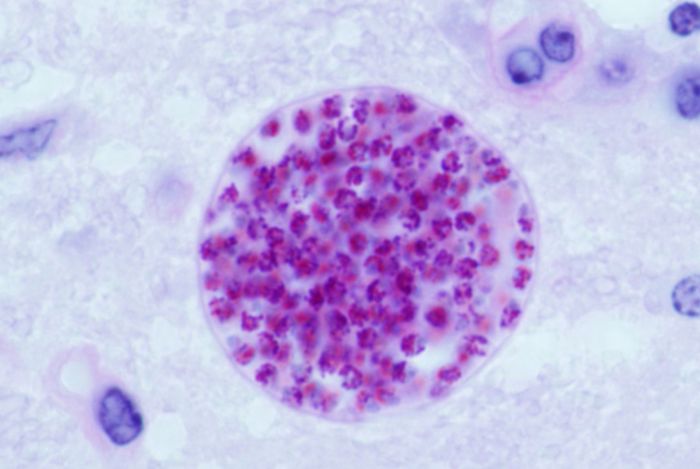
A single-celled parasite called Toxoplasma gondii causes a disease known as toxoplasmosis. While the parasite is found throughout the world, more than 60 million people in the United States may be infected with the Toxoplasma parasite. Of those who are infected, very few have symptoms because a healthy person's immune system usually keeps the parasite from causing illness. However, pregnant women and individuals who have compromised immune systems should be cautious; for them, a Toxoplasma infection could cause serious health problems.
Severe toxoplasmosis, causing damage to the brain, eyes, or other organs, can develop from an acute Toxoplasma infection or one that had occurred earlier in life and is now reactivated.
advertisement
#9 Tongue-eating louse
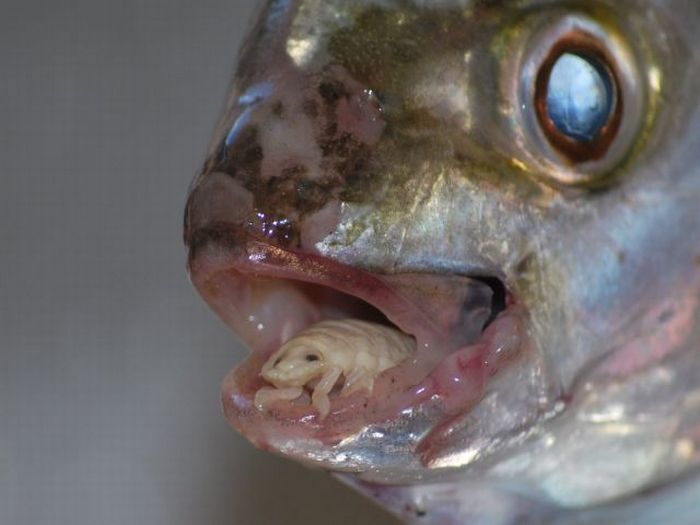
Tongue-eating louse, is a parasitic crustacean of the family Cymothoidae. This parasite enters fish through the gills, and then attaches itself to the fish's tongue. The female attaches to the tongue and the male attaches on the gill arches beneath and behind the female.
The parasite severs the blood vessels in the fish's tongue, causing the tongue to fall off. It then attaches itself to the stub of what was once its tongue and becomes the fish's new tongue.
advertisement