

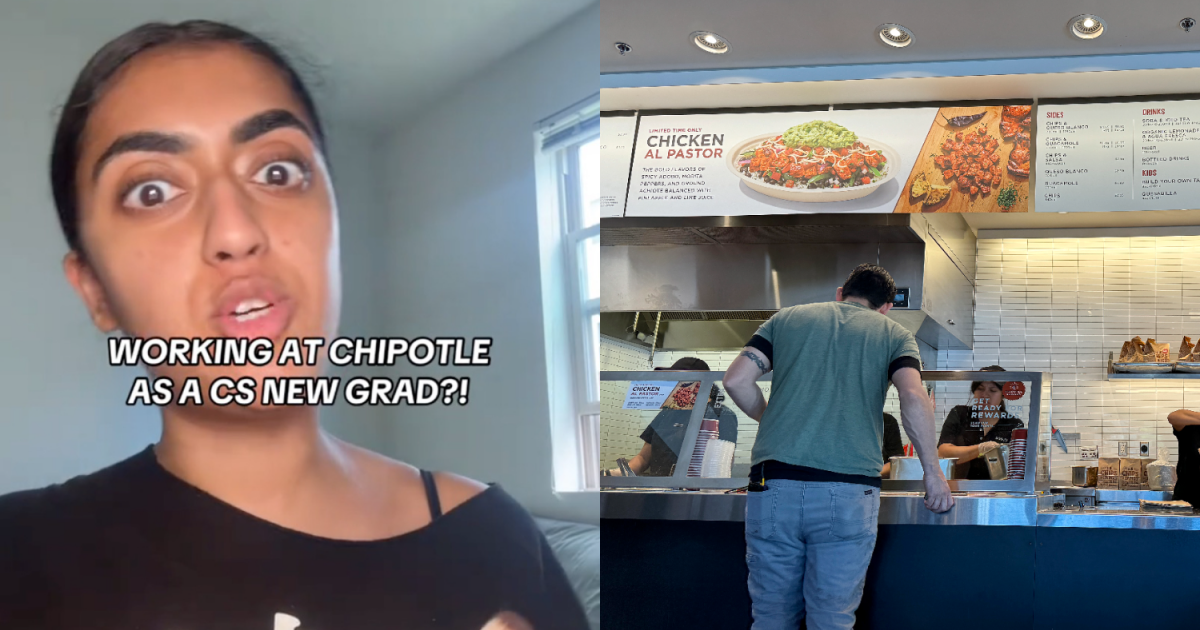
When Manasi Mishra enrolled in computer science, she imagined a career building software for top tech firms — not making burritos.
Coding Graduates Say AI Has Taken Their Jobs, Forcing Them To Find Work At Chipotle
By
Khadija Pervez in
News
On 13th August 2025
advertisement
Manasi Mishra, a recent graduate of Purdue University, says breaking into the tech world has been nearly impossible as companies turn more and more to AI to handle beginner-level coding work.
"I just graduated with a computer science degree, and the only company that has called me for an interview is Chipotle." she shared in a TikTok video earlier this summer, a post that has now been watched close to 150,000 times and resonated with other struggling grads.
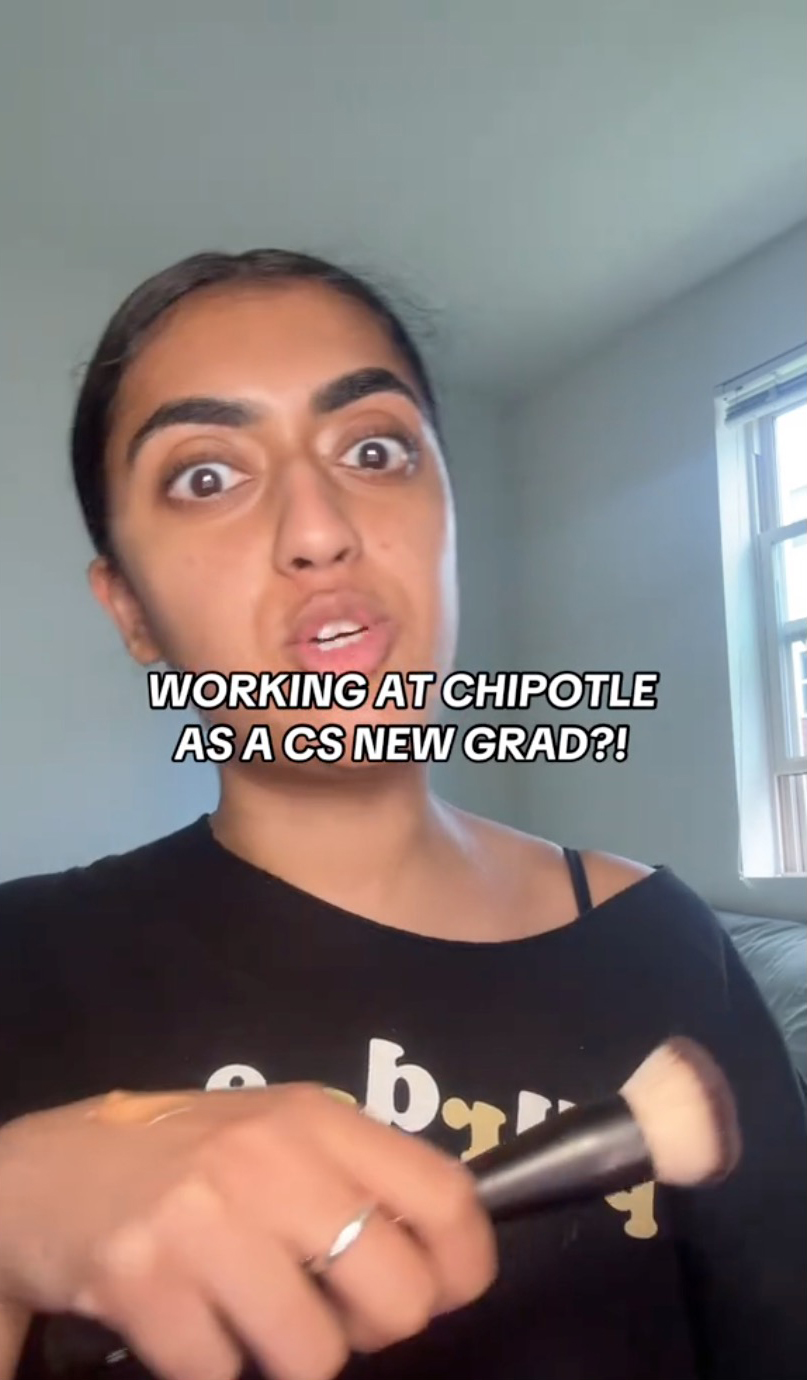
Manasi Mishra, a recent Purdue University grad, has been unable to find work in tech.
TikTok/khuhlina
Her story is a clear example of just how much the job market has changed for new software developers.
Data from the Federal Reserve Bank of New York shows that unemployment for recent computer science graduates is currently 6.1%, and for computer engineering majors it’s 7.5%. Both numbers are higher than the 5.3% average for all recent grads, and roughly double the 3% unemployment rate for fields like biology or art history.
"I'm very concerned." said Jeff Forbes, a former National Science Foundation program director for computer science education and workforce development, in an interview with the New York Times.
advertisement
"Computer science students who graduated three or four years ago would have been fighting off offers from top firms — and now that same student would be struggling to get a job from anyone."
For years, industry leaders, wealthy tech entrepreneurs, and even U.S. presidents encouraged young people to "learn to code," — promising that learning to code would almost guarantee a six-figure salary and job stability right out of college.
While a small group of professionals in the AI boom have secured huge paychecks as company valuations soar, most of these high-growth AI firms hire very few employees, leaving many graduates on the sidelines.

Mishra said that she recently had to settle for a job at Chipotle.
TikTok/khuhlina
Dario Amodei, CEO of AI company Anthropic, has even warned that AI could wipe out as much as half of all entry-level white-collar roles in the next one to five years.
Tools like GitHub Copilot, CodeRabbit, and others are speeding up the decline in beginner programming positions, which are among the easiest for employers to replace with automation.
Economists and tech executives also point to other factors making it harder to get hired — including overstaffing after the pandemic, strict cost-cutting measures, high interest rates, and ongoing hiring freezes at major companies.
advertisement
While experts may disagree on exactly how much of the slowdown is due to AI compared to normal business cycles, almost everyone agrees that entry-level tech jobs are now facing intense pressure.
This has created a job market that feels almost unrecognizable compared to just a few years ago.
Zach Taylor, who graduated from Oregon State University in 2023, told the Times that he has submitted nearly 5,800 tech job applications, which resulted in only 13 interviews — and not a single job offer.

Mishra shares her frustration over the shrinking number of entry-level programming roles for new graduates.
TikTok/khuhlina
advertisement
Even the company where he had previously interned wasn’t able to offer him a full-time position.
After unsuccessfully trying to get a job at McDonald’s and being turned down "for lack of experience," he moved back to his hometown of Sherwood, Oregon, and began collecting unemployment benefits.
"It is difficult to find the motivation to keep applying." he admitted to the Times.
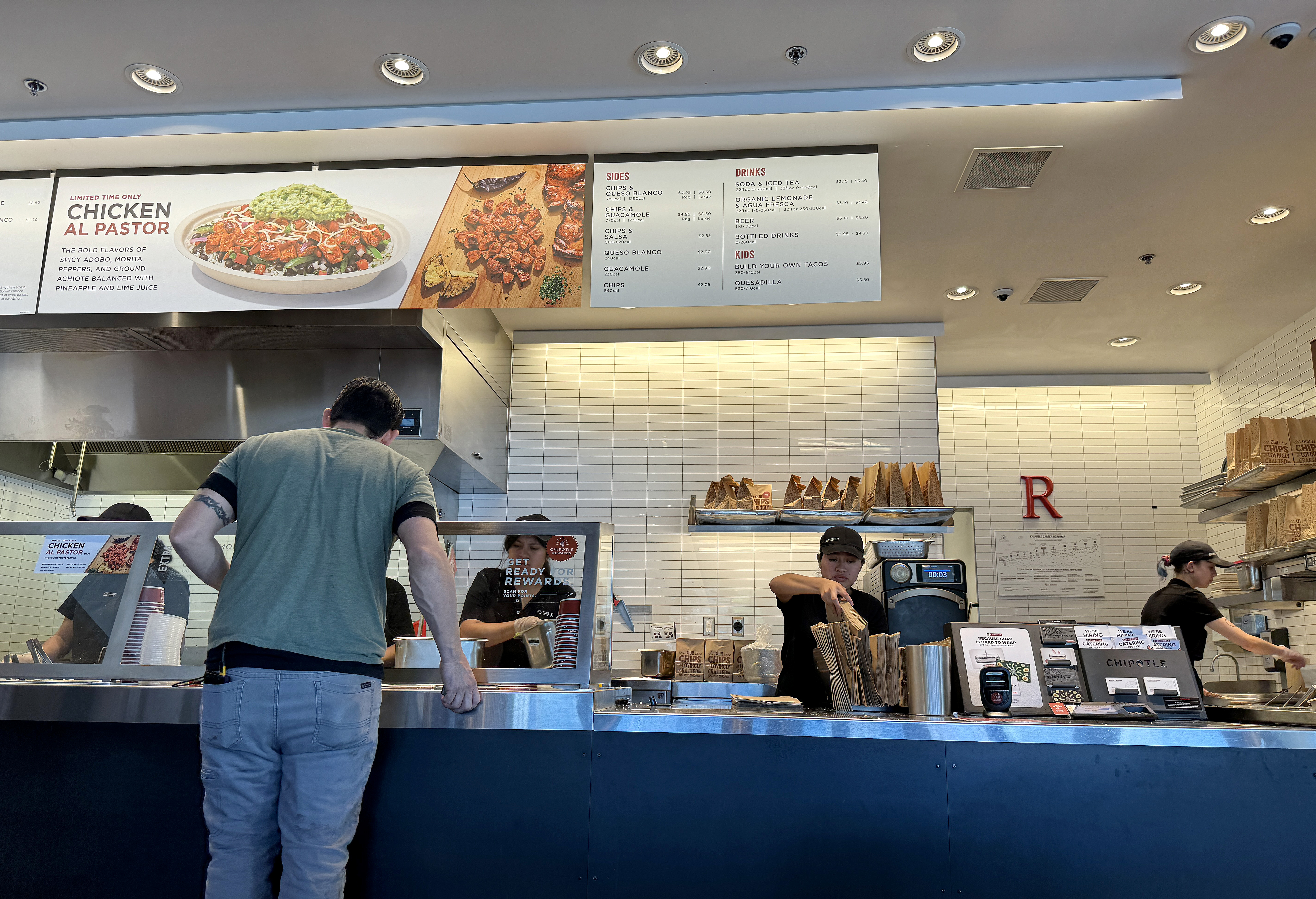
Wages for Chipotle workers pale in comparison to entry-level software engineering roles, according to the latest data.
Getty Images
advertisement
Many job seekers describe today’s hiring process as exhausting. They face multiple rounds of online coding challenges, live technical tests, and back-to-back interviews, only to be either rejected or left without a response.
Some call the experience "bleak" or "soul-crushing.". Others say they’ve been "gaslit" by the same industry that once promised coding skills were a sure ticket to success.
In San Francisco, large billboards now openly advertise AI-powered coding tools that claim they can write and fix software faster than any human.
advertisement
Although not as widely used as GitHub Copilot, CodeRabbit has been praised for features such as real-time team collaboration and code reviews that adapt to context. With these tools becoming more common, and a huge pool of applicants competing for fewer roles, companies can now deliver more projects with far fewer junior developers.
Audrey Roller, a new data science graduate from Clark University in Worcester, Massachusetts, told the Times she writes every application from scratch without using AI — hoping her personal touch might help her stand out from the crowd.
But when she received a rejection email just three minutes after submitting an application, she suspected the decision came from an algorithm rather than a person.
advertisement
"Some companies are using AI to screen candidates and removing the human aspect." she told the Times.
The hiring slump has also hit another pathway into tech — coding bootcamps — just as hard.
advertisement
For over ten years, these short but intense programs offered people without computer science degrees a way to break into high-paying software roles.
But according to Reuters, many bootcamps are now seeing their graduate job placement numbers fall sharply.

A group of students writes computer code in class, preparing for jobs that have become far harder to land in the age of AI.
Mediaphotos – stock.adobe.com
advertisement
Jonathan Kim, who spent nearly $20,000 for a part-time course at Codesmith in 2023, has applied for over 600 software jobs without securing a single offer.
For now, he works at his uncle’s ice cream shop in Los Angeles while continuing to contribute to open-source coding projects on the side.
"They sold a fake dream of a great job market." he told Reuters.
advertisement
At Codesmith, just 37% of students in its 2023 part-time program found full-time tech jobs within six months — a steep drop from 83% in late 2021, according to the Council on Integrity in Results Reporting.
Other bootcamps have seen similar declines, with some cohorts placing only 37% to 50% of their graduates in jobs.
The company told Reuters that the current job market is "tough", though it also pointed out that 70% of its full-time graduates did find roles within a year.
Veterans in the tech industry say these tough conditions are pushing many companies to focus once again on recruiting from elite schools like MIT and Stanford, which has also undone some of the diversity gains that coding bootcamps helped create.
"They're sending their recruiters to MIT and Stanford and wining and dining the top students." said Michael Novati, co-founder of Formation Dev, a company that helps experienced engineers prepare for job interviews, in an interview with Reuters.