Airplane Windows Are Always Round, And Never Square. Do You Know Why?
By
Editorial Staff in
Facts
On 28th January 2016
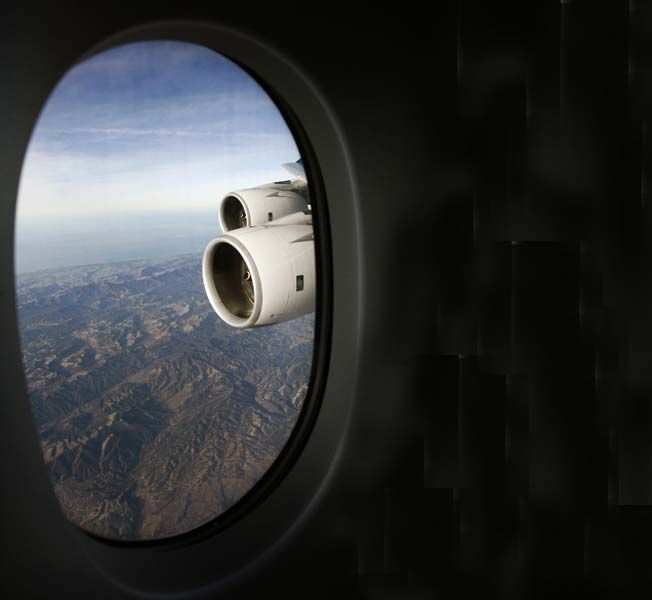
Ever noticed how airplane windows are always round or oval, but never square with sharp edges? Almost half a century ago, planes had square windows and here’s what happened.
In 1949, the world’s first commercial jetliner ‘de Havilland Comet’ was launched amidst much aplomb. But within a year, 2 of its planes crashed mid-air. Investigations revealed that the windows were the culprit. They were square-shaped.
#1
Now what happens is that commercial planes fly at a height of more around 30,000 feet because air density is quite low at this altitude and it minimizes air resistance on the plane. And so, the pressure inside the cabin is maintained at a higher level so that passengers can breathe. But this creates a huge difference in pressures outside and inside the plane.
#2
Square windows have weak points at the four corners, and under extreme stress due to pressure difference, there is a chance they would crack at the weak points. This is what happened in the Comet crashes. Since then, the shape of plane windows was changed from square to round or oval. A round window has no weak or stress point and can bear the immense difference in pressure inside and outside the plane. The round windows really do ensure we have a safe flight.
#3 Why Are Plane Windows Round?
We often learn the most from our failures, this is particularly true for advancements in the field of engineering. Unfortunately for the engineers in the aviation industry, the prices to pay for failure are high. This will be a reoccurring theme in my videos, trust me. The flip-side of this unforgiving industry, is that it consistently provides learning opportunities for engineers, because failure is not an option when peoples lives are at risk.
One of the greatest examples of this occurred during the development of cabin pressurisation. The problems caused by cabin pressurisation didn't develop until the introduction of the first commercial jet powered aircraft, The De Havilland Comet. It entered service in 1952 and initially proved to be a massive success, but just one year into service catastrophe struck. Three Comets suffered fatal mid-flight disintegrations and the entire fleet was grounded until the cause was identified.
The root of the problem was double-edged. The introduction of jet engines required planes to fly even higher in order to make the fuel hungry engines economically viable (less drag in the upper atmosphere means less fuel is needed). As a plane increases in altitude the external atmospheric pressure lowers to a greater extent than the internal cabin pressure. This creates a pressure differential that causes the fuselage to expand ever so slightly. Engineers accounted for this, but the effects of repeated pressure cycles over time were not well known at the time. Over thousands of cycles and metal begins to fatigue and cracks can form at high stress locations.
The effects of stress concentration were also not well understood at the time. Stress concentration occurs when the flow of stress is interrupted. Square windows, in contrast to modern oval windows, provide a significant barrier to the smooth flow of stress. Because of this stress peaks at the sharp corner of the window, and this is exactly where investigators determined the origin of failure to be.
These combined phenomenon proved to be fatal. Today all airliners feature oval windows to avoid this stress concentration and comprehensive fatigue testing is required before a plane can be approved by the FAA. We often learn the most from our failures, this is particularly true for advancements in the field of engineering. These are now two basic concepts that every materials engineer is taught, these events allowed us to further our understanding of materials and prevent further failures.
#4
Take a look at this video by Real Engineering that explains the science behind circular windows.