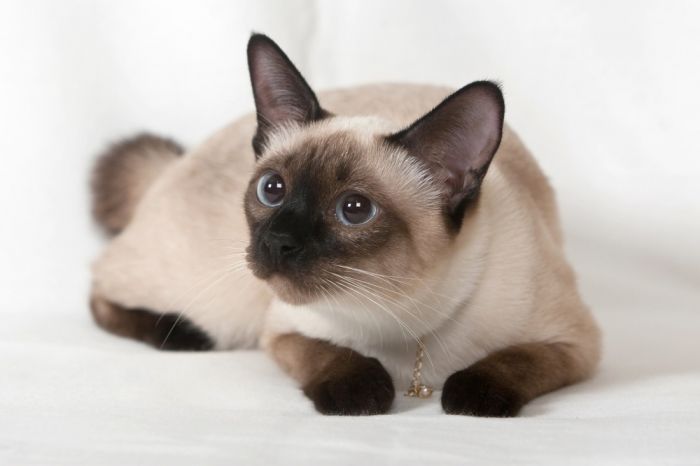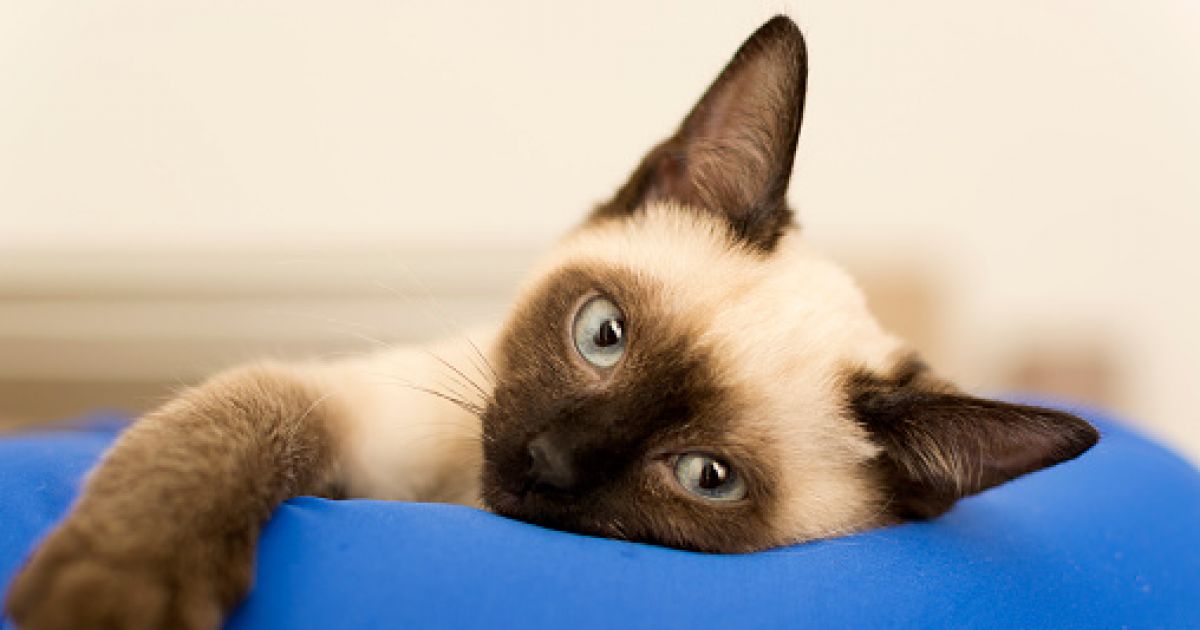
The Siamese cat is a very old breed of domestic cat. It is very popular as a pet, especially in Europe and America. The origin of the Siamese cat leads us to the area of the former Siam, i.e. Thailand today. This breed of cat was very respected in the temples of Buddhist monks, and also it was present at the court of the King of Siam. It appeared in Europe in the second half of the 19th century, while in the United States appeared at the beginning of the 20th century. It is supposed that the Siamese cat was created more than 500 years ago.
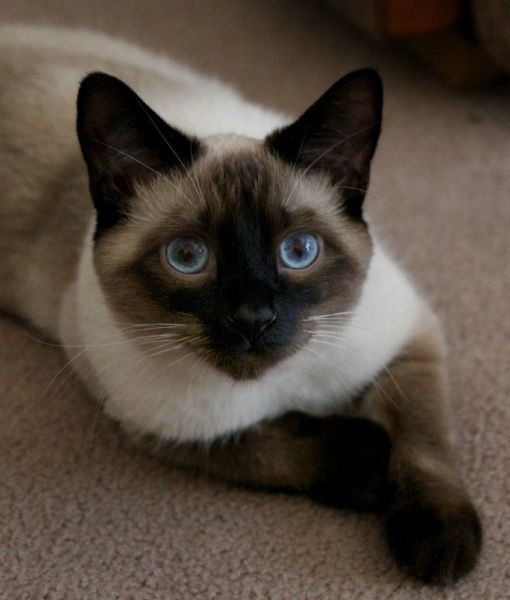
The Siamese is perhaps the most recognizable of all purebred domestic breeds. It has been treasured for centuries because of its winning personality and beautiful, exotic, aristocratic physical characteristics. These are slender, graceful cats with finely-chiseled muzzles, elegant necks and long, svelte bodies. Their hind legs are noticeably longer than their front legs, and their paws are small and oval-shaped. The tail of the Siamese is long, quite slender and tapered and must have no trace of a kink. This is a very fine-boned, refined animal that should exude breed type in appearance and confidence in attitude. They have been described as “living art,” with their combination of great beauty with acute intelligence, sociable curiosity and loving nature.
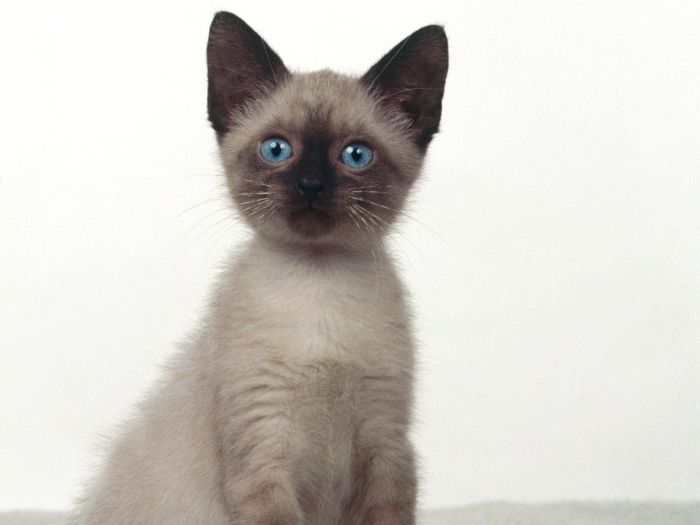
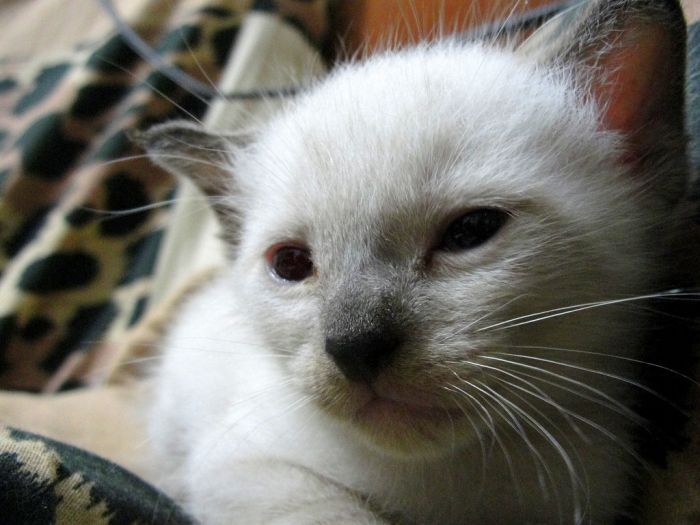
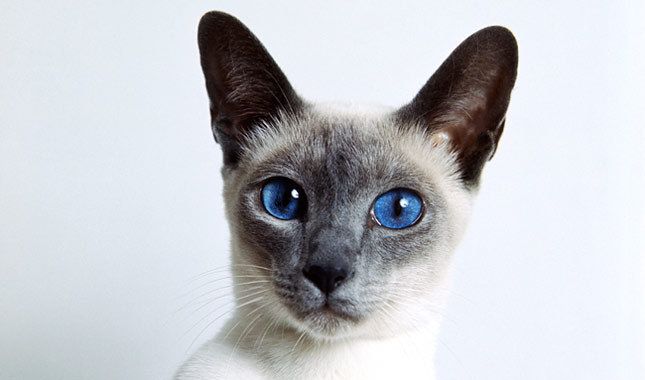
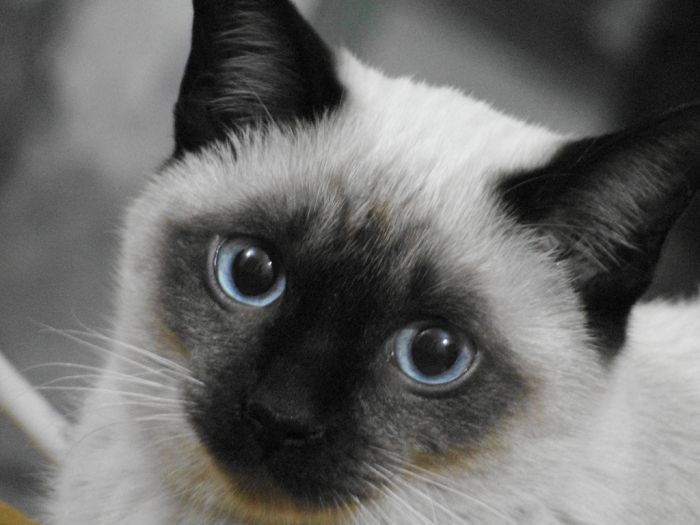
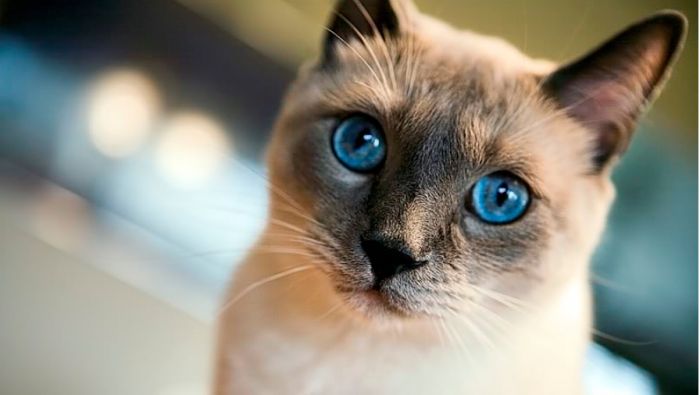
Siamese have almond-shaped eyes that slant downward inwardly towards their noses and upward at the outer side towards their large, pointed, widely-set ears. Their captivating eyes are uniformly a bright, startling sapphire blue. They have wedge-shaped heads with a slight Roman nose and an alert, uniquely wise facial expression. Siamese have a pale base coat color with darker points on the face/mask, tips of the ears, legs, feet and tail. Their coat is short, fine and glossy. It is low-maintenance and quite easy to care for. Most Siamese kittens are born pure white, with the darker colors showing up gradually as they mature. Siamese do not exhibit their full mature coat color and markings until they are at least one year of age.
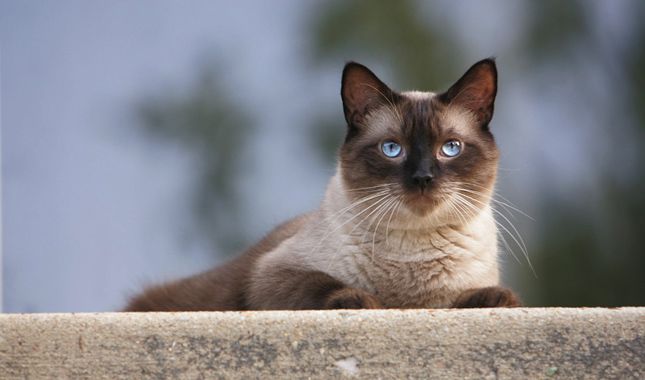
Physical characteristics
The appearance of the Siamese cat has changed over the centuries. Many present variations of Siamese cats are more likely ordinary cats than traditional Siamese cats.
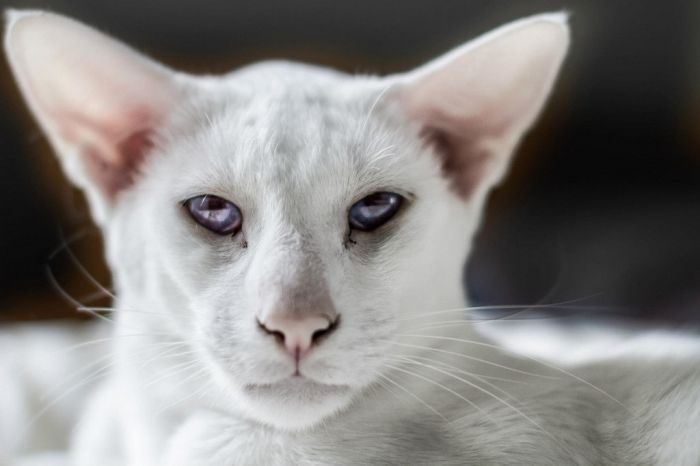
Physical characteristics, that distinguish all variations of Siamese cats, are: specific light colored coat with dark areas on the feet, tail, ears and muzzle, elegant body, with a thin, long legs and a long tail that tapers towards the top.
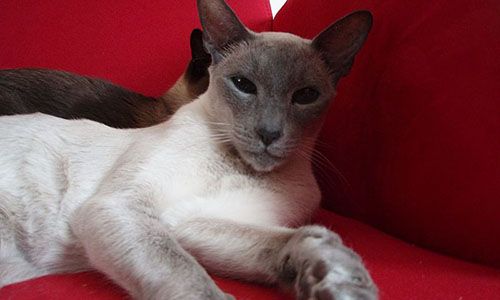
Types of Siamese include
Traditional or Applehead Siamese
Modern Siamese
Chocolate Point
Seal Point
Lilac Point
Blue Point
Siamese Mix
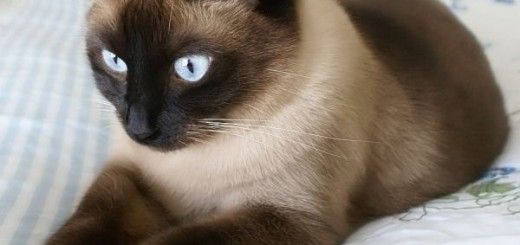
Traditional Siamese cats have extremely elongated wedge-shaped head and big slanted eyes of deep blue color on it. Their ears are large and they continue the outer line of the head. They have short and soft hair, without undercoat. In recent times they are developing in the direction of extreme emphasizing of elongated body and legs and increasing of the eyes and ears. This is very different from the early Siamese cats.
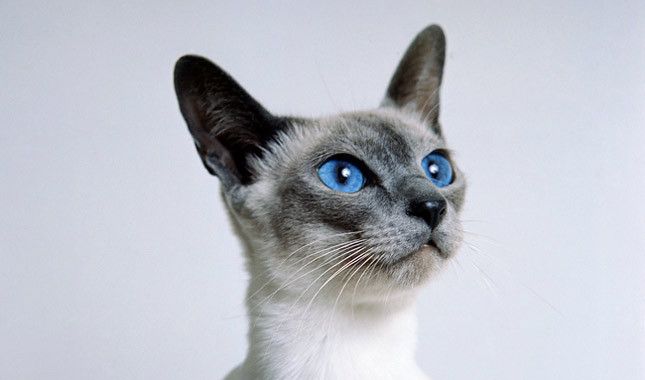
More modern variations of Siamese cats have a round head, large and mysterious eyes and slightly smaller ears than the traditional Siamese cats. While in the past smaller eyes were considered a common feature, today they are considered a defect. Coat of newer varieties of Siamese cats is very short and soft. Too long or too coarse fur and too much undercoat also are considered defects. The hind legs are longer than the front legs, and their paws are round.
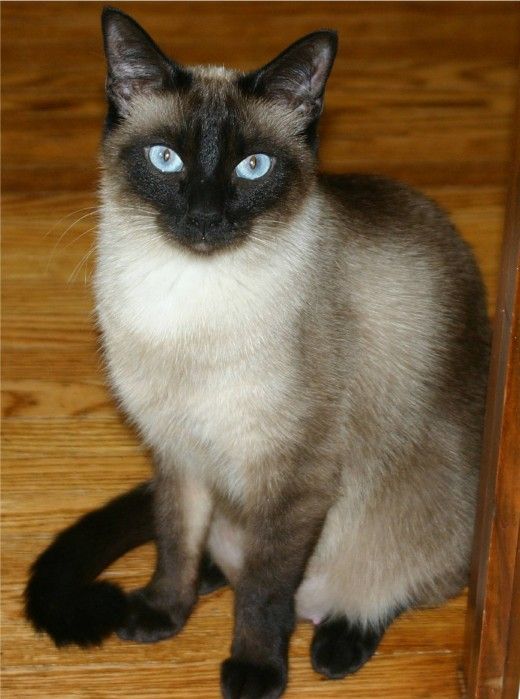
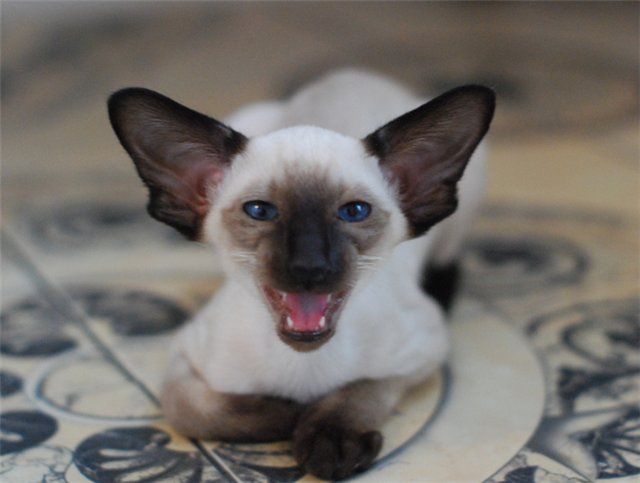
Siamese kittens are born completely white, and later appear their colored sections – on the face, ears, tail and feet. The color the Siamese cat get in the third year will be its permanent color. Over time the bright area may become slightly darker due to licking fur or because of the cool room where the cat is.
The History of Siamese Cats
It is believed though it is not exactly known that this breed of cats is descendant of the sacred temple cats in Siam now called Thailand. They were called "Moon diamond" in Siam. Legend has it that they keep away evil spirits and bring good luck to their owners and was often seen around in temples and Royal households. They made their appearance in the United States in 1878 when a gift of "Siam" from the American Consul in Bangkok was made to the American President. In 1884 a breeding pair of Siamese cats was brought to the UK by the British Consul-General in Bangkok as a gift for his sister. The breed of cat then soon spread to other parts of Europe and Asia.
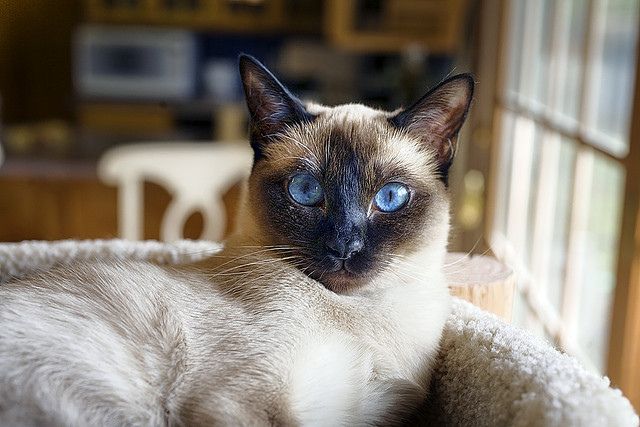
You might wish this breed came with a mute button. Siamese are vocal and demanding, capable of conveying its wants in a range from mews to loud raspy calls. Siamese are also curious, affectionate and athletic. Their vocalization sounds like human baby cries. They love to be around their favorite people and tend to share your pillow at bedtime.
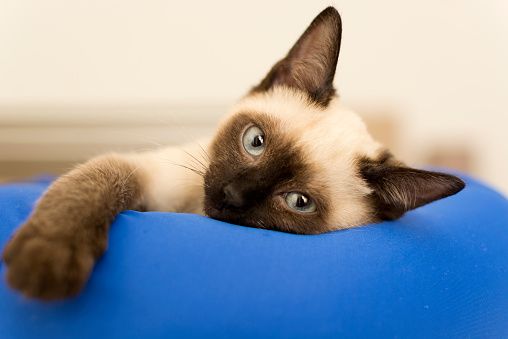
For a long time the Siamese cat has been a popular type of purebred cats, yet is not exactly the best choice for everyone. Siamese cats are very extroverts and demanding, and not everyone can live with them. They are extremely lively and affectionate, active, energetic, social, curious and talkative. They usually have a long lifetime. They can live 18 to 20 years. If you need a pet that will be affectionate to you, and a pet which also has “itself”, the Siamese cat can be the ideal choice for you.
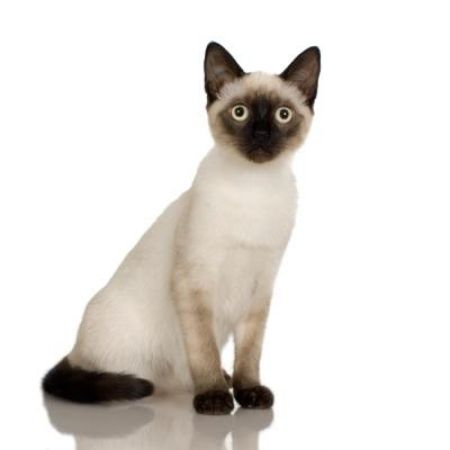
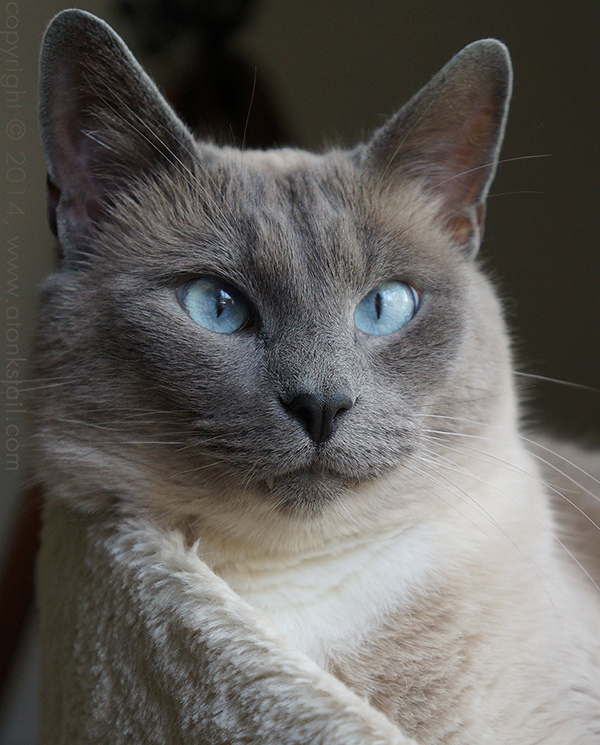
Its short hair coat contains a mutated enzyme in its pigment that produces its cream colored torso offset by darker points at the ears, face, and toes. The CFA recognizes four “points” or colors of Siamese: seal (black), chocolate (brown), blue (grey dilution of seal) and lilac (dilution of the chocolate). TICA allows more colors, including lynx and tortoiseshell.
Females weight between 5 and 6 pounds and males average between 6 and 7 pounds.
Regarded as a healthy breed, the Siamese can be genetically predisposed to problems with gingivitis and a liver-destroying disease called amyloidosis.
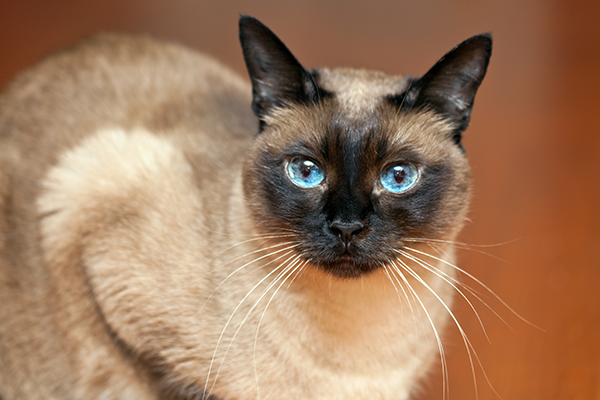
Most Siamese cats are very playful and active. They are strangely curious and can be very intelligent. They get easily bored and therefore you should not leave them alone for significant periods of time because they will likely snooping around the house in search of something to play with. Pamper them with affection and lots of attention and they will be happy for your company. Their constant need for attention and admiration makes them great pets for a household with many people or with children.
Caring for a Siamese
The only maintenance these breed of cats require physically is that they need to be bathed from time to time and their coats need to be brushed at least twice a month. Gentle brushing is sufficient as their hair is not very long. Siamese cats can live to be fifteen or twenty years old if they are well taken care of.
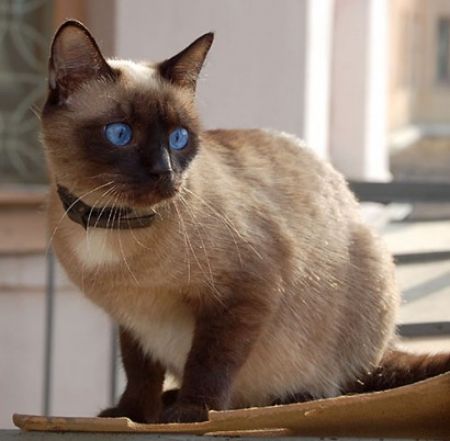
When Siamese cats were first shown in England in 1871 they were described as 'an unnatural nightmare kind of cat' because of their strange coloring. They went on to become one of the most popular cat breeds in the world!
Myths About Siamese
There are a few common misconceptions about the Siamese cat, the most common one being that they are mean. Just like any other breed of cat, it completely depends on the cat.
Though everyone has had different experiences with cats, judging an entire breed based on a few "bad apples" could keep you from finding your perfect feline companion.
Behavioral Traits
Siamese always have a lot to say, and they usually always have the last word. One of their most well-known characteristics is the legendary ability to vocalize. Siamese are the most extroverted and vocal of all domestic felines. They will hold conversations over almost anything, with food and human attention being at the top of the list. Their loud, long meows sometimes sound like a human baby's cry. Intact female Siamese (and almost all Torties and Tortie Points are female) have a particularly renowned noisy call when they are interested in finding a breeding partner. In a nutshell, these are cats with loud voices that match their big personalities.
Another behavioral trait of this breed is their tendency to thrash their tail when bored. They can be a bit demanding of attention. They are fastidiously clean and easy to care for as an indoor companion. They crave warm places and are fond of piling up with people or other animals. This is a breed of many extremes and makes a unique, wonderful companion.