

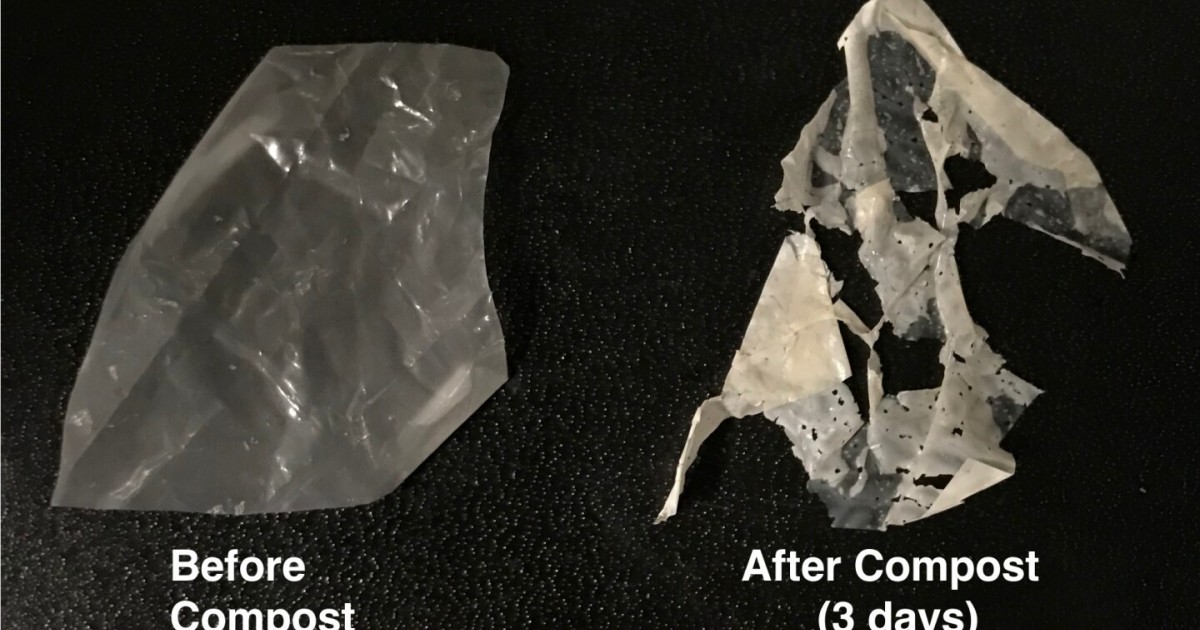
Scientists and engineers at the University of Texas at Austin have created an enzyme that can break down environment-throttling plastics that typically take centuries to degrade in just a matter of hours to days. The project majorly focuses on polyethylene terephthalate (PET), a significant polymer found in most consumer packaging, including cookie containers, soda bottles, fruit and salad packaging, and certain fibers and textiles. It makes up 12% of all global waste.
Amazing: Artificial Engineered Enzyme Can Break Down Plastic Waste In Hours Instead Of Decades
By
Samantha in
Science and Technology
On 30th May 2022
advertisement
The University of Texas at Austin has created an enzyme variant that can break down environment-throttling plastics that typically take centuries to degrade in just a matter of hours to days.
This discovery, published in Nature, could be a big problem solver for the world's most pressing problem of environmental pollution with a huge question mark on what to do with billions of tons of plastic waste piling up in landfills and polluting our natural lands and water.
The enzyme created by scientists and engineers has the potential to supercharge recycling on a large scale that would allow major industries to reduce their environmental impact by recovering and reusing plastics at the molecular level.
Getty Images
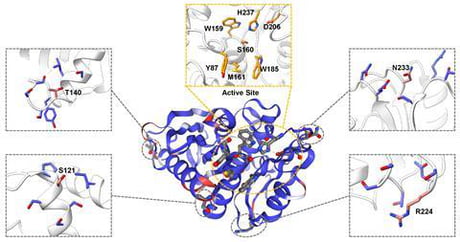
Hal Alper, professor in the McKetta Department of Chemical Engineering at UT Austin, stated that machine learning has become more powerful with time especially when it comes to identifying the effects of altering amino acids outside the active site. This means it can balance the evolutionary trade-off between activity and stability.
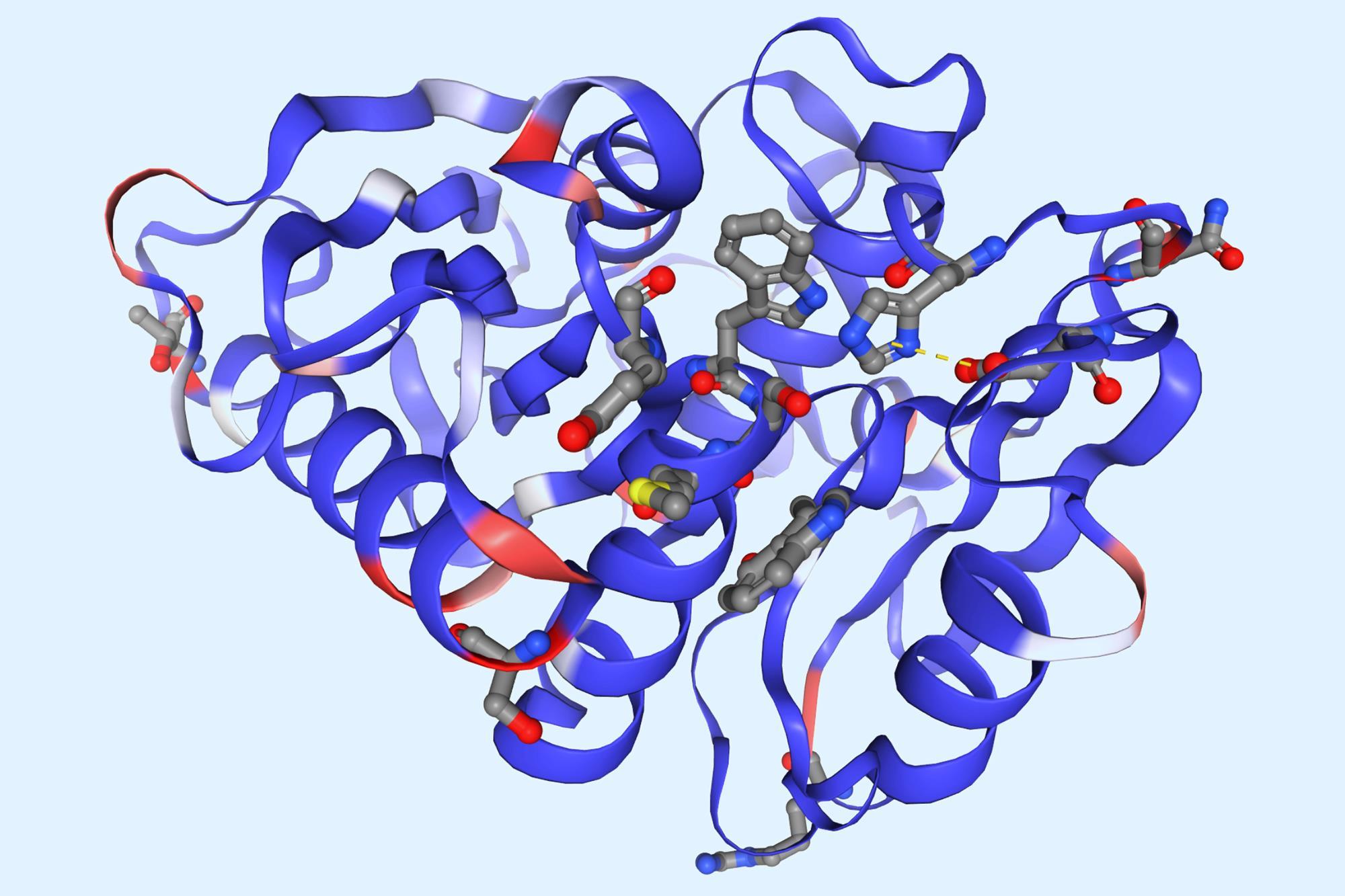
There are millions of possible combinations and out of these the researchers zeroed in on three suggested amino acid substitutions. Combined with two modifications from a previous PETase engineering effort, they designed an enzyme that is "highly, highly active, especially at lower temperatures, compared to anything else that’s out there," Alper says.
The University of Texas/Nature
advertisement
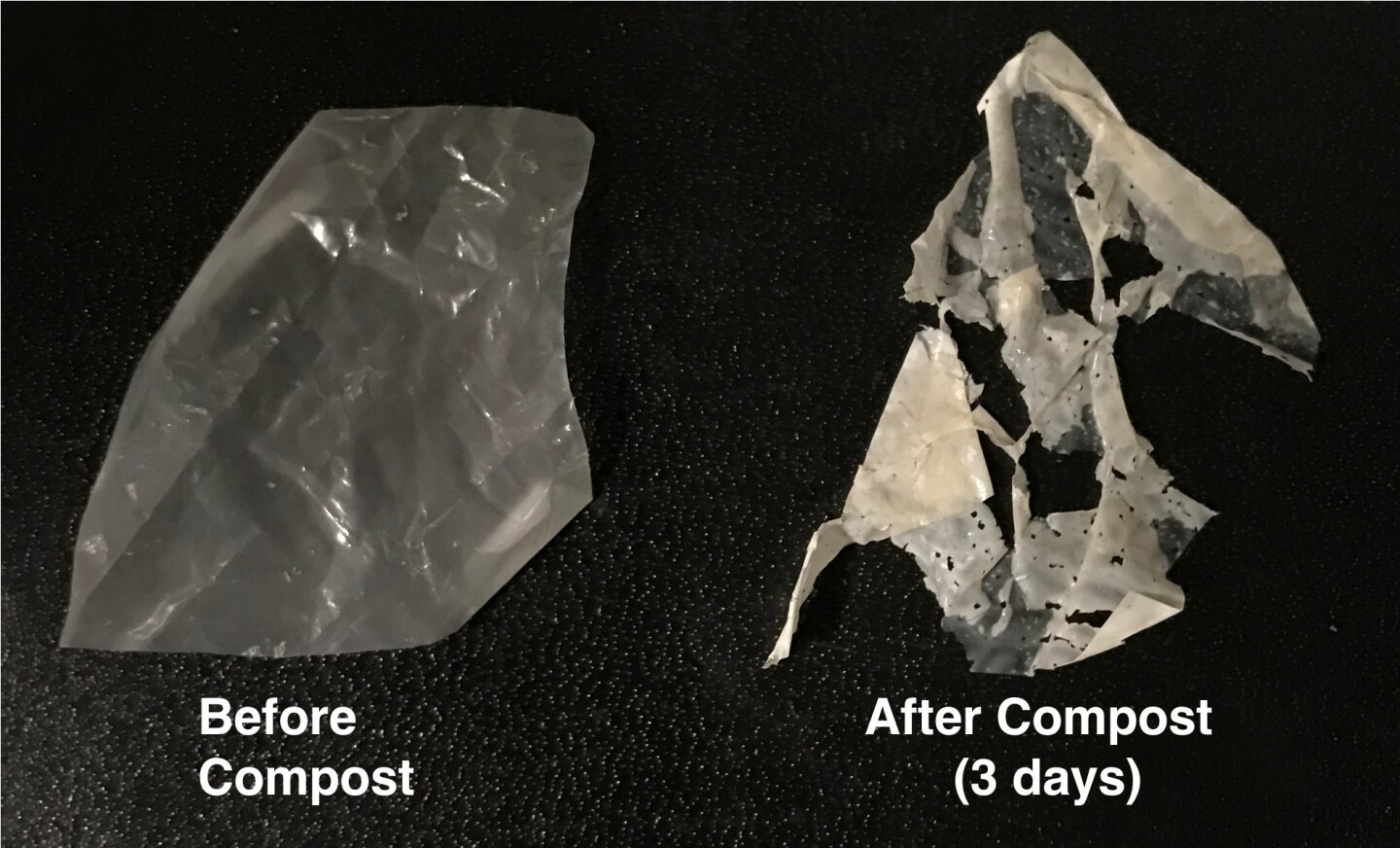
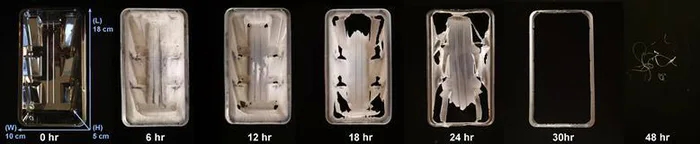
At 50°C, the enzyme is almost twice as active in hydrolyzing a small sample of a PET food container than another engineered PETase at 70°C. The enzyme even depolymerized an entire plastic cake tray within 48 hours, and the team showed that it can make a new plastic item from the degraded waste.
The University of Texas/Nature
Alper said:
The possibilities are endless across industries to leverage this leading-edge recycling process. Beyond the obvious waste management industry, this also provides corporations from every sector the opportunity to take a lead in recycling their products. Through these more sustainable enzyme approaches, we can begin to envision a true circular plastics economy.
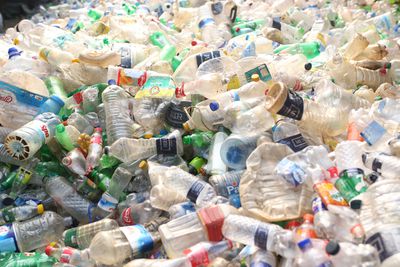
The project especially targets polyethylene terephthalate (PET), a significant polymer found in most consumer packaging, including cookie containers, soda bottles, fruit and salad packaging, and certain fibers and textiles. It makes up 12% of all global waste.
The University of Texas/Nature
advertisement
The enzyme was able to complete a "circular process" of breaking down the plastic into smaller parts (depolymerization) and then chemically putting it back together (repolymerization). In some cases, these plastics can be fully broken down to monomers in as little as 24 hours.
advertisement
Researchers at the Cockrell School of Engineering and College of Natural Sciences used a machine learning model to generate novel mutations to a natural enzyme called PETase that allows bacteria to degrade PET plastics. The model predicts which mutations in these enzymes would accomplish the goal of quickly depolymerizing post-consumer waste plastic at low temperatures.
Through this process, which included studying 51 different post-consumer plastic containers, five different polyester fibers and fabrics and water bottles all made from PET, the researchers proved the effectiveness of the enzyme, which they are calling FAST-PETase (functional, active, stable and tolerant PETase).
Getty Images
advertisement
Andrew Ellington, a professor in the Center for Systems and Synthetic Biology whose team led the development of the machine learning model, said:
This work really demonstrates the power of bringing together different disciplines, from synthetic biology to chemical engineering to artificial intelligence.
Getty Images
advertisement
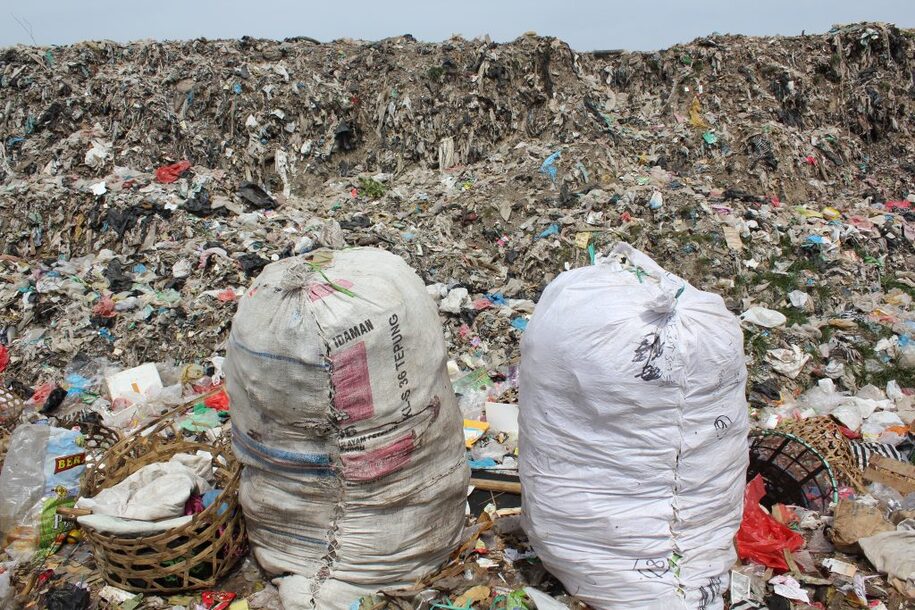
The 3 R's of recycling is the most common and obvious way to cut down plastic waste.
The most common method for disposing of plastic, besides throwing it in a landfill, is to burn it, which is costly, energy-intensive and spews noxious gas into the air. Other alternative industrial processes include very energy-intensive processes of glycolysis, pyrolysis, and/or methanolysis.
The University of Texas/Nature
advertisement
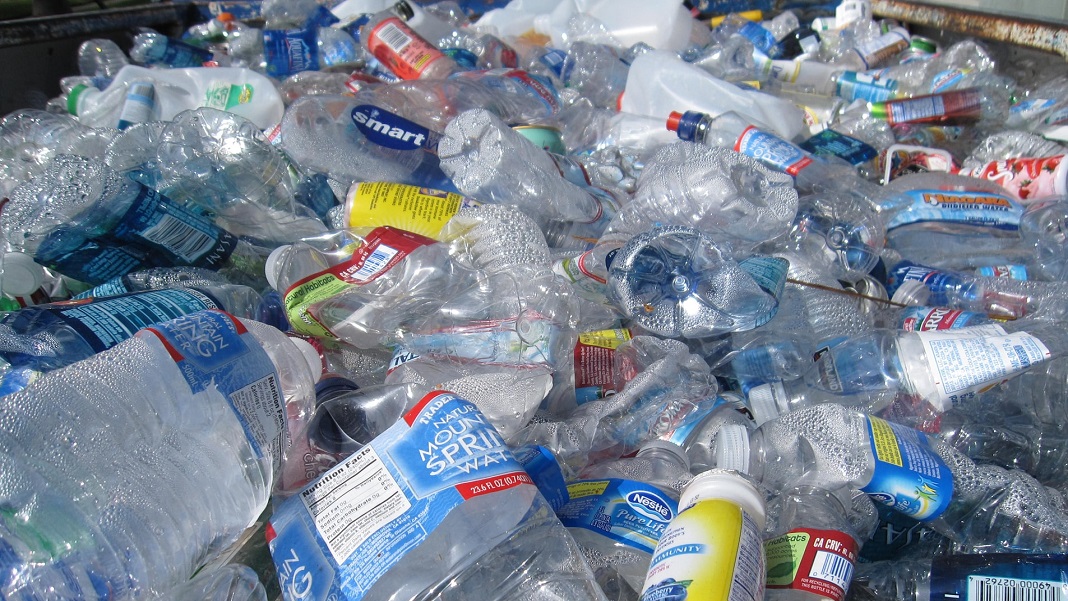
Biological solutions take much less energy. Research on enzymes for plastic recycling has advanced during the past 15 years. However, until now, no one had been able to figure out how to make enzymes that could operate efficiently at low temperatures to make them both portable and affordable at large industrial scale. FAST-PETase can perform the process at less than 50 degrees Celsius.
Getty Images
advertisement
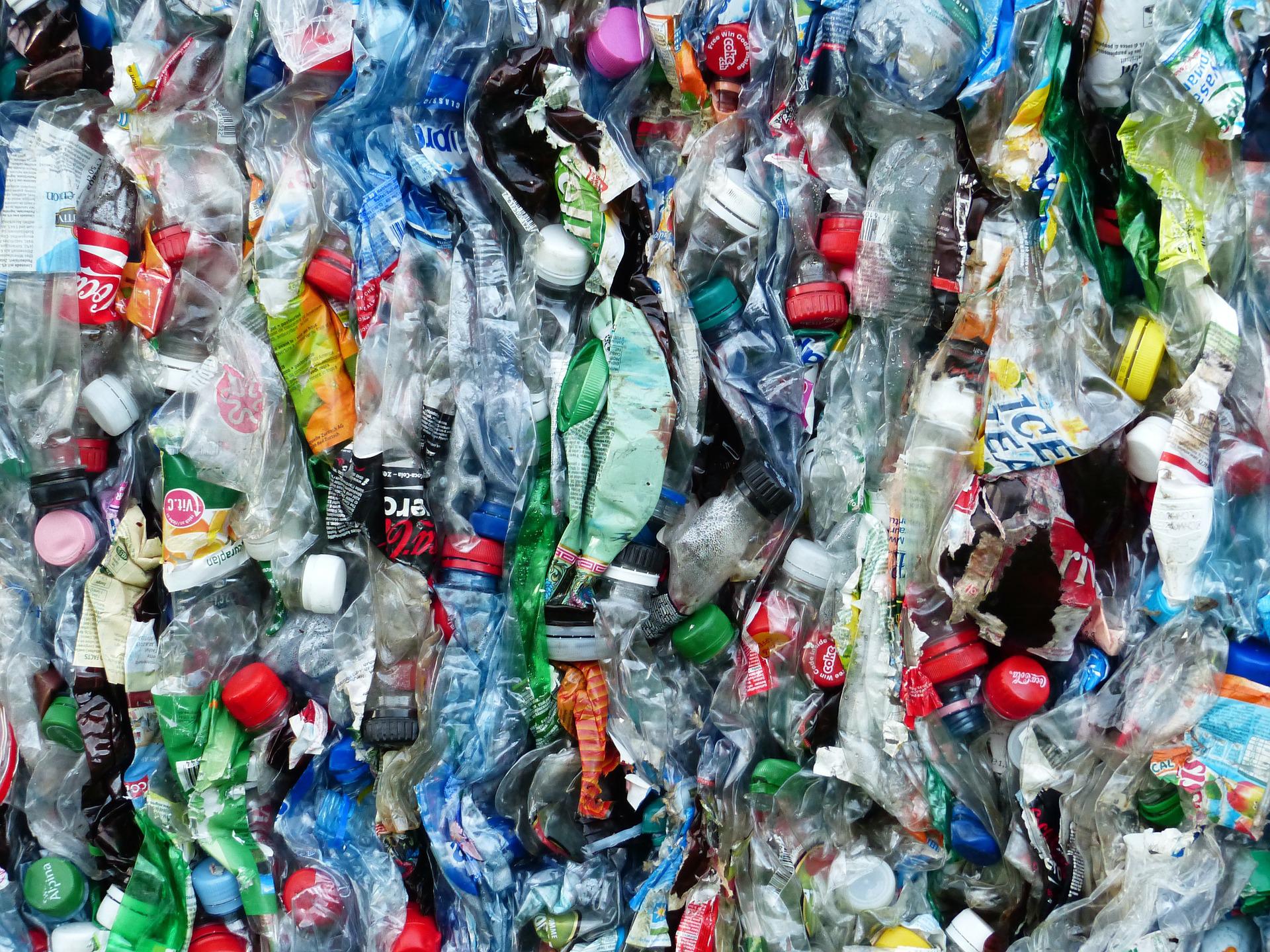
Up next, the team plans to work on scaling up enzyme production to prepare for industrial and environmental applications. The researchers have filed a patent application for the technology and are eying several different uses. Cleaning up landfills and greening high waste-producing industries are the most obvious. But another key potential use is environmental remediation. The team is looking at a number of ways to get the enzymes out into the field to clean up polluted sites.
Alper said:
When considering environmental cleanup applications, you need an enzyme that can work in the environment at ambient temperature. This requirement is where our tech has a huge advantage in the future.
Getty Images