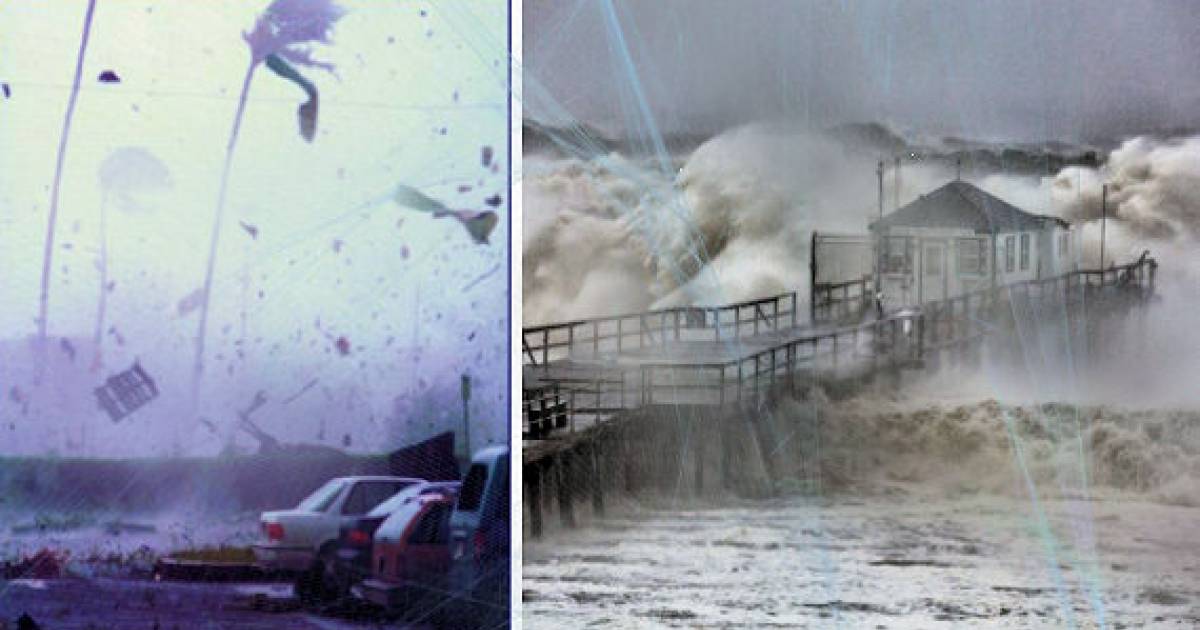
Anyone who has survived a hurricane knows the destruction and devastation they can cause. For some people in low-lying areas, flooding, massive winds, and total annihilation of homes and towns are nothing new. Yet people continue to rebuild in the same locations. Weather experts have determined that things are only going to get worse over the next few years, possibly wiping out entire areas now occupied by residents, because of global warming and the effects of temperatures rising in the seas.
advertisement
#1 Torrential Rains, Winds, Electrical Jolts
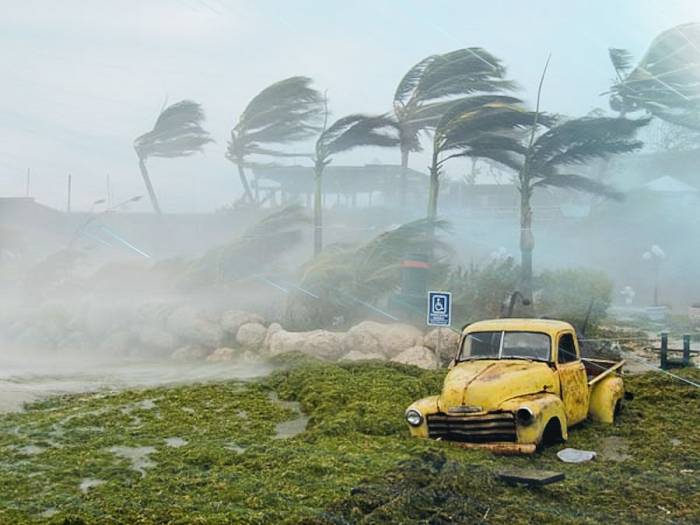
Hurricane season in the Atlantic Ocean that affects the United Sates runs from June to mid-November. A hurricane is an intense tropical storm with powerful winds and heavy rain. It can go by many different names, including typhoon, cyclone, or tropical storm. These storms are usually tropical in nature and can start in the eastern Pacific Ocean, Caribbean Sea, and the Gulf of Mexico as well. One thing they all have in common is that they produce very high winds, torrential rains, and destroy coastal regions in their path.
#2 The Name
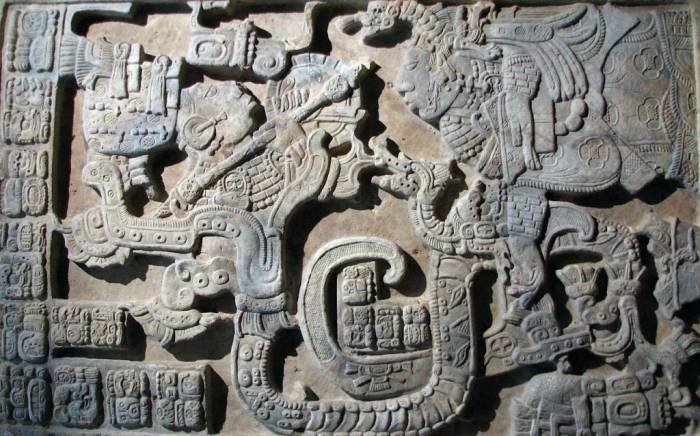
Some believe the term 'hurricane' is derived from ‘Taino,' a Native American word which means evil spirit of the wind. Others believe the one-legged Mayan god, Hurakan, summoned the Great Floods. His name is pronounced in the same way we say and spell "hurricane."
advertisement
#3 Different Terms Around The World
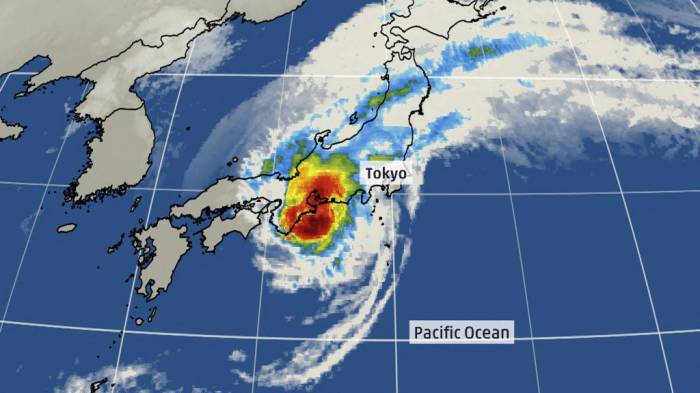
Some refer to hurricanes as "typhoons," and it's essentially the same thing. While they are essentially the same thing, the different names usually indicate where the storm took place. Tropical storms that form in the Atlantic or Northeast Pacific (near the United States) are called hurricanes, those that form near in the Northwest Pacific (near Japan) are called typhoons and those that form in the South Pacific or Indian oceans are called cyclones. To avoid confusion, meteorologists prefer to call them all tropical cyclones.
#4 Forget About Naming A Hurricane Your Own
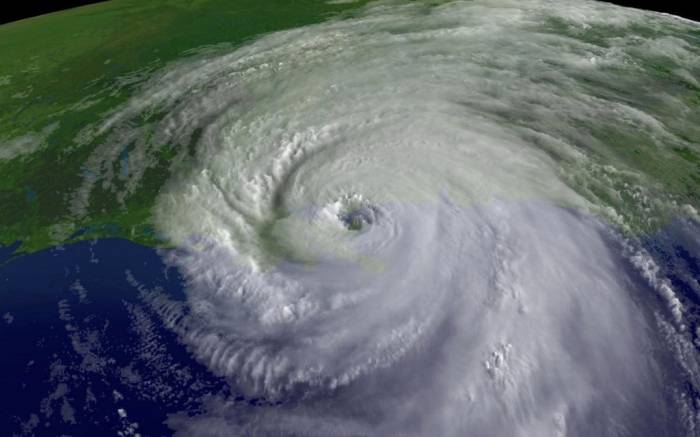
The World Meteorological Organization is responsible for naming hurricanes, and the refrain from letting people try and put their name into the hat. They also do it because being named for a hurricane that can kill people isn't something to be proud of. In the Atlantic Ocean, tropical storms that reach a sustained wind speed of 39 miles per hour are given a name, such as "Tropical Storm Fran". If the storm reaches a sustained wind speed of 74 miles per hour it is called a hurricane - such as "Hurricane Fran". So, hurricanes are not given names, tropical storms are given names, and they retain their name if they develop into a hurricane.
advertisement
#5 Hurricane Names On Rotation
An alphabetical list of names are used every six years. However, famous storms like Hurricane Katrina and Sandy are generally retired. Before the 1960s the names of hurricanes were picked at random, or by the day they fell on, like the great and devastating Labor Day hurricane of 1935. The Catholic church also named storms previously and used the same name several times, like "Hurricane San Felipe" which hit twice on the same day one year apart. In the early days of meteorology in the United States, storms were named with a latitude / longitude designation representing the location where the storm originated. These names were difficult to remember, difficult to communicate and subject to errors. During the Second World War military meteorologists working in the Pacific began to use women's names for storms. That naming method made communication so easy that in 1953 it was adopted by the National Hurricane Center for use on storms originating in the Atlantic Ocean.

advertisement
#6 September Is Busiest Month
Ocean surface waters are generally the warmest in the month of September. This is why there are more hurricanes at this time than any other. Hurricanes are first formed in warm moisture atmosphere by swirling above tropical ocean water. They then pick up speed and begin rotating, growing in size as they travel across the warmer waters.
advertisement
#7 Spins Differently Around Earth
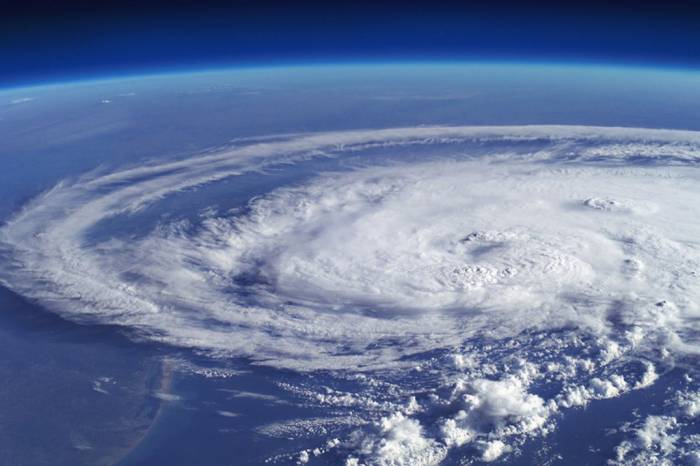
They don't all spin in the same direction. Hurricanes spin clockwise south of the equator. It's counterclockwise north of the equator, where North America is. Stronger hurricanes can reach 40,000 to 50,000 feet up into the sky, though those originating in the Atlantic tend to be more far reaching in spread and height. A high-reaching Atlantic storm can produce above 2 millions trillion gallons of rain per day, while those in the Pacific or elsewhere normally price more severe winds instead of rain.
advertisement
#8 Typhoon Tip
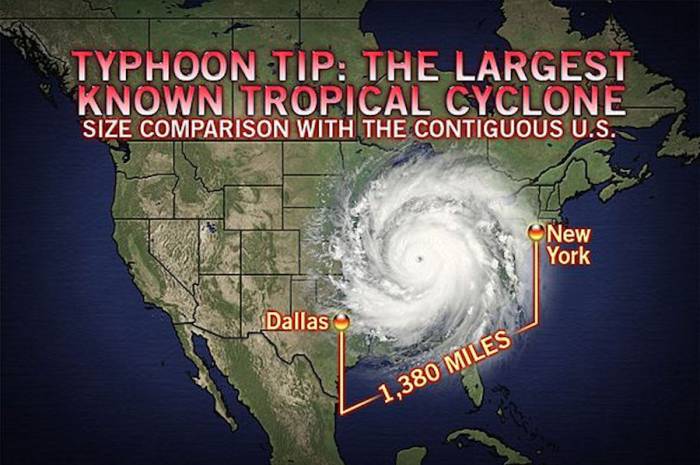
Typhoon Tip, known in the Philippines as Typhoon Warling, was the largest and most intense tropical cyclone ever recorded. It affected areas of Japan, Caroline Islands, Russia, and Guam with wind speeds over 190mph in October of 1979. The size of the storm was almost 1,380 miles in diameter across the Pacific Ocean, roughly the length from NY City to Dallas, Texas.
advertisement
#9 Largest Hurricane Not On Earth
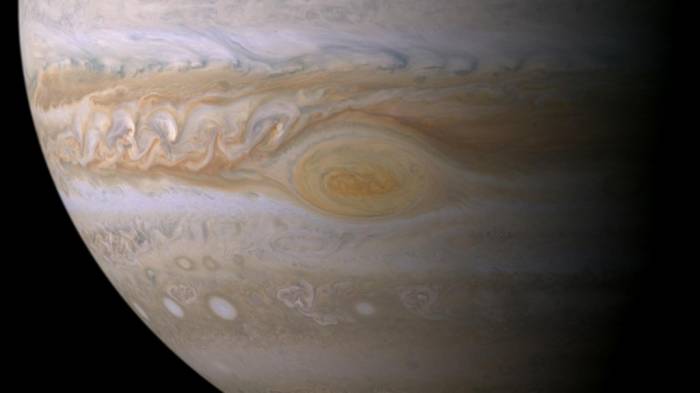
They have storms similar to our hurricanes on other planets too. It's expected that Jupiter's Great Red Spot is the home of a 400 mile-per-hour hurricane that is bigger than Earth itself. The storm never stops.
advertisement
#10 The Aftermath Is Worse
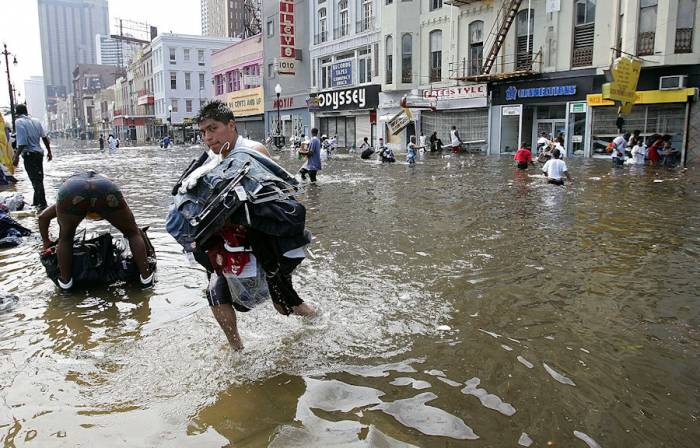
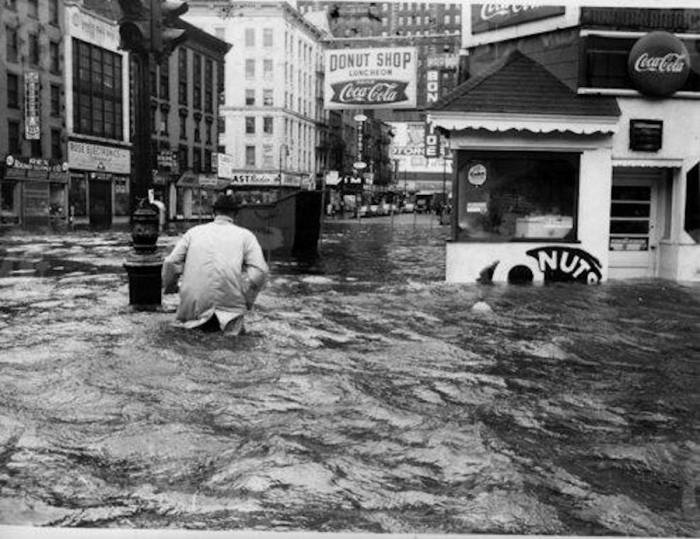
A huge hurricane can release energy equivalent to 10 atomic bombs per second. Hurricanes also produce wild tornadoes, which can last up to 45 minutes. Once they hit land, the intensity of the winds decreases but over the ocean and waters a rolling wave begins. As with Hurricane Sandy, the most destruction occurred after the storm had passed, leaving the areas hit flooded with water as high as the rooftops, power outages, and erosion of the waterfronts. 90% of the deaths that occur during hurricanes is because of the floods created by this disaster.
advertisement
#11 Storm Surge Killed Many In Bangladesh
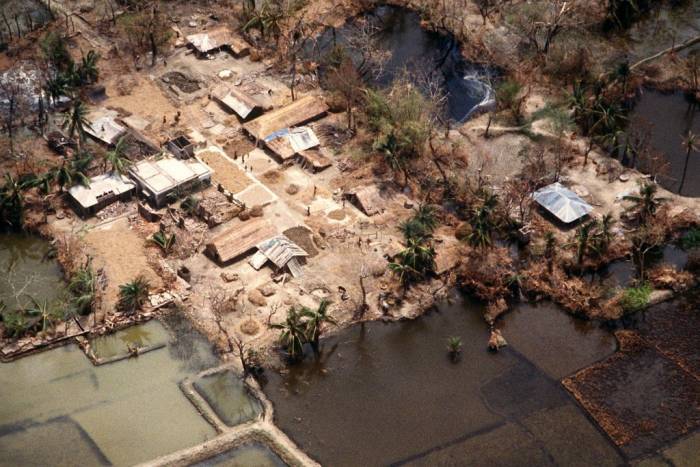
Many people die in hurricanes because of the rising sea water walls that enter the mainland instantly killing people. Tidal waves in the pacific region are more devastating than the actual hurricanes in most cases. Formerly East Pakistan back in 1970 when it occurred, a hurricane created a 30-foot wave and obliterated the country. A benefit concert tried to raise money afterward, but much of the money was taken by the IRS.
advertisement
#12 Total Devastation
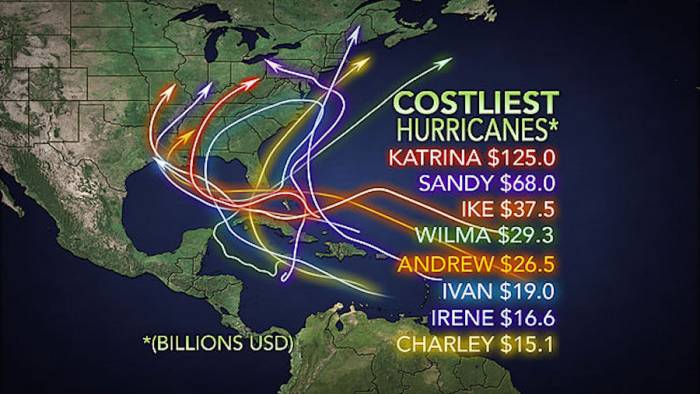
The year 2005 saw the most hurricanes ever to form in a single Atlantic season, with 15. Though hurricanes are said to be responsible for over 19,000 death since the year 1990, the destruction and cost of surviving are detrimental to a community or country. Hurricane Katrina is one of the costliest category 5 type hurricane which has caused damage over $125 billion, which includes clean-up, medical, and reconstruction costs.
#13 Deadliest Hurricane
Though hurricanes are given a category number based on their strength, such as a Category 1 has wind speeds of 70-95 mph, a category 2 has speeds of up to 110 mph, a category 3 has speeds of up to 129 mph, a category 4 has wind speeds around 155 mph, and a category five, the worst, is anything above 160 mph. Oddly enough, the deadliest hurricane ever is the category 4 hurricane that occurred in Texas and Galveston in the year 1990. 8000 people were found dead by the 15-foot waves which carried winds traveling for 130 miles per hour.
advertisement
#14 Extremely Powerful Energy Source
If we could control hurricanes, they would be a terrific source of energy. They create 600 trillion watts of energy, which is approximately 200 times more than the entire Earth can produce. Scientists have been busy working on a way to harness this power for decades, but Mother Nature is not easy to tame.