

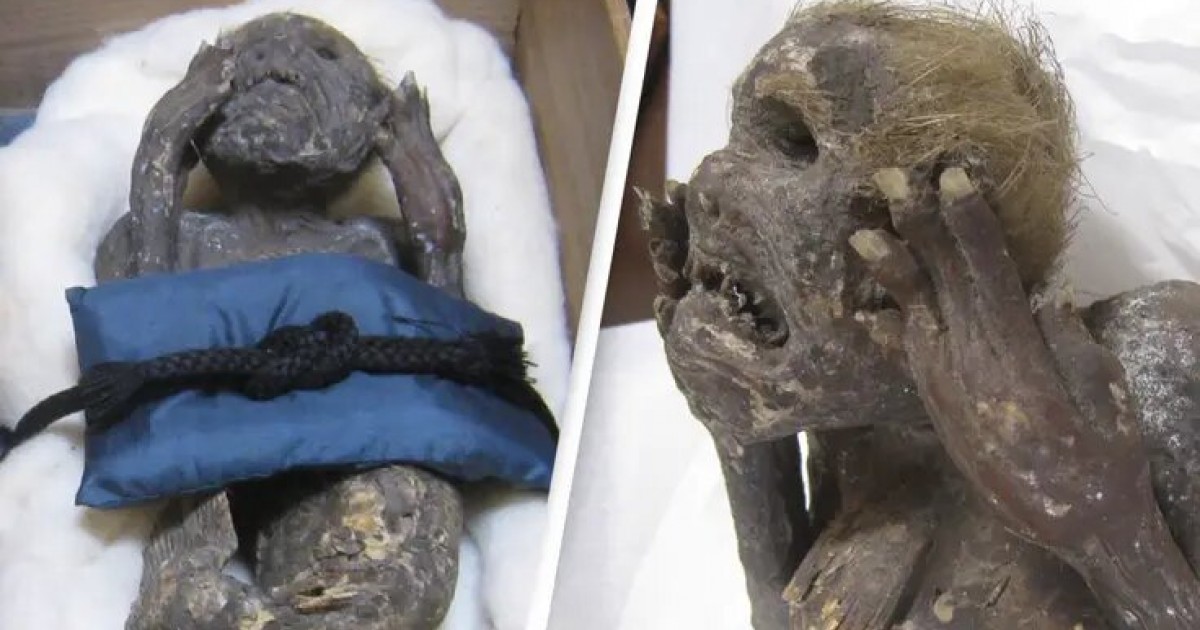
Prepare to have all of your Peter Pan and Pirates of the Caribbean fantasies - or nightmares - realized. Researchers from the Kurashiki University of Science and the Arts have disclosed that they would be undergoing CT scans on a mummified mermaid to learn more about its unusual form and legend, which has even been linked to the coronavirus outbreak.
Ancient Mummified ‘Mermaid’ Rumoured To Grant Immortality To Anyone Who Eats It Being Investigated
By
Haider Ali in
News
On 9th March 2022
advertisement
'Japanese mermaids have a legend of immortality. It is said that if you eat the flesh of a mermaid, you will never die', he said. 'There is a legend in many parts of Japan that a woman accidentally ate the flesh of a mermaid and lived for 800 years. This ‘Yao-Bikuni’ legend is also preserved near the temple where the mermaid mummy was found. I heard that some people, believing in the legend, used to eat the scales of mermaid mummies.'
Pen News
Kinoshita also mentioned how mermaids are said to be able to 'predict[...] an infectious disease,' which could have predicted the coronavirus epidemic.
Kinoshita is doubtful of the mummy's claim that it was "caught in a fish-catching net in the sea off Kocki Prefecture" in a letter that arrived with it.
Pen News
advertisement
The letter states: 'The fishermen who caught it did not know it was a mermaid, but took it to Osaka and sold it as unusual fish. My ancestors bought it and kept it as a family treasure.'
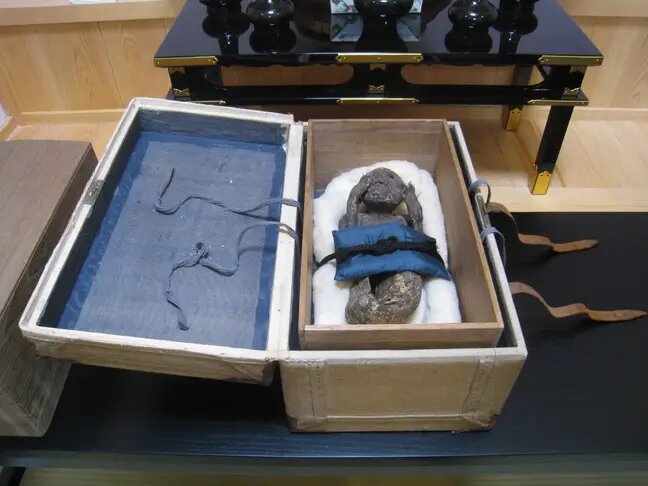
The mummy is currently housed in the Enjuin temple in Asakuchi, where it is kept safe in a fireproof safe after formerly being on exhibit in a glass case.
Pen News
Chief priest Kozen Kuida told The Asahi Shimbun: "We have worshipped it, hoping that it would help alleviate the coronavirus pandemic even if only slightly.”
He stated: 'Of course, I don't think it's a real mermaid. I think this was made for export to Europe during the Edo period, or spectacles in Japan.'
advertisement
He believes the increased interest in the mummy is due to the "tale of mermaids" that "remains all across the world" in Europe, China, and Japan.
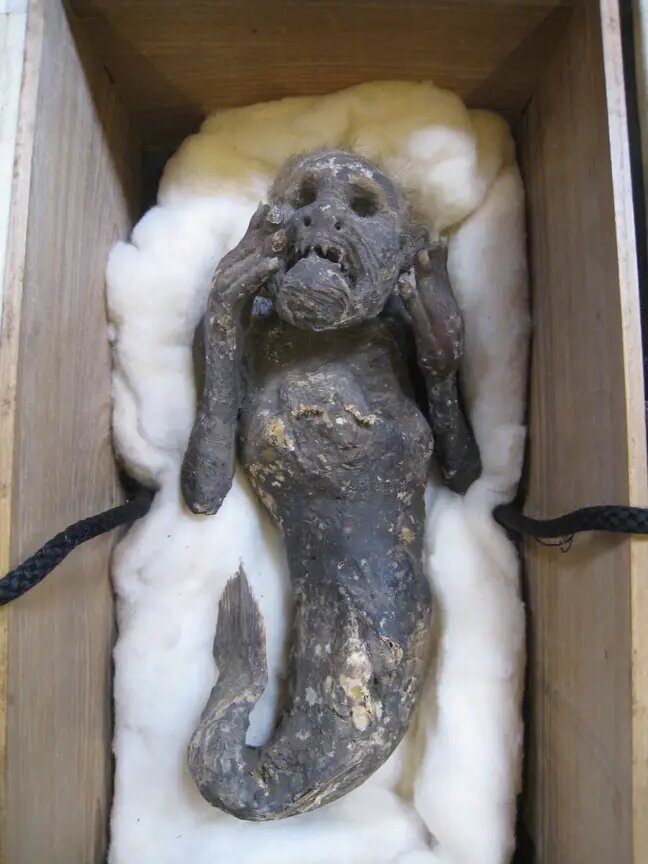
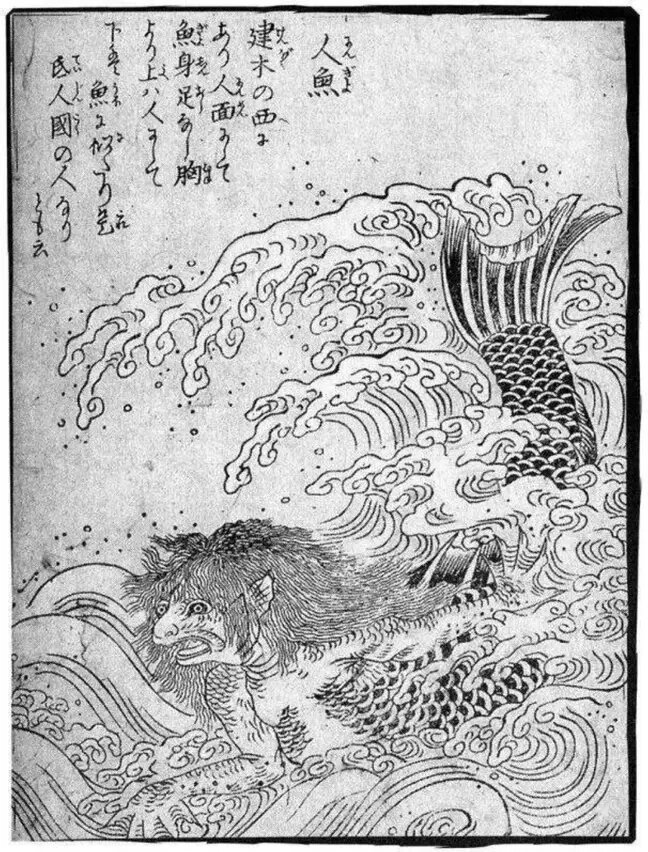
In Japanese legend, there is a creature known as the ningyo, which has a scaled body, a monkey's mouth, and fish's teeth.
advertisement
In light of the mythology, Kinoshita noted that the scheduled CT scans, as well as DNA tests, are intended to determine whether the mummy is made from living animals.
He concluded: 'It looks like a fish with scales on the lower body and a primate with hands and a face on the upper body.'