

Archaeologists believe the remains of a child found in a cave could be around 29,000 years old
Experts Say Ancient Skeleton Discovered In Remote Cave Could ‘Rewrite Human History’
By
Khadija Pervez in
News
On 9th March 2025
advertisement
An ancient skeleton discovered in a remote cave may completely change what we know about early human history, experts have suggested.
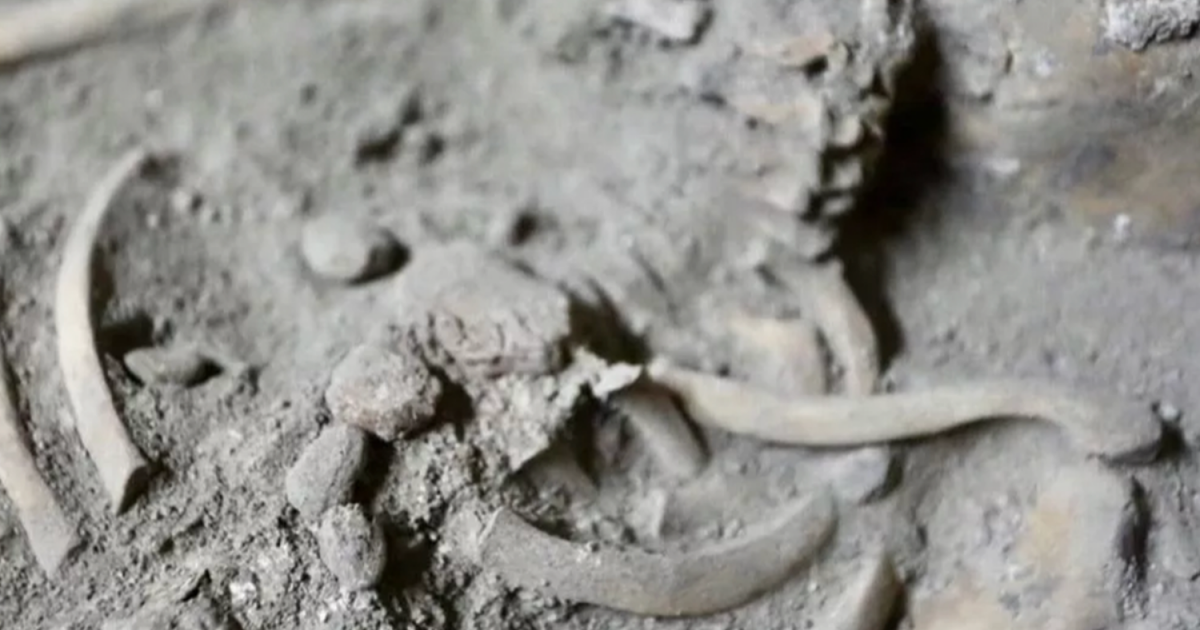
Archaeologists have uncovered the remains of a young child from the Stone Age in a hidden cave in Thailand, marking a significant breakthrough in the study of early human migration.
The remains, estimated to be around 29,000 years old, are now the oldest human fossils ever found in Thailand. This discovery challenges previous theories about when humans first settled in Southeast Asia during the late Pleistocene era, according to Livescience.
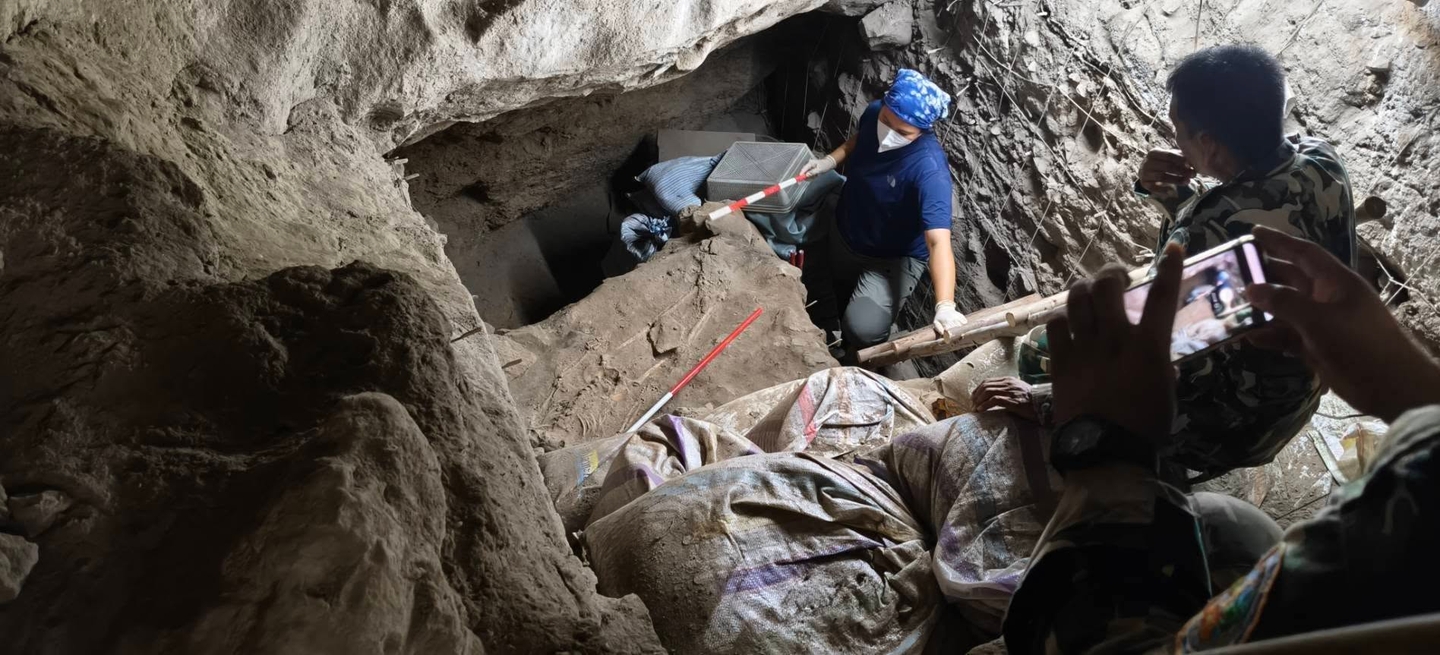
The excavation site
นสพ.ประจวบโพสต์/Prachuap Post/Facebook
The skeletal remains belong to a child believed to have been between six and eight years old at the time of death. The discovery team has affectionately nicknamed the child ‘Pangpond,’ inspired by a well-known Thai cartoon character.
What makes this find even more intriguing is that Pangpond was laid to rest in what appears to be a carefully arranged burial site inside Tham Din Cave. The cave, located 125 meters above sea level in Khao Sam Roi Yot National Park, is already known for its prehistoric rock art.
Now, with the addition of these remains, the cave provides even deeper insight into early human activity in the region.
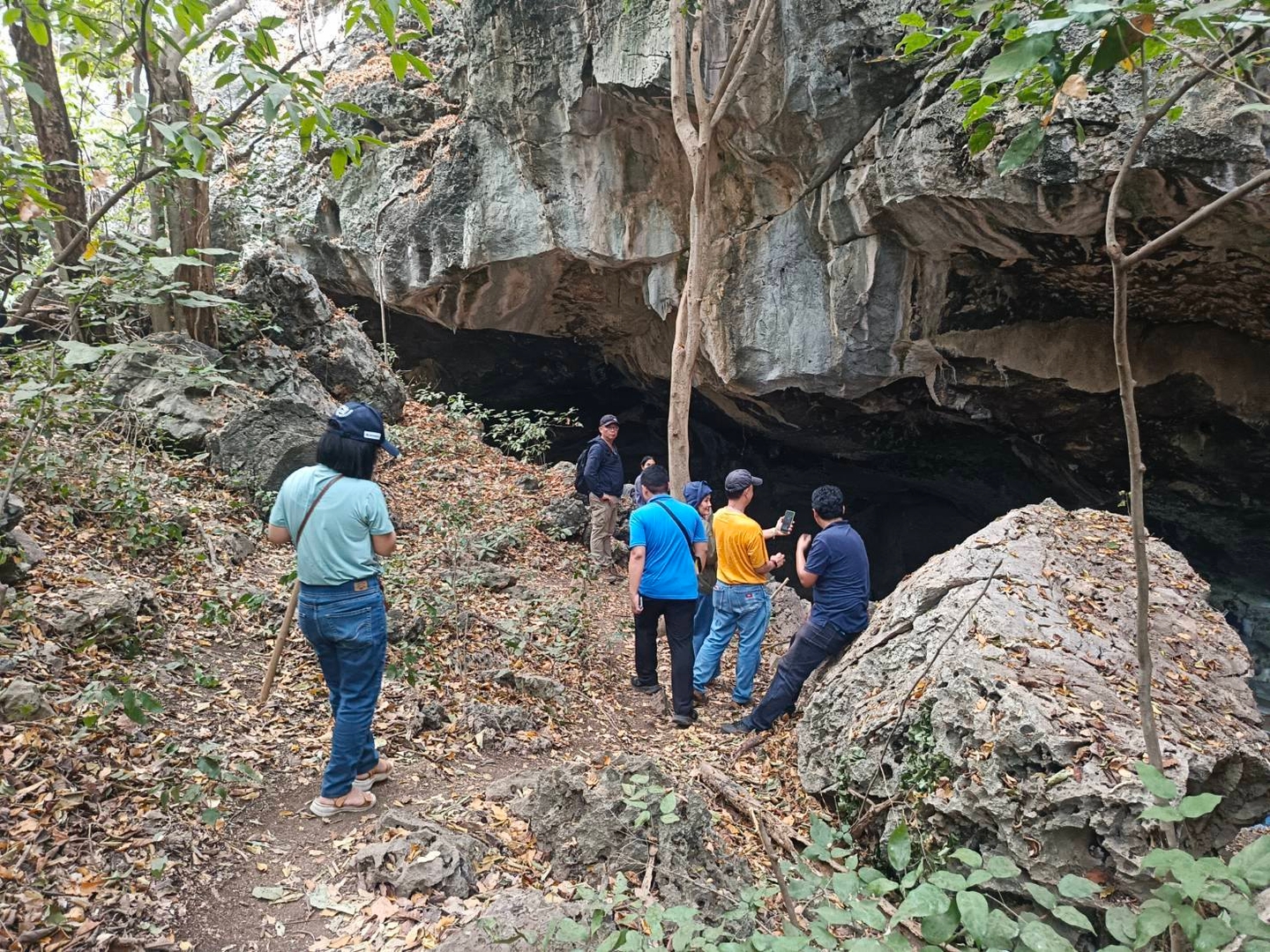
The skeleton challenges previous beliefs about prehistoric activity in the country
นสพ.ประจวบโพสต์/Prachuap Post/Facebook
advertisement
The Thai government’s Fine Arts Department, along with the Department of National Parks, Wildlife, and Plant Conservation, officially announced the discovery in a recent press conference, as reported by the Prachuap Post.
According to experts, both the skeleton and the unique burial method have forced researchers to reconsider the long-held timeline of human habitation in the area.
Phnombootra Chandrajoti, Director General of the Fine Arts Department, emphasized: "This is a groundbreaking discovery that will reshape our understanding of early human presence in Southeast Asia."
It's a landmark discovery
นสพ.ประจวบโพสต์/Prachuap Post/Facebook
"The careful burial and the associated artefacts provide invaluable insights into the rituals and daily lives of these ancient inhabitants."
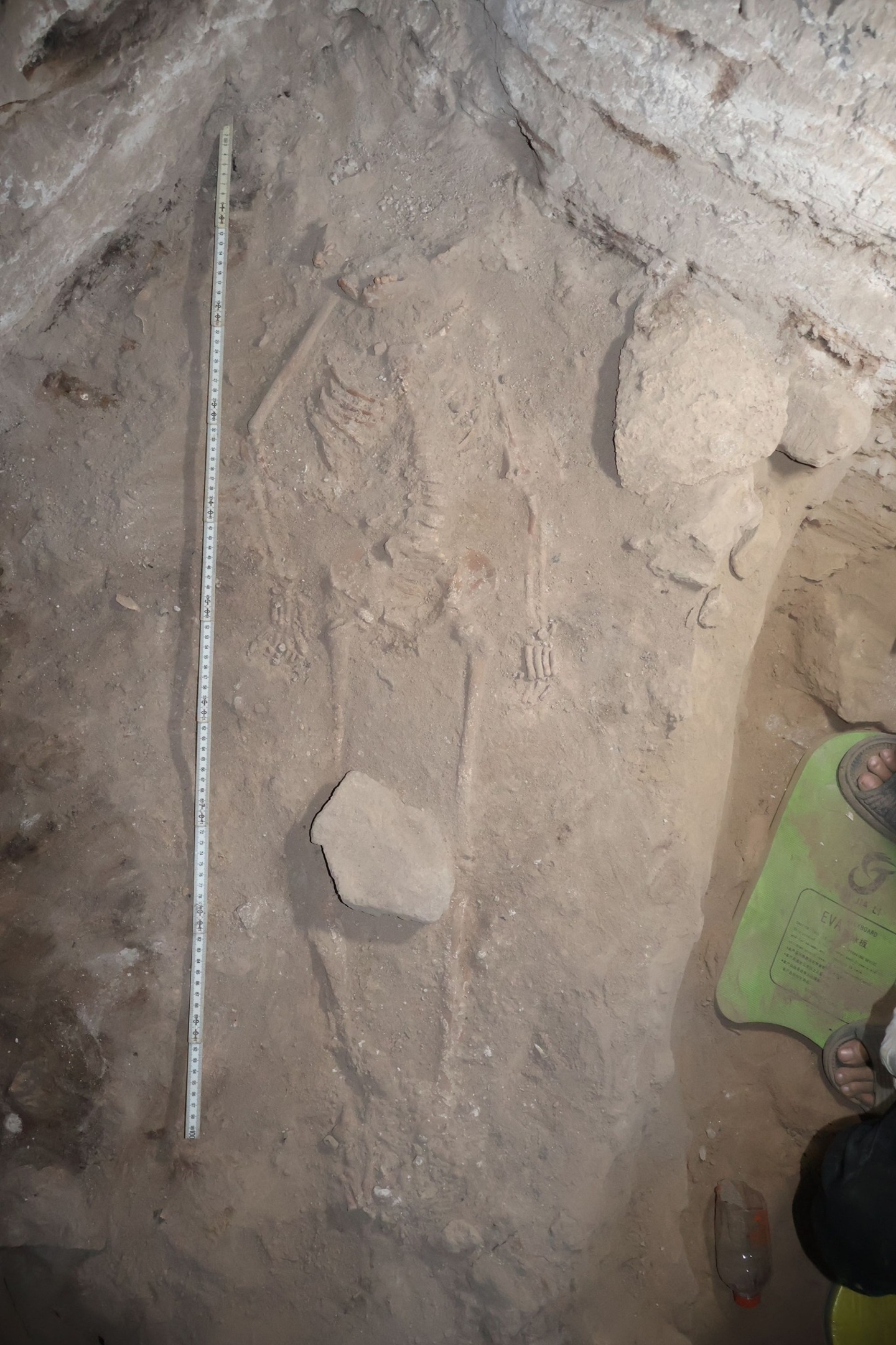
The child’s body was found lying flat on its back, with its arms and legs positioned closely to the torso, suggesting that it may have been wrapped or tied before burial.
Additionally, traces of ash and charcoal near the site suggest that a fire was lit around the burial spot, possibly as a way for prehistoric people to ward off wild animals.
advertisement
The Fine Arts Department further noted: "The body was carefully placed and surrounded by stones, indicating a level of respect and care in the burial process."
Meanwhile, the burial’s unique positioning has led some experts to speculate that certain rituals may have been involved. "The positioning of the limbs, with the toes touching, suggests the body may have been wrapped or tied before burial," reports the Daily Star.
By analyzing the soil and fossils surrounding the skeleton, archaeologists now suspect Pangpond may have lived during a time when Southeast Asia was still part of the ancient landmass known as Sundaland. This submerged region once connected large portions of Asia during the last Ice Age, between 110,000 and 12,000 years ago.
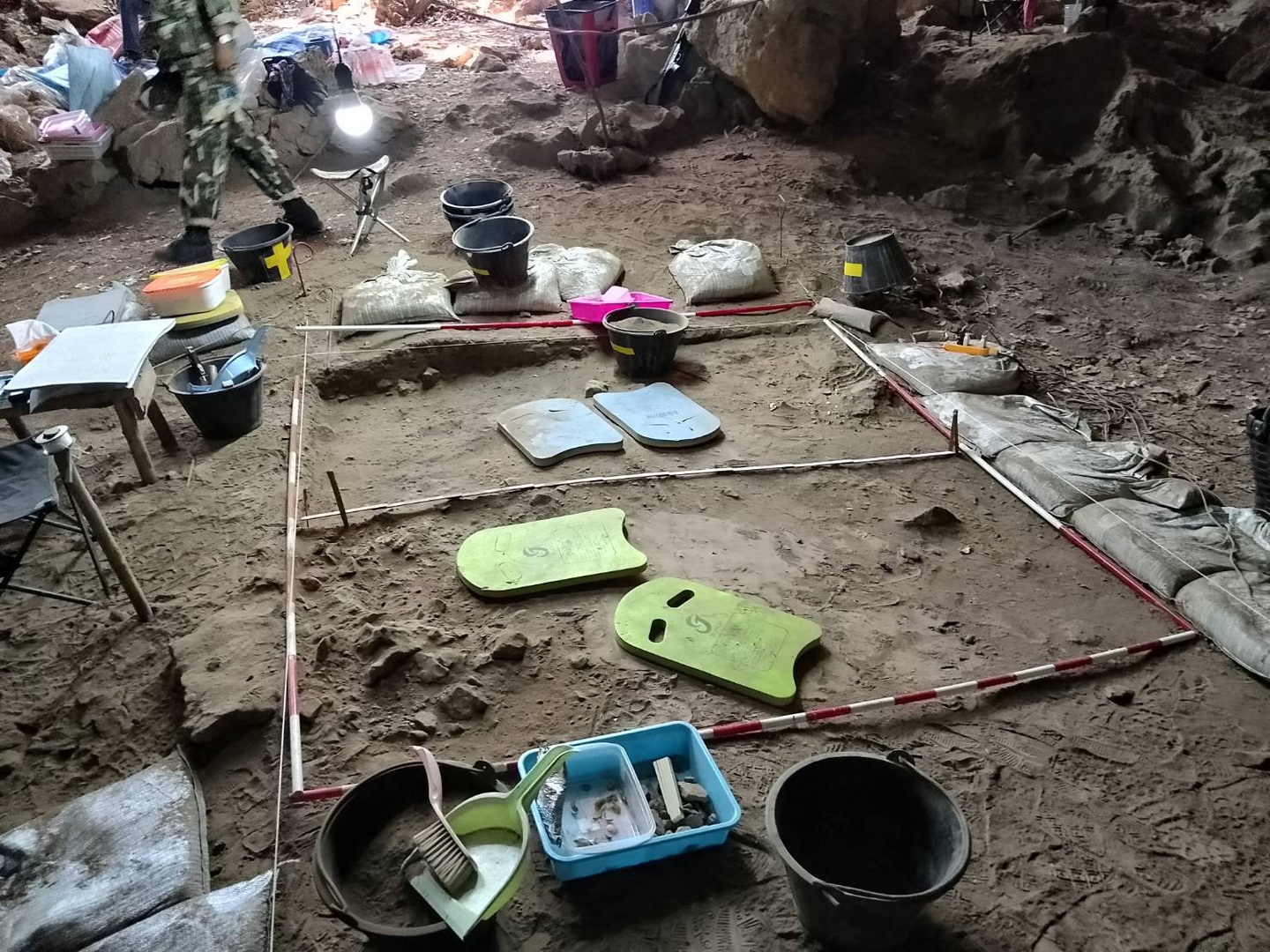
Archaeologists made the groundbreaking discovery last month
นสพ.ประจวบโพสต์/Prachuap Post/Facebook
advertisement
The Tham Din Cave site first gained attention in 1996 when researchers discovered prehistoric rock paintings on its walls. These paintings, drawn in red ocher, have since been extensively studied. In 2020, archaeologists began focusing on three specific chambers in the cave, where artwork depicts human figures and hunters wielding bows and arrows.
By 2022, further excavations revealed additional evidence of early human activity, including animal bones, shells, seeds, and primitive tools. Radiocarbon dating of these findings confirmed that prehistoric communities may have lived in the area between 11,000 and 29,000 years ago.
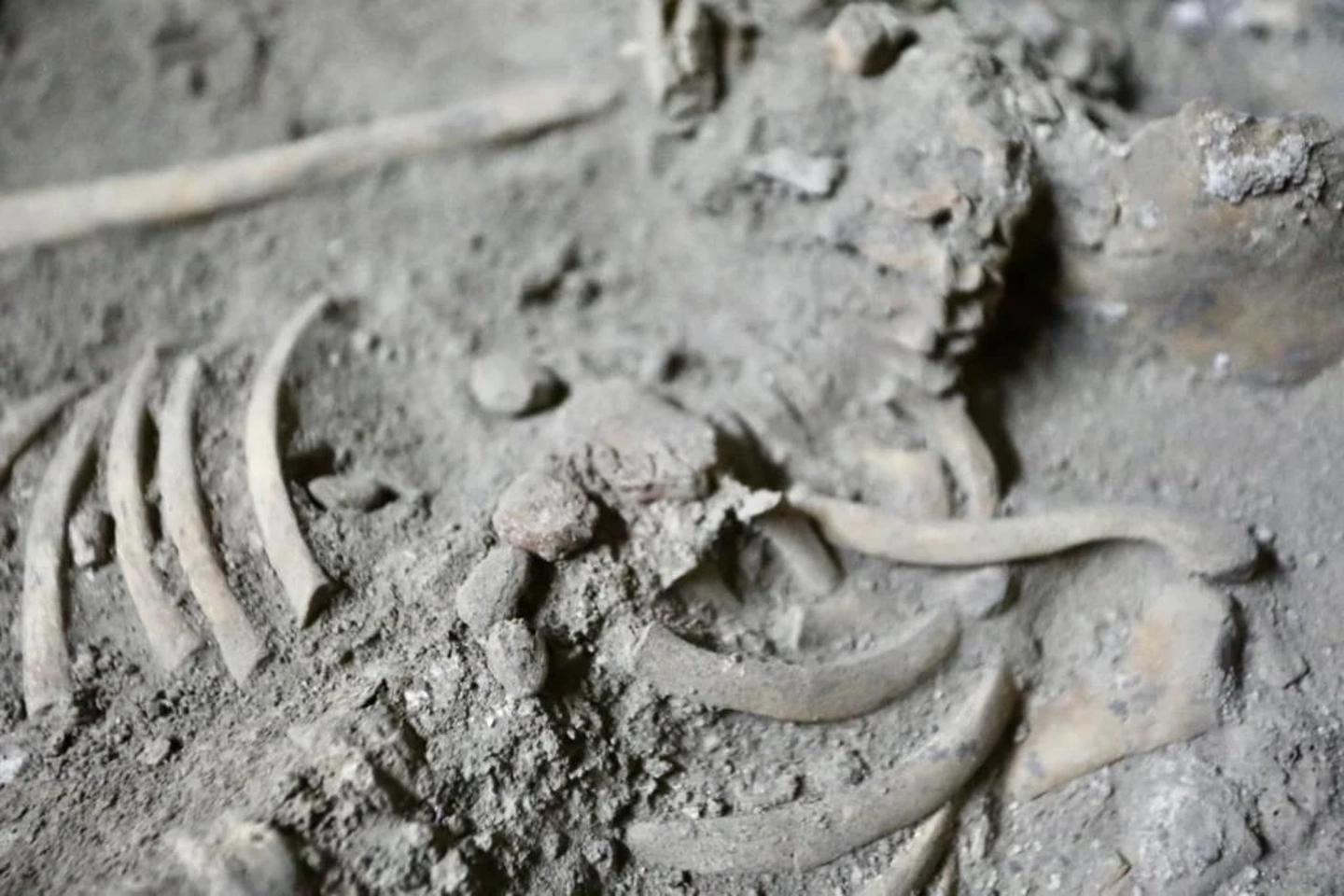
The remains are believed to be 29,000 years old
Fine Arts Department/Facebook
advertisement
A spokesperson for the Fine Arts Department remarked: "The Din Cave site offers a unique window into the past, documenting the evolution of human societies over thousands of years."
They also added: "Further research and analysis will undoubtedly shed more light on the lives of these ancient people and their contributions to the region's rich history."