Fasika is one of the greatest festivals of the Ethiopian people.
Beautifully Festive Easter Traditions Around The World - Part 2. Ethiopia
By
Editorial Staff in
Holidays
On 20th March 2016
advertisement
Ethiopia
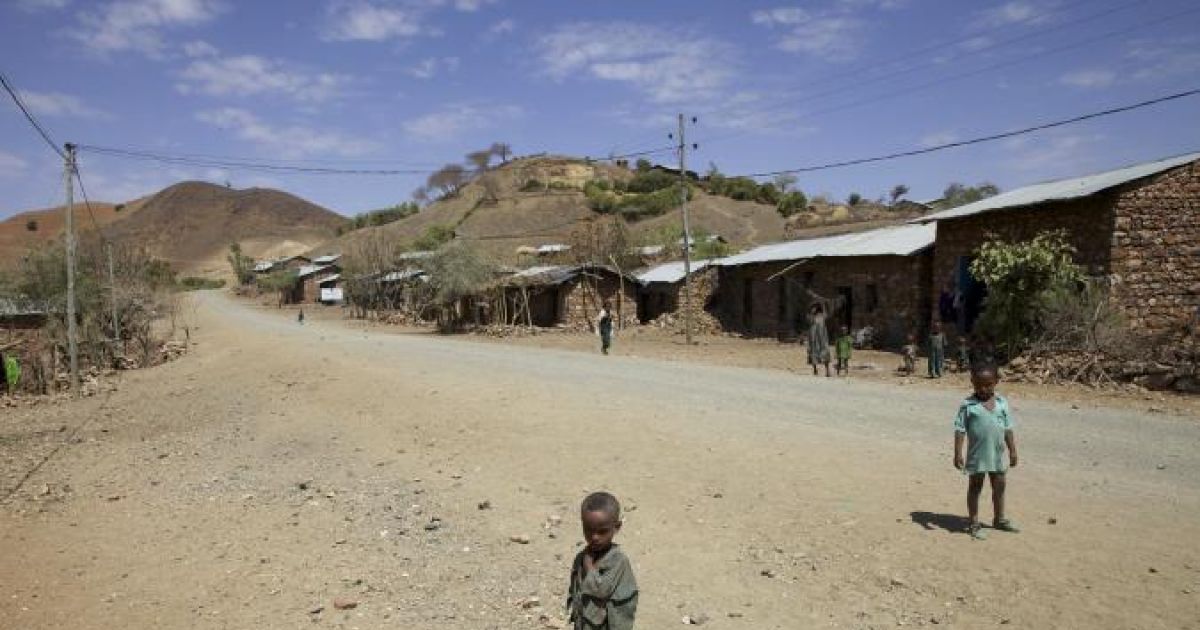
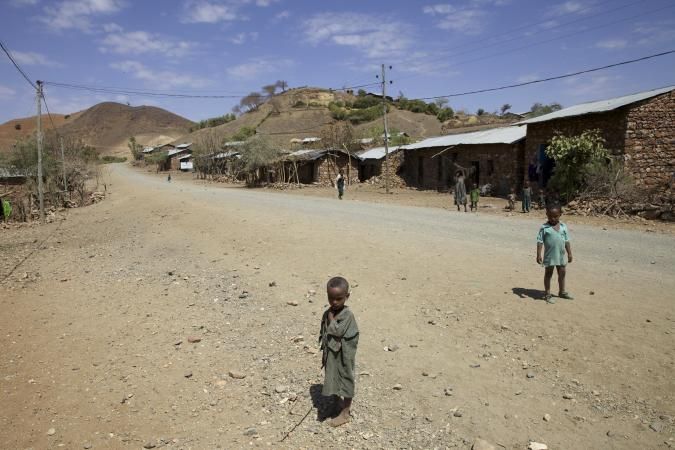
Ethiopia is considered a 3rd world country due to its underdeveloped industries and economy, their health, education and standard of living along with many other substandard advancements. A poor country they may be, They are rich in traditions. Ethiopian Christians take pride in their ancient heritage.
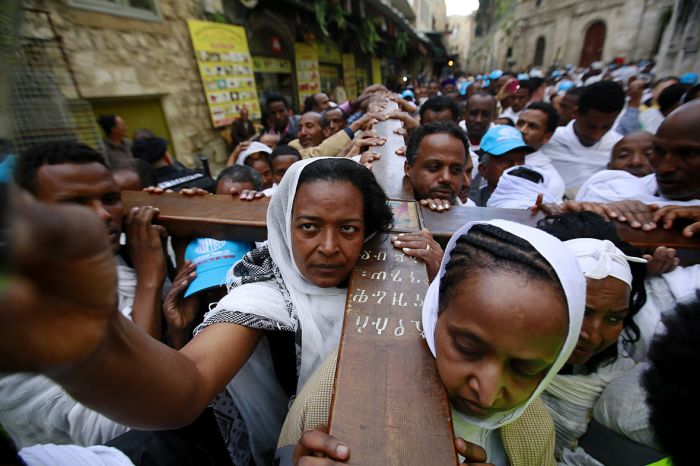
Good Friday procession in Jerusalem's old city
During Good Friday's procession, Orthodox Christians make their way to Jerusalem's old city along the Via Dolorosa carrying wooden crosses.
advertisement
Their best colorful garments
Unique to their own communities, Ethiopian Orthodox Clergy dress in their best colorful garments. In Orthodox theology, the death and resurrection of Jesus is more meaningful than Christmas when Christ was born.
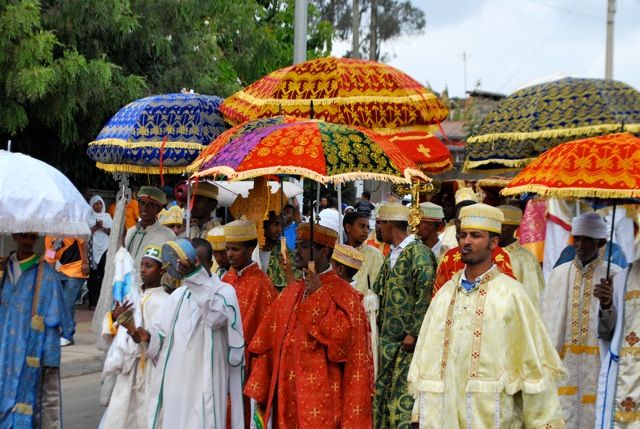
Some dress like kings
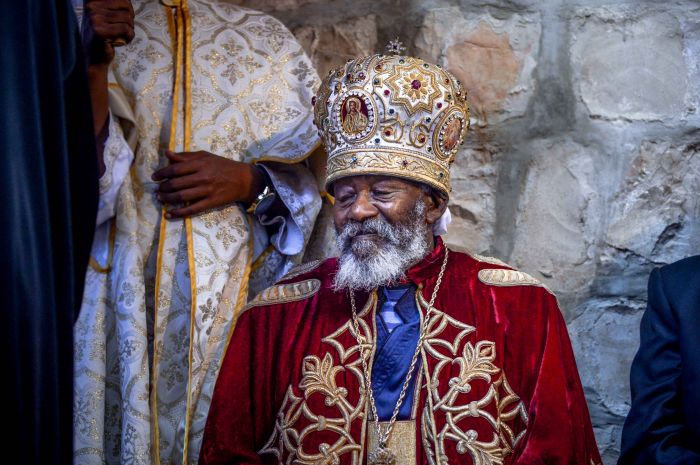
Some clergy dress so elaborate they look like kings!
advertisement
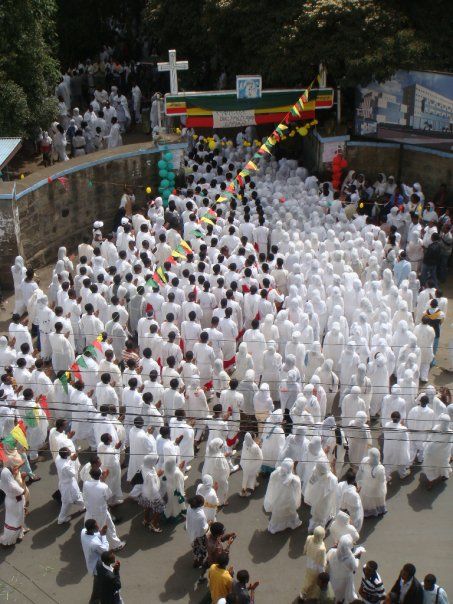
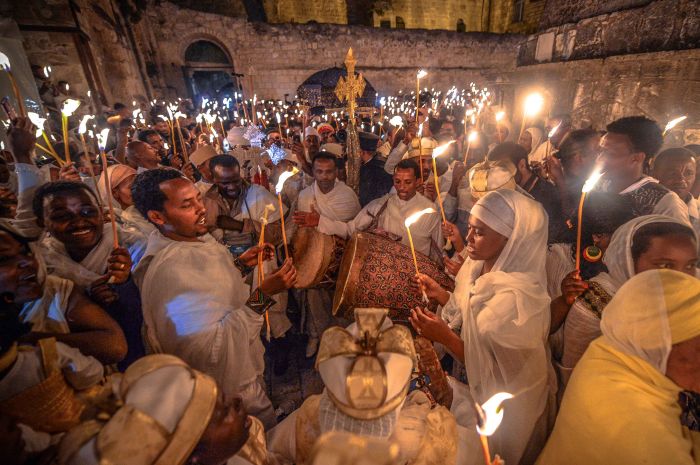
Dressed mostly in white
Most parishioners who plan to attend the whole service wear their best white clothing called 'Yabesha Libs'. They will have with them candles made of cotton and wax called 'twaf'.
advertisement
Sacred celebration
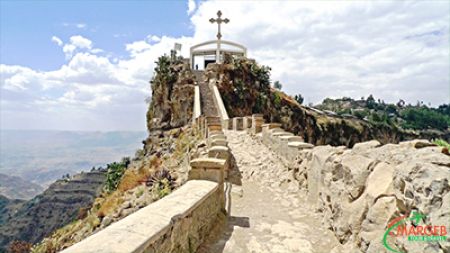
Fasika is Ethiopia's most formal and sacred of celebrations.
advertisement
Paschal Vigil
The initial Easter service begins on Saturday night beginning with the Paschal Vigil. Service can start any time after 6pm. They read scripture and around 10 pm they will play music and sing hymns and drums play while the priests chant a prayer called the 'Geez. Just before midnight, night prayers and midnight hour prayers are said. Then all the lights and candles are extinguished except for the ones on the alter. All the while people position themselves on their knees on the ground with their head on the ground as well and they bow and rise continually until they tire. The service usually ends around 3am Sunday morning.
advertisement
Easter morning
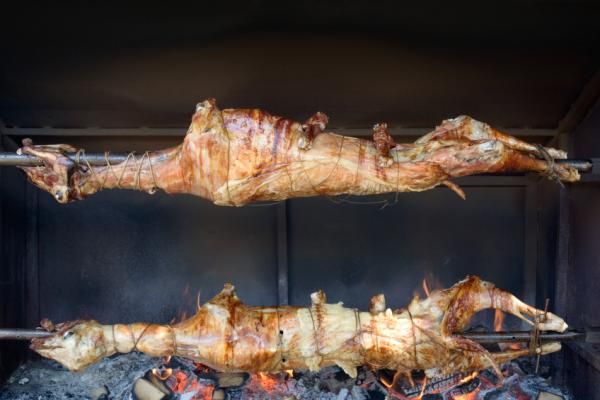
During their service on Saturday night, a chicken is slaughtered. In the morning after the service ends everyone goes home and have breakfast with a sour dough bread called 'dabo' usually cut by a priest or head of the house hold and then after a brief rest they slaughter a sheep. This the end to their 55 days of fasting where during this time called "Lent" they don't eat or purchase any animal products including eggs, milk, yogurt and so on and the beginning of their Easter feast.
advertisement
Easter meal
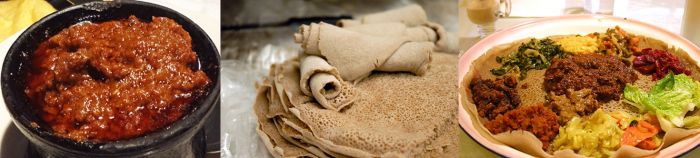
A tradition Easter meal usually consists of mutton or lamb stew called "beg wot" and a sourdough pancake called "injera" and is normally eaten in the afternoon.