

Emma Heming Willis says an old speech problem began returning before the family had answers about Bruce's health
advertisement
Before Bruce Willis' family had a clear explanation for what was happening to him, his wife Emma Heming Willis noticed an old problem beginning to return. It was something the Die Hard actor had dealt with as a child and had spent much of his adult life learning how to control.
Willis' family first announced in 2022 that he had aphasia, a condition that affects communication, and said he would step away from acting. In February 2023, they shared a more specific diagnosis of frontotemporal dementia, or FTD. The condition is less common than Alzheimer's disease and is estimated to affect tens of thousands of people in the United States.
Since then, Emma has spoken openly about the family's experience, including the changes she noticed before doctors reached the diagnosis. Her comments offer a glimpse at how difficult it can be to recognize that something familiar has begun happening for a very different reason.
Emma discussed those early changes while appearing on the Making Space with Hoda Kotb podcast, one day before the 27th anniversary of The Sixth Sense, one of Willis' most famous films.
Rather than describing a sudden loss of memory, she pointed to a speech problem that Willis had experienced long before his acting career. As a child, he lived with a severe stutter, but over the years he became skilled at managing it.
That history initially made the change easier to explain away. Emma already knew the stutter was part of his past, so its return did not immediately look like a sign of a progressive neurological condition.

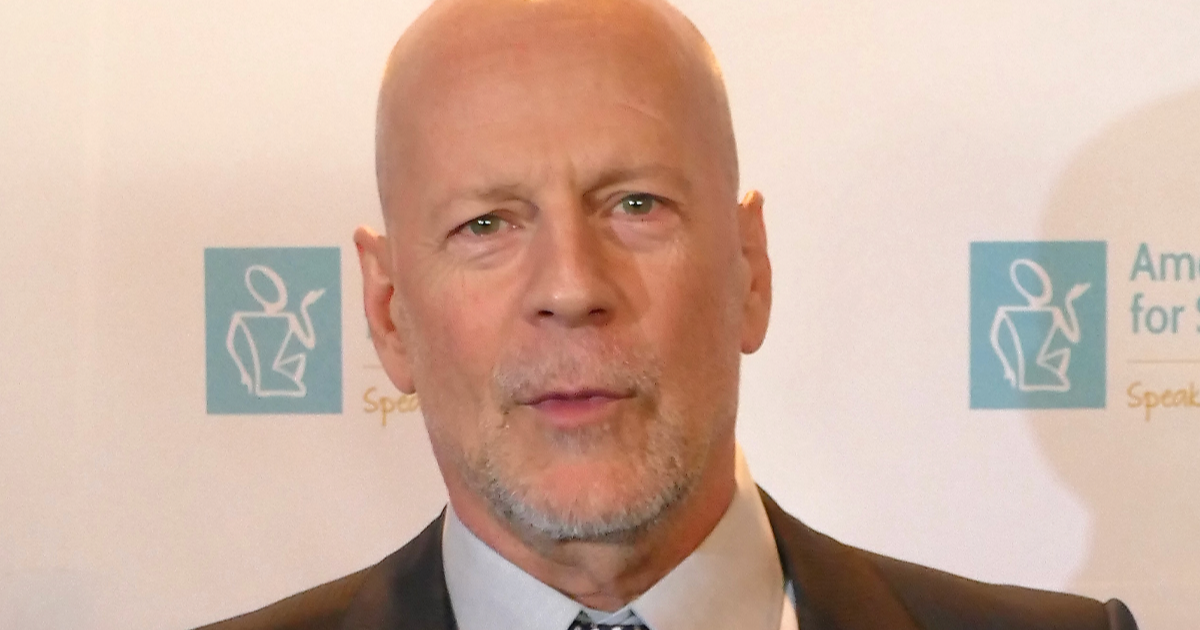
Emma Heming Willis has been speaking about her husband's dementia diagnosis
Jon Kopaloff/Getty Images for The Association for Frontotemporal Degeneration
advertisement
Emma recalled the first change she began noticing: "I started noticing a stutter that he had had, a severe stutter, that was quite debilitating for him as a young child. "
At first, it seemed like something Willis had simply lost some control over rather than a completely new symptom. She continued: "It started to come back. It's not that his stutter wasn't there throughout his life. He just sort learned to manage it. But then I started noticing that he was not managing it anymore."
The former model and entrepreneur has since become one of the most public voices discussing her family's experience with FTD. She turned 50 earlier this year and admitted during the same podcast conversation that she had 'not really been in the celebratory feelings of late' while navigating life alongside her husband's illness.
Emma admitted that even deciding whether to mark the milestone took some thought. "I was unsure if I really wanted to do anything,"
A friend eventually convinced her that reaching 50 deserved to be recognized despite everything else happening in her life. Emma explained: "But I had a friend of mine who kept sort of pushing and saying, 'You know what? You don't wanna miss out on your 50th. You have to celebrate in some form or fashion.' And I really sat with that, and I thought about it. And I thought, 'You know what? I don't wanna look back and think, why didn't I celebrate 50?'"
She did eventually celebrate with cocktails and the people closest to her. Even then, enjoying herself was not completely simple. Emma said guilt can follow moments of happiness when someone you love is living with a progressive illness, leaving her to question whether she should be celebrating at all.
advertisement
Emma explained how she tries to deal with that feeling by asking herself what Bruce would want for her: "I always wrestle with it, you know? I think guilt is something that I am always carrying, but I've learned that it is really not helpful. What I know is I always go back to what would my husband want for me?"
She has also spent time correcting one assumption people often make when they hear the word dementia. FTD does not always begin with the type of memory loss most commonly associated with Alzheimer's disease, and different forms can affect language, behavior or movement in different ways.
Speaking on The Bossticks podcast in June, Emma addressed questions about whether Willis still recognizes the people closest to him: "When people say, 'Oh, you know, does he remember who you are?' Well, he does because he doesn't have Alzheimer's; he has FTD,"

Bruce and Emma Heming Willis married in 2009
Burak Akbulut/Anadolu via Getty Images
advertisement
FTD can affect language before memory becomes the main concern
A returning stutter on its own does not mean someone has FTD, and it should not be treated as a diagnostic sign by itself. What makes Emma's observation relevant is that certain frontotemporal disorders can affect the parts of the brain involved in speech and language, which can lead to growing problems with communicating.
The National Institute on Aging explains that FTD results from damage mainly to the frontal and temporal lobes of the brain. Depending on which areas are affected first, someone may experience changes in behavior, emotions, speech, understanding language or movement rather than obvious memory problems at the start.
One group of frontotemporal disorders involves primary progressive aphasia, where communication becomes harder over time. Symptoms can include trouble finding or understanding words and increasing difficulty speaking. That helps explain why families may notice changes in conversation long before the condition resembles the kind of dementia they expected to see.
advertisement
That difference is why Emma has been so keen to separate Bruce's experience from the assumption that every form of dementia follows the same path. She said: "I think that's a very common misconception that, when you think of dementia, we think of memory loss."
Earlier this year, the family also launched the Emma & Bruce Willis Fund. The Entertainment Industry Foundation says the fund is focused on raising awareness of FTD, backing promising research and giving caregivers access to practical support and opportunities for respite.
For Emma, caregiving has involved adjusting to changes rather than facing one single moment of loss. Describing what that experience can feel like over time, she said: "These diseases, they take and they take and they take, sometimes very slowly, and you are grieving different losses all the time. So you are consistently in grief."