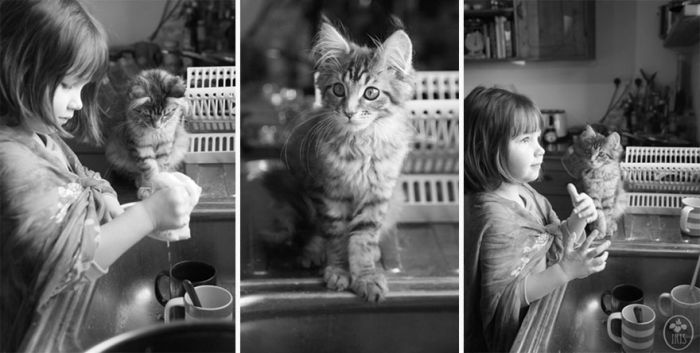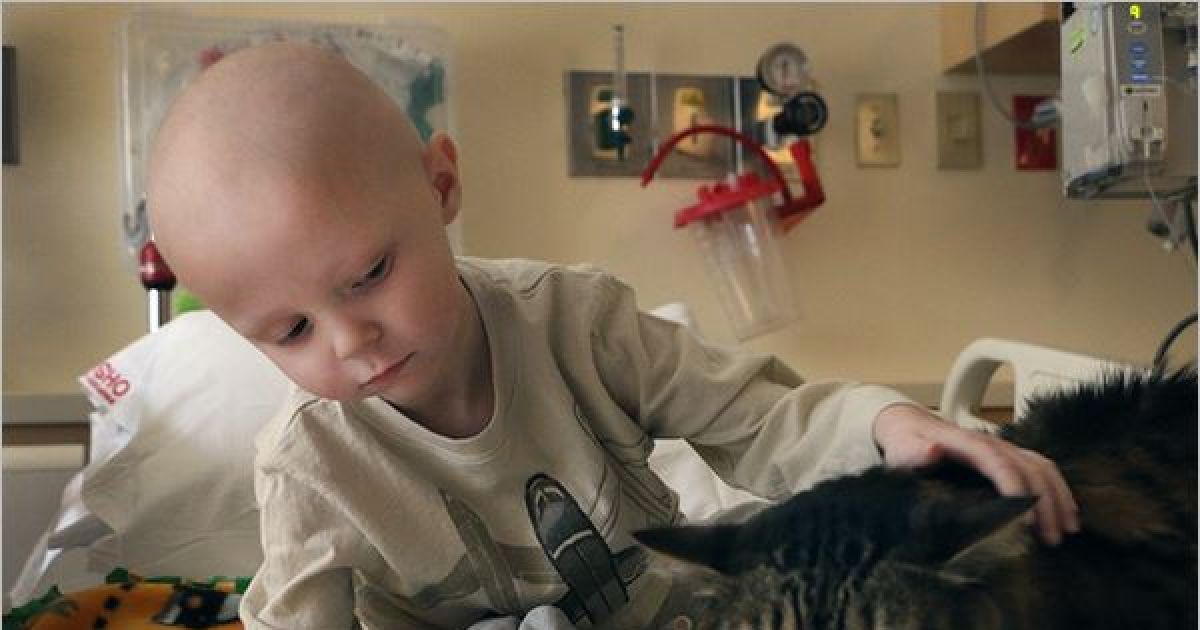
A therapy cat is a cat trained to help ailing humans in a medically beneficial way to take advantage of the human-animal interaction for purposes of relaxation and healing.
advertisement
THERAPY CATS: Sharing the Love
Ask any number of cat owners about the benefits of petting or snuggling with a cat and the responses will likely be the same. Cats provide their own brand of unconditional love and comfort. They help us relax and cope with the stresses of life in a special way.
When our feline friends run to greet us after a long day away, it affects us physically.
Many studies have shown that having a cat can calm nerves, lower blood pressure, help prevent and treat cardiovascular disease, cancer and chronic pain, strengthen the immune system and even help you live longer. One researcher even suggests that those who own pets tend to be happier in general than those who do not.
advertisement
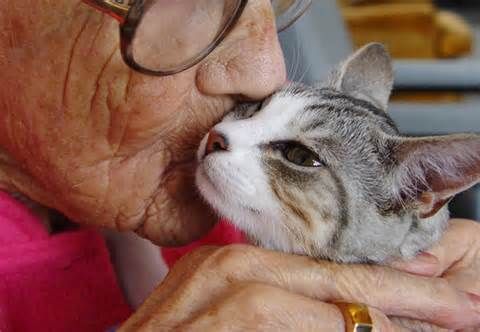
Our cats give us unconditional love and sharing that love with others in need can be a special gift.
One way to do this is by having your cat certified as a 'Therapy Cat,' one that provides love, comfort and confidence to people who are shut in, lonely or sick. Once a cat has been certified and approved as a Therapy Cat, it can visit people in certain types of facilities along with its owner - usually in hospitals, nursing homes or schools
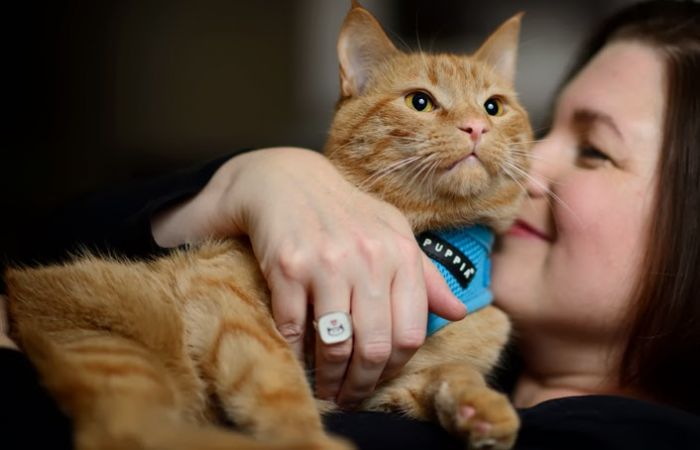
Our cats give us unconditional love and sharing that love with others in need can be a special gift.
One way to do this is by having your cat certified as a 'Therapy Cat,' one that provides love, comfort and confidence to people who are shut in, lonely or sick. Once a cat has been certified and approved as a Therapy Cat, it can visit people in certain types of facilities along with its owner - usually in hospitals, nursing homes or schools
advertisement
By interacting with people or by simply purring or being petted, Therapy Cats often work miracles.
They have been known to help significantly combat a variety of physical illnesses, as well as anxiety disorders, depression, loneliness and developmental disabilities. A visit from a Therapy Cat is always a welcome treat.
advertisement
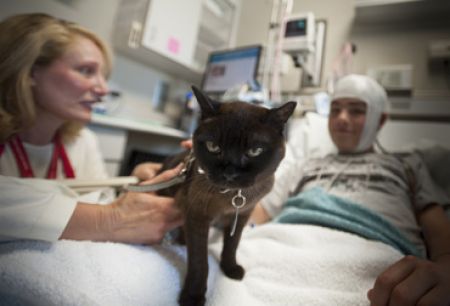
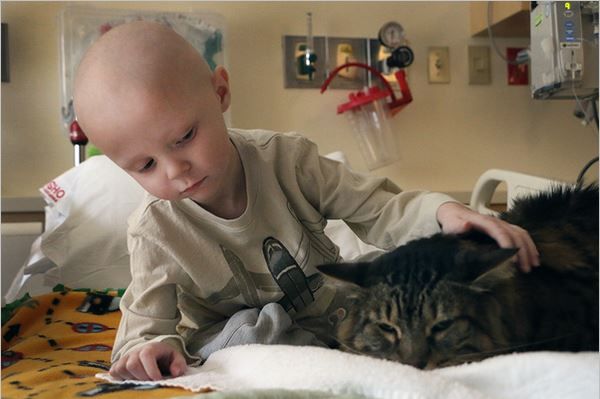
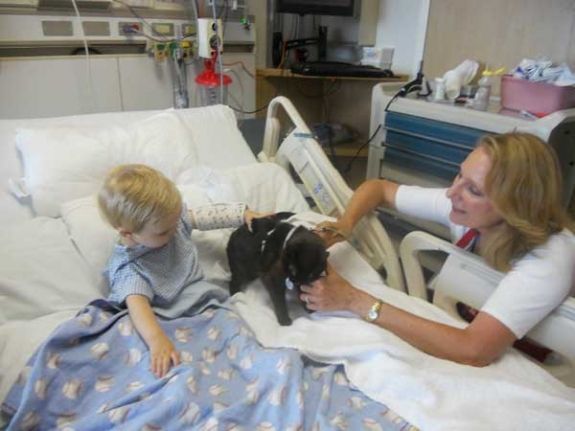
In hospital settings
Therapy Cats have been credited with providing distractions so that nurses can more easily perform medical procedures on pediatric patients, encouraging stroke patients to perform physical therapy exercises with extra diligence and even bringing people out of comas. Patients afflicted with dementia or Alzheimer's disease have been known to suddenly begin speaking again after spending time with a Therapy Cat.
advertisement
Cats seem to have an instinct to be there when we need comfort.
Whether we are sick, worried about our work, blue over a broken romance, or mourning the loss of a dear friend or loved one, a cat will inevitably show up to share our angst. Feeling a furry body steal into your lap, then give loving licks on your hand or face, purring all the while, is one of the most comforting feelings imaginable
advertisement
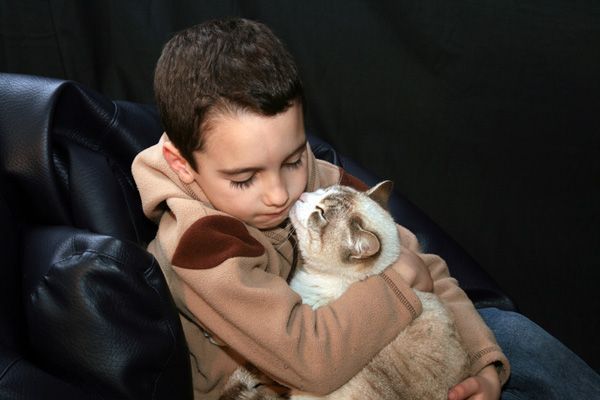
Pets May Help Kids With Autism
Study Shows Bonding With New Pet May Improve Socialization
Although there is plenty of anecdotal evidence linking pet ownership to better socialization in children with autism, the study is among the first to explore the connection.
Researchers in France tested behavior and intelligence in 260 children with autism who did and did not have pets -- mostly dogs and cats.
They found that those who became pet owners after the age of 5 performed better than children without pets on two key measures of social functioning -- offering comfort and offering to share.
advertisement
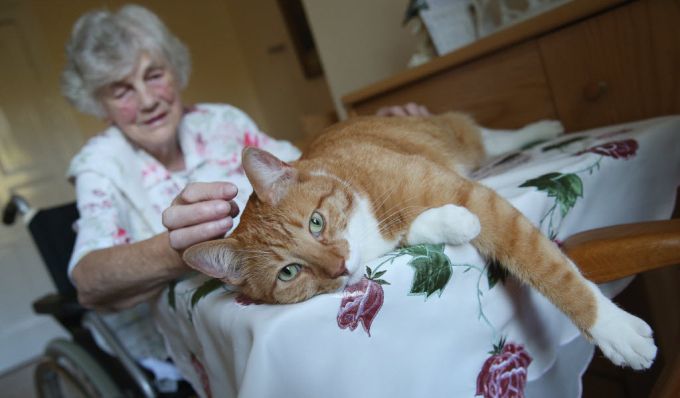
Therapy Cats in Nursing Homes
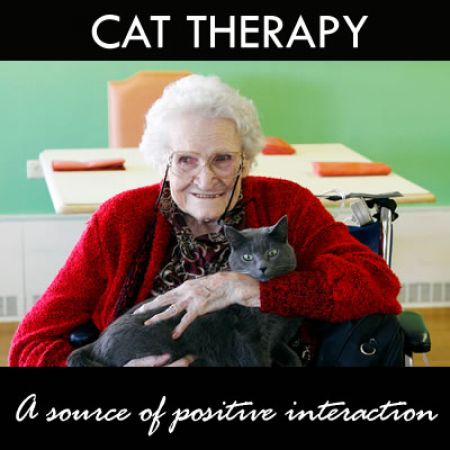
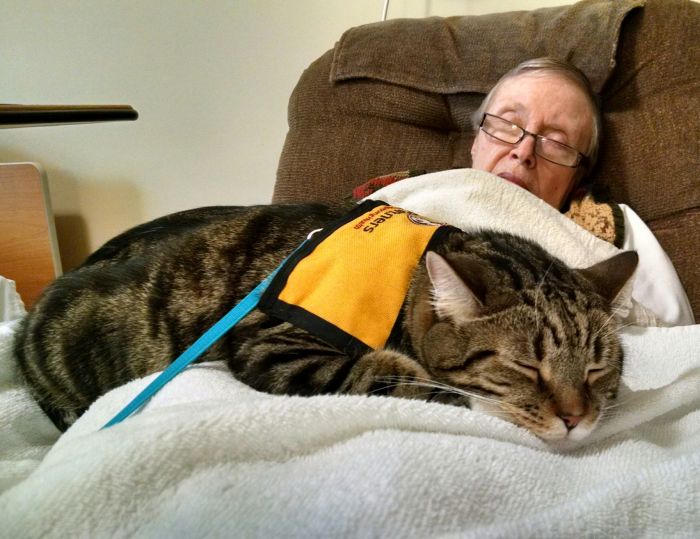
Is it any wonder then, that cats are great therapy for nursing home residents too? It brings joy to see eyes light up when a cat is brought in by a visitor. Even more fortunate are those patients of health care facilities who have a cat in residence. Try petting your kitty when you are feeling stress from the activities of an unusually busy day. You'll find those tense shoulder and neck muscles relaxing, your heart rate slowing, and an intense feeling of pleasure flowing through your entire body, as all those stresses flow out and relaxation flows in. Those are the benefits of therapy cats to nursing home residents and health care facilities, and they can be equally applied to the rest of us.
advertisement
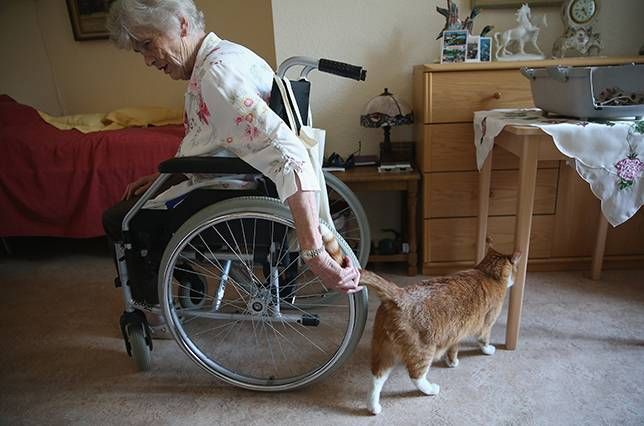
Therapy Cats With Alzheimer Patients
Therapy cats are especially valuable when interacting with Alzheimer's Disease patients, by stimulating both memory and forgotten emotions.
advertisement
One of the most astounding cases of cats assisting Alzheimer's patients is Oscar
the cat who rules the third floor dementia ward of Steere House Nursing and Rehabilitation Center in Providence, Rhode Island. Oscar has the almost mystical ability to sniff out patients who face imminent death, and he invariably stays with them until they have passed over. Often, Oscar will not leave a patient's bedside until someone arrives to remove the deceased. Then, he will turn to the next most needy patient. Oscar's story has been told in the masterful book, Making Rounds With Oscar, by David Dosa, M.D., a staff physician at Steere House, with a background in Geriatrics. No one knows precisely what alerts Oscar to the pending demise of a patient, although there are several theories, including the odor of ketones on the patients' breath, signaling the breakdown of body cells.
advertisement
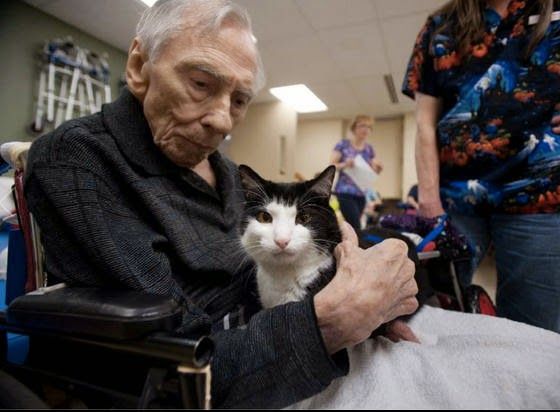
Although dogs have more traditionally been recruited as therapy animals
and horses are the second most favored, cats are being used more and more. After all, the advantage of being able to purr is of huge value, and seeing eyes light up as wrinkled hands stroke a wildly vibrating furry body is a convincing argument for cats in this role.
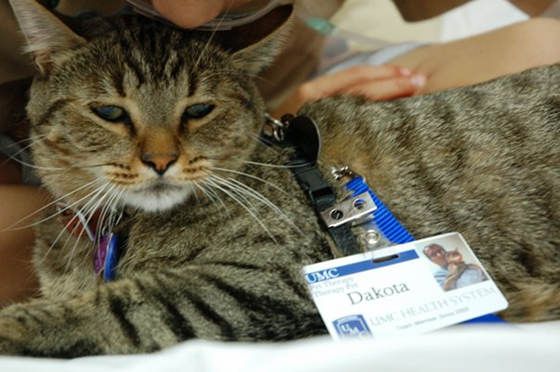
Cats chosen for therapy must meet certain criteria.
They should be of a "laid-back" temperament, with no fear of strangers, and tolerant of new circumstances. It goes without saying that they should be current on shots, and either have their claws trimmed or plastic caps such as SoftPaws attached. Although previously declawed cats might be used as therapy animals, they should never be declawed for that purpose.
advertisement
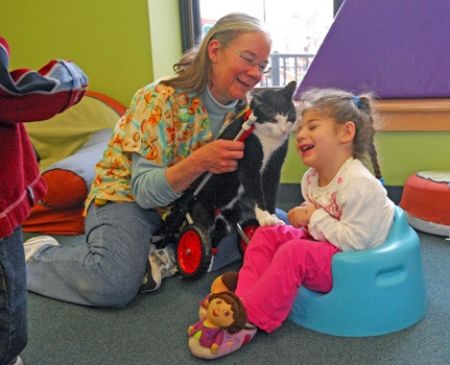
Cats are soft, furry and companionable animals that can be a delight to have around.
They provide more than just entertainment, however. Cats can be a tremendous help in animal-assisted therapy sessions.
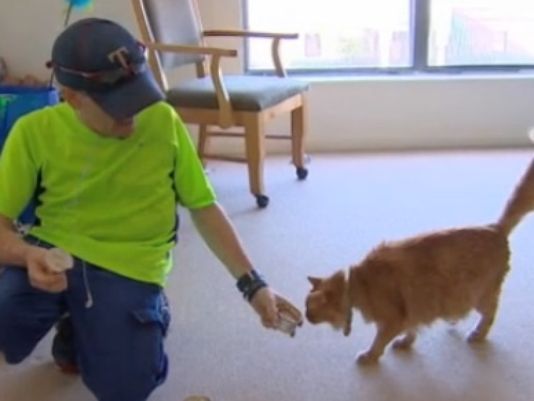
When cats were present during a therapy session:
Depressed patients were more social, and experienced decreases in depression.
Children with severe ADHD showed increased attention spans.
Autistic or developmentally disabled patients were more social, and showed increased attention spans.
Patients with Alzheimer's experienced decreases in depression and anger, with increased attention spans.
advertisement
Of course, having a cat isn't right for everyone.
But if you're in the right place in life and have love to give, you might be surprised by the ways your life improves with a cat by your side.