For most people, religious practices are special activities that happen on the weekend or during the holidays. However, religious rituals have also involved incredible feats of endurance and challenges to test human limits. This list includes ten of the most challenging forms of religious practices found in traditions from across the globe. These include ancient rituals that were once quite common (but may have ceased being performed), to contemporary practices that are still taking place today.
Challenging Religious Practices From Across The Globe
By
Sughra Hafeez in
Life Style
On 11th August 2017
advertisement
#1 Stylite: Sitting atop a pillar for years
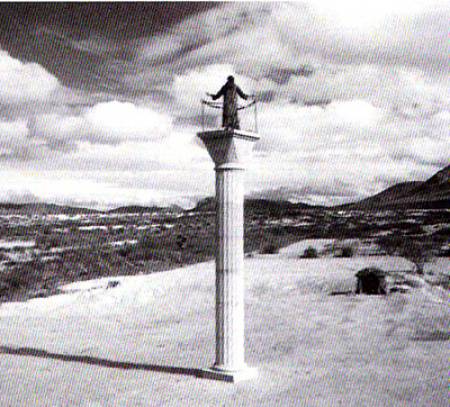
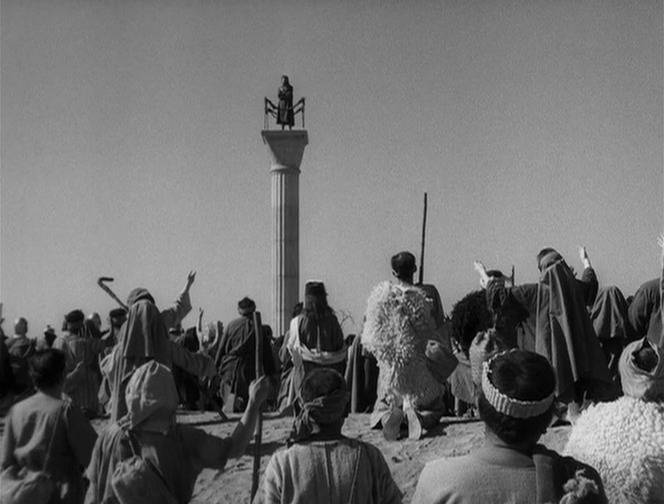
A stylite or pillar-saint is a type of Christian ascetic who live on pillars, preaching, fasting and praying. Stylites believe that the mortification of their bodies would help ensure the salvation of their souls. Stylites were common in the early days of the Byzantine Empire. The first known stylite was Simeon Stylites the Elder who climbed a pillar in Syria in 423 and remained there until his death 37 years later.
#2
Palladius of Galatia tells of Epidius, a hermit in Palestine who dwelt in a mountaintop cave for twenty-five years until his death.St. Gregory of Nazianzus (Patrologia Graeca 37, 1456) speaks of a solitary who stood upright for many years together, absorbed in contemplation, without ever lying down. Theodoret assures us that he had seen a hermit who had passed ten years in a tub suspended in midair from poles (Philotheus, chapter 28).
The practice was quite popular and well-known for several centuries in the Eastern portion of the Roman Empire, and the later Byzantine Empire. However, it never caught on in Western Europe, with only one such account of a Stylite performance taking place in France.
advertisement
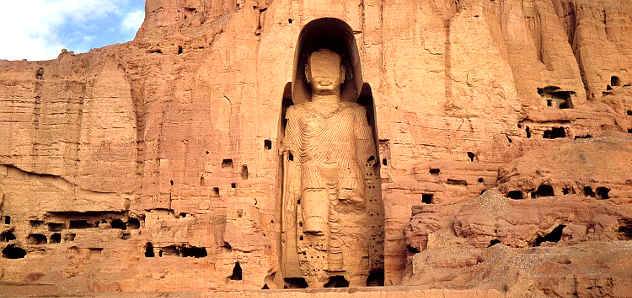
#3 Bamiyan Buddhas: Dwelling in Caves
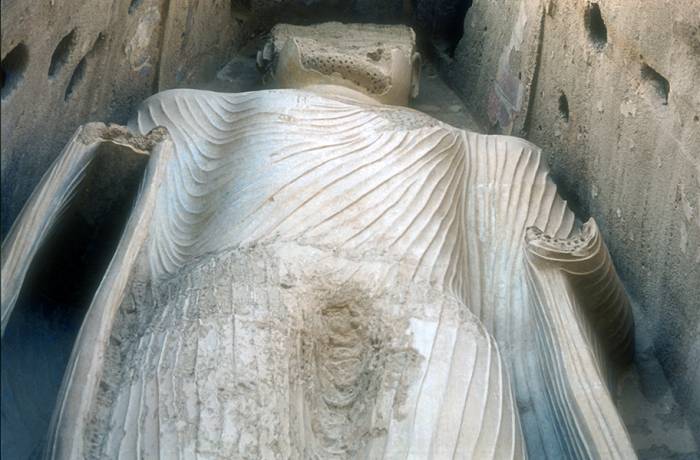
In ancient times, the region that is present-day Afghanistan was a thriving center for Buddhism. While these massive carvings were unfortunately destroyed by the Taliban in 2001, the region is still home to other Buddhist architecture.
#4
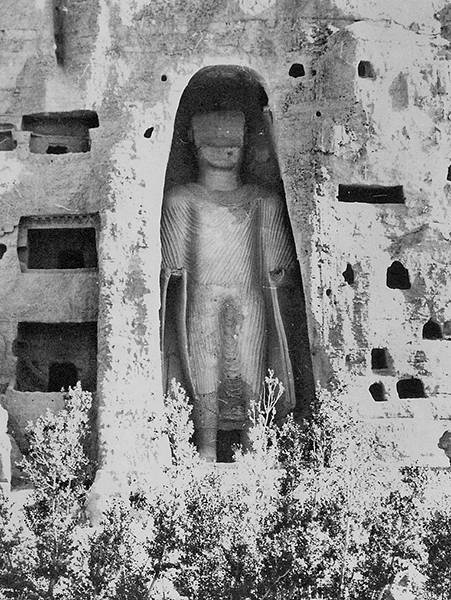
Prior to their recent destruction, the 6th-7th century, rock-cut Buddha sculptures in the Bamiyan Valley of central Afghanistan were considered the largest in the world. Known collectively as the Bamiyan Buddhas, the two monumental sculptures have amazed both Buddhist and non-Buddhist visitors for more than a thousand years. Like many of the world’s great ancient monuments, little is known about who commissioned the Bamiyan Buddhas or the sculptors who carved them. However, their very existence points to the importance of the Buddhist faith and the Bamiyan Valley during this period.
advertisement
#5
These rock-cut caves in the hills behind the village offered monks quiet, isolated spaces where they could engage in meditation without being disturbed by worldly affairs.Much like the Stylites, these monks also lived off the charity of the village and religious pilgrims, often spending extended periods in the caves. What gives this practice that extra layer of challenge is that many of these caves were elevated hundreds of feet from the ground. Reaching them was no easy task, and leaving was just as perilous. Even the present-day inhabitants of these caves point out the difficulties of reaching the higher ones.
advertisement
#6 Hikikomori: Isolating Oneself in a Room
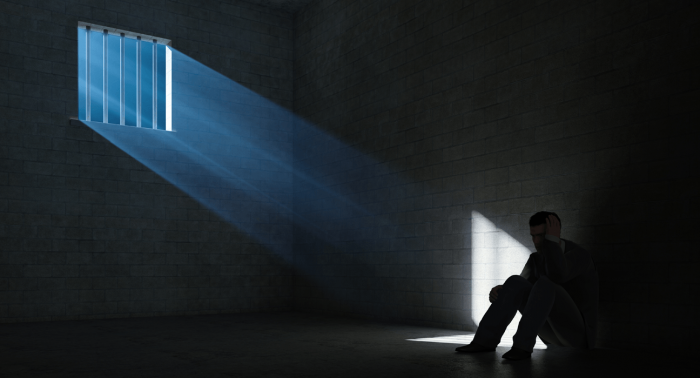
In Japan, hikikomori, literally "pulling inward, being confined", i.e., "acute social withdrawal") are reclusive adolescents or adults who withdraw from social life, often seeking extreme degrees of isolation and confinement. Hikikomori refers to both the phenomenon in general and the recluses themselves. Hikikomori have been described as loners or "modern-day hermits"

advertisement
#7
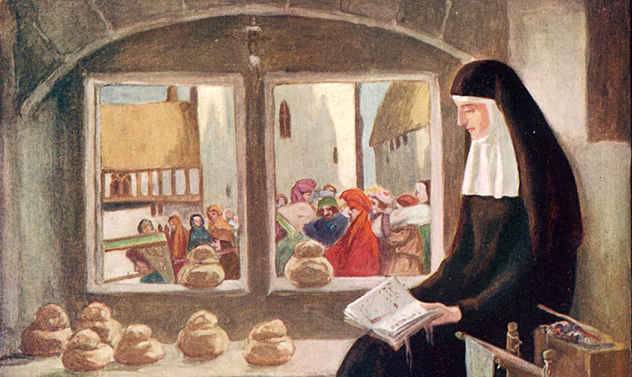
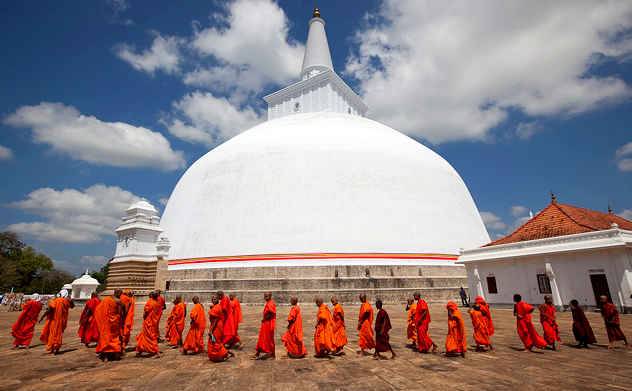
During the Middle-Ages, thousands of Christian men and women entered into monastic orders. While the orders varied in their practices, one of the more notable ones for this list is that of the anchorite or anchoress. While some monks and nuns lived in small, isolated communities, these men and women walled themselves up inside small rooms where they would spend the rest of their lives.
Often, these cells were built adjacent to the local church so that the hermit would have some contact with the locals. Ironically, the men and women living these extreme lives often acquired reputations and became popular. A good example is Julian of Norwich, a 14th-century anchoress in England. Locals and pilgrims alike flocked to her cell to seek her spiritual counsel and guidance.
advertisement
#8
The psychiatrist Tamaki SaitÅ defines hikikomori as "a state that has become a problem by the late twenties, that involves cooping oneself up in one's own home and not participating in society for six months or longer, but that does not seem to have another psychological problem as its principal source".
advertisement
#9 Fire walking: Walking over Burning Coals
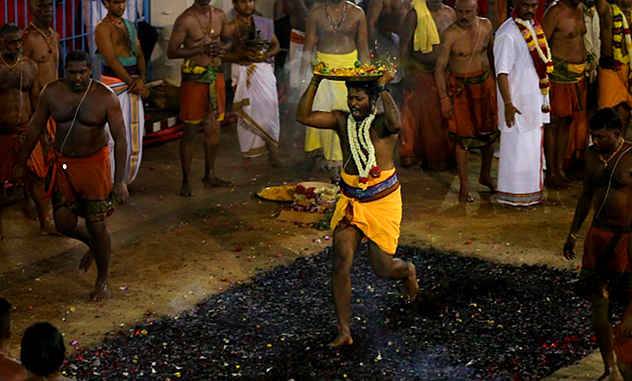
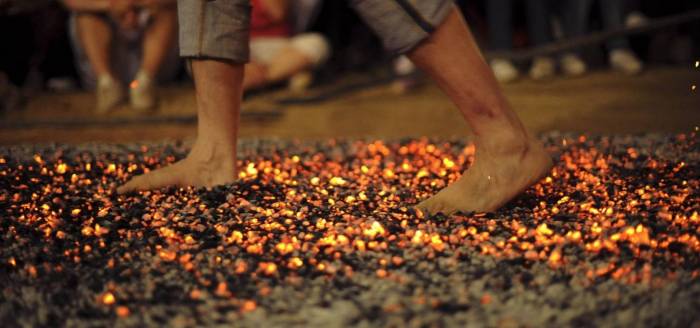
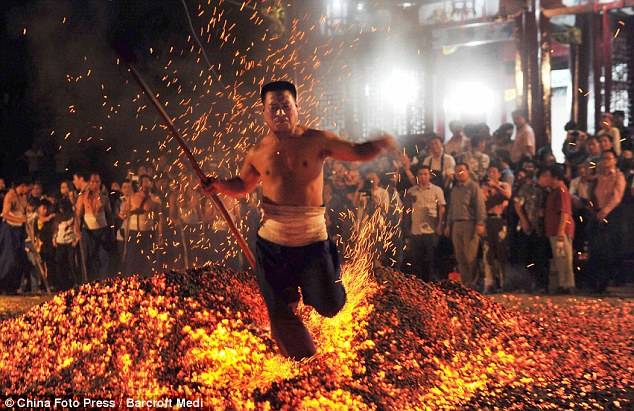
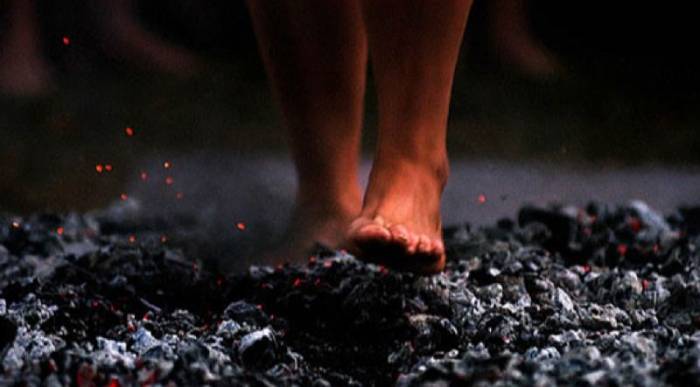
Firewalking is the act of walking barefoot over a bed of hot embers or stones.
Firewalking has been practiced by many people and cultures in all parts of the world, with the earliest known reference dating back to Iron Age India – c. 1200 BC. It is often used as a rite of passage, as a test of an individual's strength and courage, or in religion as a test of one's faith.
advertisement
#10
Walking on fire has existed for several thousand years, with records dating back to 1200 BC.Cultures across the globe, from Greece to China, used firewalking for rites of healing, initiation, and faith
advertisement
#11
Firewalking is also practiced by:
Indians in South Asia and their diaspora in Sri Lanka, Mauritius, Réunion, South Africa, Malaysia and Singapore who celebrate the Thimithi Festival.
The Sawau clan in the Fijian Islands.
Eastern Orthodox Christians in parts of Greece and Bulgaria during some popular religious feasts.
Fakirs and similar persons.
!Kung Bushmen of the African Kalahari desert. (The!Kung use fire in their healing ceremonies.)
Little girls in Bali in a ceremony called Sanghyang dedari, in which the girls are said to be possessed by beneficent spirits.
Japanese Taoists and Buddhists.
advertisement
#12
Some tribes in Pakistan as a justice system, wherein the accused is asked to firewalk. If he does firewalk and is unharmed, he is deemed innocent; otherwise, he is considered guilty.
Tribes throughout Polynesia and documented in scientific journals (with pictures and chants) between 1893 and 1953.
People from South India especially Mangalore, Bhootaradhane, Ottekola worship of demi-gods is one of the distinct cultures of the coastal region. Though rituals vary from region to region, the people’s dedication coupled with fear is omnipresent.
#13 Circling the Temple: Rolling across the Ground
A common Hindu devotional practice is to circle a temple or religious icon in a clockwise manner.A more extreme version of this practice also occurs at the temples of Mariamman in South India. There, rather than walk the circumference of the temple, pilgrims will vow to do so by rolling on the ground. This includes rolling through crowds, over dirt and debris, and any other obstacle that might come up.
advertisement
#14 Blood Libel: Killing children
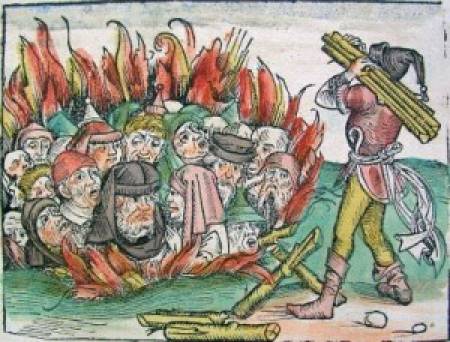
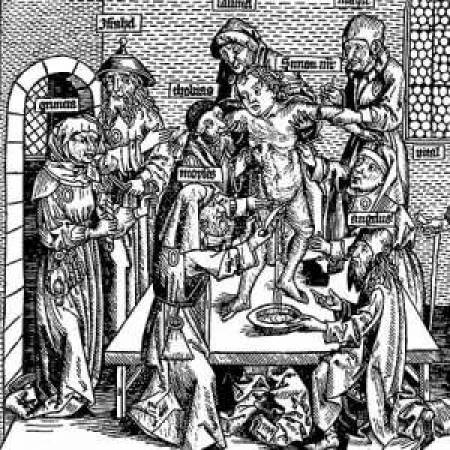
Blood libel (also blood accusation) is an accusation that Jews kidnapped and murdered the children of Christians in order to use their blood as part of their religious rituals during Jewish holidays.Historically, these claims – alongside those of well poisoning and host desecration – have been a major theme of the persecution of Jews in Europe.
#15
Blood libels typically say that Jews require human blood for the baking of matzos for Passover, although this element was allegedly absent in the earliest cases which claimed that then-contemporary Jews reenacted the crucifixion. The accusations often assert that the blood of the children of Christians is especially coveted, and, historically, blood libel claims have been made in order to account for the otherwise unexplained deaths of children. In some cases, the alleged victim of human sacrifice has become venerated as a martyr, a holy figure around whom a martyr sect might arise. Three of these – William of Norwich, Little Saint Hugh of Lincoln, and Simon of Trent – became objects of local sects and veneration, and in some cases, they were added to the General Roman Calendar. One, Gavriil Belostoksky, was canonized by the Russian Orthodox Church.
advertisement
#16
In Jewish lore, blood libels were the impetus for the creation of the Golem of Prague by Rabbi Judah Loew ben Bezalel in the 16th century.
According to Walter Laqueur:
Altogether, there have been about 150 recorded cases of blood libel (not to mention thousands of rumors) that resulted in the arrest and killing of Jews throughout history, most of them in the Middle Ages. In almost every case, Jews were murdered, sometimes by a mob, sometimes following torture and a trial.
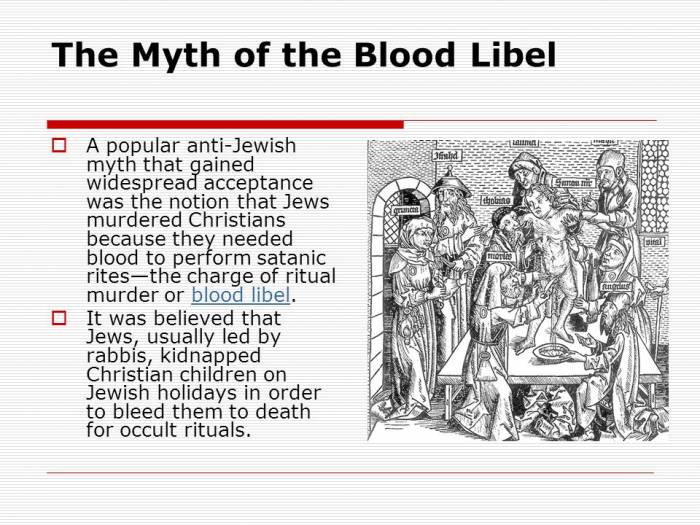
#17 Animal slaughtering: Gadhimai festival
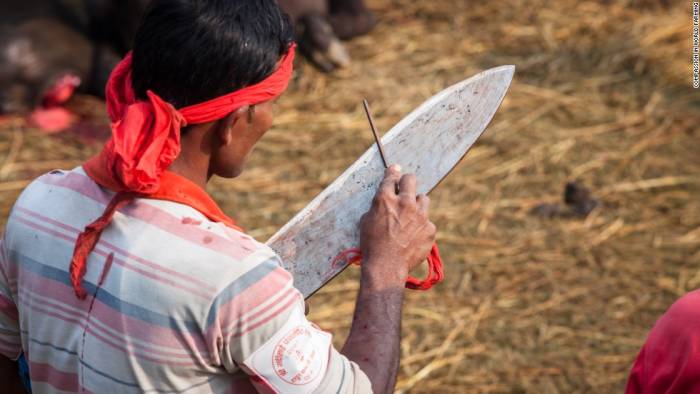
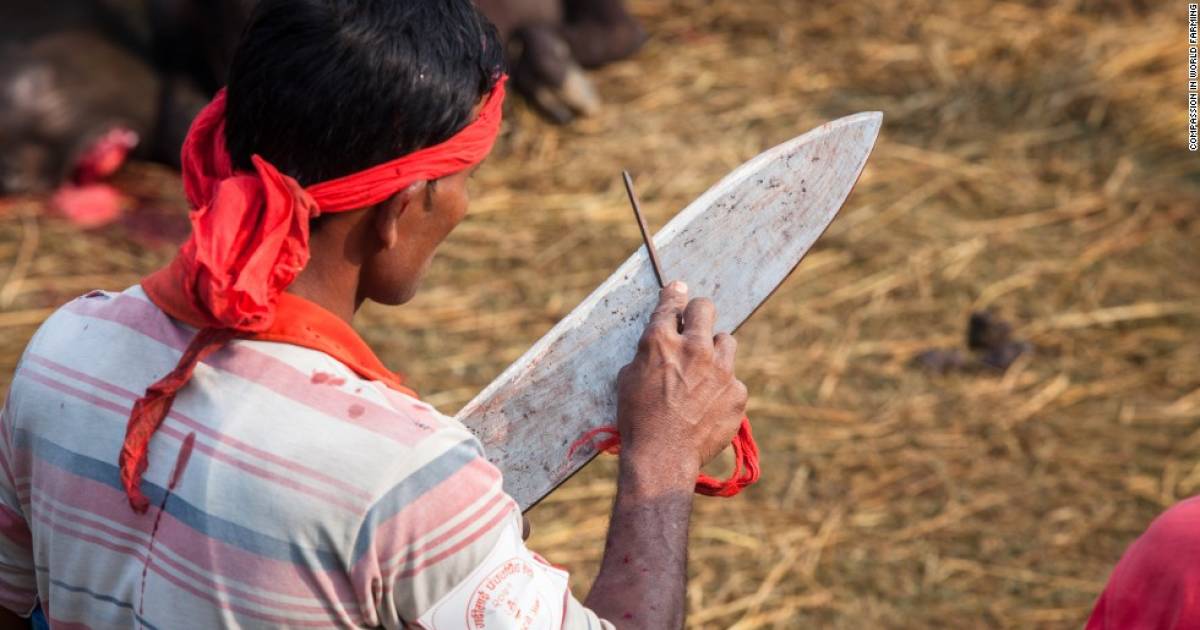
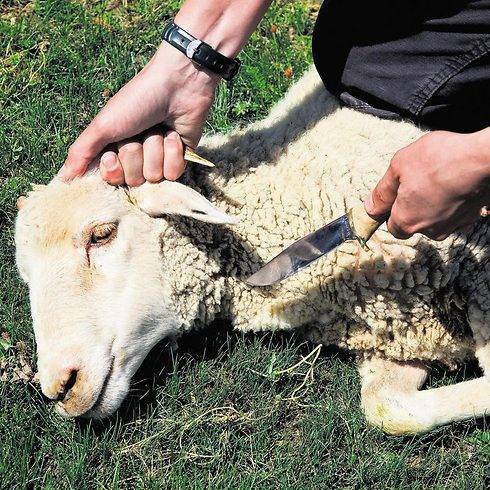
Gadhimai festival was a sacrificial ceremony that was held every 5 years at the Gadhimai Temple of Bariyarpur, in Bara District, about 100 miles (160 km) south of the capital Kathmandu in the southern Nepal, near the Indo-Nepal border, adjacent to Bihar. It was primarily celebrated by the Madheshi and Bihari people. The event involves the large scale sacrificial slaughter of animals including water buffaloes, pigs, goats, chickens, and pigeons – with the goal of pleasing Gadhimai, the goddess of power.
advertisement
#18
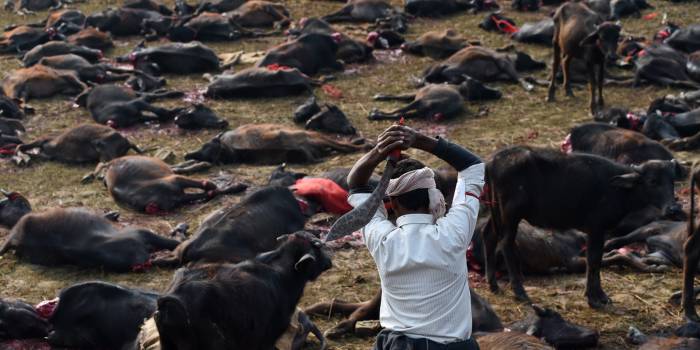
It is estimated that 50,000 animals were sacrificed during the Gadhimai festival of 2009. In 2015, Nepal's temple trust on announced to cancel all future animal sacrifice at the country's Gadhimai festival
#19
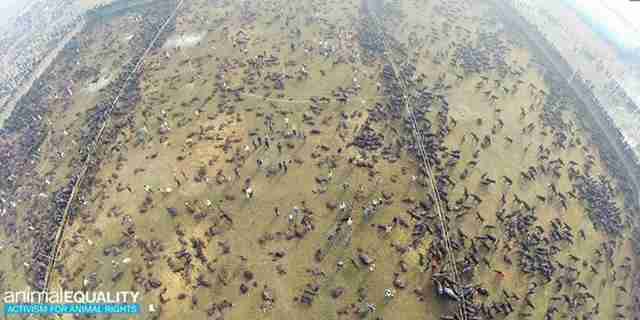
About 4 million people participate in the festival.Participants believe that animal sacrifices to the Hindu goddess Gadhimai will end evil and bring prosperity.
A month before the ritual in 2009, the Madheshi politicians realized there would be a "severe shortage" of goats for the ritual sacrifice, as well as for the consumption of goat meat during the festival. They began a radio campaign urging farmers to sell their animals.
advertisement
#20
The festival started in the first week of November 2009 and ended in the first week of December (up to makar sankranti), the fair has a custom of animal sacrifice that occurred on November 24 & 25 in the year 2009, with the temple's head priest performing ritual sacrifice called Saptabali which includes the sacrifice of white mice, pigeons, roosters, ducks, swine and male water buffaloes. More than 20,000 buffaloes were sacrificed on the first day.It is estimated that 250,000 animals were sacrificed during the Gadhimai festival of 2009. The ritual killings were performed by more than 200 men in a concrete slaughterhouse near the temple.