

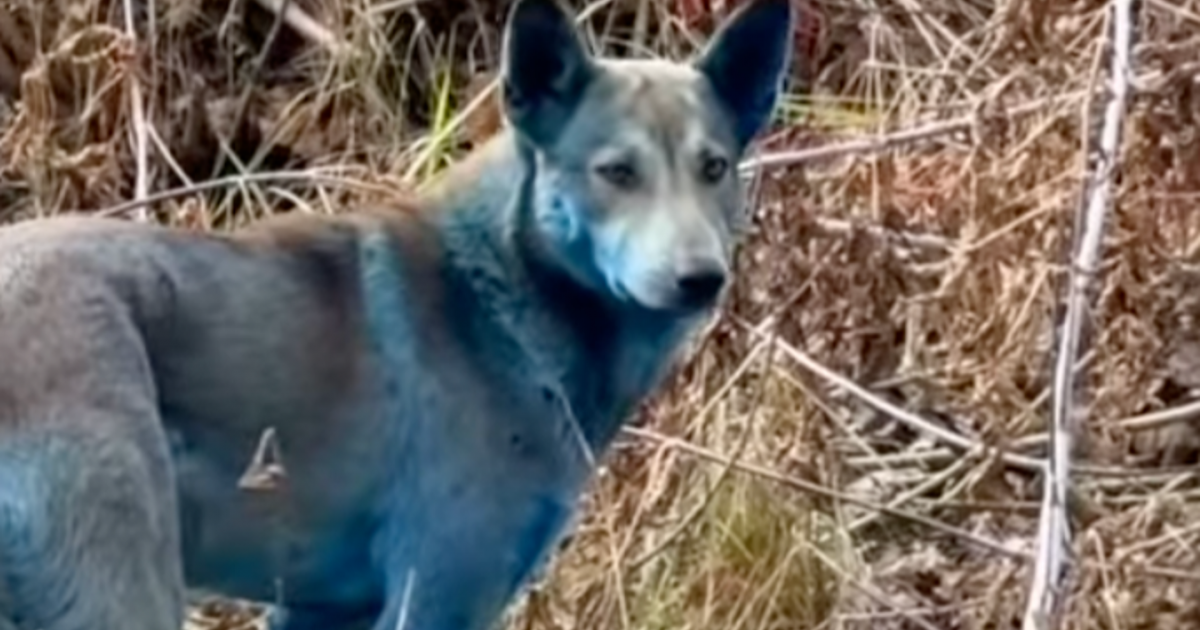
Nearly four decades after the Chernobyl disaster, the exclusion zone is once again in the news — but this time, it’s not because of radiation, but because of a strange pack of blue-colored dogs spotted wandering the area.
advertisement
Most people know Chernobyl as the site of the world’s worst nuclear accident, but almost 40 years later, the area continues to make headlines — this time for something completely unexpected. The once-forbidden landscape, scarred by tragedy and radiation, is now home to a thriving population of wildlife.
Even though the 1,017-square-mile exclusion zone was created to limit human exposure to lingering radiation and prevent health issues such as thyroid cancer, cataracts, and leukemia, nature has quietly reclaimed it. Wild horses, wolves, and birds now roam freely among the decaying remnants of the city.
Among the creatures that have made the zone their home are packs of stray dogs, descendants of pets left behind during the mass evacuation in 1986. Most look as you’d expect — black, brown, or gray — but some recent sightings have shown dogs with an odd, bluish tint to their fur, leaving many people both puzzled and fascinated.
The mysterious phenomenon caught global attention after the group Dogs of Chernobyl shared a video online showing several of the region’s stray dogs, including one whose fur was strikingly blue. The footage quickly went viral, with thousands of viewers speculating about what could be behind the bizarre coloring.
The group explained in their post: "They were not blue last week. We do not know the reason, and we are attempting to catch them so we can find out what is happening."
advertisement
According to the organization, they may have an explanation for the unusual blue hue — and it has nothing to do with nuclear radiation. Instead, they believe the answer lies in something much more down-to-earth and chemical in nature.
"Most likely, they're getting into some sort of chemical," they added.
Despite their odd appearance, the group assured followers that the dogs seemed otherwise healthy and full of energy. They described the animals as “very active and healthy,” showing no signs of illness linked to their strange fur color.
Veterinarian Jennifer Betz, who has spent years leading field missions in the exclusion zone, also spoke out to address viral claims suggesting that radiation had somehow “turned the dogs blue.”
Speaking to IFL Science, Betz explained: "They appear to have been rolling in a substance that had accumulated on their fur."
She went on to say: "We are suspecting that this substance was from an old portable toilet that was in the same location as the dogs; however, we were unable to positively confirm our suspicions."
Adding further clarity, she emphasized: "We are not in any way saying that it is related to radiation in Chornobyl."
Her comments helped put to rest growing speculation that the dogs were experiencing some sort of radiation-related mutation, instead suggesting that contact with a chemical substance was the most likely cause.
advertisement
Today, an estimated 700 dogs live within the Chernobyl exclusion zone. Many of them are believed to be descendants of domestic pets left behind during the 1986 evacuation, when families were forced to flee their homes in a matter of hours to escape radioactive fallout.
Since 2017, volunteer groups like Dogs of Chernobyl have worked tirelessly to care for these animals. They bring in food, provide vaccinations, and offer veterinary treatment to improve the dogs’ chances of survival in one of the most hostile environments on Earth.
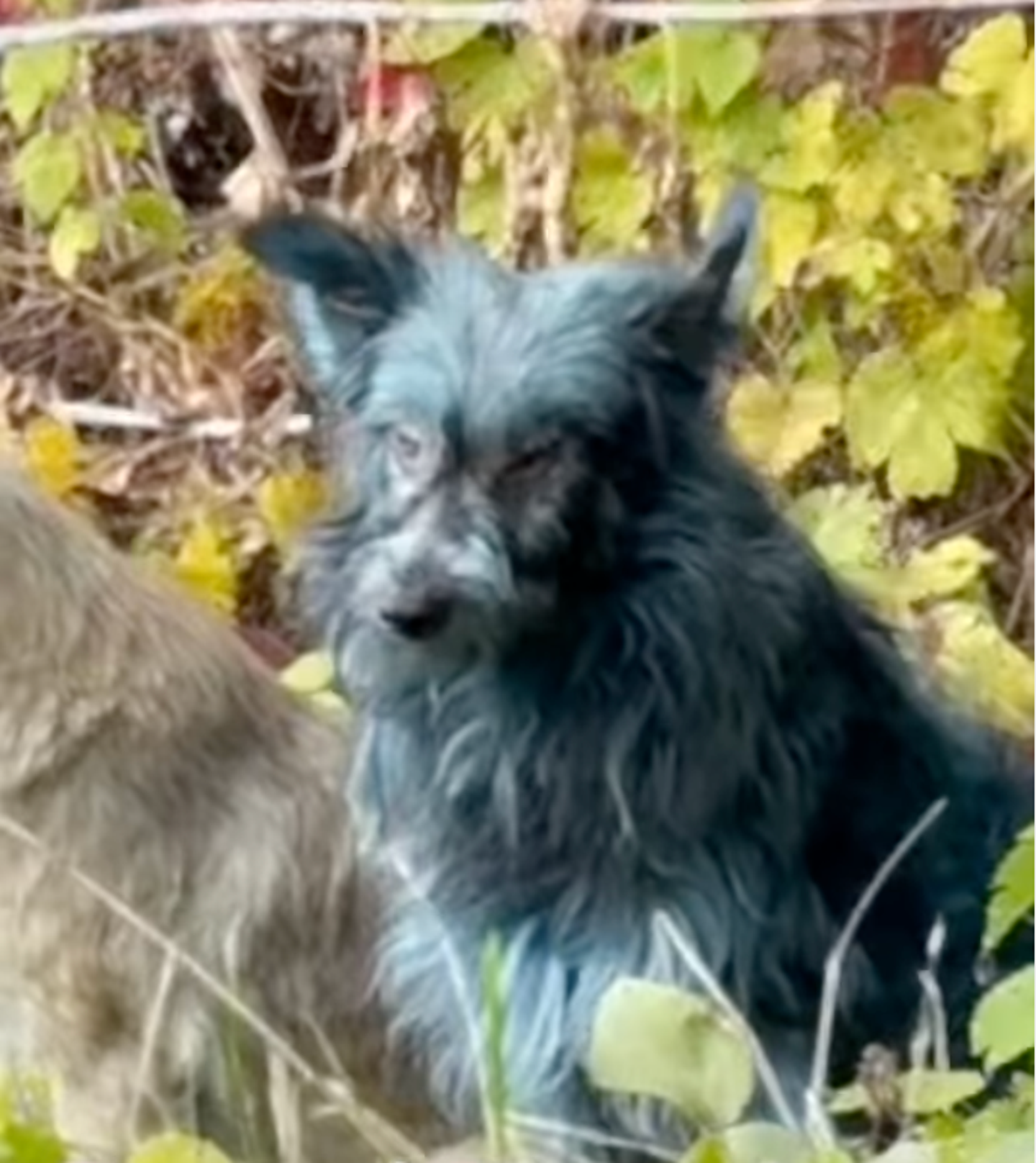
A number of blue dogs have been spotted inside the Chernobyl exclusion zone
Instagram/dogsofchernobyl1
advertisement
Radiation in the region still measures around 11.28 millirems — roughly six times higher than what’s considered safe for humans. Yet, in the absence of people, nature has flourished. Over the years, scientists have noted that many plants and animals seem to have adapted to these conditions, showing surprising resilience.
In 2024, researchers discovered that some of the dogs in Chernobyl may have developed what they call “radiation resistance.” The animals showed increased immunity to radiation, heavy metals, and pollution, suggesting that generations of living in such an extreme environment may have altered their biology.
Environmental health scientist Norman J. Kleiman from Columbia University led one of the studies exploring this phenomenon. His research aimed to understand how prolonged exposure to the harsh Chernobyl ecosystem has changed the genetic makeup of the dogs and allowed them to survive despite the constant radiation.
advertisement
As part of the study, Kleiman and his team collected blood samples from 116 semi-feral dogs living around the exclusion zone. These samples were then analyzed to detect genetic differences between dogs in highly contaminated areas and those in regions with lower radiation levels.
The research revealed that two distinct populations of dogs had evolved, each with genetic traits that helped them adapt to their environment. These traits were passed down through generations, slowly shaping a unique population of dogs capable of surviving in one of the world’s most radioactive places.
Scientists identified 52 genes that “could be associated with exposure to the contamination of the environment at the nuclear power plant.”