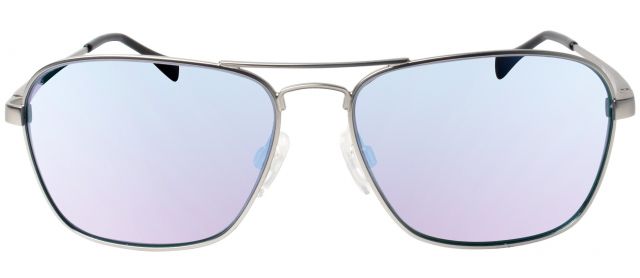
Glasses that were initially designed to protect surgeons’ eyes from lasers during procedures are now helping the colorblind see the world!
advertisement
#1
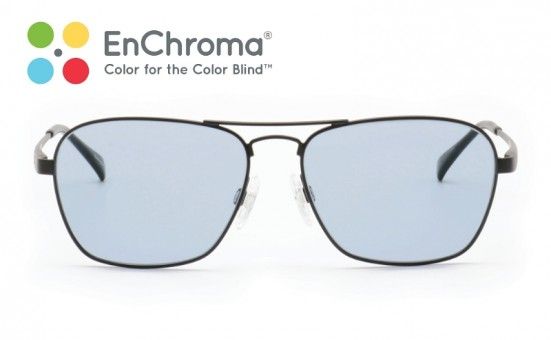
Over 300 million people worldwide have some sort of color vision deficiency. EnChroma a company from Berkely, California have developed a pair of glasses that allow the color blind to see color. With 1 in 12 men and 1 in 200 women suffering from CVD (Color Vision Deficiency) the estimate is that 80% of these people can be helped.
#2
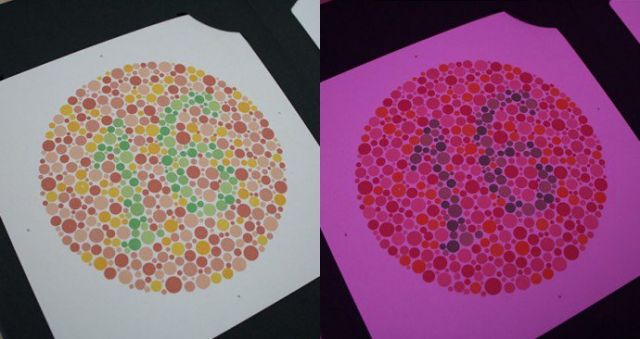
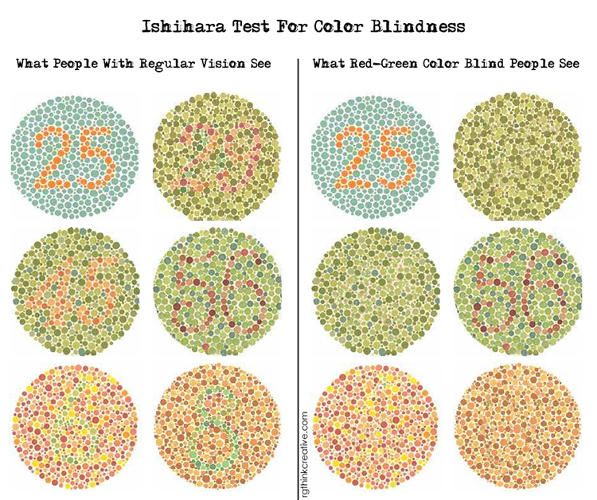
If you're red-green colorblind, then chances are you see nothing, or close to nothing, within the Ishihara test circle. On the left you can see what people with regular vision see, on the right is what people with red-green color impairment see.
advertisement
#3
This type of colorblindness, more common in males than females, results from a deficiency in either the red or green color receptors in the retina, the genes for which are on the X chromosome (hence the higher occurrence in males). You can see the before corrective lenses to the left on the following pictures.

#4
EnChroma makes color-enhancing sunglasses for the vast majority of such people, who have trouble seeing red or green due to a genetic defect. The company has sold more than 1,000 pairs in two years.

advertisement
#5
"There are certain activities they do which they don't feel comfortable doing, like driving," said Don McPherson, EnChroma's vice president of products, of his consumers. "Even trivial things like detecting a red curb, so you can't park there."
He added, "Ideally, we would want to give them a product that restored their ability to identify the color and the quickness with which they did that to normal."

advertisement
#6
The glasses were originally intended by McPherson to serve as laser-safety eyewear for surgeons. Then, one day, a colorblind buddy tried on the researcher's prototype and saw a range of colors for the first time. McPherson immediately changed course and began developing a product for people with his friend's condition.

advertisement
#7
What happens to make someone colorblind is that at the back of the eye, there are three types of color-sensing cells, called cones, that respond to different parts of the spectrum of light: blue, green and red.
advertisement
#8
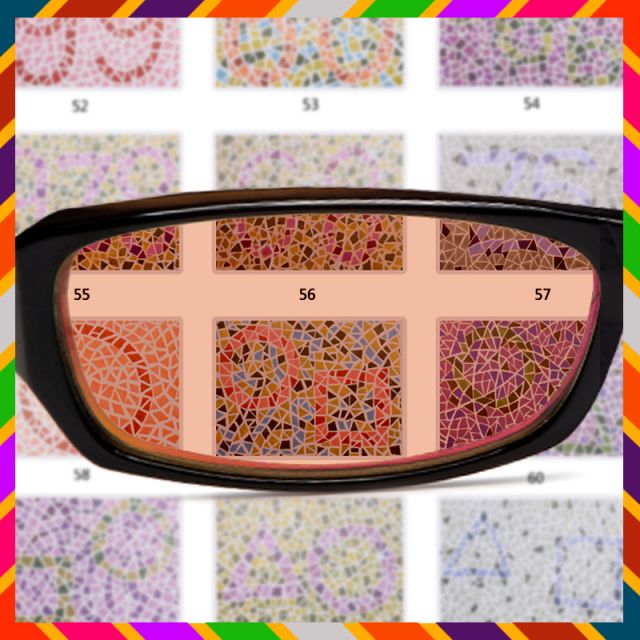
The three overlap somewhat, but in the case of a red-green deficiency, the cones' responses to green and red overlap too much. That causes the red and green cones to send the same, or almost the same, information to the brain, which then has difficulty discriminating between the colors.

advertisement
#9
This confusion also leads the brain to mix up blended, muted colors that contain red or green, such as purple.
advertisement
#10
A growing market of tools and programs wants to make life more colorful. There are special contact lenses, as well as apps that can identify colors by name or numerical codes so people can "see" what colors appear on a website.
advertisement
#11
O2Amp makes tinted-lens glasses that are intended to give doctors clearer views of human anatomy, but have the unintended side effect, the company says, of helping the viewer distinguish between red and green. EnChroma says that unlike conventionally tinted lenses that can only enhance one color, its smart glasses enhance the three primary colors simultaneously. This technology grew out of research initially funded by the National Institutes of Health.
advertisement
#12
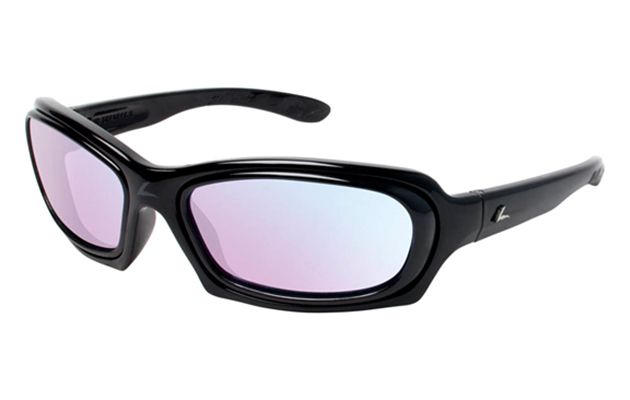
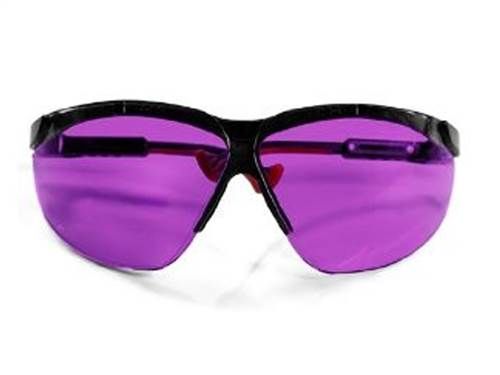
The proprietary lens contains a filter that blocks a portion of the spectrum where the overlap between the two cones occurs and restores the separation between them.
#13
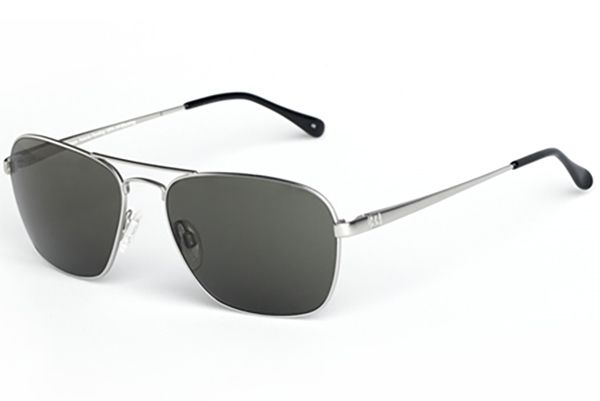
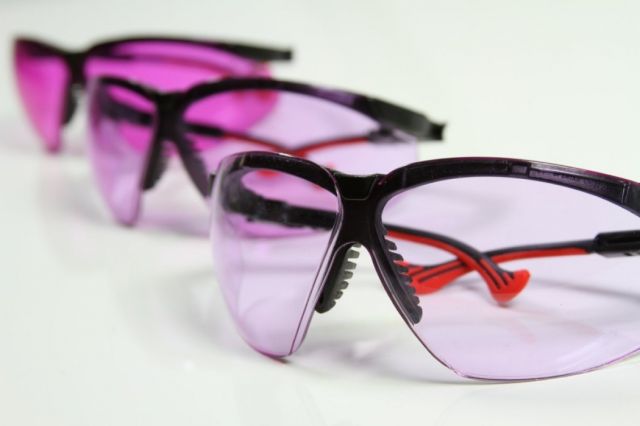
EnChroma, an angel-backed startup founded in 2010, started out with lenses made with a glass substrate. It hopes to expand its audience with its new, polycarbonate-based frames, which are more durable, can hold up under greater impact and come in styles ranging from aviator to athletic wraparounds.
advertisement
#14
For now, these shades aren't covered by insurance, with the possible exception of those with prescriptions. They are also meant only for use in bright sunlight, although EnChroma is developing versions that can work indoors and even underwater. In addition, the glasses may not work for people with severe red-green deficiency, about 20 percent of the color-blind population.
#15
McPherson's idea has come a long way since the company's inception in 2005. To date, 3,000 pairs of glasses have been sold. Models run from $325 to $450, are FDA-compliant and made in the U.S.A.
They are also available to both prescription and non-prescription wearers.