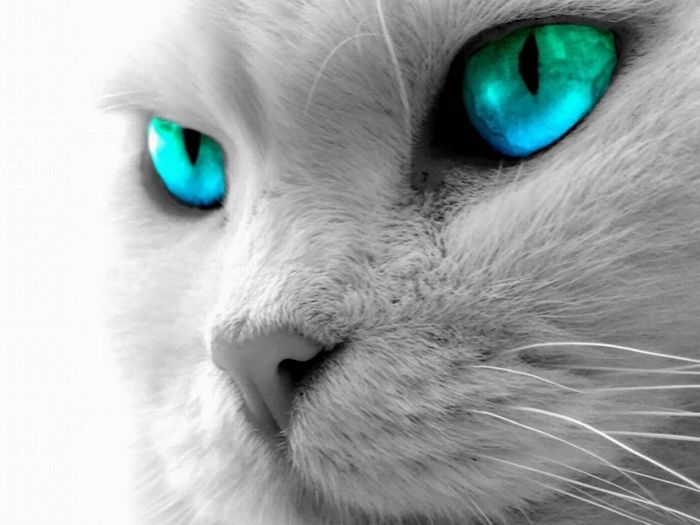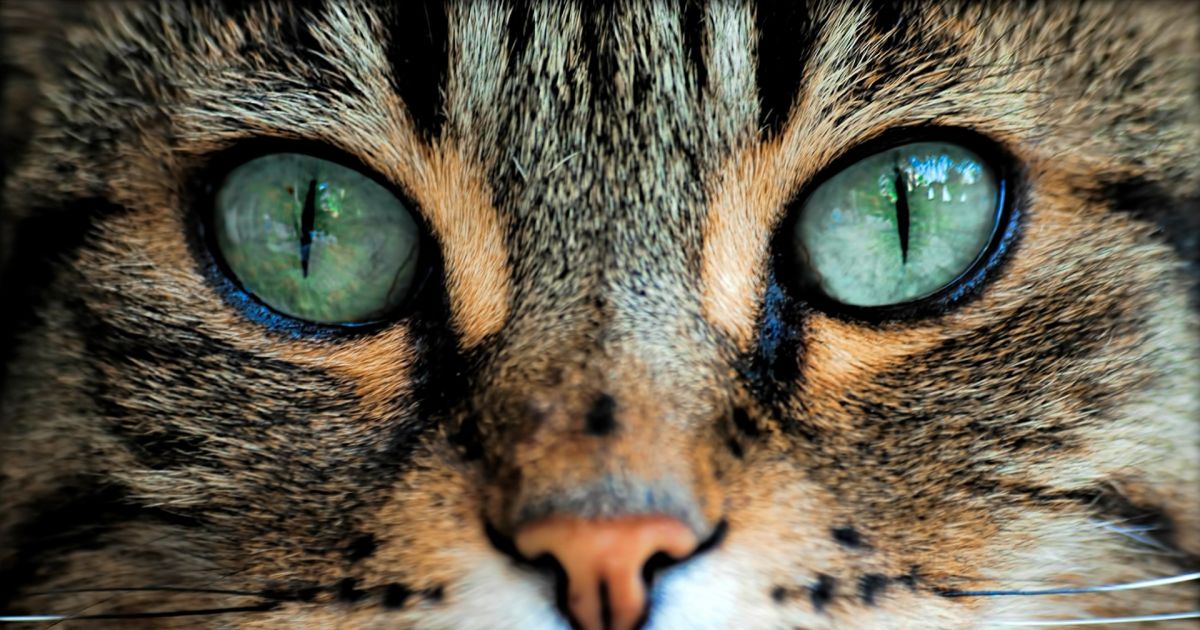
It starts with the iris
The colored area around the pupil of the eye is called the iris. The iris has two layers, the stroma and the epithelium. Both of these layers contain pigment-producing cells called melanocytes. In the stroma, those melanocytes are loosely arranged, and in the epithelium, they are more tightly packed.
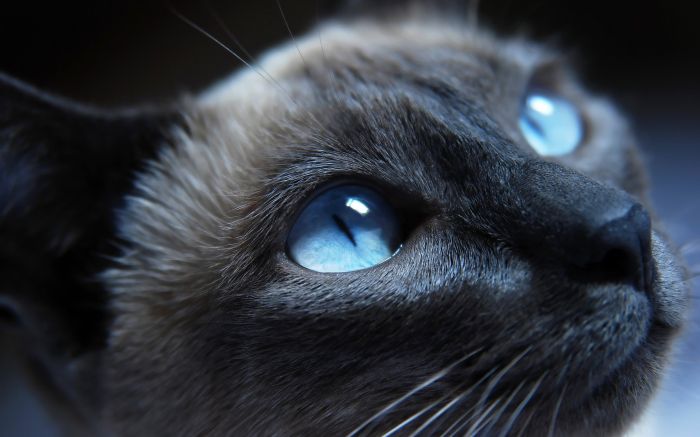
Purebred cats tend to have more intense eye colors
Because purebred cats are bred to meet a specific breed standard, which often includes eye color, breeders select for cats that have more intense colors or particular colors. For example, the Bombay cat breed standard requires copper-colored eyes; and the Tonkinese has aqua-colored eyes.
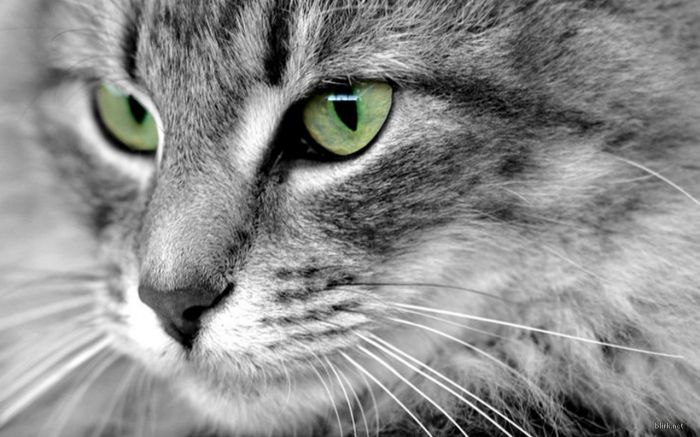
It’s all about melanin
The pigment produced by the melanocytes is called melanin. A while back I wrote an article on the genetics of cat fur color, in which I explained that melanin plays an important role in determining how dark your cat's fur coat will be. The same thing is true with cats' eyes: The more melanocytes there are in your cat's irises, the darker their color will be. But cats don't get brown or black eyes like people do; the darkest color you'll see in a cat's eyes is a deep, rich copper.
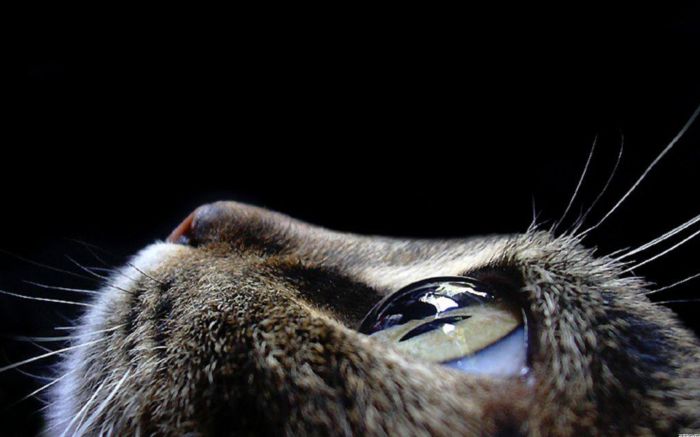
Eye-color intensity is linked to melanocyte activity
When the melanin-producing cells are very active, a cat's eye color will become more intense. For example, a cat with a medium amount of highly active melanocytes will have bright golden-yellow eyes, but a cat with a medium amount of less active melanocytes may have pale lemon-yellow eyes.
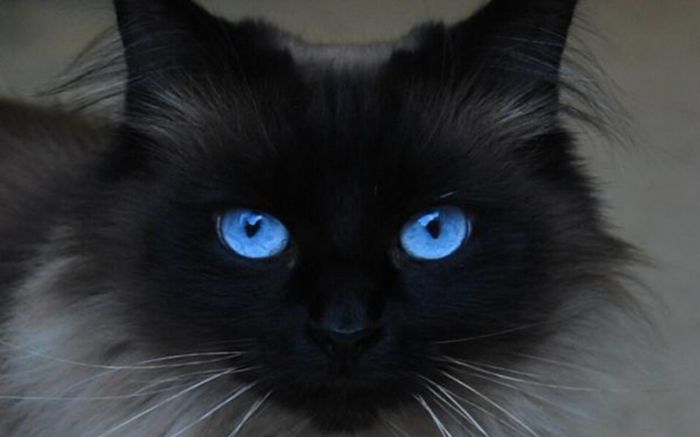
There’s a connection between melanin and kitten eyes, too
Kittens are born with blue eyes because their melanocytes haven't started working yet. As they grow, their melanocytes start to function and the true color of their eyes begins to appear. The adult eye color starts to appear between 4 and 6 weeks of age, and a kitten's true eye color is usually apparent by the time he or she is 4 months old.
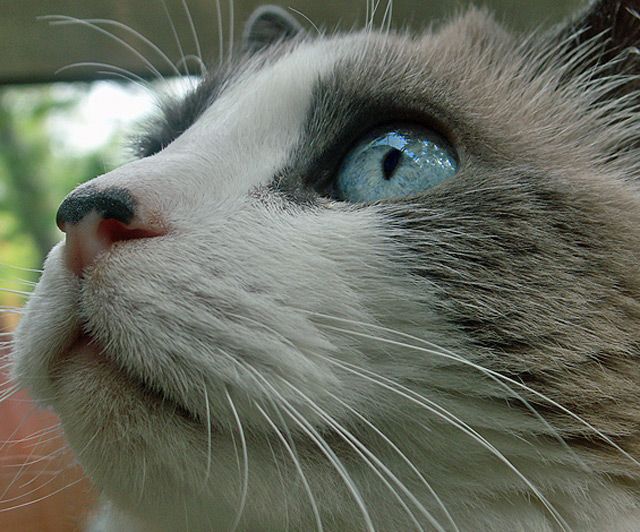
Blue-eyed cats have no melanin in their irises
You know how window glass looks clear when you look straight through it, but it looks kind of blue or green around the edges? That's because of the refraction of light through a clear surface. The same thing happens with blue-eyed cats: They have no pigment cells in their irises, and because the eye has a rounded shape, light refracts through that rounded surface and produces the blue color.
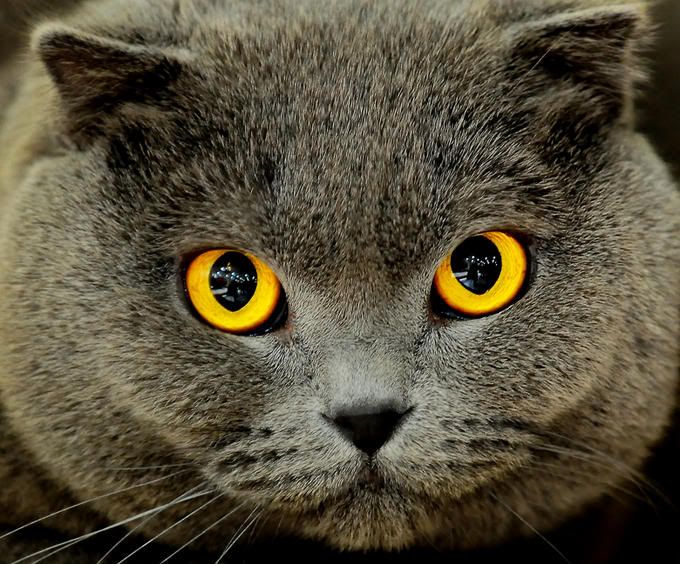
There is generally little relation between fur color and eye color
Different genes control fur color and eye color, so the melanocytes in the fur may be much more (or less) active than those in the eyes. Thus, a black cat like my Belladonna has pale hazel eyes, but a purebred orange Persian may have dark copper-colored eyes. The only exception to this rule is white cats. Because the epistatic white gene is a dominant and masks other colors, white cats are statistically more likely to have blue eyes than random-bred cats of other colors.