

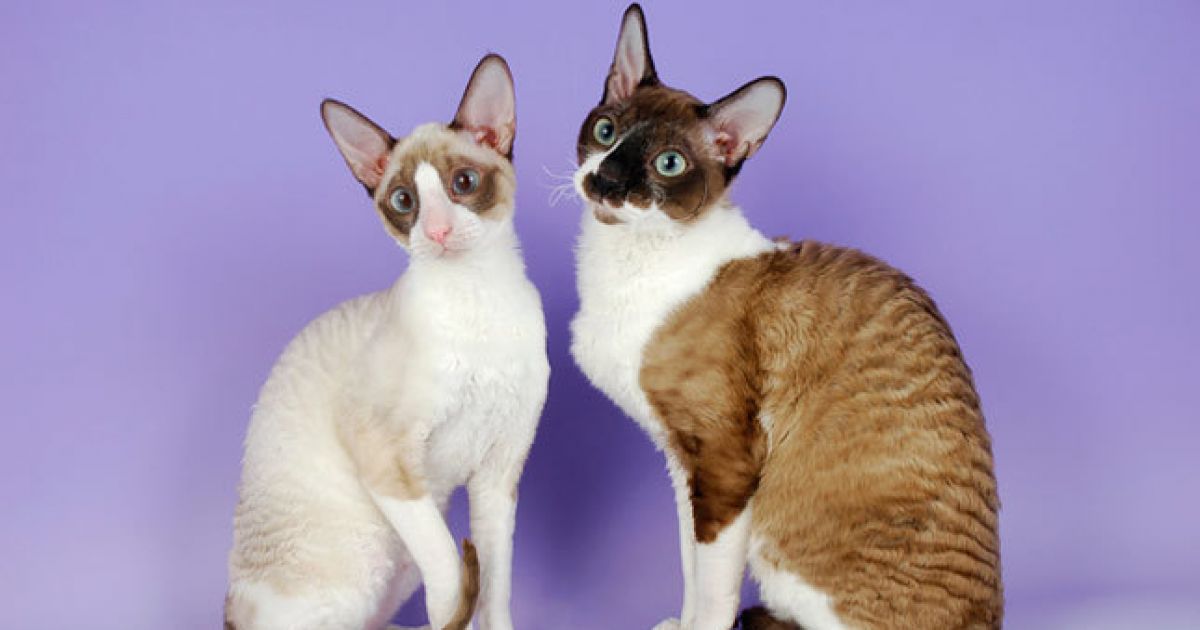
The Cornish Rex’s soft, short, wavy coat is the product of a spontaneous natural mutation, a not uncommon occurrence in the world of cats.
advertisement
The Cornish Rex isn’t the victim of a hair stylist experimenting with permanent wave solution.
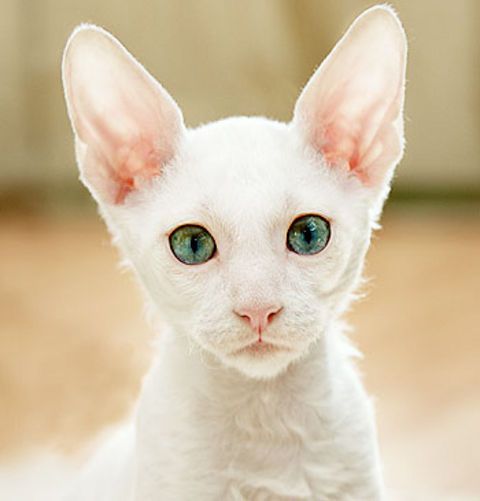
His soft, short, wavy coat is the product of a spontaneous natural mutation, a not uncommon occurrence in the world of cats. The first known Cornish Rex, named for his coat's resemblance to that of a rex rabbit, made his appearance in Cornwall in 1950. It's not only his coat that distinguishes the Cornish Rex. He has an egg-shaped head topped with large ears, big eyes, curly whiskers, and unusually long hind legs.
Once seen, never forgotten.
The Cornish Rex cat is delightful, distinctively different, constantly charming and captivating. Rexes need people, and given a choice will spend most of their time with humans. When they are free to choose their own sleeping quarters, their first choice is the owners bed. This is partly due to their desire for warmth. Even tempered and very affectionate, they also appeal because of their extremely quiet voices.
advertisement
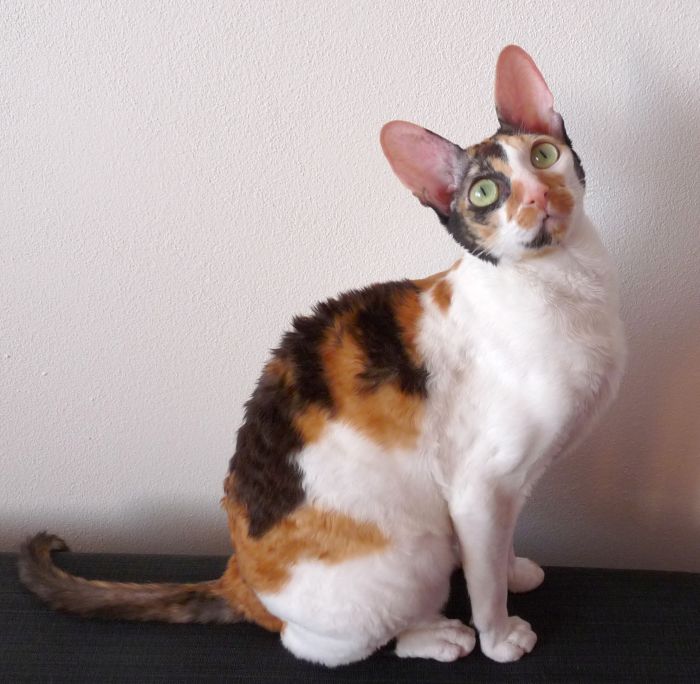
The Cornish Rex is a study in curves
with curly coat, curved profile, large expressive ears, and Whippetlike arched bodies. In spite of their sophisticated, elegant appearance, they are anything but cool, aloof, or dignified. They are affectionate, people-oriented, and active cats whose kitten-like antics last a lifetime. Favorite Cornish Rex games are fetch and catch, and they may even use their agile paws to pick up and toss small objects. Belying its fragile appearance, the Cornish Rex is a very sturdy breed. They are perfect pets for the owner who wants active cats to participate in family life.
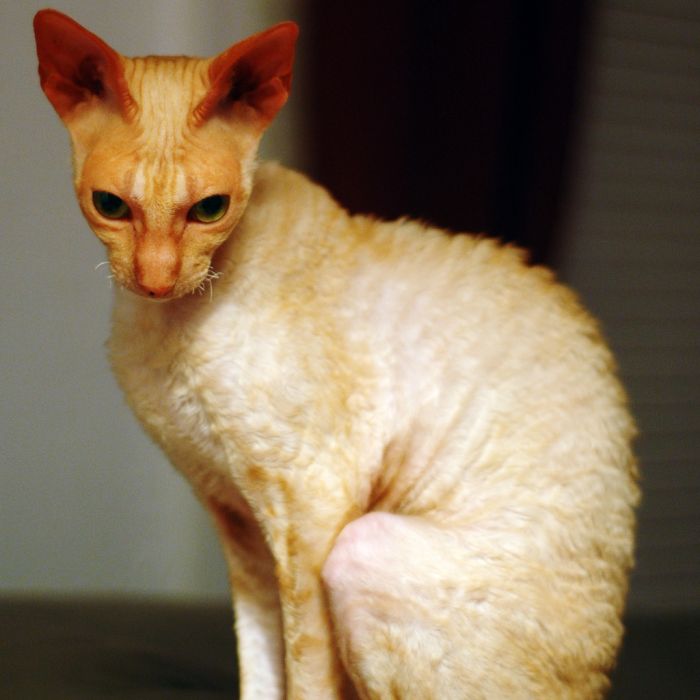
The most striking feature of the breed is its very noticeably curly coat.
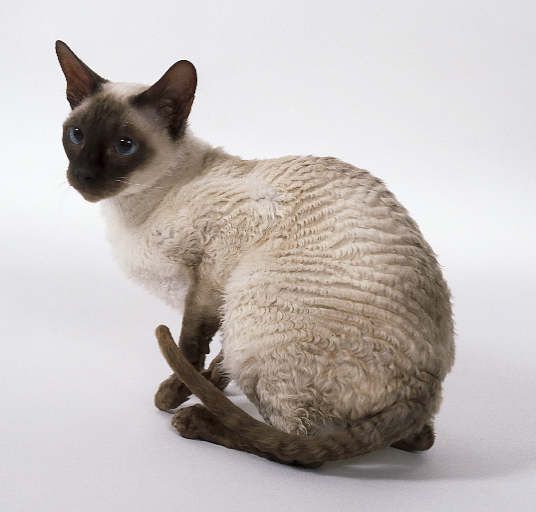
Ideally falling in marcel waves, the coat is very short, lies close to the body, and is incredibly soft to the touch, prompting comparisons to cut velvet, karakul lamb, rabbit fur, or silk. In fact, nothing else feels exactly like a Cornish Rex coat.
advertisement
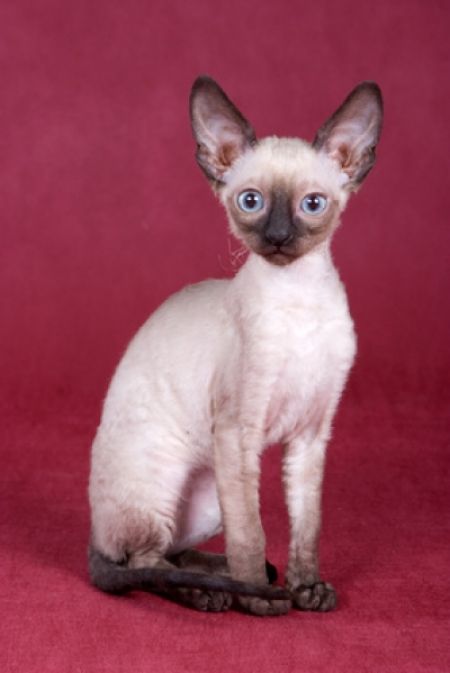
In addition to the coat, this breed is remarkable for its distinct egg-shaped head
with high cheekbones, hollow cheeks, a strongly bridged Roman nose, and large ears set high on the head. The body has been compared to that of a Whippet, with its arched back, barrel chest, small waist, and very fine, long legs. In spite of their dainty appearance, these small to medium sized cats are extremely hard-bodied and muscular, using their welldeveloped hips and long legs for fast starts and stops, quick turns, and high jumps.
advertisement
Some people who are allergic to cats are able to own Cornish Rex cats
but the reason for this is not that Rexes are, as some people have claimed, hypoallergenic. The Cornish and the Devon do shed less than other cat breeds (they can't shed hair they don't have), which is great if keeping hair off the couch is important to you. How-ever, cat hair itself is not what causes allergic symptoms in humans. An allergenic protein called Fel d1, secreted via saliva and sebaceous glands, produces the symptoms. When cats groom, they spread Fel d1 onto their fur. Cornish Rexes produce this protein, too. They just don't deposit as much allergen-laced hair all over the house. Since Cornish Rex cats are easy to bathe (the soap penetrates the short coat easily and their fur dries quickly), regular bathing can reduce the Fel d1 covering the Rex's fur, and can further reduce allergic symptoms.
advertisement
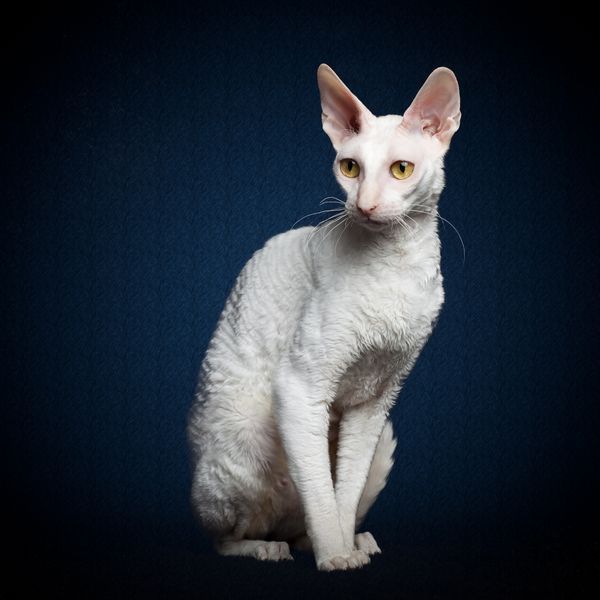
You just know that a cat who looks like this has a sense of humor
and you can expect that he will exercise it at your expense. The Cornish Rex is a highly intelligent, highly active cat who loves to be involved in everything you're doing: he will climb to the highest point in the house to survey his domain, steal food to fuel his antics, and play fetch anything, really, that will bring him attention and applause. He can learn just about anything you can teach, although you may find that he is a better trainer of you than you are of him. He's always on the go, so don't think that you are acquiring a sweet, quiet lap sitter when you bring the Rex home. This is a cat who speaks his mind. He might not speak English, but he definitely knows how to get his point across with a glance, gesture, or vocal riposte.
advertisement
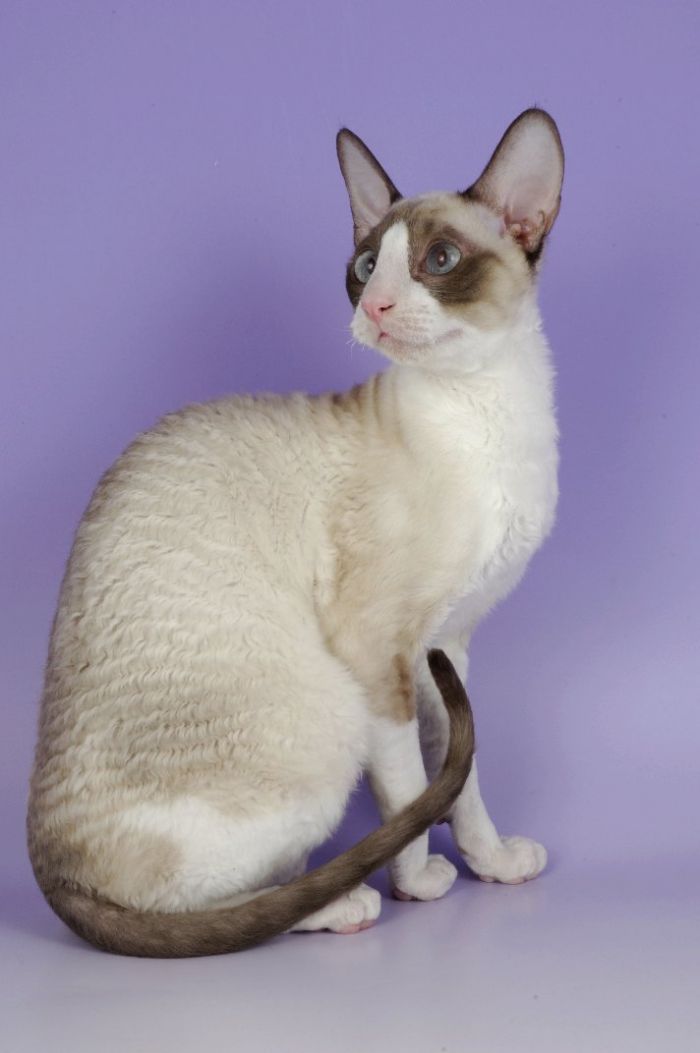
In spite of its delicate appearance, the Cornish Rex is a surprisingly hardy breed and does not require any unusual care.
An active cat who loves to exercise, it has no problems creating its own entertainment. While most mature cats outgrow their kittenish playfulness, a Cornish Rex never loses interest in games, and as an adult is as playful as a kitten.
advertisement
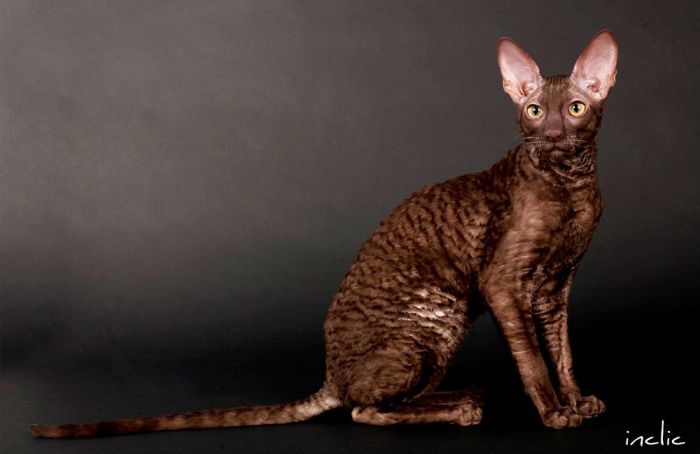
The Cornish Rex has been compared to the Whippet dog
because of its slender athletic build, curved contours, arched back, and willowy body. From torso to tail the Cornish Rex is long and lean. However, do not let the willowy form fool you-the Cornish Rex is no weakling. Under that ultra short fur are strong bones and muscles.
advertisement
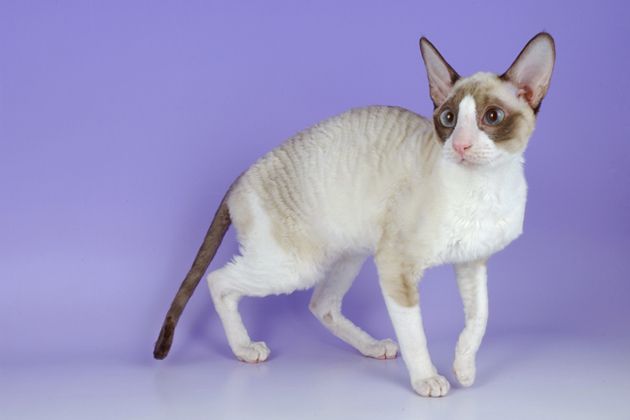
The defining characteristic of the breed, however, is its very short, close lying, very soft wavy fur.
The entire coat is curly or wavy, sometimes compared to the design of a washboard. They have a marcel wave. Although completely lacking guard hairs-the long, stiff, outer hairs that act as a barrier against the elements-the Cornish Rex's coat is made up of the soft inner down and awn hairs, with down hair predominating. The lack of guard hairs make the Cornish Rex's coat very soft touch. The soft, warm feel is luxurious.
advertisement
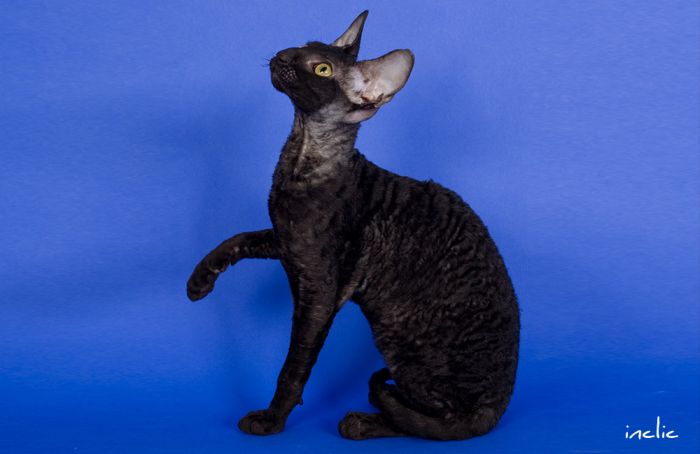
The coat requires very little grooming.
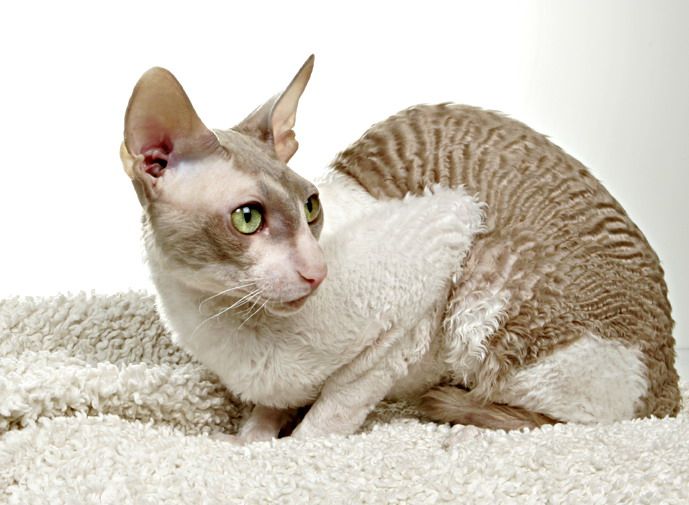
They do not shed like other breeds, but the short, fine hair is hard to see, and they don't deposit their hair over the furniture like other animals. Fanciers often compare the feel of the Cornish with warm suede or crushed velvet.
advertisement