Warning: this article brings together two of the most two taboo topics of our time.
Could This New Birth Trend Be Putting Babies At Risk?
By
Editorial Staff in
Health and Fitness
On 2nd March 2016
advertisement
What is it?
NEW mothers could be putting their babies at risk of serious infection by following a trend called "seeding", experts have warned.
Doctors said demand for the practice - also known as microbirthing - is rising in UK hospitals but there is no proven benefit for newborn babies.
When babies are born naturally they are exposed to a range of beneficial bacteria while moving down the birth canal.
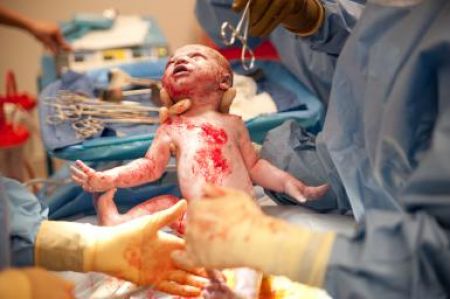
But babies who are born by Caesarean section are not exposed to this bacteria.
Potential risk
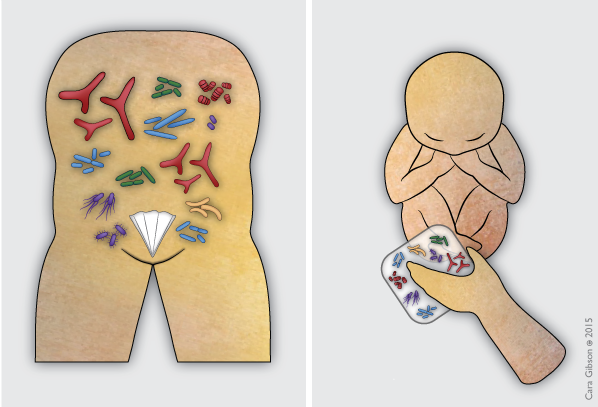
With seeding - which apparently started in Australia but is now growing in popularity in the UK - mothers are requesting that their babies are covered in vaginal fluid immediately after a Caesarean birth via a swab.
The swab of fluid is applied to the baby's mouth, face and body.
Parents hope the exposure to bacteria will boost their baby's immune system, thereby preventing illness and disease in the future, such as asthma and allergies.
But experts writing in the British Medical Journal (BMJ) have warned that new mothers could be putting their babies at risk of harm, including from group B strep (GBS), which is a serious infection that can lead to death.
advertisement
No evidence of benefit
Three experts writing in the British Medical Journal have raised concerns about the practice, known as ‘gauze seeding' or ‘seeding the microbiome'.
They suggest that the procedure could carry a risk of passing infections to the baby, such as Group B Strep, and that, since there is ‘no evidence of benefit', this small risk of harm cannot be justified.
Microbiome
Before we go any further, we perhaps need to rewind a bit, since you might be anywhere on the spectrum between baffled and revolted to learn that C-section mums are rubbing their vaginal bacteria on their cute little babies.
So let's start by attempting to get a basic grip on the concept of the human microbiome.
Microbiome is a word that's only just edging its way into the popular consciousness, but take it from me, if you're lucky enough to be alive for the next fifty years, you're going to be hearing a whole lot more about it.
Essentially, it's the rich colony of bacteria that lives on us and in us, and scientists are only just beginning to understand the huge role it may play in every single aspect of our physical and mental health.
advertisement
The numbers
Around a quarter of pregnant women carry GBS at any one time, with a small number of babies becoming infected during birth.
There are also other conditions that cause no symptoms in the mother, such as chlamydia, gonorrhoea and herpes simplex virus that could be transferred on the swab.
advertisement
The next best option
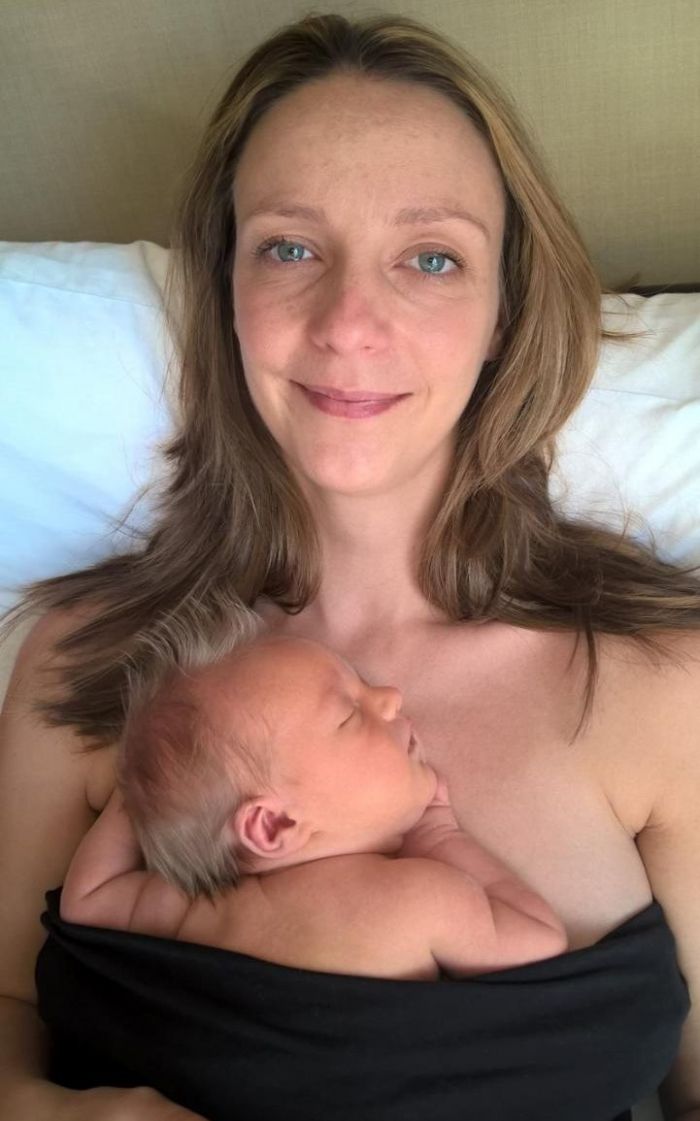
One such woman was Helen-Marie Shackleton, who had a natural birth with her first baby, but chose an elective caesarean for medical reasons with her second son, Oliver, at Harrogate Hospital in North Yorkshire.
"People have suggested I wanted to join the new ‘hippy mummy trend' or that I was ‘mourning' a natural birth, but I had actually researched widely into the ‘seeding' procedure", she explained.
"I concluded that I couldn't birth naturally, this was the next best option. The benefits of my baby being exposed to these beneficial microbes far outweighed any risks in my opinion. I wanted my second son to have the same exposure to my microbiome as my first born had had, to hopefully reduce any long-term risk of disease."
advertisement
Not that natural
A world-renowned obstetrician, Michel Odent, and his view:
"This technique is based on the assumption that human babies have been programmed for immediate colonization by vaginal microbes", he told me.
"But we need to challenge this assumption. I know from experience, that when birth is not interfered with as it so often is in modern times - it is much more common for the baby to be born without the bag of waters breaking before or during labour. When a baby is born in this way, ‘in the sac' or ‘caul' as it is sometimes called, of course it is not in direct contact with any vaginal bacteria at all."
advertisement
No conclusive answers yet
Currently, nobody has any conclusive answers and everyone both mothers and doctors needs to keep very open minds. Only a few basics seem clear: Bacteria? It's not all bad. Vaginas? They're quite important when you're giving birth. And vaginal bacteria? Well, it seems that stuff is pretty special.