

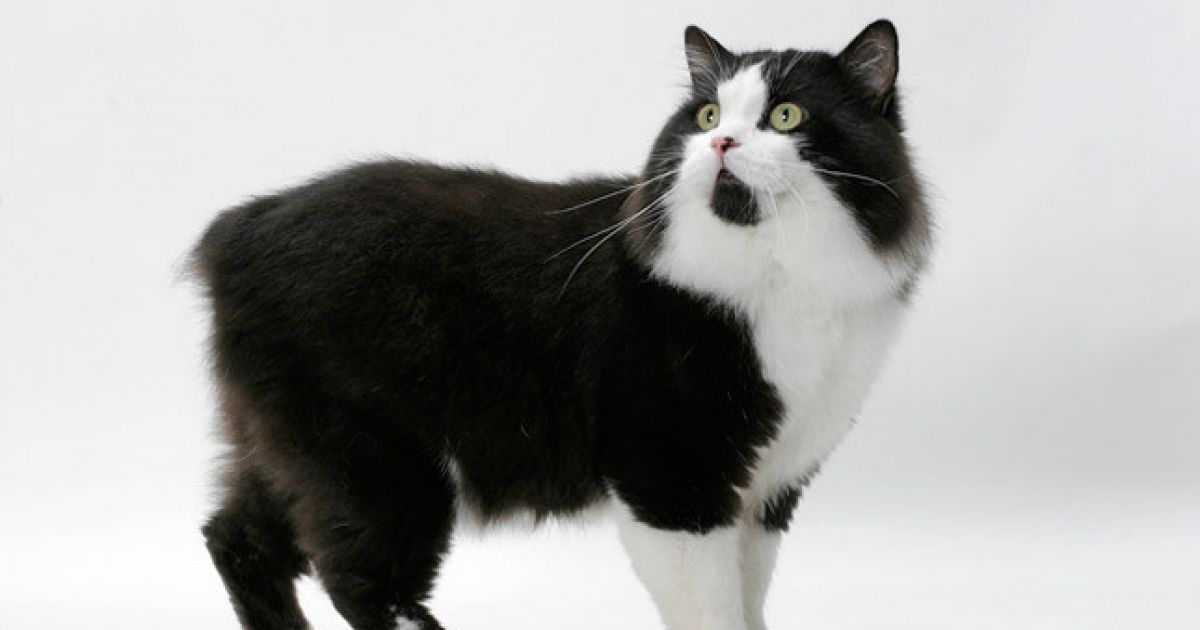
Both varieties are characterized by the extreme shortness or absence of a tail.
advertisement
The friendly, affectionate Cymric is the longhaired variety of the tailless Manx cat.
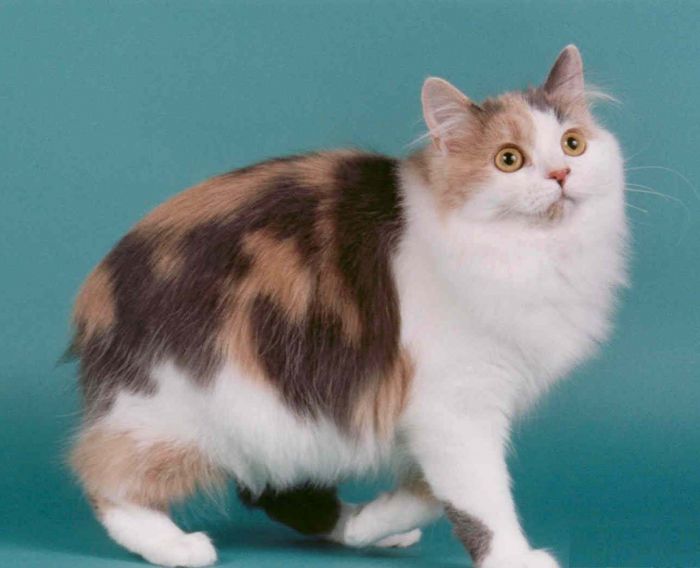
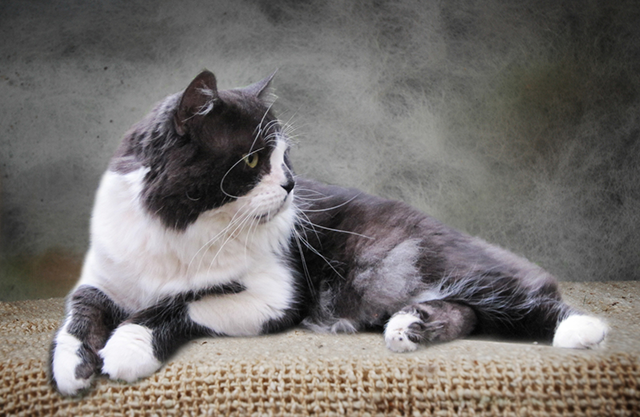
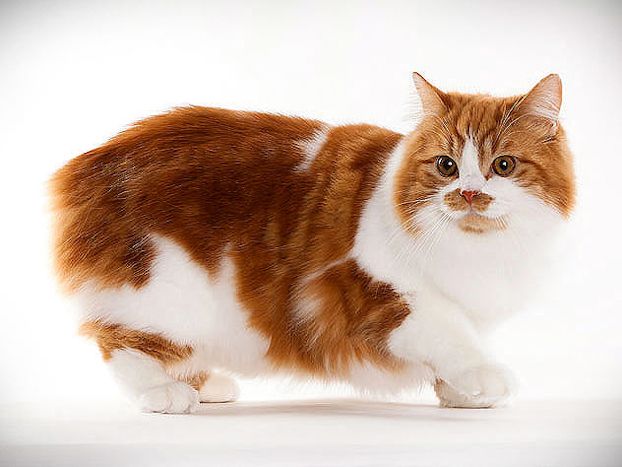
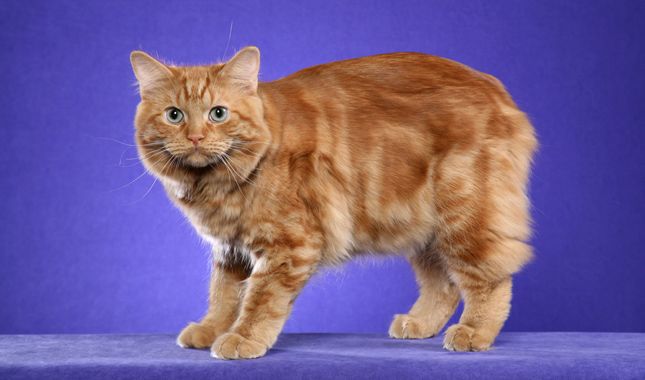
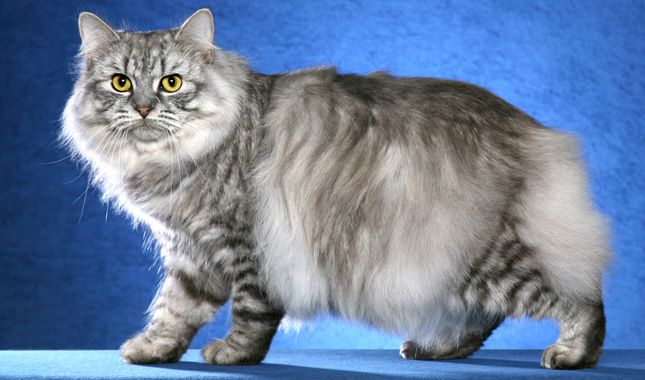
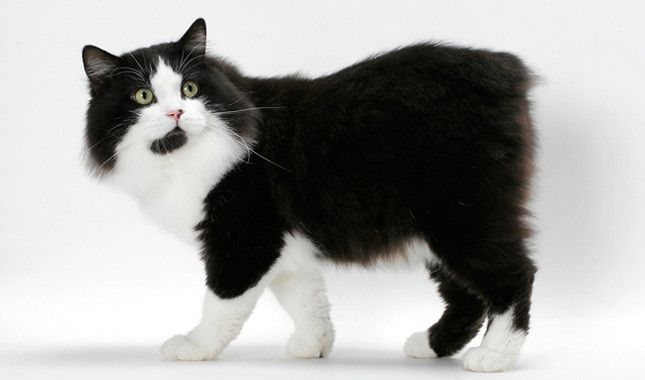
Other than coat length, the two breeds are identical, with a solid body, round head, widely spaced ears and large, round eyes. The thick coat comes in many colors and patterns, including tabby, tortoiseshell and calico.
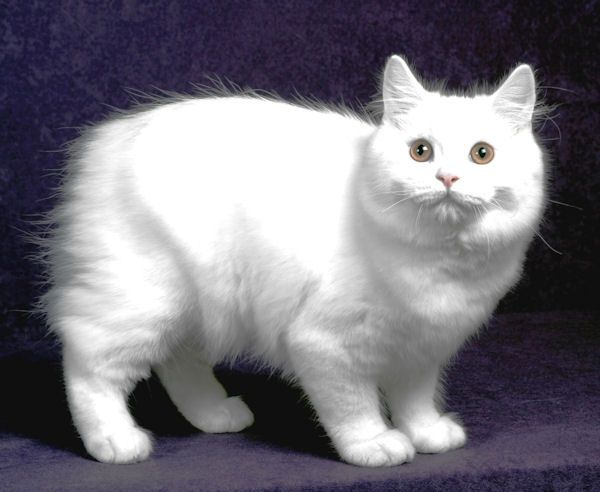
The Cymric’s taillessness is the result of a spontaneous genetic mutation, a common occurrence in felines.
Besides his lack of a tail, the Cymric, who takes his name from the Gaelic word for Wales, is noted for his rounded appearance: He has a round head, round eyes, even a rounded rear end.
advertisement
Don’t think that the Cymric is completely tailless, eithe
some arethey are called rumpysbut others have up to three vertebrae fused at the end of the spine (rumpy risers); some have a stump of up to five vertebrae that they can whisk around; and some, known as longys, have a tail that's longer than the stump but shorter than the typical cat tail.
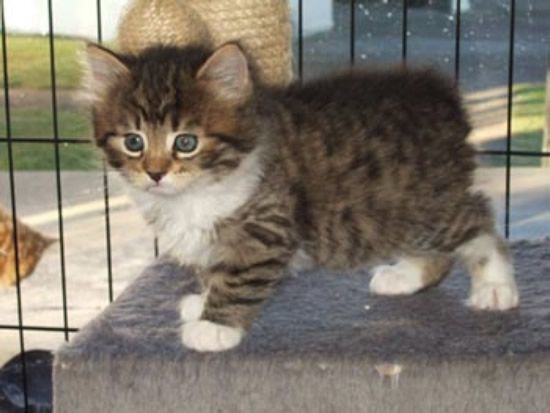
The Cymric is gentle and playful. It’s not unusual to find that he enjoys playing fetch or carrying his toys around.
He's also smart and dexterous, capable of using his paws to get into cabinets or to open doors. Fond of human company, he will carry on a conversation in a sweet trilling voice. Some Cymrics give all their love to a single person while others are affectionate toward the entire family, including children.
advertisement
He might lack a tail, but the Cymric has a powerful rear end and is an excellent jumper, even without a natural counterweight to aid his balance.
When you see him accelerate through the house and make sharp turns and quick stops, you'll think he's a mini sports car in the shape of a cat.
advertisement
The genetic mutation that causes the shortness or absence of a tail in this breed is caused by a mutation similar to the one that causes spina bifida in people.
Unfortunately, many of the kittens in litters of short-haired and long-haired Manx queens are stillborn, or later develop spina bifida or another neurological abnormality called sacrocaudal dysgenesis. The breed is predisposed to developing gastrointestinal disorders including megacolon and rectal prolapse. They also are at an increased risk of corneal dystrophy, which is a progressive eye condition that typically becomes evident by about four months of age.
advertisement
Cymrics - or long-haired Manx - are intelligent, affectionate, fun-loving cats that typically get along very well with other animals, including dogs.
Like their short-haired counterparts, the long-haired Manx are extremely loyal to their humans and enjoy spending as much quality time with them as possible, every hour of every day. They are wonderfully playful cats. Many Cymrics can easily be taught tricks, which constantly amuse and delight friends and family members, and also household visitors. Despite their outgoing temperaments, these cats are uniformly gentle and non-aggressive and are not known to be pushy, forward or overly demanding of attention.
advertisement
The Cymric is a stocky, athletic breed, with an ability to jump that defies its husky size, weight and structure.
They often are found perching on something that is at the very highest point in a room, without any obvious pathway for how they reached that lofty place. The Cymric, or long-haired Manx, has exceptionally powerful and well-developed hindquarters, which give it the unique ability to successfully leap unusually high and far.
advertisement
The long-haired version of the Manx is particularly dog-like in terms of temperament and traits.
The Cymric is known to bury bones and toys much like a dog, and to retrieve objects willingly during games of toss and fetch. They tend to be either one-person cats or uniformly family cats. If a Cymric is especially bonded to one owner, it can be difficult to successfully introduce it to another owner or household. However, when a Cymric is fully a family cat, it easily adapts to most new family members or changes in environment.
advertisement