

The disturbing case happened in the US in 2010
Dark Story Of School That Gave 2,300 Students Free MacBooks Then Used Webcams To Spy On Them
By
Haider Ali in
Community
On 21st August 2024
advertisement
A school spying on its students through their webcams might sound like a plot straight out of a "Black Mirror" episode, but it actually happened in Pennsylvania back in 2010.
This incident led to the Robbins v. Lower Merion School District case, also known as 'WebcamGate'.
It involved allegations that around 2,300 students were monitored in the privacy of their own homes.
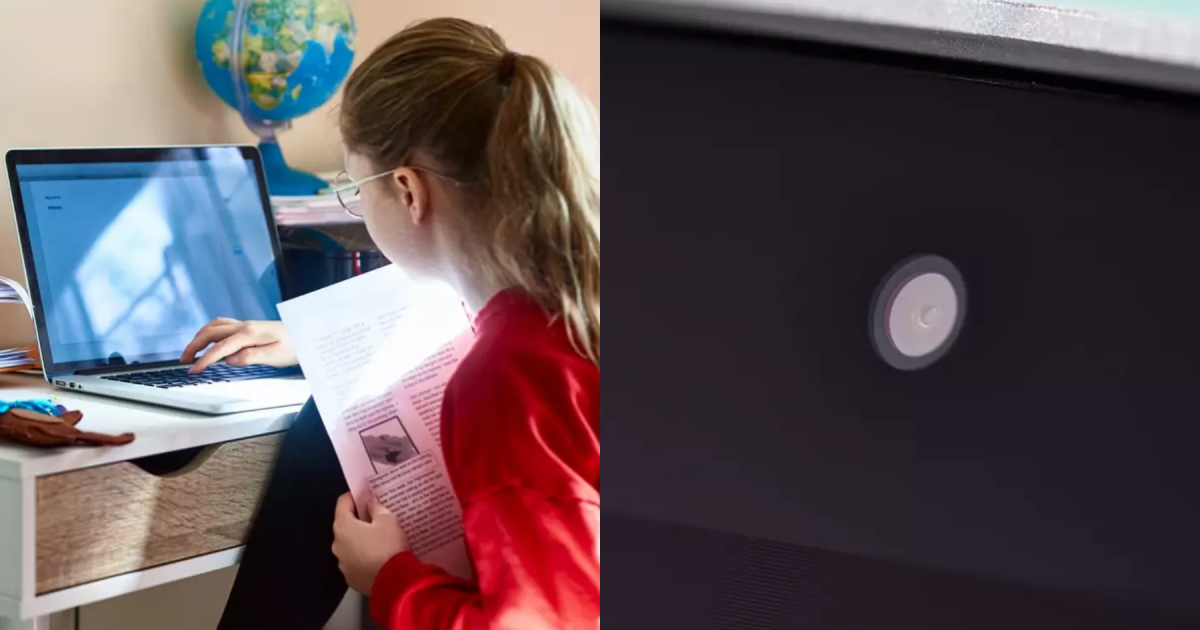
At the start of the 2009-10 school year, the Lower Merion School District issued MacBooks to students for use both at home and at school.

Phil Barker/Future Publishing via Getty Images
This initiative was funded by education grants.
advertisement
Installed on each laptop was tracking software designed to prevent theft, including the now-discontinued Theft Track program.
This software allowed school officials, without the students' knowledge, to remotely activate the webcams on these laptops.
They could take photos of students at home and even upload screenshots from the webcams along with records of web browsing and instant messaging activities.
The school district's covert operations came to light in late 2009.
advertisement
This happened when Blake J. Robbins, a sophomore at Harriton High School at the time, noticed his webcam had been activated without his knowledge.
Robbins first became aware of the tracking in November when he was summoned to the vice principal's office and accused of drug use and sales.
Getty Images
The evidence? Covertly captured webcam images.
Robbins denounced the accusations as 'completely false'.
advertisement
Robbins described the charge as " completely false."
Following his disclosure of the incident to his parents, the Robbins family made the decision to file a lawsuit on behalf of all students who had received laptops from the school.
advertisement
Following this, the Robbins family decided to file a lawsuit on behalf of all students who had been issued laptops.
A second student, Jalil Hasan, also filed a complaint citing invasion of privacy after discovering that he had been secretly monitored via his webcam for two months.
advertisement
The lawsuit was eventually settled in October 2010, with the district agreeing to pay $610,000 to resolve both suits.
The settlement allocated $175,000 and $10,000 into trusts for Robbins and Hasan, respectively.

10'000 Hours/Getty Images
Additionally, the students' attorneys received $425,000.
advertisement
At that time, the Lower Merion School District released a statement saying:
"We believe this settlement enables us to move forward in a way that is most sensitive to our students, taxpayers and the entire school district community. The agreement is comprehensive, and effectively resolves all components of the laptop litigation, including the Robbins and Hasan cases and the Graphic Arts insurance case.
advertisement
"It is the product of a lengthy, court-ordered mediation involving the active participation of Judge DuBois and Chief Magistrate Judge Reuter.The terms of the agreement have been thoroughly reviewed in a number of executive sessions over the past few weeks. Throughout the entire process, the Board has aggressively sought to protect the interests of our taxpayers.
"Earlier this summer, the U.S. Attorney's Office, the FBI and the Montgomery County District Attorney cleared the District, and its employees - current and former -- of any criminal wrongdoing.
advertisement
"That was an important moment for us -- it confirmed the results of an independent investigation and the District's own initial findings. The District acknowledged and apologized for any mistakes and addressed them immediately. We revised our policies and procedures, reaffirmed our commitment to technology and put safeguards into place to ensure the privacy of our students, staff and school families."
It added: "This settlement is not under seal because as a public entity, we have a responsibility to report all terms of the agreement. Although we would have valued the opportunity to finally share an important, untold story in the courtroom, we recognize that in this case, a lengthy, costly trial would benefit no one.
advertisement
"It would have been an unfair distraction for our students and staff and it would have cost taxpayers additional dollars that are better devoted to education. We also wanted to be sensitive to the welfare of the student involved in the case, given the possible ramifications of what would have been a highly-publicized trial.
"Bottom line, it is time to resolve this matter and ensure that the District's resources are focused squarely on educating our children."