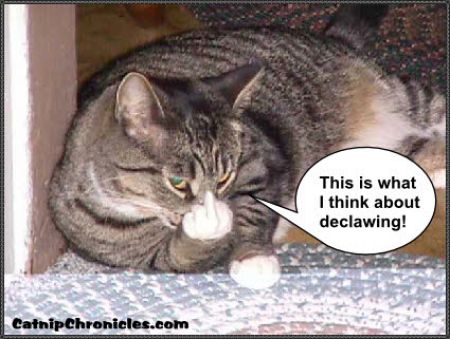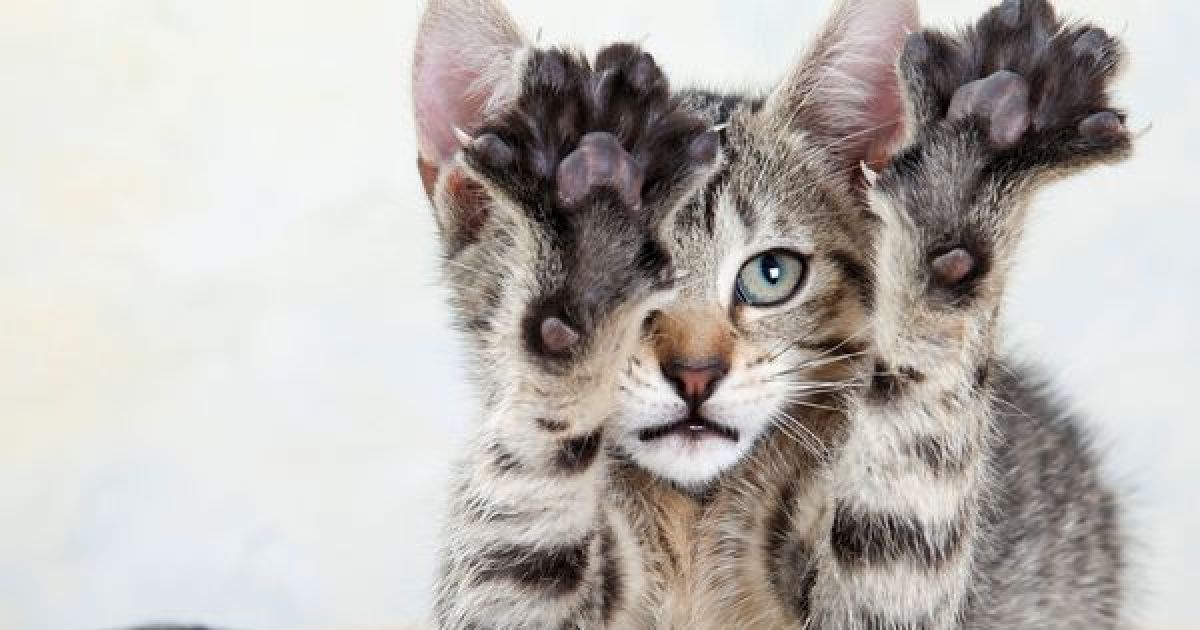
People often mistakenly believe that declawing their cats is a harmless "quick fix" for unwanted scratching. Declawing also can cause lasting physical problems for your cat.
advertisement
Onychectomy, popularly known as declawing
is an operation to remove an animal's claws surgically by means of the amputation of all or part of the distal phalanges, or end bones, of the animal's toes. Because the claw develops from germinal tissue within the third phalanx, amputation of the bone is necessary to fully remove the claw. The terms "onychectomy" (origin: Greek á½Â„νÏ…ξ onycho, nail + á¼ÂκÏ„ομή ektome, excision) and "declawing" imply mere claw removal, but a more appropriate description would be phalangectomy, excision of toe bone.
The United States is way behind the rest of the civilized world in its attitude toward declawing of cats.
Declawing has been illegal in England for several years. Australia, New Zealand, Germany, Wales, Finland and Brazil are among the many countries that either consider declawing illegal or inhumane, and only allow it under extreme circumstances. More and more savvy cat aficionados, Cat Fancy organizations, and veterinarians in the United States are mounting protests against declawing, calling it inhumane and unnecessary.
advertisement
The truth about cats and scratching
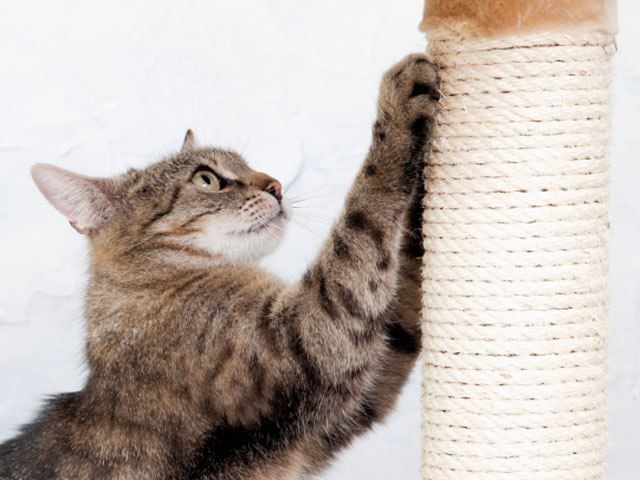
Scratching is normal cat behavior. It isn't done to destroy a favorite chair or to get even. Cats scratch to remove the dead husks from their claws, mark territory, and stretch their muscles.
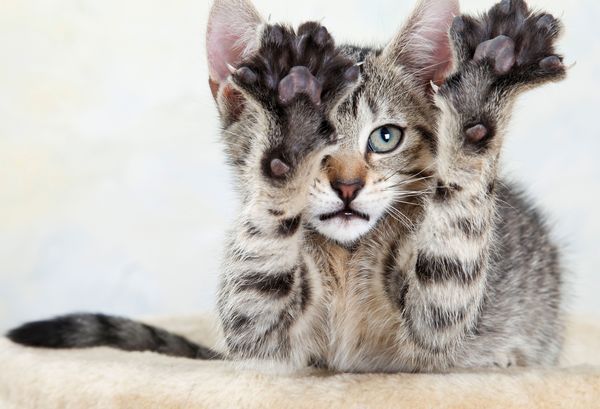
Cats are usually about 8 weeks old when they begin scratching.
That's the ideal time to train kittens to use a scratching post and allow nail trims. Pet caregivers should not consider declawing a routine prevention for unwanted scratching. Declawing can actually lead to an entirely different set of behavior problems that may be worse than shredding the couch.
advertisement
Declawing is NOT Just Nail Trimming
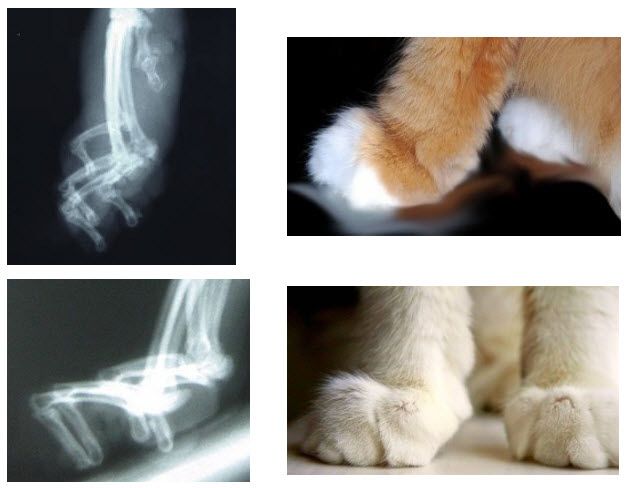
Nor is declawing only the removal of a portion of a claw. Instead, it is the surgical amputation of the first joint of the cat's toes. Whether this procedure is accomplished with a scalpel, a guillotine-type cutter or a laser, it is major surgery, and not to be undertaken lightly.
advertisement
Declawing Does Nothing to Benefit the Cat
You will sometimes hear the disclaimer, "It's better than putting him to sleep." This is a fallacious argument, and usually offered only to soothe the owner's conscience. Only the cat's owner can make the decision to kill her cat because of scratching problems. He or she can also make the decision to let him keep his toes. Unlike neutering, which does benefit the cat, both healthwise and behavioralwise, declawing simply does nothing positive for the cat.
advertisement
Declawing Robs a Cat of His Chief Weapon of Defense
A typical counter-argument is, "My cat is indoors-only." Even indoor cats sometimes manage to escape. A declawed cat does not stand a chance against a large dog, a bigger cat, or a predator. Although he still has teeth, by the time he gets in close enough to bite, it may be too late.

advertisement
Declawing is Painful Surgery
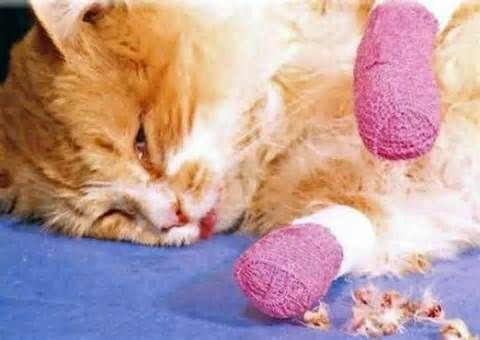
Think of it as 10 amputations (if only the front feet are declawed). Pain meds may help initially, but phantom pain may last for weeks or months, as nerve endings heal. Dr. Nicholas Dodman describes the pain following surgery: "Unlike routine recoveries, including recovery from neutering surgeries, which are fairly peaceful, declawing surgery results in cats bouncing off the walls of the recovery cage because of excruciating pain."
advertisement
Too often, people think that declawing is a simple surgery that removes a cat's nails
the equivalent of having your fingernails trimmed. Sadly, this is far from the truth.
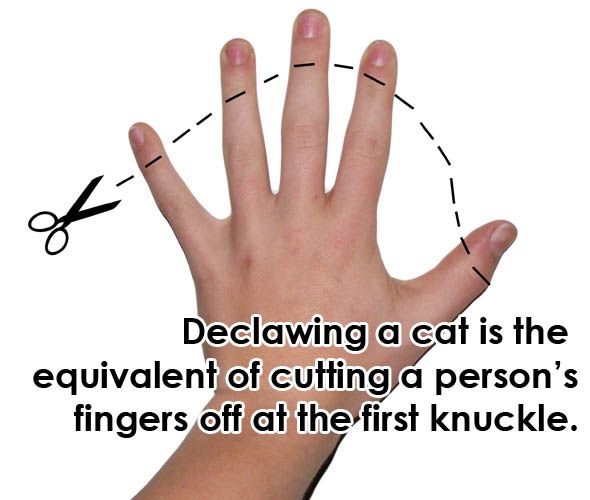
Declawing traditionally involves the amputation of the last bone of each toe. If performed on a human being, it would be like cutting off each finger at the last knuckle.
It is an unnecessary surgery that provides no medical benefit to the cat. Educated pet parents can easily train their cats to use their claws in a manner that allows everyone in the household to live together happily.
advertisement
Cats are "digitigrade," which means they walk on their toes.
Pain in the toes can cause changes to their normal gait, which eventually can cause stiffness and pain in their legs, hips, and spine. Anyone who has ever experienced prolonged foot pain will understand exactly what I'm describing.
advertisement
Many cat owners who have had cats declawed in the past now say they would never consider it again, knowing what they now know, and remembering the aftermath of the surgery.
Happily, there are other alternatives, so they need never subject their cats to such pain:
advertisement
Nail Trimming
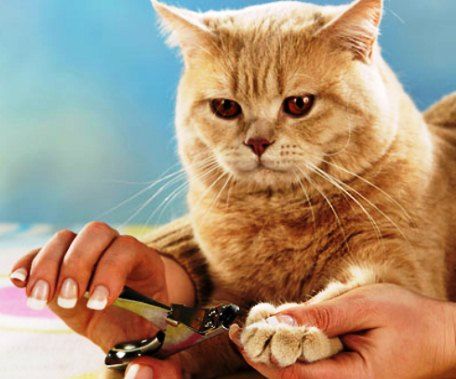
Cats cannot do the serious damage to furniture, drapery and rugs, with blunt nails. Trimming is a simple procedure, and if you wait until your cat is sleepy and quiet, and take it one nail at a time, over a period of several days, your cat will soon find out it's not to be feared. Simply lightly squeeze the cat's toe to extend the nail tip, and snip the tip. You can buy inexpensive clippers for this purpose at any pet store. Be careful not to cut into the dark part on the underside of the tip-- this will cause bleeding. If you're hesitant about doing this yourself, ask your veterinarian to teach you, or read my How to instructions on this subject. It's a lot less expensive than declawing, and a lot easier on the cat and your conscience.
Scratching Posts
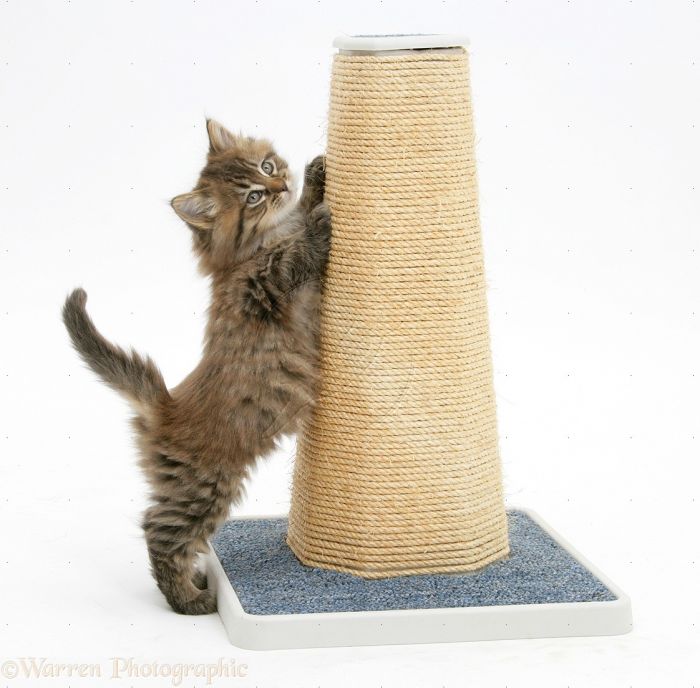
Invest in, or build your own, scratching post(s). Sisal-covered posts are highly favored by many cats. Most cats can be easily trained to use the post instead of your furniture. Scratching Posts can be obtained through pet stores, or if you have any carpentry talent at all, you can build your own. Don't stint on the number of posts. Many cats enjoy having several surfaces and elevations (vertical, horizontal and plane.) Fortunately, one of the most popular surfaces is cardboard, and inexpensive cardboard scratching posts are readily available. If one post doesn't work, get a second one, and experiment with their locations. Offer kitty a variety of surfaces and elevations, and he will soon choose his favorites.
advertisement
Soft Paws
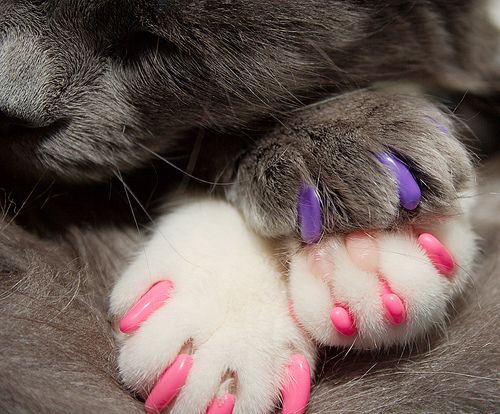
Soft Paws were developed by a veterinarian, and are vinyl nail caps which glue right over a cat's claws. They come in clear or colors, which can look quite fancy, and also are easy to locate if one should come off. The caps grow out with the natural growth of your cats nails, and are said to last four to six weeks, on average.
Feliway
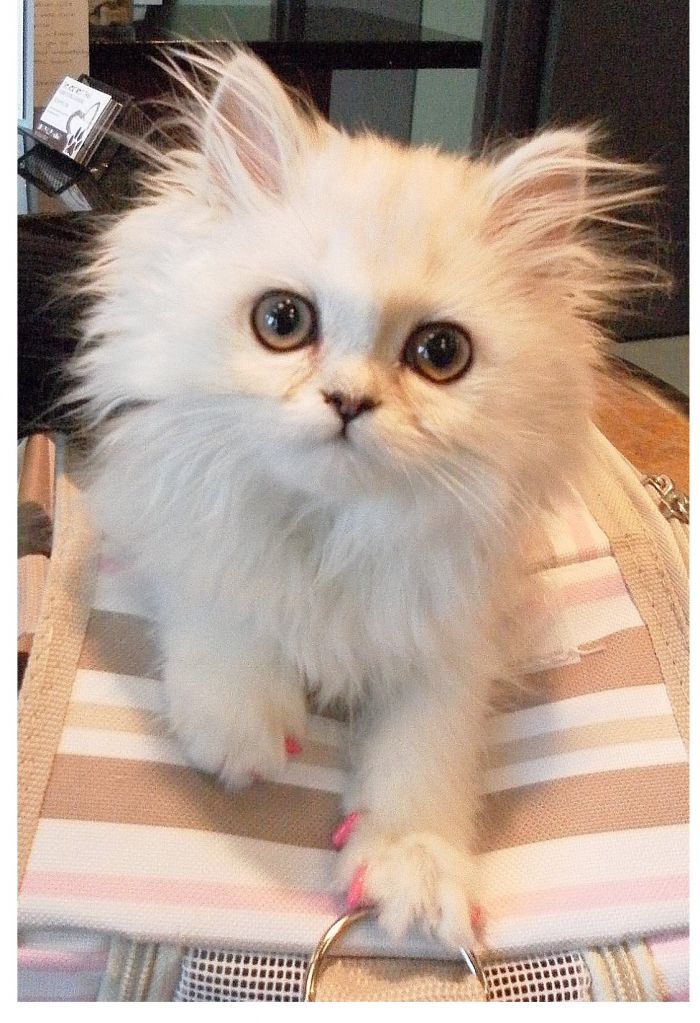
Feliway is a "friendly pheromone" which mimics the scent of cats' facial glands. It has been found to be useful in combating cats' urine marking tendencies, as it is thought that cats will not mark with urine where they have previously marked with facial glands. Although Feliway is not marketed for this purpose, some behaviorists believe it may be useful to curb undesirable scratching.
advertisement
There is no valid reason today to even remotely consider declawing as a solution for destructive scratching.
Any of these alternatives or a combination of them, can end your furniture-damage problems completely.