

Divers in Taipei, Taiwan encountered a giant oarfish, a lesser-known sign of potential danger due to its association with earthquakes and tsunamis. The fish's appearance near the surface raised concern about its well-being rather than a global catastrophe.
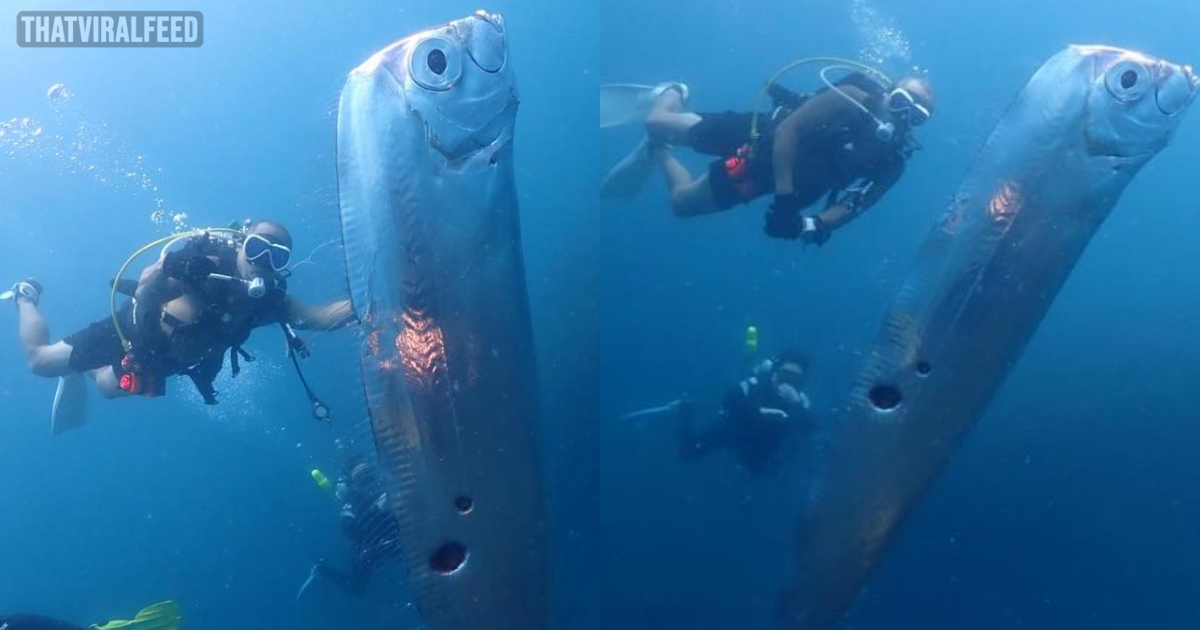
Divers Capture Rare 6-Foot Fish Riddled With Holes Sparking Terrifying ‘Doomsday’ Theory
By
Haider Ali in
Animals
On 27th July 2023
advertisement
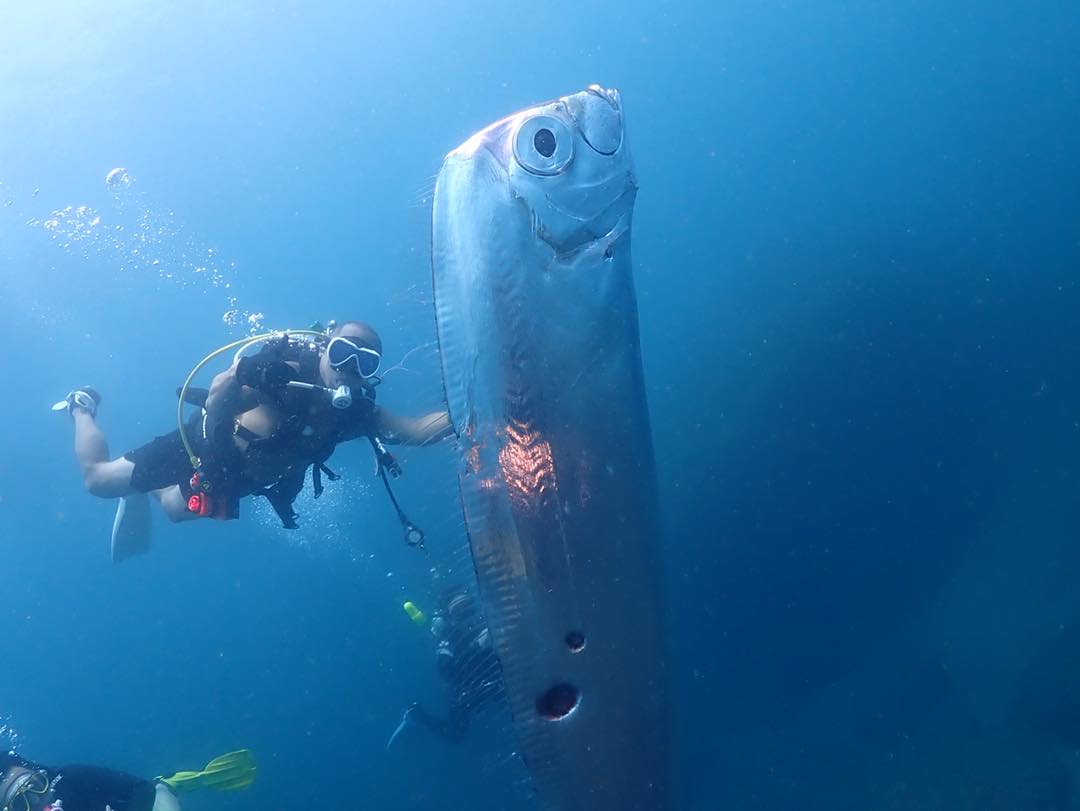
Jam Press/@chengruwang
We are all familiar with the traditional signs of danger, such as a lone magpie or a black cat crossing our path. However, there's one lesser-known sign that might not immediately come to mind—a six-foot fish covered in holes.
Yes, you heard that right. A giant fish, particularly an oarfish, has now been added to the list of potential red flags.
Recently, a group of divers had a unique encounter with one of these colossal creatures, reminding us to stay cautious of the unexpected wonders that lie beneath the surface.
advertisement
The strange scene, which the divers were able to photograph, was spotted as they were exploring the ocean close to Taipei, Taiwan's Ruifang District.
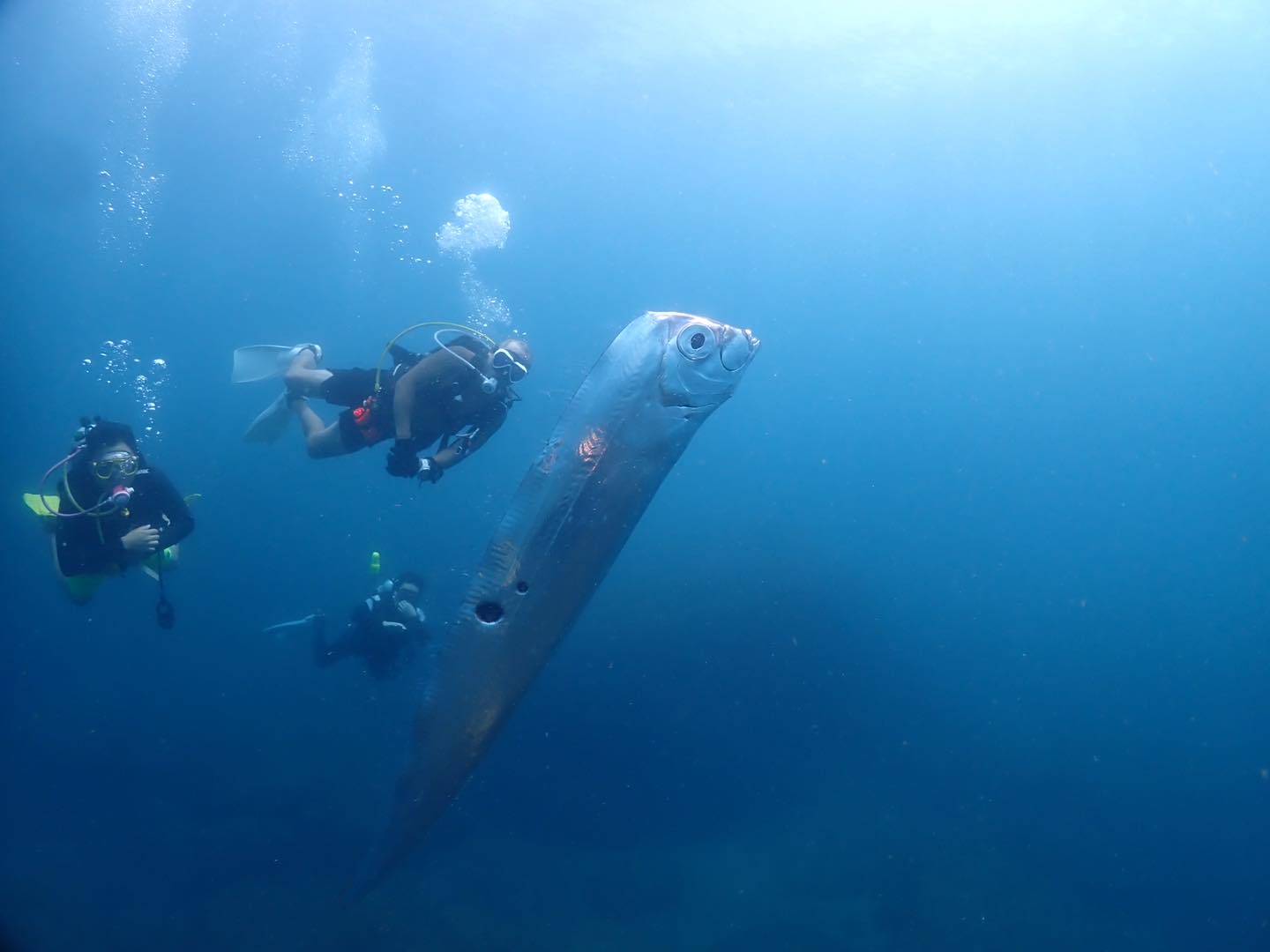
Jam Press/@chengruwang
The enormous oarfish is shown in the video appearing to be suspended in the water.
Its body has two holes in the center, and as the divers approach, it makes no attempt to swim away.
The fish doesn't appear to be extremely dangerous, especially given that it made no attempt to attack any people, but the risk that has been connected to the fish is what causes alarm.
advertisement
The enormous oarfish is also called an "earthquake fish" or a "doomsday fish" since it is believed that witnessing one heralds the impending occurrence of a major catastrophe.
When describing the encounter, diving instructor Wang Cheng-Ru, who was behind the camera during the dive, named the fish by its nickname.
advertisement
"I was diving with the group and we immediately recognized the earthquake fish. It was a very special encounter, as I've never seen one in real life before," he said.
The fish, particularly in Japanese mythology, is thought to be a sign of tsunamis as well as earthquakes, thus they aren't always only an indication of earthquakes.
advertisement
Wang went on to say that he thought the oarfish's body had holes that "probably came from a shark attack," and he drew attention to the fish's notoriety by adding: "I hope that this is not a bad omen."
Oarfish are extremely uncommon to encounter in the wild because they normally swim between 650 and 3,300 feet below the surface.
advertisement
As a result, sporadic sightings might be viewed as even more foreboding - however, Wang believes the enormous fish may have been near the ocean's surface on this particular occasion because it was hurting and possibly dying from the holes in its body.
It's still a bad situation, but maybe the risk in this case just affects the fish's life and not the rest of the world.
advertisement
While the oarfish may not be a direct harbinger of impending catastrophe, its presence should inspire awe and reverence for the delicate balance of our planet.
As we explore and venture into the unknown territories of our world, it is vital to approach with humility and respect the wonders that await us.
advertisement
Its appearance serves as a reminder to remain curious and vigilant about the natural world, marveling at its wonders while acknowledging the limits of our understanding.
The ocean continues to offer a wealth of knowledge and discoveries, inviting us to journey further into its depths with a sense of wonder and respect for the awe-inspiring creatures that call it home.