

A team of doctors in Shanghai made the rare discovery after a one-year-old girl was brought in experiencing delays in speech development
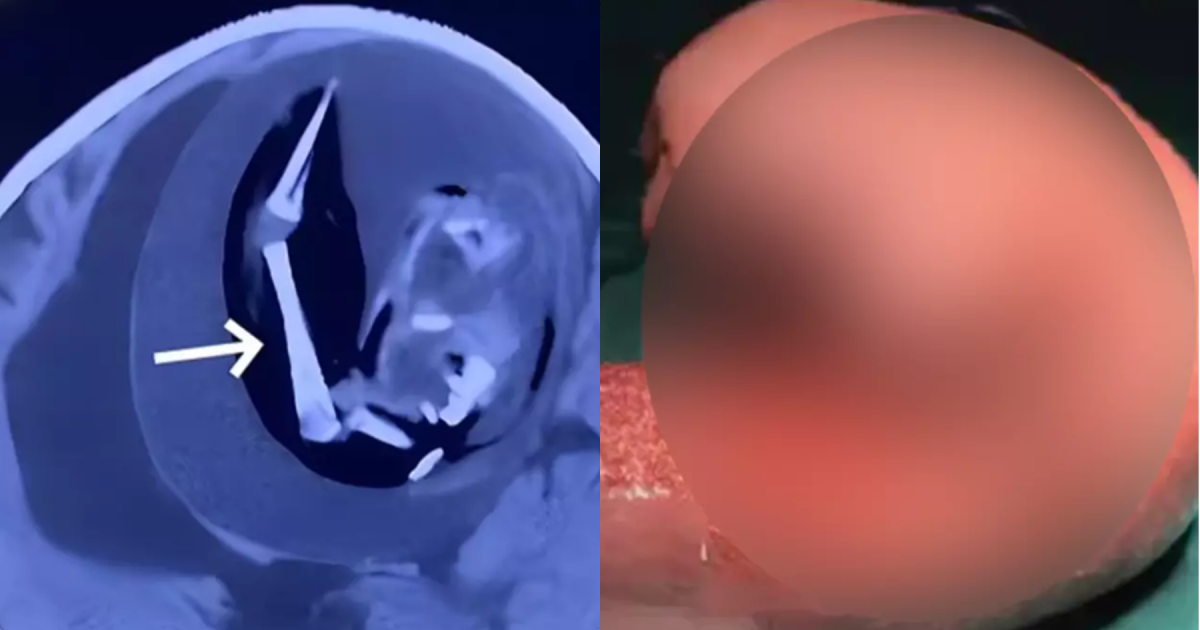
Doctors Are Left Astounded After Finding A Fetus Growing In A One-Year-Old Girl's Skull
By
Haider Ali in
News
On 12th July 2024
advertisement
After discovering a "parasitic unborn twin" in the head of a one-year-old child, doctors in China were forced to operate on her.
A 1-year-old girl in Shanghai, China was brought in to consult with physicians due to "delays in speech development and motor skills."
An examination at 33 weeks revealed "abnormalities" in the baby, according to a report.
This report was published in the American Journal of Case Reports under the title "Intracranial Parasitic Fetus in a Living Infant."

The one-year-old's parents took her to hospital after she began showing signs of developmental issues
Getty Images
However, the test failed to pinpoint the precise issue; the research stated that an MRI "could not provide more information due to space occupation."
advertisement
Four weeks later, the baby was delivered with "a large head circumference."
Later, when the baby was only able to speak "mom" by the time she was roughly a year old, further red flags went up.
Additionally, a head CT scan after being brought in to meet physicians in Shanghai turned up an uncommon discovery.
According to the report, scan results showed a "large mass" in the cerebral hemisphere of the young girl.
advertisement
This area of the brain is responsible for controlling speech, learning, and muscular function.
The mass featured an "internal bone structure" with a "smooth boundary," and its maximum diameter was measured at 13 cams.
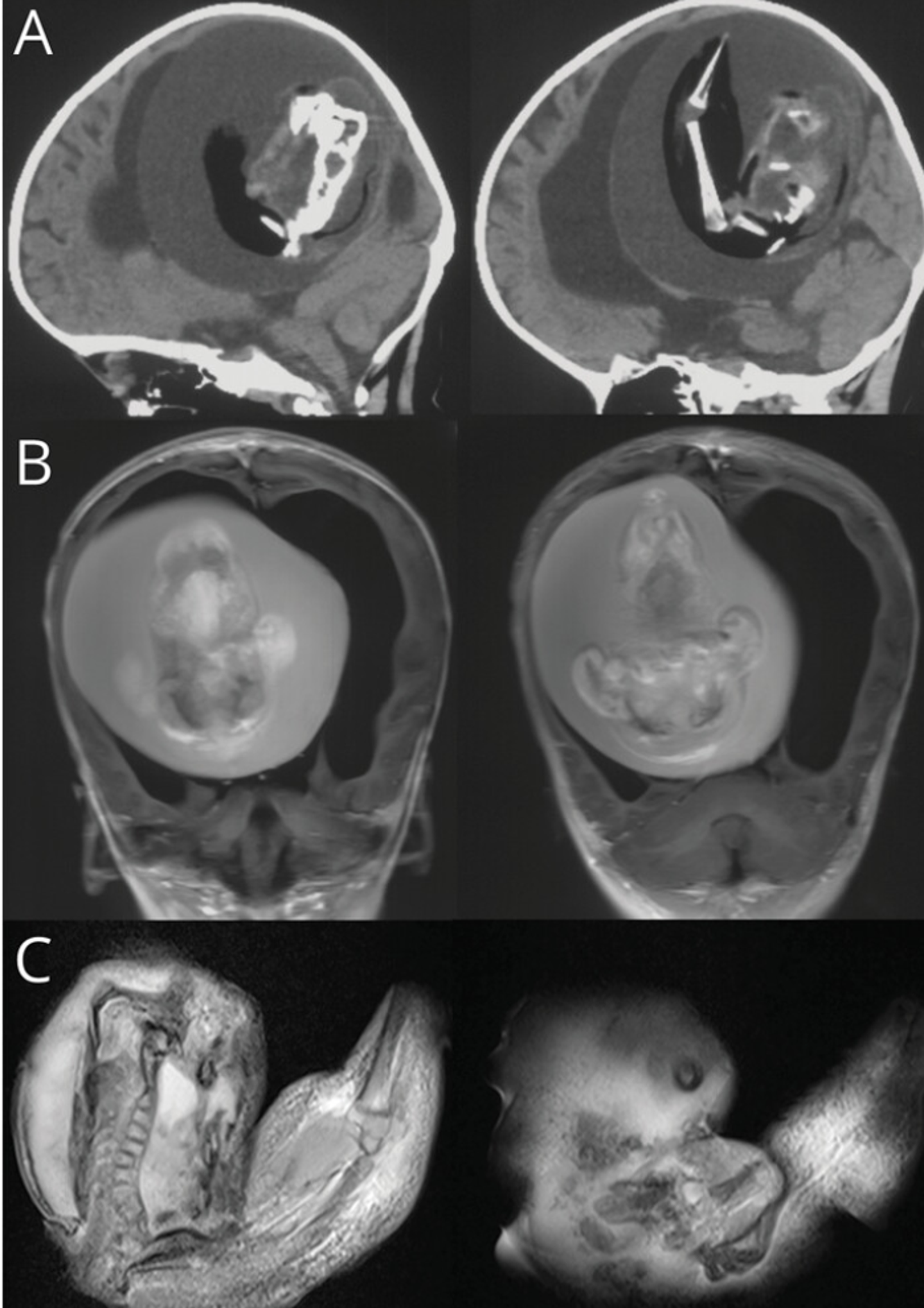
The head CT scan of the one-year-old
Neurology Journals/ Zongze Li et al
The study adds: "Both ventricles and third ventricle had hydrops, with a fetal shape at a continuous level, along with apparent compression near the cerebral parenchyma."
advertisement
The fetus within the girl's skull was identified as fetus in fetu (FIF), a condition described by BMJ Case Reports as "a rare developmental abnormality in which a malformed fetus is found within the body of its twin."
This abnormality occurs when one twin becomes encapsulated within the other during development.
advertisement
This syndrome, also called a parasitic twin condition, causes one twin to cease developing but to stay linked to its other twin while the other twin keeps developing.
Research published in the Medical Journal of Australia estimates the highly unusual occurrence to happen in one in 500,000 live births.

Doctors performed surgery on the one-year-old to remove the fetus
Getty Images
In the end, the doctors decided to give the small girl a craniotomy.
advertisement
"A craniotomy is the surgical removal of part of the bone from the skull to expose the brain," John Hopkins Medicine explains.
"Following complete mass resection, mouth, eye, arm, and hand shapes could be observed," the study adds.
advertisement
The little child suffered from "seizures that were difficult to control" throughout the surgery, despite the doctors' meticulous "preoperative examinations, laboratory tests, and surgical planning" and the fact that the patient was "unconscious" due to general anaesthesia.
advertisement
After the surgery, she died 12 days later.
The study resolved: "Teratomas can be distinguished based on anatomy and imaging. Surgical resection is the only curative treatment and its prognosis is poor."