

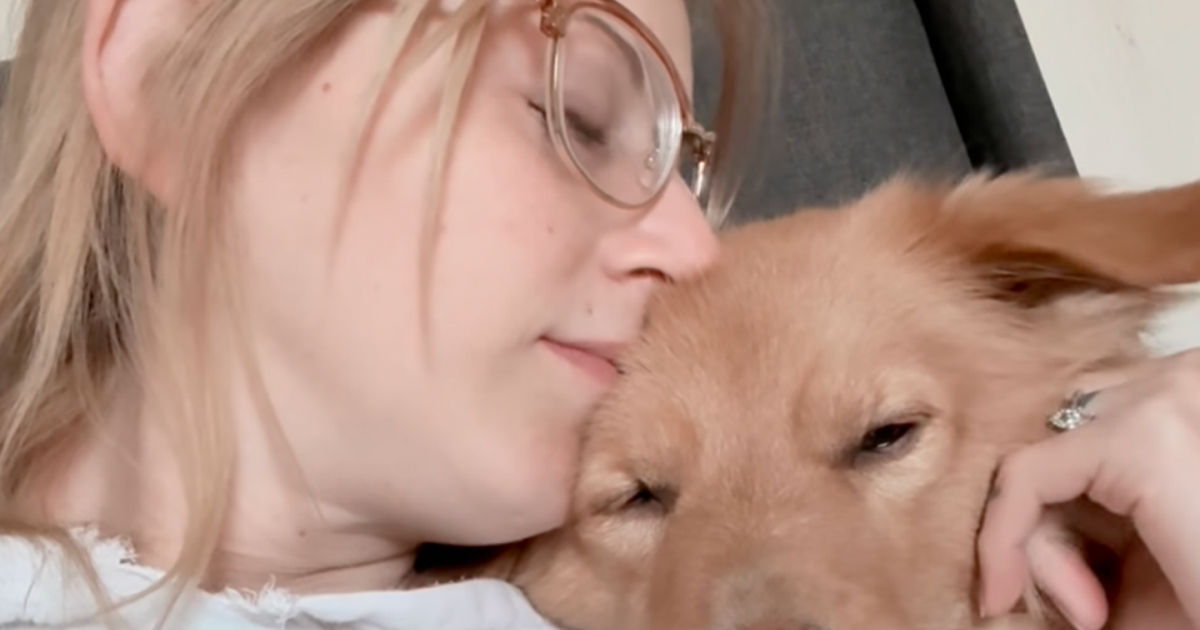
The woman noticed her dog becoming unusually restless and protective around her
advertisement
A woman received a serious medical diagnosis just a day after her dog began behaving in a way she had never seen before. The sudden shift left her confused at first, but the reason behind it became clear soon after.
Kenzie Kinney Seymour, who is 31, owns a two-year-old rescue dog named Sunny. Out of nowhere, Sunny started acting unusually restless around her, staying close in a way that immediately stood out from her normal behavior.
Kenzie said she noticed Sunny becoming fixated on her neck. The dog kept circling her and leaning in, which made Kenzie wonder what was going on because it was so different from the calm temperament she was used to seeing.
"She could sense something was wrong," she told Newsweek. "She wouldn't stop whining, licking excessively, hovering and laying behind me, propping herself on my back, neck and shoulders."
Kenzie later posted a video on Instagram that showed Sunny’s behavior in real time. In the clip, Sunny sat directly behind her and rested her head on Kenzie’s shoulder, watching her closely and refusing to move.
Across the video, she wrote: "The day before I was diagnosed with a brain aneurysm, my dog kept climbing behind me and wouldn't leave my neck alone."

Kenzie's dog started acting differently around her just a day before she got her diagnosis
theterminalbartender/Instagram
advertisement
Kenzie then explained that this wasn’t the first time Sunny had reacted strongly to a possible health issue. The dog had shown similar instincts during past medical scares, which made this new behavior feel even more alarming.
"She does the same thing with my leg that has permanent chronic blood clot damage," Kenzie explained. "It is always nerve-wracking when Sunny gets so antsy like that, because it's not normal for her and I know she is sensitive to my health problems."
According to the Mayo Clinic, a brain aneurysm forms when a weak area in a blood vessel in the brain begins to bulge, creating a dangerous situation if it grows or ruptures.
The Mayo Clinic further states: "Experts think brain aneurysms form and grow because blood flowing through the blood vessel puts pressure on a weak area of the vessel wall."
"This can increase the size of the brain aneurysm. If the brain aneurysm leaks or ruptures, it causes bleeding in the brain, known as a hemorrhagic stroke."
After Kenzie shared her video, many people reached out with their own stories of pets sensing when something was wrong. The responses showed how common it is for animals to notice subtle changes in their owners before the owners do.
advertisement
"I had a similar experience recently with a non-trained dog alerting to me," somebody wrote. "She was able to predict an episode of syncope before I even felt it and potentially saved me from what could have been hours of coming in and out of consciousness."
"Dogs are so so cool," they added.
A second person shared a similar story, saying: "I swear my mother's dog could smell my brain tumor growing and didn't want to die because she knew I was sick. Dogs are beautiful."
advertisement
These stories line up with what experts already know about dogs. They have an extraordinary sense of smell and can detect biochemical changes in humans, which may explain why they sometimes react before symptoms appear.
One study even found that dogs could detect COVID-19 in people with a 94 percent success rate, according to PetMD, showing just how sensitive their noses can be.