The B group vitamins as re very essential for the overall body, among them is vitamin B12 which is usually ignored by most of the people. However, shortage of this vitamin may cause many health issues if it is neglected as it is linked with the metabolism of every cell of the body. Deficiency of vitamin B-12 can lead to prolonged blood diseases accompanied with neurological concerns.
Don’t Ignore These Warning Signs Of Vitamin B12 Deficiency
By
Sughra Hafeez in
Health and Fitness
On 13th September 2017
advertisement
#1 What is Vitamin B12 and Why is it So Important?
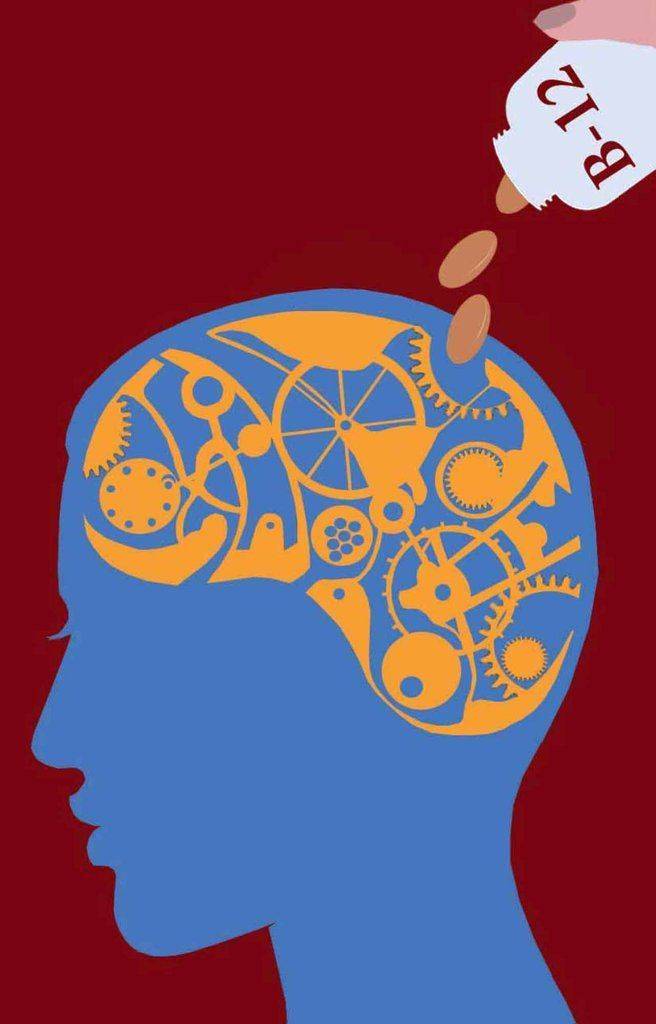
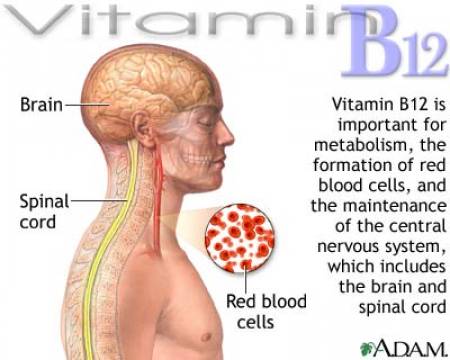
Vitamin B12 ensures that both your brain and nervous system function as they should. It’s also an intrinsic part of your cell’s metabolic controls. Thus, a deficiency in vitamin B12 can play havoc on a person’s entire system.
#2 Vitamin B-12 and other B vitamins play a role in producing brain chemicals that affect mood and other brain functions.
Low levels of B-12 and other B vitamins such as vitamin B-6 and folate may be linked to depression.
advertisement
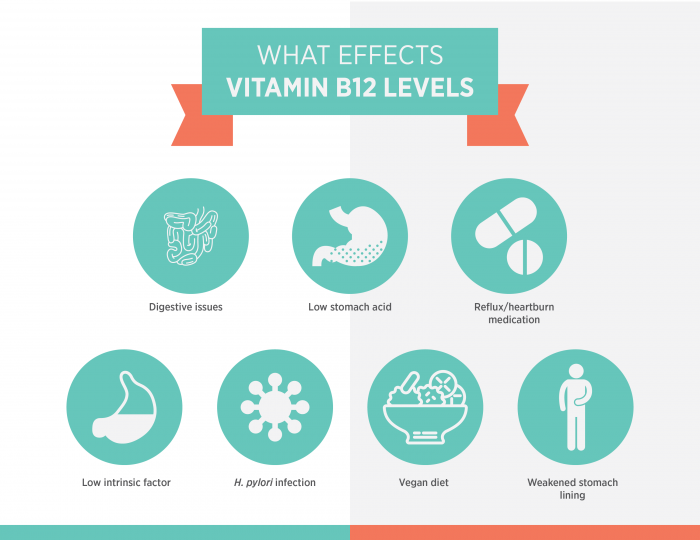
#3 Low levels of a vitamin can result from eating a poor diet or not being able to absorb the vitamins you consume.
Older adults, vegetarians, and people with digestive disorders such as celiac disease or Crohn's disease may have trouble getting enough B-12.
#4 Anaemia
Not having enough vitamin B12 is called vitamin B12 deficiency anemia. This condition makes the body produce larger than normal red blood cells, described as megaloblastic or macrocytic, which don't do their job as well.

advertisement
#5 Causes of vitamin B12 deficiency
The most common cause of vitamin B12 deficiency is pernicious anaemia, an autoimmune condition that affects around one in 10,000 people. Pernicious anaemia is caused by a lack of a protein called intrinsic factor that’s needed to absorb vitamin B12 from food into the body from the gastrointestinal tract. This condition is more common in people over 60, in women, in people with a family history of pernicious anaemia or some autoimmune conditions, including Addison’s disease and vitiligo.
advertisement
#6 Symptoms:
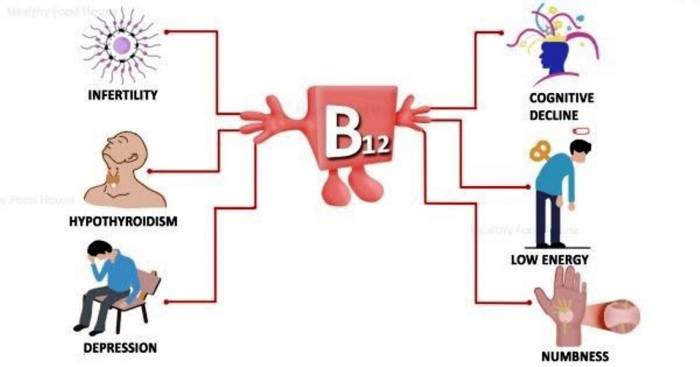
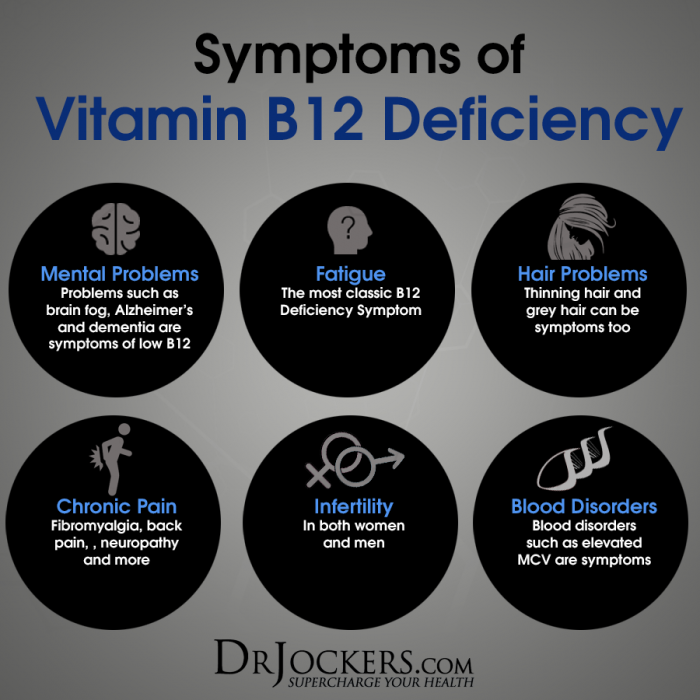
Vitamin B12 deficiency can be slow to develop, causing symptoms to appear gradually and intensify over time. It can also come on relatively quickly. Given the array of symptoms it can cause, the condition can be overlooked or confused with something else. Vitamin B12 deficiency symptoms may include:
strange sensations, numbness, or tingling in the hands, legs, or feet
difficulty walking (staggering, balance problems)
anemia
a swollen, inflamed tongue
yellowed skin (jaundice)
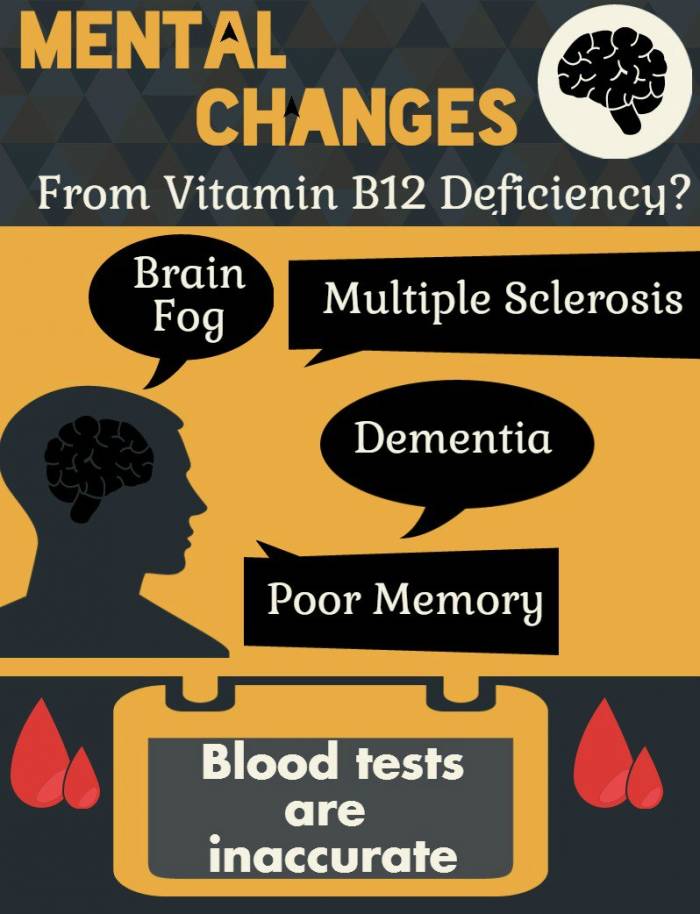
difficulty thinking and reasoning (cognitive difficulties), or memory loss
paranoia or hallucinations
weakness
fatigue
advertisement
#7 Vitamin B12 and Depression
As you may have guessed by now, vitamin B12 deficiency is a serious problem when it comes to mental health. Although a lack of B12 can negatively affect the brain in many ways, studies connecting B12 deficiency and depression are particularly compelling.
advertisement
#8 Researchers in a 2005 article published in the Journal of Psychopharmacology reviewed studies of depression and low vitamin B-12 status.
They found substantial evidence that a decrease in the vitamin B-12 serum correlates with an increase in depression. They also state that high vitamin B-12 status may be associated with better treatment outcome of depression. The researchers suggest people with depression take a 1-milligram supplement of B-12 daily. More research is needed to fully understand the link between B-12 and depression.
advertisement
#9 One possible connection is the effect of vitamin B-12 on the levels of serotonin in your brain, in addition to other chemicals.
Serotonin helps to regulate your mood. Low levels of serotonin may be linked to depression. However, recent research has suggested that serotonin may play a smaller role in depression than previously thought.
advertisement
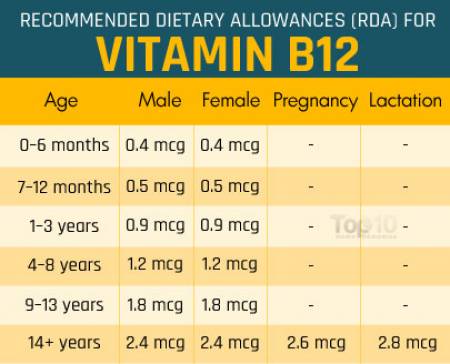
#10 Recommended Dietary Allowances (RDA)
The Recommended Dietary Allowances (RDA) for vitamin B12 is just 2.4 mcg/day. Many people following a standard, varied diet will reach this amount, however, those who avoid or limit proteins for any reason may experience difficulty in getting their RDA.
advertisement
#11 How Can You Treat Vitamin B12 Deficiency?
Supplements and vitamin B12 booster shots are both very popular ways to treat a vitamin B12 deficiency, depending on the source of the deficiency. Vitamin B12 shots are generally used for those who are already consuming enough vitamin B12 but are not seeing any benefits, whereas supplements can be used by those who have milder deficiencies.

advertisement
#12 Why Are Vitamin B12 Booster Shots the Best Solution?
Even if you don’t have issues absorbing vitamin B12, a booster shot is still the fastest way to get the vitamin into your system. And even if you don’t have any form of B12 deficiency, additional B12 may be just what the doctor ordered to improve your mental and physical health. With a vitamin booster shot, you can find yourself feeling better within hours rather than days.
As with most vitamins, it’s nearly impossible to overdose on vitamin B12. Even very large quantities of vitamin B12 usually don’t have any adverse effects. Consequently, it may be worth inquiring about vitamin B12 supplements or shots with your physician if you expect that you have a deficiency. There have been some indications that a boost of vitamin B12 can even be helpful to those who are not deficient but instead simply suffering from fatigue or depression.

#13 It’s a good idea to ask your doctor about having your B12 level checked if you:
are over 50 years old
take a proton-pump inhibitor (such as Nexium or Prevacid) or H2 blocker (such as Pepcid or Zantac)
take metformin (a diabetes drug)
are a strict vegetarian
have had weight-loss surgery or have a condition that interferes with the absorption of food
advertisement
#14 What are the treatment options for a B-12 deficiency?
Changes to your diet are the most effective way to treat a B-12 deficiency. If you aren’t vegan, add egg whites, poultry, and lean meat to your meals. Fish is an excellent source of B-12, so you should also try to regularly add fish to your diet. There are many types of fish, so if you don’t like one type, experiment with other varieties. Or use different cooking methods to change the taste.
#15 A serious vitamin B12 deficiency can be corrected two ways:
weekly shots of vitamin B12 or daily high-dose B12 pills. A mild B12 deficiency can be corrected with a standard multivitamin.
Be sure to talk to your doctor first. Sometimes B vitamins can interact with medications, so your doctor may not recommend that you take them.
advertisement
#16 Do you have a B-12 deficiency?
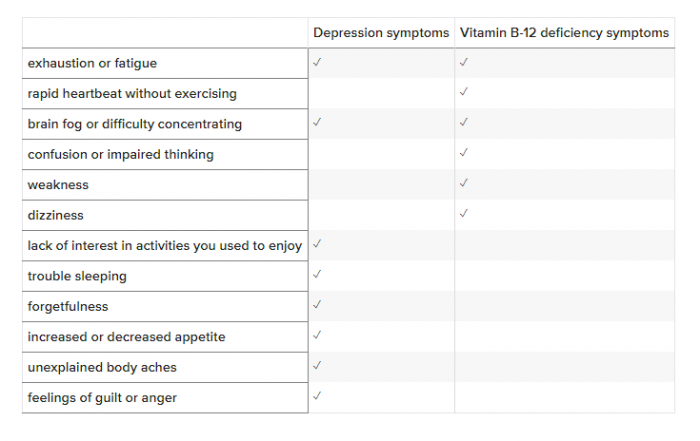
Some of the symptoms of a B-12 deficiency are similar to those of depression, which can make it difficult to identify a vitamin deficiency if you’re also depressed.
#17 Outlook
Depression is a serious medical condition that can affect everything you do. While there may be a link between your B-12 levels and depression, it’s important to work with your doctor to come up with a holistic treatment plan that works for you.