

If you compare some of the photographs which can be found on NASA’s website, you can really see how human beings have changed the appearance of our world over the years. The time difference between these images ranges from five to 100 years. Incredible stuff.
Earth, Then And Now: Dramatic Changes In Our Planet Revealed By Incredible NASA Images
By
Michael Avery in
Facts
On 29th March 2017
advertisement
The left side is the Aral Sea, a huge lake that stands between Kazakhstan and Uzbekistan, in August 2000.
It used to be the fourth-largest lake in the world. In the 1960s, the Soviet government thought it would be a good idea to divert the water of the Aral to irrigate the surrounding plains. In this image, the black outline represents the water's edge in 1960.
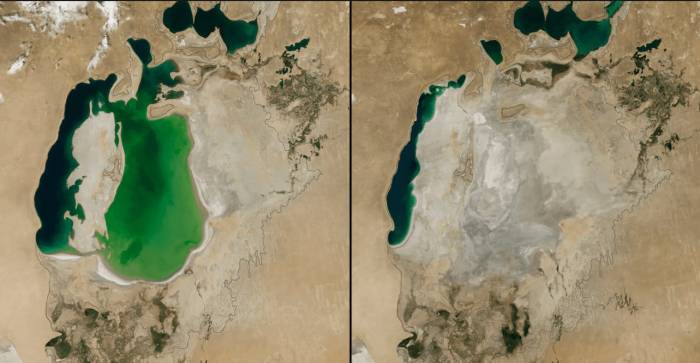
By 2014, the Aral Sea had all but disappeared.
It's not just the fish who should be worried about this. The enormous body of water helped to regulate the weather, too. Now that it's mostly gone, the summers are much hotter and much drier, which is not good for the crops.
The left side is Lake Urmia, in Iran, as recently as April 2016.
It doesn't look so bad, does it? Scientists estimate that, over the past 14 years, 70 percent of the lake's surface area has evaporated. Still, it looks like a large, healthy body of water.
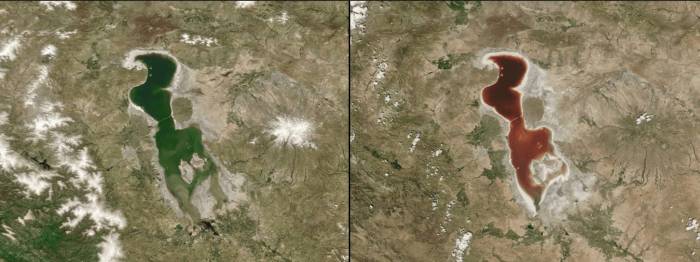
Just three months later, the lake has turned blood-red.
With less surface area covered in water, the ecosystem of the lake completely changes. New bacteria move in. New algae take over. These new creatures have turned the lake red.
advertisement
On the left is Alaska's Aialik Bay as it would have appeared to visitors during the middle of the 20th century.
This image was taken during the summer. Things were just much colder in summer 50 or 60 years ago. That white hunk of ice in the background is Pedersen's Glacier.
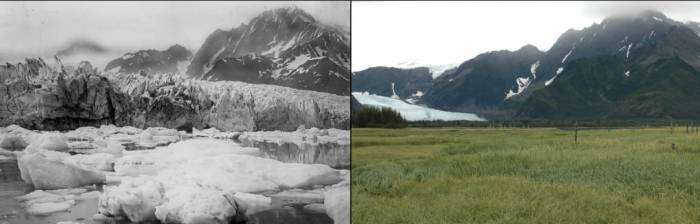
The right side is the same bay as of August 2005.
That little spike of white is all that's left of Pedersen Glacier's encroachment on this area. The glacier has retreated by more than 1 mile. Meanwhile, the sea rose and the coast sank, creating a swampy lagoon. So much for the ice.
The left is Manila, the capital of the Philippines, in January 1989.
Keep your eye on the edges of the city, and that little blue line that wiggles through the south and east of the city.. That's the Pasig river.
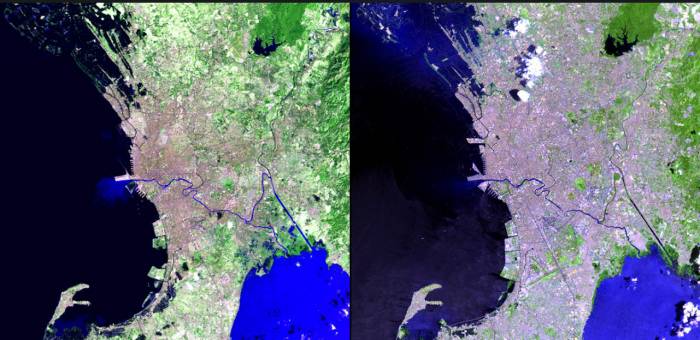
The right side is an aerial view of Manila taken in April 2012.
The city's edges have reached out to gobble up much of the green space. Meanwhile, the Pasig shows evidence of discoloration. That's because, in this densely populated urban center, the river has become terribly polluted. It's now among the most polluted rivers on Earth.
advertisement
The image on the left depicts Bolivia's Lake Poopó, just a short time ago, in April 2013.
At its highest point, the lake covered 1,200 square miles. But it's also a shallow lake. It doesn't take much to dry the economically important body of water up.
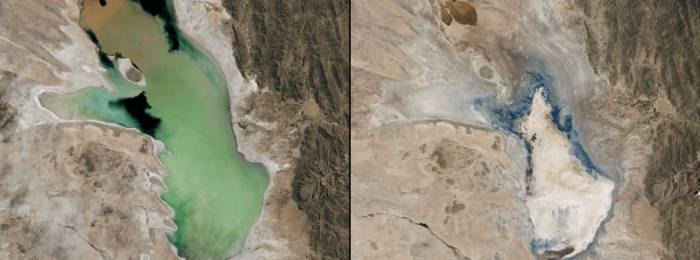
That's exactly what happened by January 2016.
A combination of a terrible drought and industrial water uses, like agriculture and mining, drained the lake almost entirely. Strangely, this isn't the first time the Poopó has been through something like this. It also dried up back in 1994. It was a disaster. Now the disaster is back.
advertisement
If you are still unconvinced of humanity's impact on the environment worldwide, keep reading. We have a few more images to show you.
advertisement
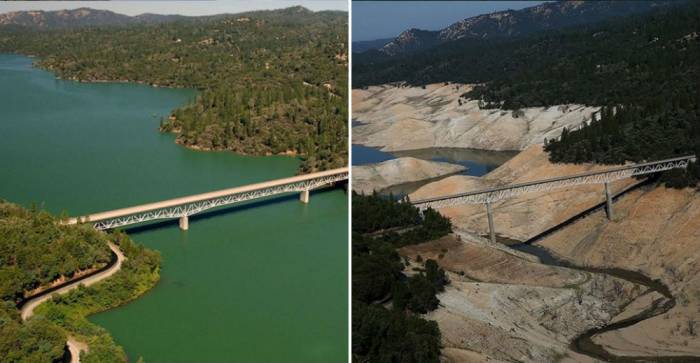
Lake Oroville, California. July 2010 — August 2016.
advertisement
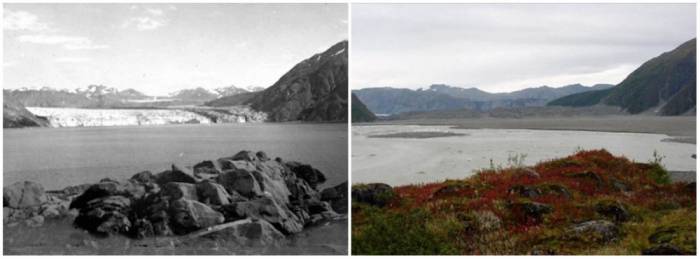
Carroll Glacier, Alaska. August 1906 — September 2003.
advertisement
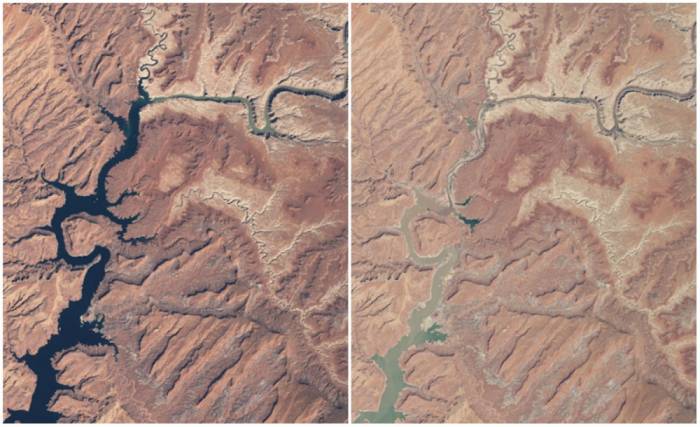
Powell Lake, Arizona and Utah. March 1999 — May 2014.
advertisement
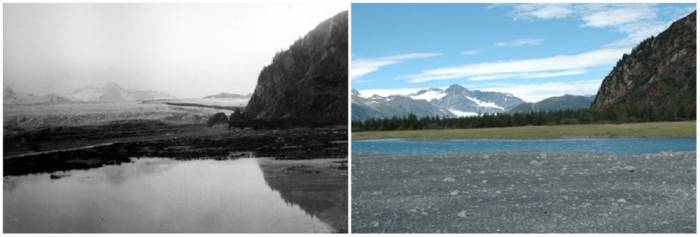
#Bear Glacier, Alaska. July 1909 — August 2005.
advertisement
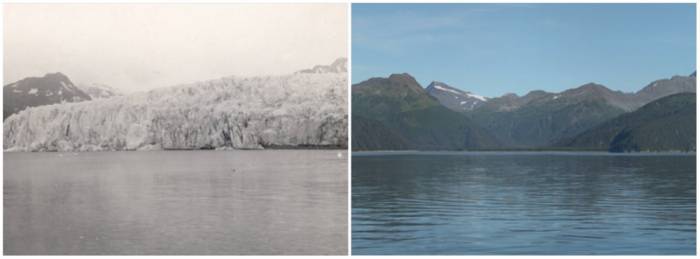
McCarty Glacier, Alaska. July 1909 — August 2004.
advertisement
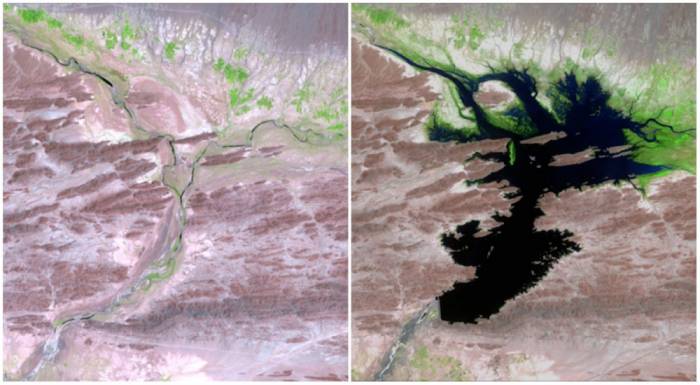
The Dasht River, Pakistan, August 1999 — June 2011.
The Mirani Dam supplies clean drinking water and power to the surrounding area. The dam also helps support local agriculture.
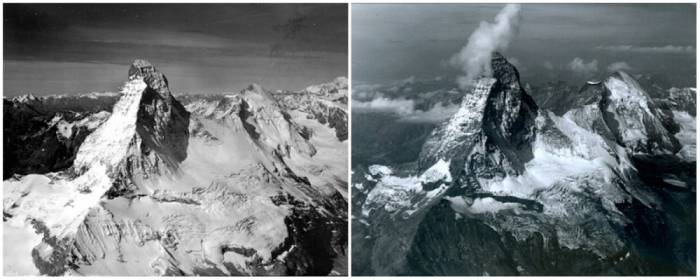
Matterhorn Mountain in the Alps, on the border between Switzerland and Italy. August 1960 — August 2005.
advertisement
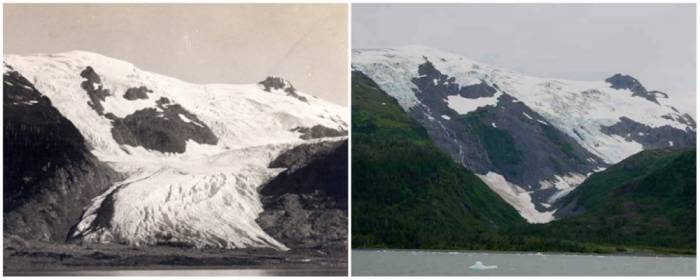
Toboggan Glacier, Alaska. June 1909 — September 2000.
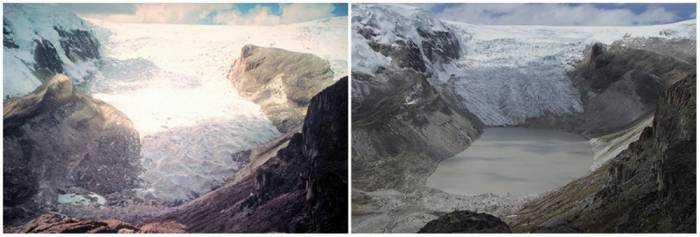
Qori Kalis Glacier, Peru. July 1978 — July 2011.
advertisement
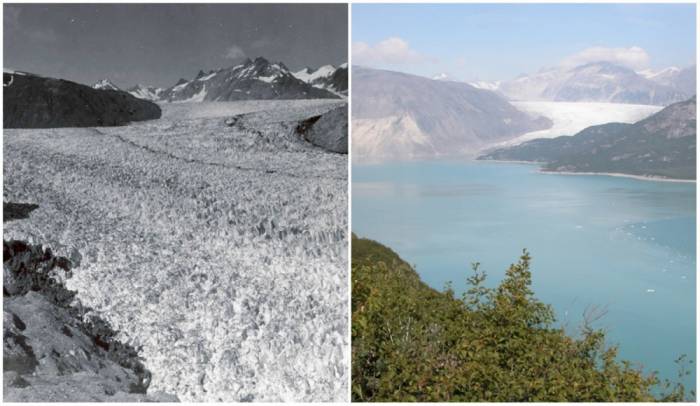
Muir Glacier, Alaska. August 1941 — August 2004.
You might not believe it but if we start now, we might just be able to save our world from destruction. After all we are the cause for most of these changes.