Some of the things we use on a daily basis were not originally intended for what we use them for today. Over the course of history, mankind has strived for advancement and innovation. This propels us as a society forward, towards efficiency, advancement, and comfort. While researching and testing our genius and not so genius theories, we may end up stumbling upon something we never even intended to. Many products have been created this way. Many of the things we love and need each day were found or invented purely by accident. Many of the things that we use were intended for something completely different but have found that over time suited another purpose much better. Here are some cases where this holds true.

Everyday Things That Were Designed For Absolutely Different Purposes
By
Editorial Staff in
Facts
On 8th May 2017
advertisement
#1 Coca-Cola
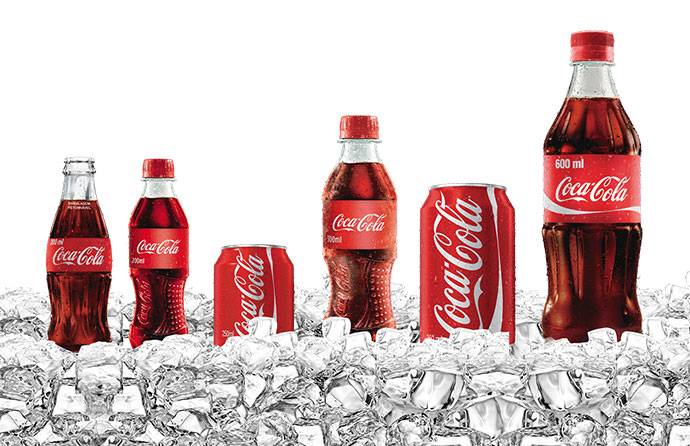
Coca-Cola, one of the world’s most famous brand names, was originally invented as an alternative to morphine addiction, and to treat headaches and relieve anxiety. Coke’s inventor, John Pemberton — a Confederate veteran of the Civil War who himself suffered from a morphine addiction — first invented a sweet, alcoholic drink infused with coca leaves for an extra kick. He called it Pemberton’s French Wine Coca. It would be another two decades before that recipe was honed, sweetened, carbonated and, eventually, marketed into what it is today: the most popular soda in the world.
#2 Black Dress
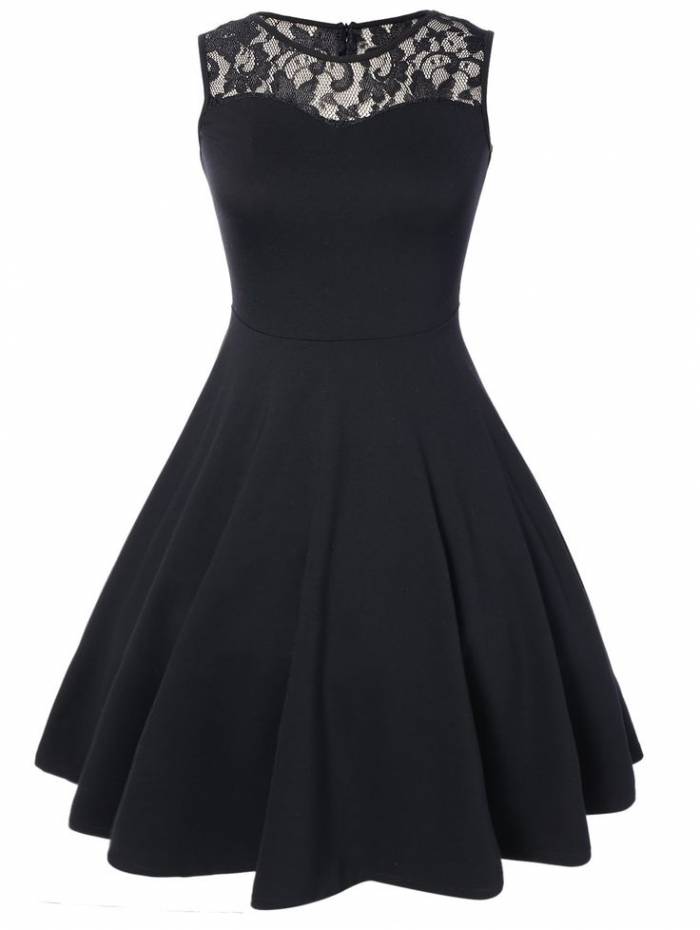
Up until the 1920s, black clothes were normally worn as a symbol of mourning and for at least 2 years. Then, in 1926, Coco Chanel sewed her famous little black dress, called ’’Chanel’s Ford’’ by Vogue, in memory of her beloved. At first, it was noted by movie divas, and then the dress became popular worldwide.
advertisement
#3 Karaoke
Daisuke Inoue, a Japanese rock musician, played for visitors of a cafe who wanted to sing in between the band songs. One evening he wasn’t able to be there, so he gave his colleagues a tape recording with his part. Then, in 1971, he invented a machine that played music without the vocals, so the musicians relaxed while the public enjoyed singing to the beat.

#4 Play-Doh
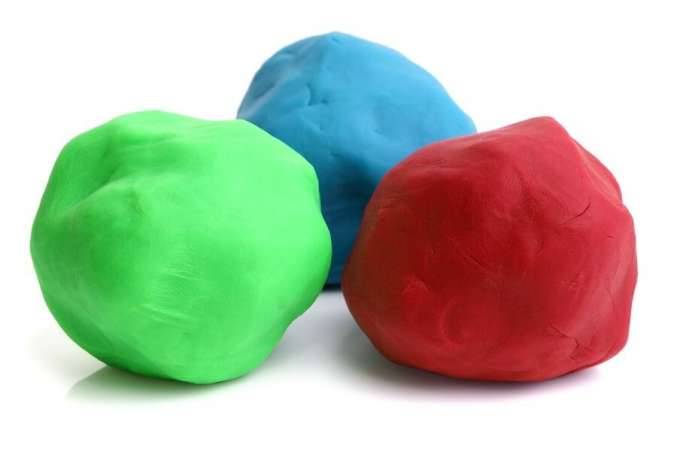
Play-Doh invented in 1955 by Joseph and Noah Mc Vicker while trying to make a wallpaper cleaner.
And look at PLAY-DOH today. Talk about taking on a life of its own.
advertisement
#5 Treadmill
The prototype of a modern treadmill was created by Sir William Cubitt in 1818 to do something with idle prisoners, using their muscle power to mill grain. The prisoners held on to a horizontal handrail and walked a sort of endless staircase.

advertisement
#6 Post-it notes
Inventor: Spencer Silver, a researcher in 3M Laboratories
What he was trying to make: A strong adhesive
How it was created: While working away, Silver created an adhesive that was actually weaker than what already existed. It stuck to objects but could be pulled off easily without leaving a mark. Years later a colleague spread the substance on little pieces of paper to mark his place in his choir hymn book, and the idea was born.

advertisement
#7 High heels
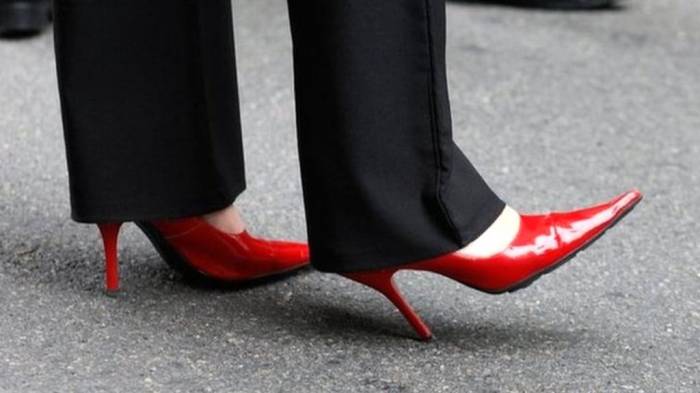
The first high heels were made for Persian soldiers in the 16th century. They were not designed for walking, as is clearly evident even today. Instead, they were made to give cavalry soldiers improved stability so that they could shoot their bows with improved efficiency while riding on horses.High heels made it to Europe in the 1600s, when they were worn by people of higher class. It was common knowledge that such a shoe, which was not meant for walking, could only be used for walking by someone who did not have to work, which could only mean that the wearer was a member of the upper class. Women began wearing heels in an effort to look more like men. Men wore fatter heels, while women wore slimmer heels. Men only stopped wearing heels because it was no longer regarded as a status symbol for them since women were also wearing it.
advertisement
#8 Bubble wrap
A bubble wrap-lined room seems like the sort of idea that would come about after people everywhere had become obsessed with the satisfying sensation of popping the bubbles that keep our fragile items safe in transit. And yet, wallpaper was actually the original intent behind engineer Al Fielding and Swiss inventor Marc Chavannes' invention. Turns out, the market for textured wallpaper was not what they had hoped, and the pair struggled to find an alternate angle. Despite some viability, the plan to pitch the material as an insulator for greenhouses didn't pan out either. Then, in 1959, IBM had announced their new 1401 variable word length computer, and Fielding and Chavannes had an idea. They pitched bubble wrap as a packaging material for the fragile new technologies, and IBM agreed to give it a try. From there, bubble wrap found new purpose and people were left wishing they had whole rooms lined with the stuff. Probably.

advertisement
#9 Pillows
The pillow was invented so that bugs would not crawl into the noses, ears, and mouths of people while they were sleeping. The pillow was first used in what is present-day Iraq over 9,000 years ago. Back then, it was carved from stone. Ancient Egyptians also used pillows because they wanted to protect their heads, which they believed were the most important parts of the body. Ancient Chinese used hard pillows (although they knew how to make softer ones) because of the belief that soft pillows depleted the body’s energy and were not effective at repelling demons.Africans believed that using pillows while sleeping would connect the sleeping person with his ancestors and also allow spirits visit them in their sleep. Japanese geishas used small, hardened pillows so that their delicate hairstyles would not get scattered while they were asleep. In Europe, pillows were seen as a symbol of weakness, so men rarely used them. In fact, they were banned for use by anyone except pregnant women by King Henry VIII. Pillows only became softer and common during the Industrial Revolution, when they were mass-produced by textile industries.

advertisement
#10 Vaseline
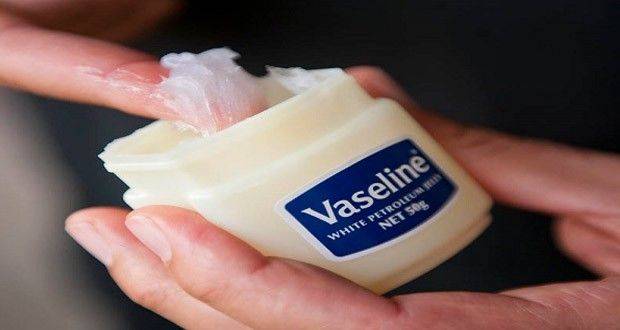
In the mid-19th century, oil field workers constantly fought the waxy substance that accumulated in the oil rig pumps. The British chemist Robert Chesebrough, though, saw an opportunity: he took a part of this ’’petroleum jelly,’’ did some research, and found that it actually had useful properties. As a result, the range of its use in those early years became very broad — from curing wounds to cleaning carpets.
advertisement
#11 The slinky
Inventor: Richard Jones, a naval engineer
What he was trying to make: A meter designed to monitor power on naval battleships
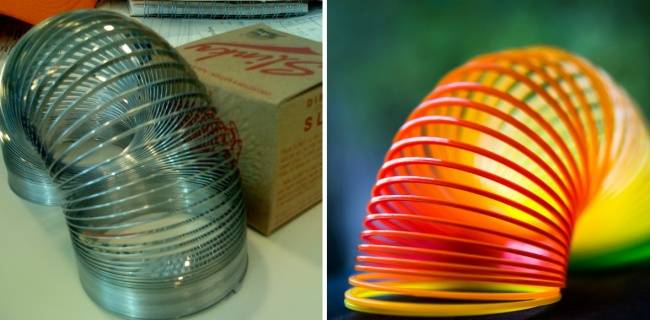
How it was created: Jones was working with tension springs when one of them fell to the ground. The spring kept bouncing from place to place after it hit the ground, and the slinky was born.
advertisement
#12 Tea Bags
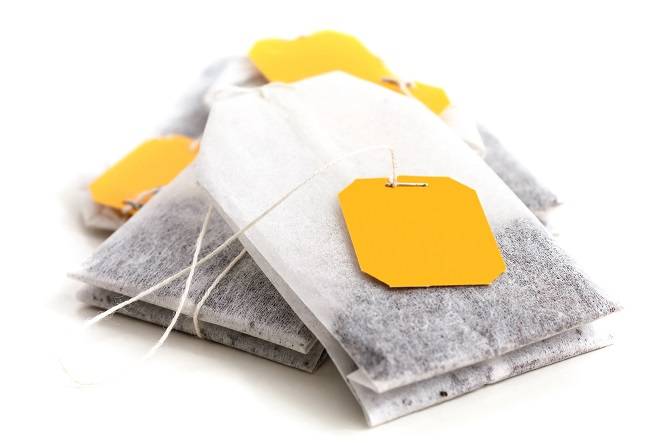
In 1904, Thomas Sullivan, a tea and coffee importer from New York, decided to sell tea with more style by pouring it into silk bags. His customers found the novelty appealing, but for quite another reason: it turned out to be more convenient to brew the tea right in the porous bags. As a result, sales skyrocketed, and the idea became universally popular.
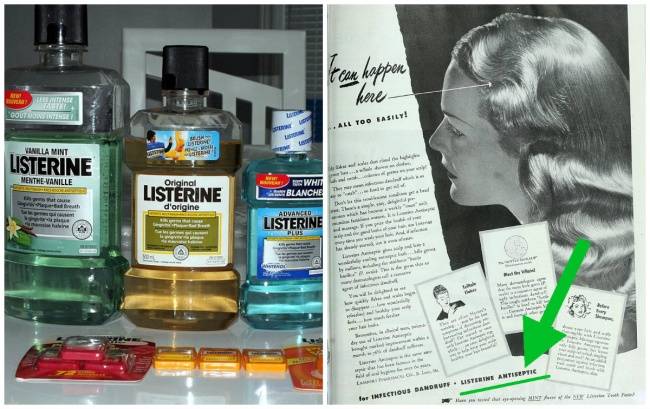
#13 Listerine
Listerine was invented 133 years ago, first as a surgical antiseptic, but also as a cure for gonorrhea.
Although it will probably feel like it’s working, I don’t think you should try to treat your gonorrhea with Listerine.
advertisement
#14 Microwave
Inventor: Percy Spencer, an engineer with the Raytheon Corporation
What he was trying to make: The engineer was conducting a radar-related research project with a new vacuum tube
How it was created: Spencer realized that the candy bar in his pocket began to melt during his experiments. He then put popcorn into the machine, and when it started to pop, he knew he had a revolutionary device on his hands.

#15 Viagra
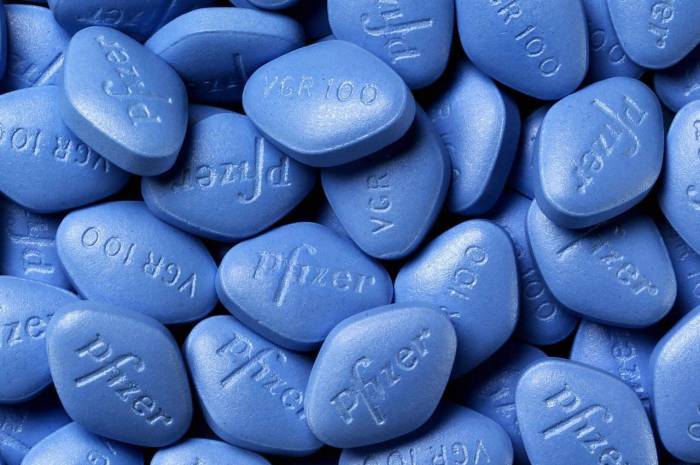
Viagra, or Sildenafil, as it's officially known, was originally conceived as a treatment for hypertension, angina, and other symptoms of heart disease. But Phase I clinical trials revealed that while the drug wasn’t great at treating what it was supposed to treat, male test subjects were experiencing a rather unexpected side effect: erections. A few years later, in 1998, the drug took U.S. markets by storm as a treatment for penile dysfunction and became an overnight success. It now rakes in an estimated $1.9 billion a year.