

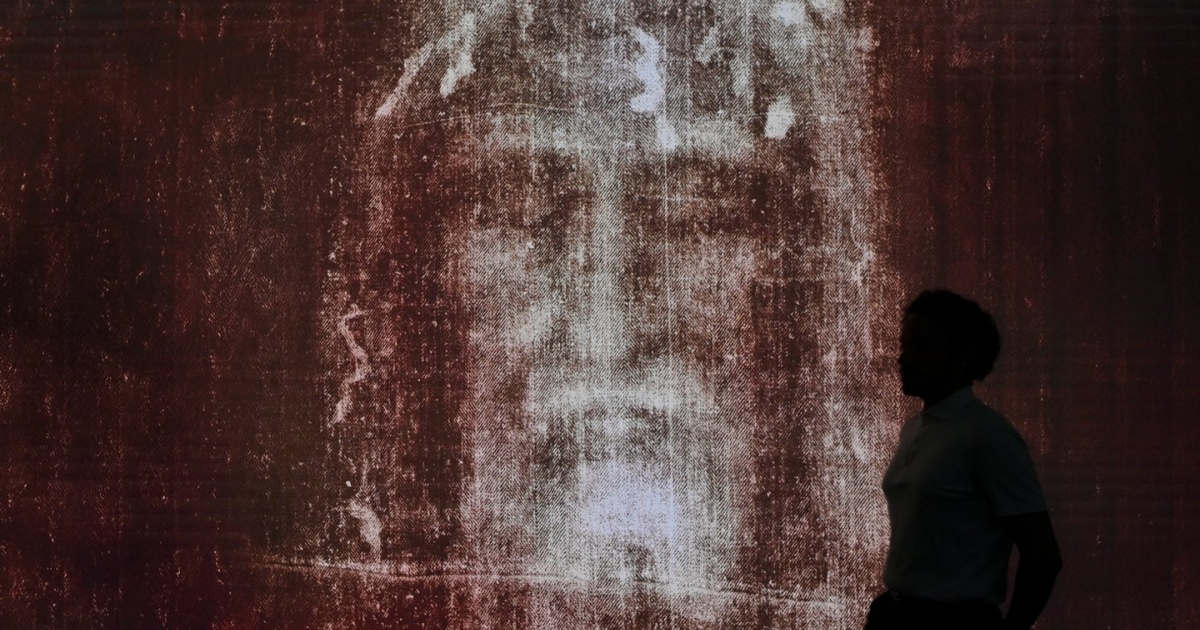
A recent study questions the claims surrounding one of Christianity’s most debated relics
advertisement
The Shroud of Turin is one of the most debated religious relics in the world. It is said to show the image of Jesus’ face and is believed by some to be the cloth that wrapped his body after his crucifixion.
Most historians agree that Jesus was a real historical figure, although claims about him being the Son of God fall into the realm of faith rather than academic consensus. For many Christians, a burial cloth linked directly to him would be a powerful and deeply meaningful object.
For decades, scholars and researchers have argued over whether the shroud is genuine. Some studies have claimed to detect blood on the fabric, while others have used carbon dating and other scientific tools to suggest the cloth is not old enough to date back to the time when Jesus lived.
A new study now challenges the relic from a different angle. Instead of focusing on the fabric’s age or chemical makeup, it examines the image itself and questions whether it could realistically have come from a human body wrapped in cloth.
Brazilian researcher Cicero Moraes used 3D digital simulations to analyze the Shroud of Turin. He compared how a real adult male face would transfer onto fabric if it were covered and pressed against it.
According to Moraes, placing cloth over an actual human face would “generate a more robust and more deformed structure in relation to the source.” In other words, the resulting image would look more distorted than what appears on the shroud.
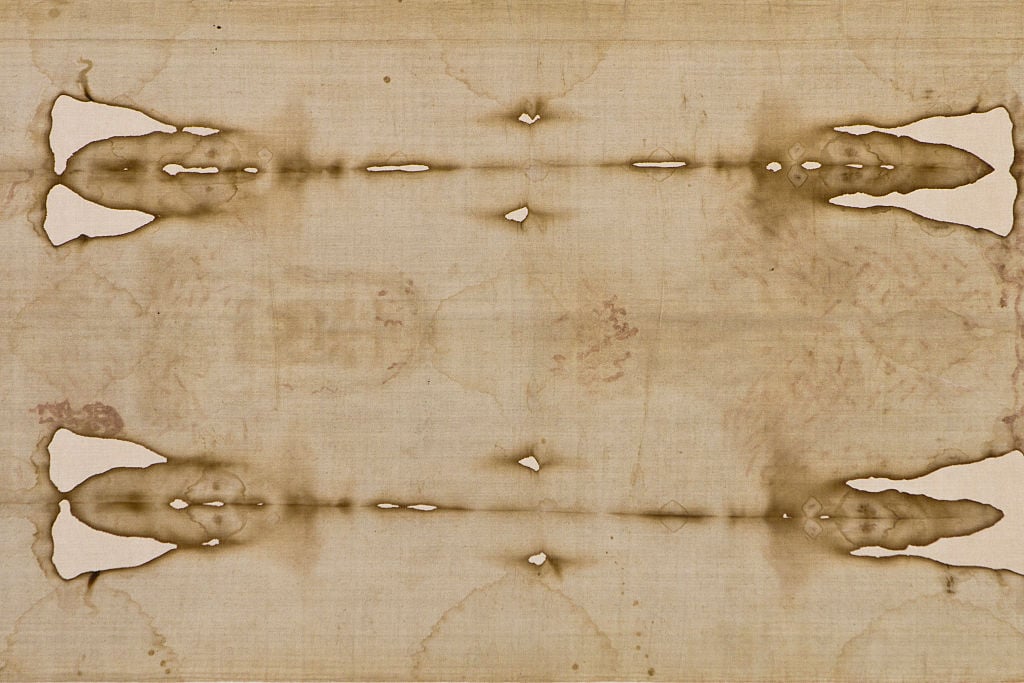
The Shroud of Turin has repeatedly been called into question
Marco Destefanis/Pacific Press/LightRocket via Getty Images
advertisement
In simple terms, Moraes argues that a real human face would not create the smooth and proportionate image seen on the Shroud of Turin. If fabric were wrapped tightly around someone’s face, the features would appear stretched or warped.
Anyone who presses a three-dimensional object into a flat surface can see how shapes become distorted. The image left behind rarely matches the original form in a clean or symmetrical way.
Using open-source software, Moraes created digital models to test his theory. Based on his findings, he concluded that the image on the shroud is more likely “an artistic low-relief representation” rather than a direct imprint of a real face.
In short, the study suggests that the Shroud of Turin may be an artistic depiction of a face instead of a physical imprint of Jesus Christ.
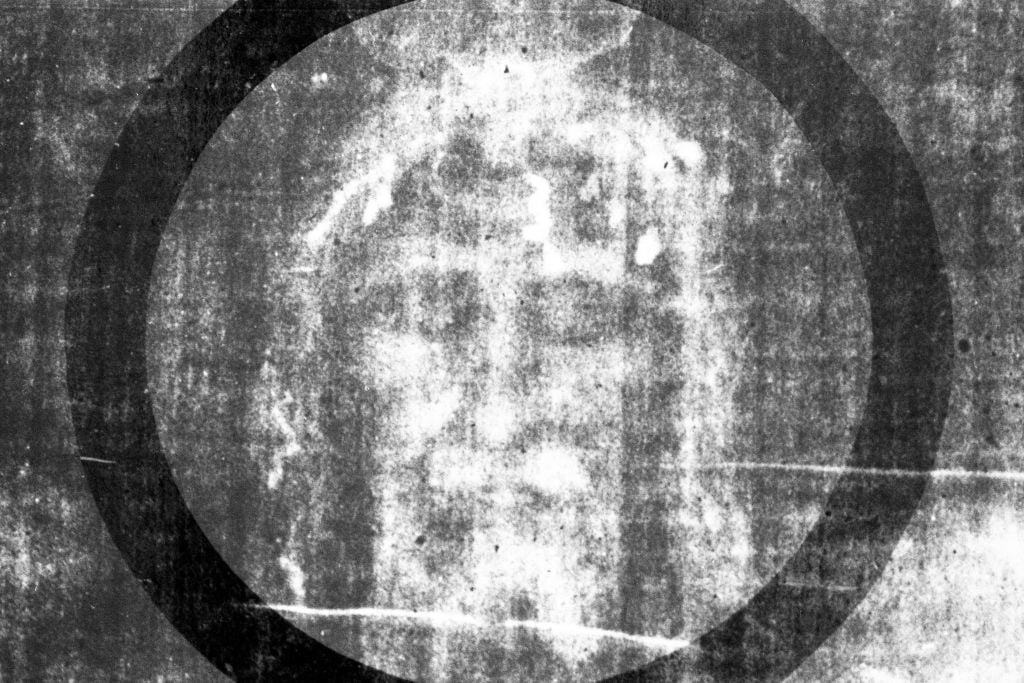
A study from last year claimed you wouldn't get that pattern from an actual human face
Edoardo Fornaciari/Getty Images
advertisement
The Turin International Centre for Studies on the Shroud (CISS) responded to the study and did not agree with its conclusions. In a statement, the organization said there was “nothing new in this conclusion of the article.”
The group also argued that Moraes’ findings had been “widely refuted by numerous physical-chemical studies, primarily STuRP, and confirmed by more recent measurements.”
Moraes later issued a public reply. He said his research “does indeed present novel contributions,” and he referenced examples of religious relief art styles to support his interpretation. He also addressed each point raised by CISS and provided counterarguments to their claims.
advertisement
Moraes further cited members of the Shroud of Turin Research Project (STuRP) whose earlier work aligned with his view. Among them was Dr. Joseph Accetta, who in 2019 presented arguments suggesting that the Turin Shroud likely dates back to the medieval period.