

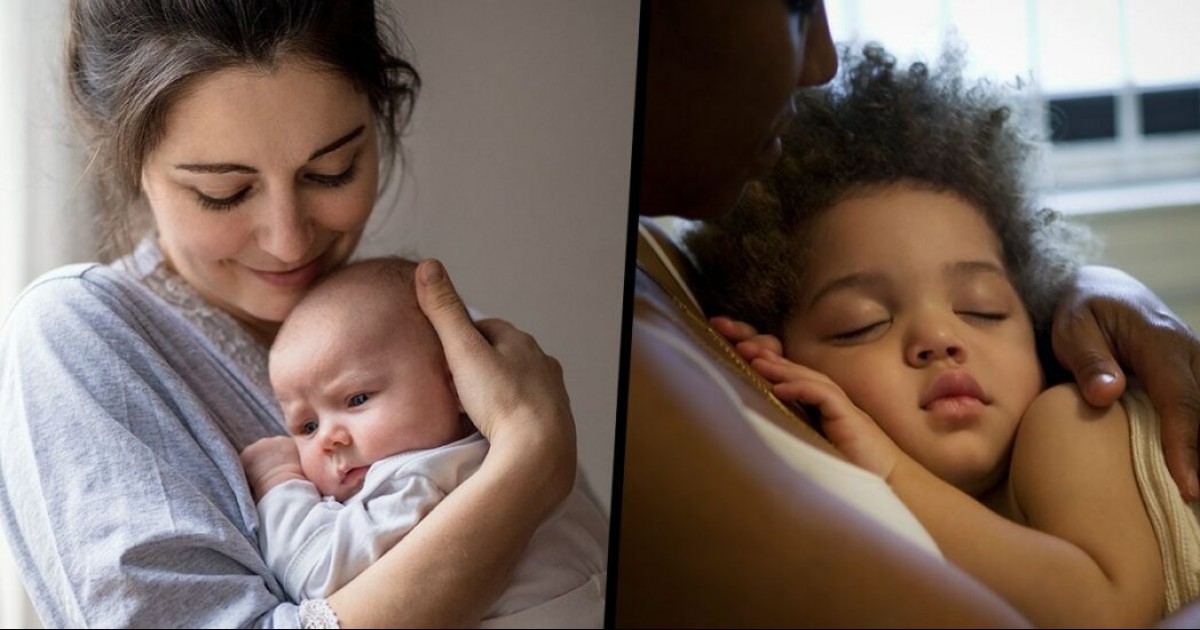
Researchers have issued a fair warning against the use of gender-neutral terms like pregnant people, chestfeeding, and the birth givers as dehumanizing towards women. According to a leading group of female health experts, such language can lead to ‘unintentional consequences that have serious implications for women and children’.
advertisement
Health researchers have warned against the use of gender-neutral terms like 'birth-giving,' 'chest feeding' and 'pregnant people' as dehumanizing women.
In the paper published in journal Frontiers in Global Women’s Health, the researchers express concerns about such language, saying it can lead to ‘unintentional consequences that have serious implications for women and children.
The study mentions: “Desexing the language of female reproduction has been done with a view to being sensitive to individual needs and beneficial, kind and inclusive.
Credit: Alamy
“Yet, this kindness has delivered unintended consequences that have serious implications for women and children.”
The global team of researchers, who hail from institutions including King’s College London and Harvard in Massachusetts reports that the consequences ultimately lead to ‘decreasing overall inclusivity’ and ‘dehumanising women’.
Experts believe that calling pregnant women a 'gestational carrier' or 'birther' marginalises their humanity, and harks back to 'sexist' ideas of women as failed men.
Credit: Alamy
advertisement
Experts also point out that these gender-neutral terms in this context actually 'works against the plain language principle of health communication and risks reducing inclusivity for vulnerable groups by making communications more difficult to understand', and that the terminology can ultimately end up being confusing.
They add: “What does the phrase ‘women and birthing people’ actually mean? This construction could be interpreted in a literal way as meaning that ‘women’ are not people.”
Credit: Alamy
This is followed by the news that NHS trust will be soon introducing new terms like 'human milk' and 'chestfeeding' to boost inclusivity which means their staff has now been asked to use the language alongside – but not instead of – traditional terms to ensure all groups are represented.
A few months back in Brighton and Sussex University Hospitals NHS Trust (BSUH) became the first in the country to use what it calls the ‘additive use of gender-inclusive language’.
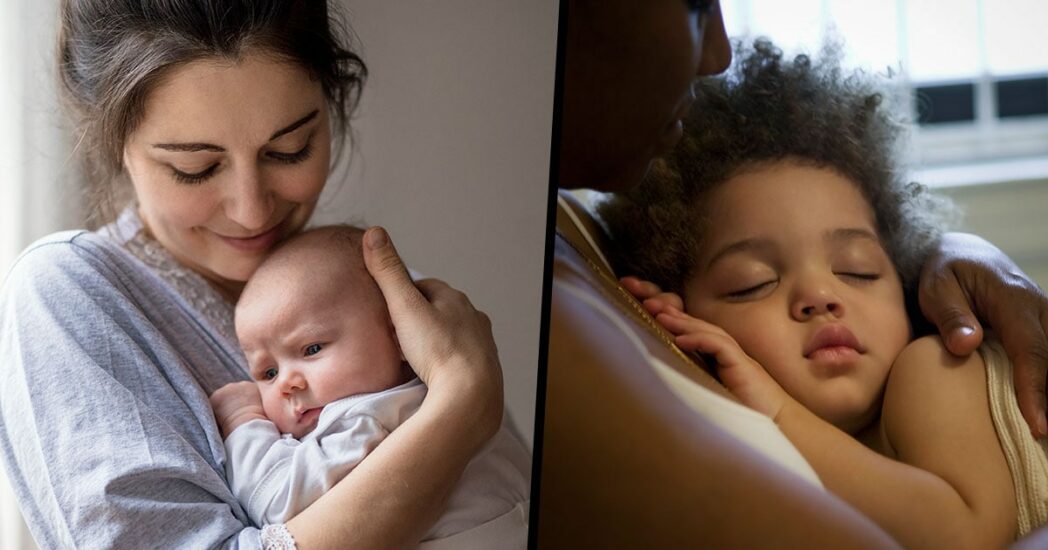
Credit: Alamy
advertisement
The trusts' website has uploaded a policy document that explains how the approach involves ‘using gender-neutral language alongside the language of womanhood, in order to ensure that everyone is represented and included’.
It added: “Gender identity can be a source of oppression and health inequality.
“We are consciously using the words ‘women’ and ‘people’ together to make it clear that we are committed to working on addressing health inequalities for all those who use our services.”
advertisement
Similarly, other terms like ‘maternal and parental’ or ‘maternal/parental’ will be replaced by ‘maternal’ and ‘woman or person’ in place of 'woman'.
Instead of ‘breastmilk’, the staff is also encouraged to consider using ‘human milk’, ‘breast/chest milk or ‘milk from the feeding mother or parent’.

Credit: Alamy