

Did you ever wonder where they put all the unused STUFF or things they replace or revamp, reconstruct, upgrade? There are actually 'graveyards' for objects scattered all over the globe. Yes, old computers, phone booths, planes, and even neon signs from glitzy Las Vegas, all have a certain place they go to die. That fast food wrapper blowing in the wind in the least of our ecological worries. There's major waste and litter out there you never dreamed of. At least some is being recycled.

Fascinating Object Graveyards You Never Knew Existed
By
Editorial Staff in
Facts
On 7th February 2017
advertisement
#1 Used Tire Graveyard - Kuwait
Talk about a threat to the ozone and air quality. This used tire and rubber site in the Sulaibiya area of Kuwait City is so massive that it can be seen from space. It's so big that there are over 7 million tires buried deep within the ground, buried in the desert sands. The tires are from countries around the globe that have paid for them to be taken away. In 2012, a fire broke out at a tire dump near Al Jahrah. Five million tires fuelled the blaze which firefighters struggled to control. Tire fires often carry toxic chemicals from the breakdown of rubber compounds while burning.
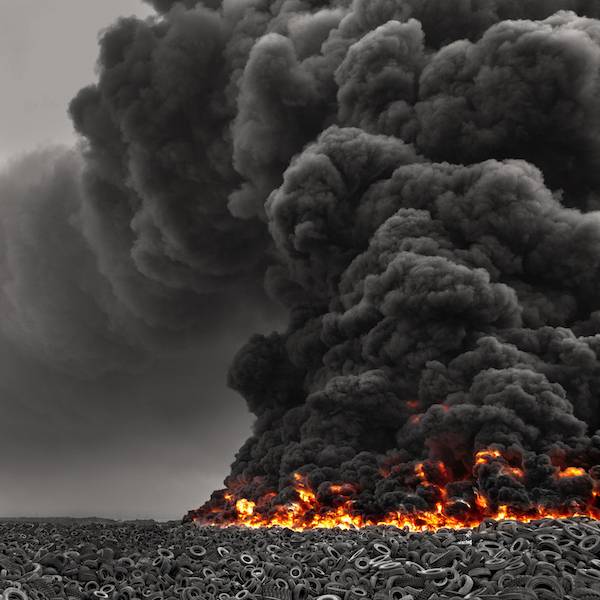
This type of waste disposal is illegal in Europe and EU rules have banned the disposal of tires in landfill sites since 2006. The thick, black, and odorous stench from these burns are hazardous to the environment and health of humans and wildlife.
#2 Toll Booth Graveyard - New Jersey
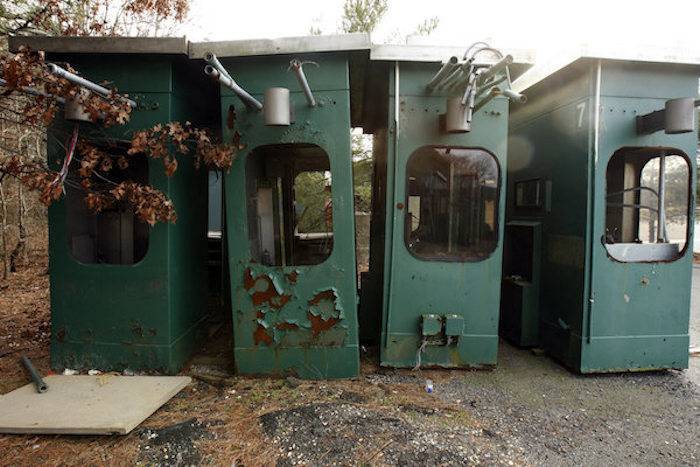
The state with more toll booths than any other, New Jersey has given their older toll booths, once used on the turnpikes, a gravesite of their very own. Just off the Asbury Park Toll Plaza, at mile marker 104 on the Garden State Parkway North in New Jersey, is the place where tollbooths go to die. The steel-and-glass boxes of toll lanes past were stripped of all reusable parts like windows, air conditioning units, and wiring before being dumped at the graveyard. Some of the booths in the graveyard can be resurrected with new paint and parts if other toll booths on the Parkway need repairing.
advertisement
#3 Airplane Graveyard - Arizona
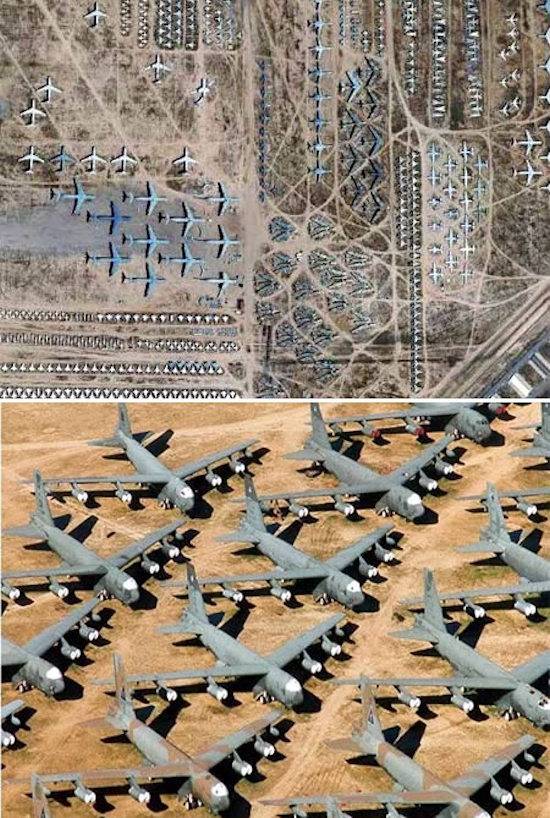
It is known as "The Bone Yard" and it's located just miles from the Davis-Monthan Air Force Base in Tucson. What's fascinating about this graveyard is that it also houses an actual museum that you can wander through. But to get the full scope of exactly what this is, you'll need to be up in a plane yourself to grasp the size and number of aircraft that is precisely parked in this massive dumping ground for all sorts of military planes. One thing good is that all the planes are capable of being returned to service if the need ever arises.
#4 Neon Boneyard - Las Vegas
It's a beautiful museum of the glitz and glamor of old Vegas rather than a graveyard, but these old and historic signs from the City of Sin are sitting lifeless in the 'Neon Boneyard' which opened in 1996 as a tribute to Las Vegas. Sitting on just over three acres, the Bone Yard houses over 250 neon signs from The Golden Nugget, the Palms Casino Resort, New-New York, Lady Luck, O'Shea's, and many more casinos and establishments that made the city famous.
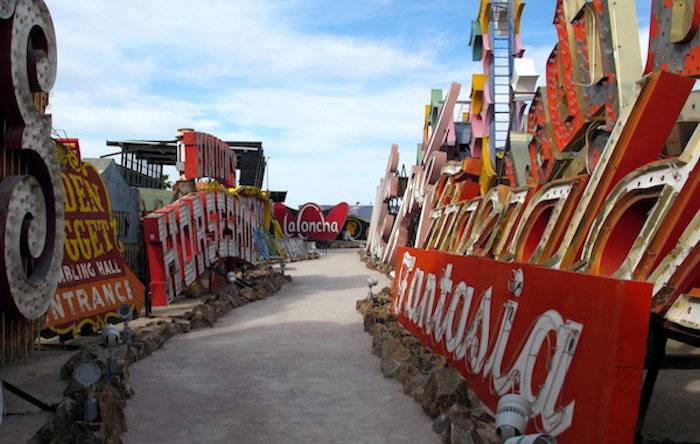
The big bonus to this graveyard-museum is that it also houses relics from classic Sin City buildings including wedding chapels, used car lots, and prohibition speakeasies, as well as some of Vegas's iconic casinos. For Elvis Presley fans, a gold lamp is a rare artifact from the extinct Aladdin casino, where Presley and Priscilla Ann Wagner married in 1967.
advertisement
#5 Subway Car Graveyard - New York City
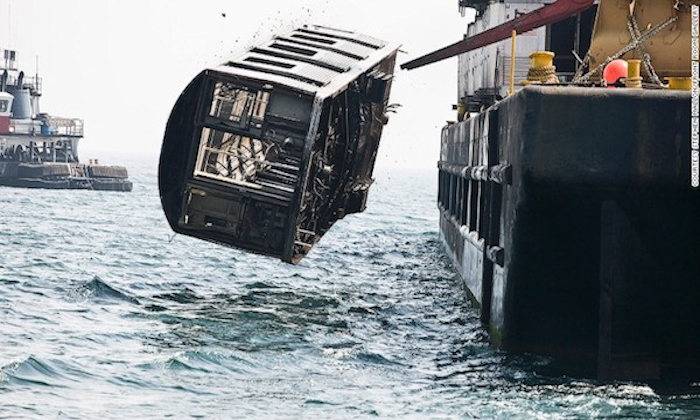
Don't worry. They were not dumped there as a shot to the ecosystem or to save money. But thousands of retired New York subway cars were buried at sea off the coast deep in the Atlantic Ocean. They are being used as an artificial reef. After 2,500 carriages had been decommissioned, they were cleaned and every part of them that could be removed, seats, straps, and wheels, was recycled or sold. They were then stacked onto a barge, which transported them a dropping point where they are being used to create an underwater reef for crustaceans and fish in the Atlantic.
advertisement
#6 Train Graveyard - Bolivia
It's creepy and eerie. This gigantic train graveyard, chock-full of the hollow husks and skeletal remains of long forsaken steam engines, is situated on the deserted outskirts of the small trading post of Uyuni, high in the Andean plane some 3,670 m above sea level. The graveyard houses all of the very old and outdated trains and locomotives from times long past. There are over 8,000 cars left here to rot away in the heat of Southwest Bolivia and some are from all over South America.
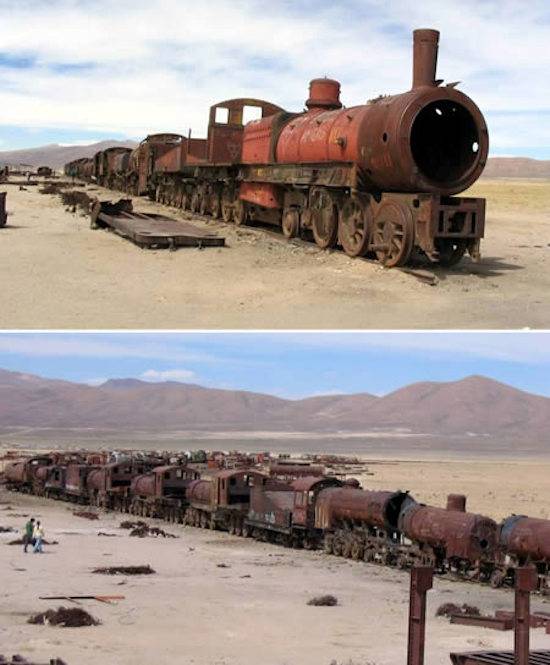
Most of the trains that can be found in the Graveyard date back to the early 20th century and were imported from Great Britain. In other places in the world, the mighty steel trains would have held up better, but the salt winds that blow over Uyuni, which hosts the world’s largest salt plain, have corroded all of the metal. Without guards or even a fence, these trains were picked over and vandalized many years ago.
advertisement
#7 Vending Machine Graveyard - Japan
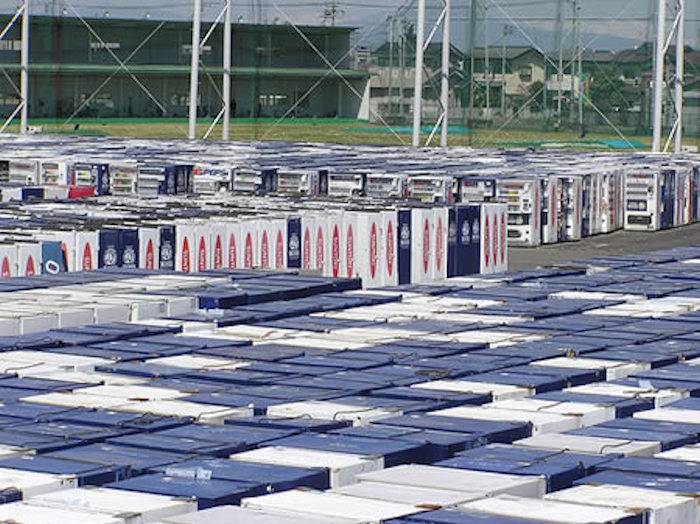
This 25-acre site located in Tamamura, Gunma-ken, Japan, is the home to one of the world's biggest vending machine graveyards. Japan makes use of more vending machines than any other country. There are machines that vend the regular things like soda, chips, candy, and cigarettes, but they also have machines for shirts, pants, underwear, condoms, adult toys, just about every type of meal, and even automobiles! However, they also keep reinventing the wheel, and all of those older machines must go someplace. This site is used to store the older machines and for spare parts. There are other vending machine graveyards throughout the world, and another big one is located in Oakland, California. But you won't find one that sells adult toys or birth control devices like those in Japan.
advertisement
#8 Soviet Tank Graveyard - Afghanistan
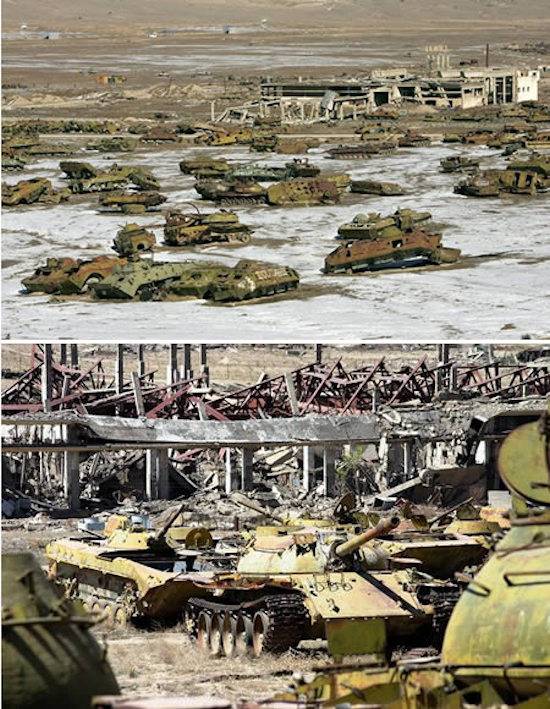
Just miles from the city of Kabul, Afghanistan, you will find a massive collection of Soviet tanks dating back to the mid-1970's through the early 1980's. The collection of abandoned Soviet battle vehicles was left behind after the failure of a massive eastern bloc military occupation of the country. Most of the tanks are unusable and in need of costly repairs, so since the Russian army had to leave in a hurry, they left behind the thousands of military vehicles to rot away in the sand. Without any recycling centers or use for the materials, the tanks will most likely sit in the spot they are in, covered with graffiti, as a reminder of the Soviet invasion.
advertisement
#9 Telephone Booth Graveyard - Great Britain
The largest active "telephone box graveyard" is now owned by Unicorn Restorations, near Merstham, Surrey. Yes, the booths are a thing of bygone days, but they are sitting in one of two graveyards in Britain awaiting a revival. Retired artist Mike Shores has purchased all of Britains old telephone booths and placed them in his two lots were they will be repurposed and refurbished into modern pieces of collectible art. Before retiring two years ago, staff at his village garage would devote 100 hours of TLC to each booth, stripping them, repainting them in the red once stipulated by the General Post Office, and putting in new glass to restore them to their former glory.
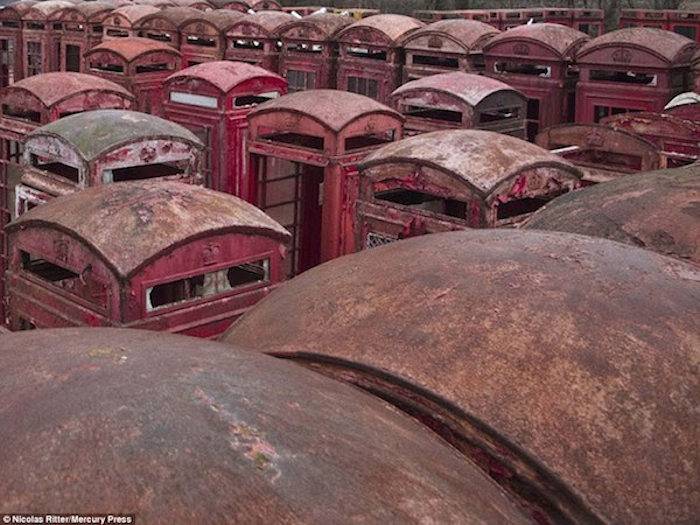
Now things move slowly and the prices have increased on a refurbished 'box' as people from around the globe are purchasing them for their very own. The booths sell for between £2,000 and £10,000 once fully restored, and the price can shoot up for older designs. The actual phones will not work, though they can come with one still inside for an extra fee.
advertisement
#10 War Graveyard - Eritrea
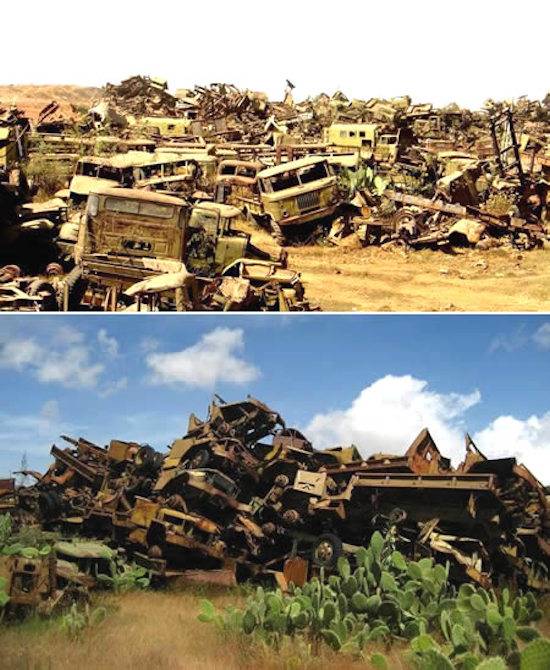
In the near outskirts of Asmara, the capital of Eritrea, lays an odd site. Hundreds and hundreds of vehicles are stacked upon each other. Many of them are military vehicles and tanks. Many of these war machines are spoils of war with Eritrea’s current day neighbor, Ethiopia. “We keep this place as a reminder,” says Peter from the Department of Tourism. We walk through the masses of mostly Russian vehicles, tanks, and piles of spent shells. In a normal country this place would be a scrap metal merchant’s dream, but here in Eritrea, it remains as a symbol of pride and victory over Ethiopia.
advertisement
#11 Anchor Graveyard - Portugal
Tavira Island, Portugal, used to be a place devoted to the tuna fishing. It was once home to 38% of the world's tuna and the main source of income for the area. Residents built up this anchor graveyard to remember those who had to quit their occupation when the big fish abandoned the coasts. These anchors were placed in their locations on purpose, and not abandoned. Hundreds of massive iron anchors standing in perfect rows in the sand on an isolated Portuguese island that recall all of the fishermen who once fed their families off the tuna.
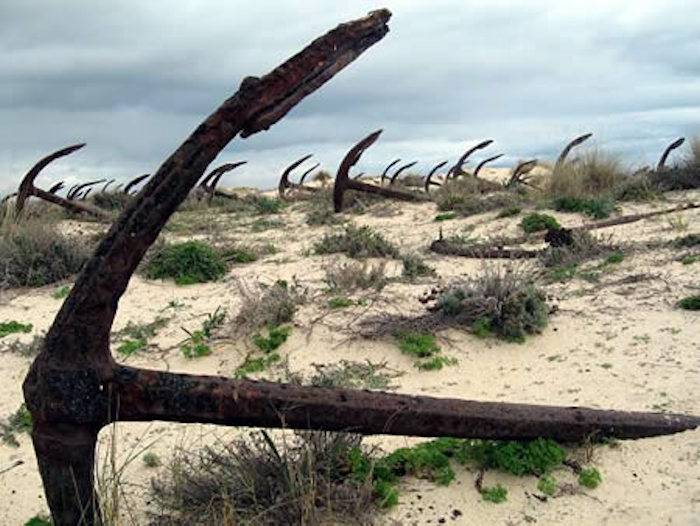
But when the tuna dried up, the ships stopped sailing. And whenever one of them docked for the last time, they'd leave their anchor on Barril beach. After a while, there was enough that someone decided they needed to be kept in order as if waiting for the moment when the island's lifeblood would return. Sadly, it never did and the anchors sit rusting away.
advertisement
#12 Soviet Car Graveyard - Russia
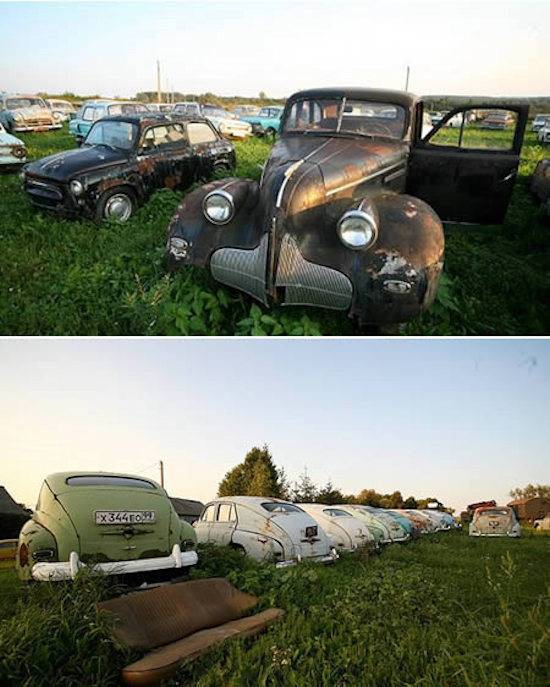
While most common people are denied the right to own an automobile, there once was a time that the rich and powerful had plenty of cars to choose from, and some people who worked very hard were able to purchase their very own. But that was long ago. Most of these cars dumped in this Russian graveyard are very rare nowadays on Russian streets and were a subject of a great desire by generations of Soviet people. Now they stay parked in rows or in heaps as a silent monument in a far-away countryside to the Soviet era and its style of life. Stalin and Brezhnev used to drive across the streets of Moscow in cars like these and they are worth a fortune for car collectors.
#13 Commercial Jetliner Graveyard - California
About 100 miles northeast of Los Angeles, in Victorville, California, you will find the graveyard where almost every commercial airplane goes to die. The Southern California Logistics Airport, formerly George Air Force Base, is one of the nation's busiest boneyards. Before jets reach their 20th birthday, most will be retired. Some will be broken down for spare parts, while others will be purchased by another airline. Airlines like to park planes in the desert because the dry weather acts as a preservative, preventing corrosion, and this one is just one of three in the American Southwest.

The facility is part of a semi-secret air force base and visitors are not allowed. You can see a portion of the Victorville airliner relics from the sky above but most of the over 3,000 planes there are hidden.
advertisement
#14 Ship Graveyard - Mauritania
The city of Nouadhibou is the second largest city in Mauritania, West Africa, and the home to one of the world's largest ship graveyards. There are close to 1,000 rusted relics on the beaches, in the water, and some below the sea. The reason for this is that the Mauritanian harbor officers were taking bribes and allowing ships to be discarded in the harbor and around the bay. This phenomenon started in the 80's after the nationalization of the Mauritanian fishing industry, numerous uneconomical ships were simply abandoned there. Many foreign ship owners later found it very convenient to get rid of their old vessels in the bay.

#15 Lost Bike Graveyard - Amsterdam
Amsterdam has a population of about 700,000 and an estimated 1.2 million bikes. Officially sanctioned parking lots are always full, and the streets are clogged with illegally parked bikes. As imagined, theft is a constant issue. The Fietsdepot outside of Amsterdam's Central Station holds bikes that were removed by the city. In 2016, the depot received more than 85,000 bikes of all shapes and sizes and holds about 15,000 and 19,000 at a time. Each one is scanned and entered into a database, with details like color, engravings, serial numbers and site of removal, then labeled with a letter and number according to the day and location of removal. Workers then cross check with local police to see if the bike was stolen.
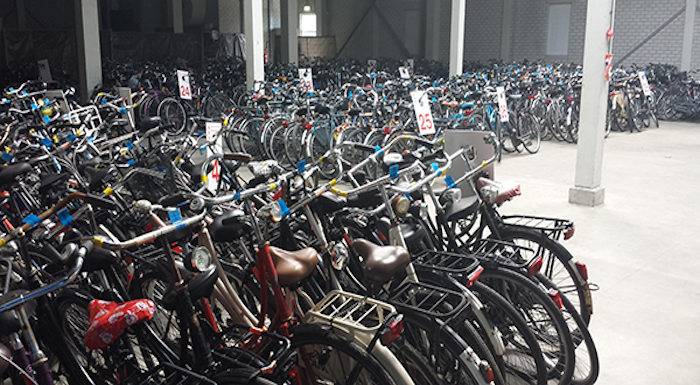
Just like cars in the US, there is a fee to retrieve a bike stored once it has been picked up by the city. Bikes are kept here for three months in an outdoor field. 40% of people do eventually retrieve their property, but unclaimed bikes are auctioned off, sold for spare parts or shredded into scrap metal. Amsterdam makes a great amount of its income by charging for claimed bicycles.