

The concept of black holes has fascinated and somewhat terrified us for ages.
Fastest Growing Supermassive Black Hole Ever Detected That Consumes Mass Of The Sun And Every Planet Each Day Now Visible From Earth
By
maks in
Science and Technology
On 25th February 2024
advertisement
Think back to the hysteria in 2012 when high school group chats were buzzing with the fear that the world might end, partly fueled by rumors that scientists were on the brink of creating a black hole.
Those fears, while unfounded, were a testament to the deep-seated anxiety and intrigue surrounding these cosmic phenomena.
Fast forward to today, and the subject of black holes has taken an even more exciting turn.
Scientists have made a groundbreaking discovery, identifying what is considered the fastest-growing black hole ever recorded.
advertisement
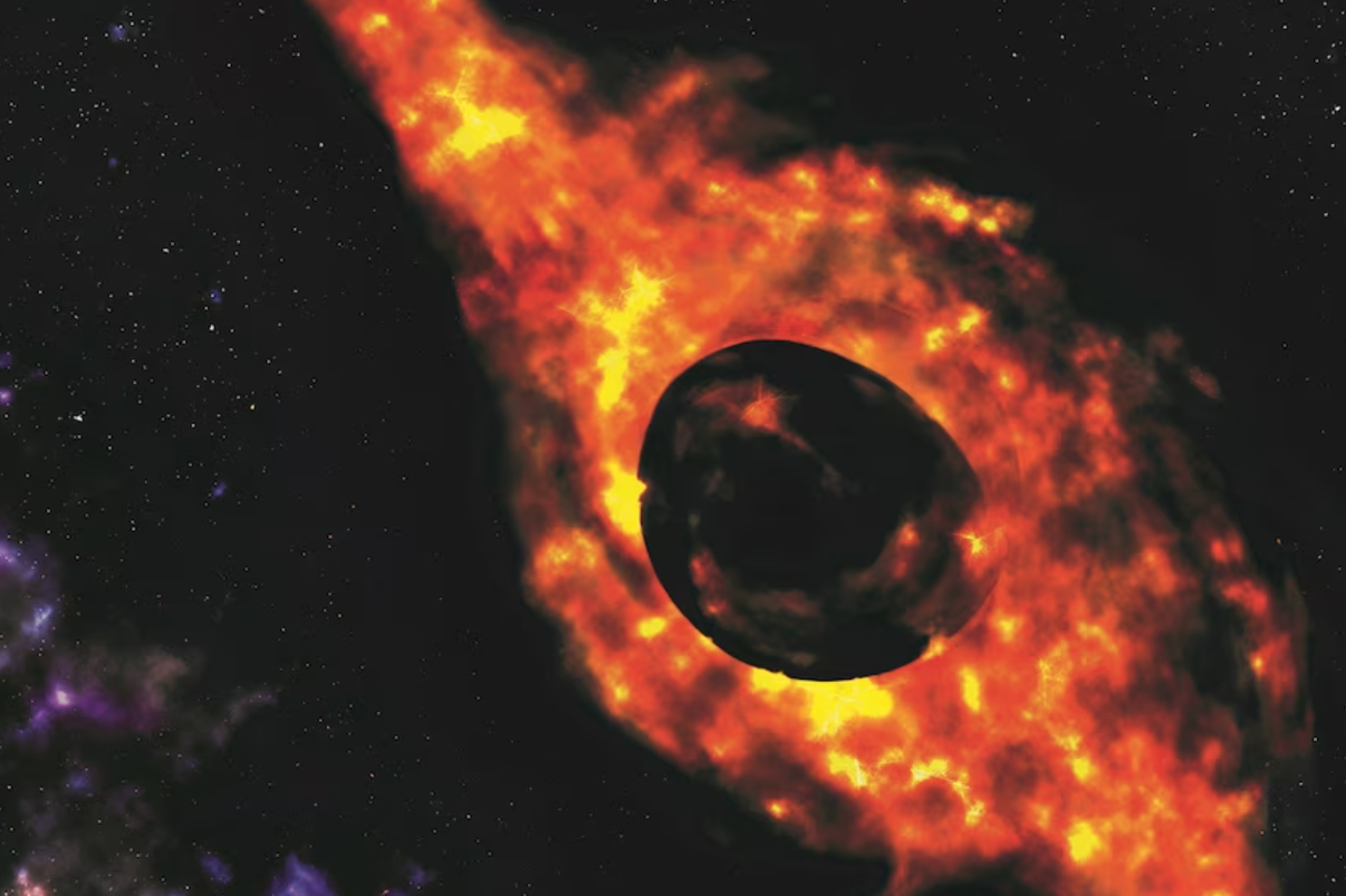
This remarkable find was made by researchers at the Australian National University (ANU), who observed that this supermassive black hole boasts a mass approximately 17 billion times greater than that of the Sun in our solar system.
Australian National University
Before diving deeper into this discovery, it's worth revisiting what exactly a black hole is.
Far from the ominous, all-consuming voids of our childhood fears, NASA defines a black hole as a dense area in space where a significant amount of matter is concentrated into a small space, creating a gravitational pull so strong that nothing, not even light, can escape its grasp.
advertisement
This particular black hole resides in a quasar, which is essentially a cosmic lighthouse, illuminating the universe with brilliant light generated by gas and dust as they spiral into the black hole's insatiable maw.
The brightness of this quasar is such that it outshines the collective light of countless stars, making it the most luminous continuously powered object known in the universe.
advertisement
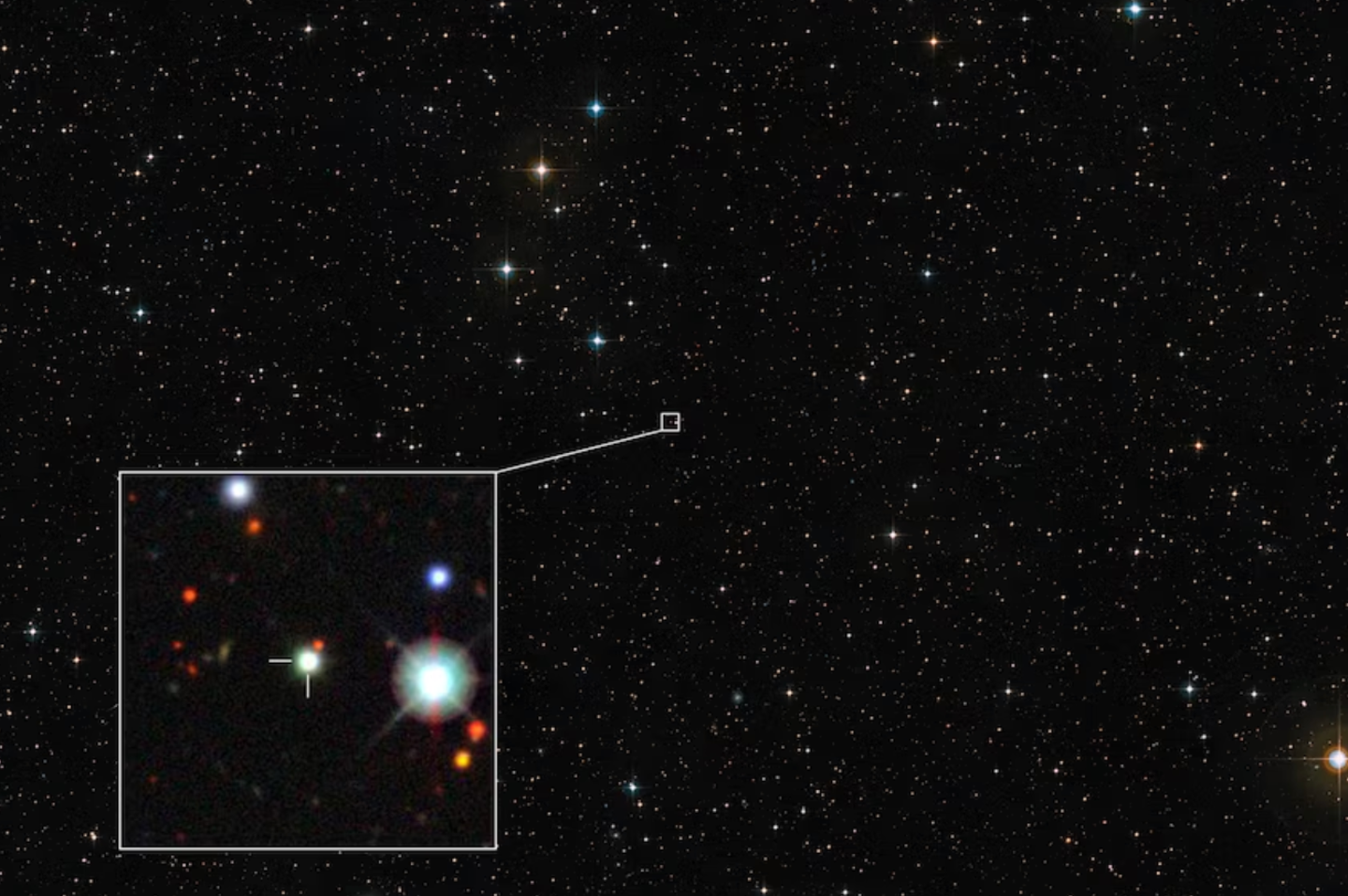
Although this quasar's light is too brilliant for the naked eye, it's visible from Earth with the aid of a simple backyard telescope.
The black hole at its heart is growing at an astonishing rate, swallowing mass equivalent to our Sun every single day.
Australian National University
Christian Wolf, the lead author of the research project and an associate professor at ANU, shared with ABC the staggering rate at which this black hole consumes matter.
advertisement
"This black hole eats as much mass in a single day as there is in our entire solar system – the Sun and all the planets combined," he explained.
Discovering and measuring the mass of this colossal black hole was no small feat, requiring one of the world's largest telescopes.
advertisement
Brian Schmidt, an ANU astrophysicist and former vice-chancellor, expressed his awe at the existence of such a massive and active black hole.
"I think the reason this is mind-blowing is just the fact that the thing exists at all. It is not something I would've thought would have been in the universe, it just seems too big and too active," he remarked.
advertisement
While its sheer size and activity may be hard to grasp, Schmidt believes this discovery will be pivotal in solving some of the universe's lingering mysteries about black holes, particularly why there are so many of them and why they're so large.