

Don't Beat Yourself Up-We All Thought It Was Hairball Problems Until The Vet Diagnosed Asthma
advertisement
A severe attack of feline asthma may sometimes be discounted as just another hairball attack, or possibly choking on a bit of food.
The cat will cough for awhile, the concerned caregiver will comfort him, then he will appear to be fine. But symptoms like these need to be checked out by a veterinarian, to eliminate asthma. You may be sent home with a bottle of hairball remedy, but if asthma is the diagnosis, you will learn ways of managing it.
Feline asthma is a common allergic respiratory disease in cats, affecting at least one percent of all adult cats worldwide.
It is a chronic progressive disease for which there is no cure. Common symptoms include wheezing, coughing, labored breathing and potentially life-threatening bronchoconstriction. There is conjecture that the disease is becoming more common due to increased exposure to industrial pollutants.
advertisement
Feline asthma occurs with the inflammation of the small passageways of a cat’s lungs, during the attack the lungs will thicken and constrict making it difficult to breathe.
Mucus may be released by the lungs into the airway resulting in fits of coughing and wheezing. Some cats experience a less severe version of an asthma attack and only endure some slight coughing. The obvious signs that a cat is having a respiratory attack are: coughing, wheezing, blue lips and gums, squatting with shoulders hunched and neck extended, rapid open mouth breathing or gasping for air, gagging up foamy mucus and overall weakness.
What allergens are more likely to trigger an asthma attack in cats?
Again, these are many of the same allergens responsible for human asthma attacks:
*Smoke
*Mildew or Mold
*Household Chemicals
*Dust
*Pollens
*Cat Litter
*Cold, Moist Air
advertisement
Asthmatic cats are also subject to exercise-related attacks, and stress can either cause or exacerbate a feline asthma attack.
For that reason, you should always try to remain as calm as possible when your cat suffers an attack, because you can "telegraph" your stress to your cat.
advertisement
What Are the General Symptoms of Asthma in Cats?
*Coughing and wheezing
*Persistent cough
*Squatting with shoulders hunched, neck extended and rapid breathing or gasping for breath
*Gagging up foamy mucus
*Open mouth breathing
*Blue lips and gums
*Labored breath after exertion
*Overall weakness and lethargy
advertisement
Asthma-like symptoms in cats can also be associated with other disease, including heartworm, respiratory parasites, tumors, heart failure and pneumonia.
All breeds of cats are susceptible, but Siamese cats seem to have a higher

advertisement
Are some cats more likely to get asthma?
Obstructive lung disease is most common in cats from two to eight years of age. Siamese cats seem to be at higher risk for developing asthma and bronchitis. Some reports indicate that it is more common in female cats. Overweight and obese cats are also reported to be at greater risk for developing respiratory disorders.

advertisement
How Can My Cat's Asthma Be Treated?
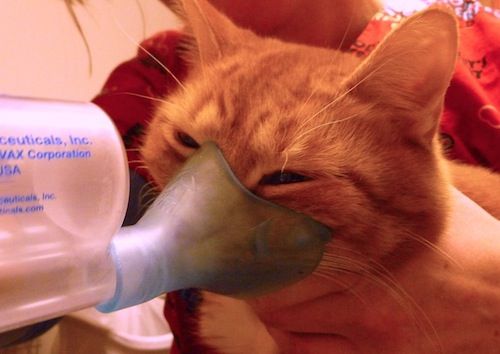
While there is no true cure for asthma, there are various methods for successfully managing it. Effective therapy may include medications that will open up breathing passages and reduce airway inflammation or modify the body's immune response. Like in human asthma, medication is sometimes administered through a specially adapted inhaler.
advertisement