Feline leukemia virus (FeLV) infection is responsible for more deaths among cats than any other infectious disease. The virus affects domestic cats and occurs in some wild felines as well.
advertisement
About FeLV
Feline leukemia virus (FeLV) is a disease that impairs the cat's immune system and causes certain types of cancer. This virus infection is responsible for a majority of deaths in household cats, affecting all breeds. Males are more likely to contract the infection than females, and it is usually seen between the ages of one to six years old.
Feline Leukemia Virus (FeLV) is one of the most feared causes of disease in cats, responsible for almost a third of their cancer deaths.
This complex and generally misunderstood disease was first reported in 1964, and it remains one of the most researched feline disease problems, despite the fact that although estimates vary according to the geographic region, the incidence of the disease in healthy free roaming cats has been reported to be as low as 1-3%.
advertisement
Feline leukemia is caused by a retrovirus that only infects members of the feline family.
It is not believed to be contagious to humans. It is readily destroyed in the environment, being susceptible to inactivation with heat, soap, most disinfectants and drying. Even in the proper environment, it will only last outside the cat's body for 24-48 hours. For these reasons, cats may be safely held in shelters with minimal risk of disease spread, but only if they are housed in individual cages, and rules about proper sanitation and washing hands between handling cats are strictly enforced. In addition, long waiting periods do not have to be observed before adopting a new cat into a household that previously housed a leukemia positive cat.
There have been advances in the development of therapeutic regimens, but no treatment has resulted in a cure or removal of the virus from the cat once it is established.
Epidemics of feline leukemia in shelters do not occur, but leukemia is a problem largely because it can be undetected in healthy carriers of the virus and because it is still a fatal disease. One of the biggest controversies surrounding the disease for shelters is whether or not feral cat trap neuter release (TNR) programs and shelters should perform routine screening tests for the virus, and how to handle the apparently healthy cats that test positive.
advertisement
Risk Factors
Cats who have contact with other cats and spend time outdoors are most at risk of contracting FeLV.
Kittens are particularly susceptible.
advertisement
Cats can carry the virus but appear healthy.
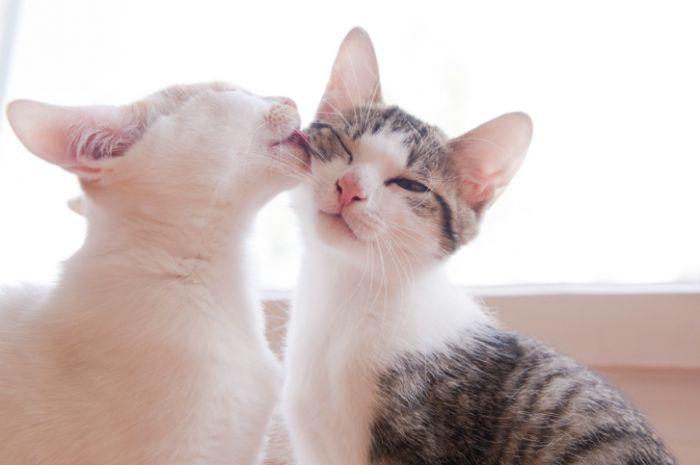
The virus is secreted primarily in the saliva and nasal secretions, though also found in other body fluids and feces. FeLV is usually spread through mutual grooming or bite wounds, and sometimes though shared food dishes and litter boxes. Mothers can also pass FeLV to their kittens.
advertisement
Symptoms and Types
Signs depend on the type of infection: FeLV-A, FeLV-B, or FeLV-C. Cats found with the virus can be infected with one, two, or all three types.
FeLV-A:
Occurs in all cats infected with FeLV. It severely weakens the immune system (immunosuppression).
FeLV-B:
Occurs in about 50 percent of FeLV-infected cats, and causes tumors and other abnormal tissue growths.
FeLV-C:
The least common type, occurring in about 1 percent of FeLV-infected cats. It causes severe anemia.
advertisement
Of these types, some of the more common symptoms of cat leukemia include:
* Anemia
* Lethargy
* Progressive weight loss
* Abscesses
* Enlarged lymph nodes
* Persistent diarrhea
* Infections of the external ear and skin and poor coat condition
* Fever (seen in about 50 percent of cases)
* Wobbly, uncoordinated or drunken-appearing gait or movement
* Inflammation of the nose, the cornea, or the moist tissues of the eye
* Inflammation of the gums and/or mouth tissues
* Lymphoma (the most common FeLV-associated cancer)
* Fibrosarcomas (cancer that develops from fibrous tissue)
advertisement
How Feline Leukemia Virus Is Transmitted
Feline leukemia is a disease that only affects cats -- it cannot be transmitted to people, dogs, or other animals. FeLV is passed from one cat to another through saliva, blood, and to some extent, urine and feces. The virus does not live long outside the cat's body -- probably just a few hours. Grooming and fighting seem to be the commonest ways for infection to spread. Kittens can contract the disease in utero or through an infected mother's milk. The disease is often spread by apparently healthy cats, so even if a cat appears healthy, it may be be infected and able to transmit the virus.
advertisement
Your Cat’s Risk Factors
Exposure to infected cats raises your cat's risk of contracting FeLV, especially for kittens and young adult cats. Older cats are less likely to contract the infection, because resistance seems to increase with age. For indoor-only cats, the risk of contracting FeLV is very low. Cats in multi-cat households or in catteries are more at risk, especially if they share water and food dishes and litter boxes.
Only about 3% of cats in single-cat households have the virus, but for cats that spend time outdoors, the rate is much higher. Still, the prevalence of FeLV has decreased over the last 25 years because of vaccines and reliable tests.
advertisement
Diagnosis of FeLV
There are a couple of tests routinely used to test for FeLV. One test, which can be done with a test kit at vet clinics, is called the ELISA and tests for presence of a specific part of the virus. Cats who test positive should be retested a few months later, as they may revert to a negative statues if they can clear the virus from the blood.
advertisement
Other laboratory tests can be done as well, such as the IFA.
Alone the IFA isn't the best test, but a positive IFA test usually indicates a cat is persistently viremic (i.e. unable to clear the virus from the blood stream). More sophisticated tests to directly identify the virus may become more widely available.
Other laboratory tests and diagnostics are not specific for FeLV but can help determine any effects of the virus and what systems are affected, such as the presence of anemia or cancer.
There is no treatment specific for FeLV.
Treatment is aimed at managing the secondary diseases. This will depend on what conditions are present, of course, and can include treatments such as chemotheraphy for lymphoma, antibiotics for secondary bacterial infections, blood transfusions for anemia, etc.
advertisement
A variety of anti-viral drugs and immune modulators have been used
but most studies have shown limited (or no) effects and some anti-viral drugs can have severe side effects in cats. Your vet will make treatment recommendations based on recent case studies and information.
Long term management includes minimizing the risks of secondary infections coupled with proactive medical care to catch problems early, along with protecting other household cats that are not yet infected.
Eighty-five percent of cats persistently infected with feline leukemia virus die within three years of diagnosis.
However, regular veterinary check-ups and good preventive health care can help keep these cats feeling well for some time and help protect them from secondary infection. Twice-yearly physical examinations, laboratory testing, and parasite control can prevent complications and identify problems quickly. All FeLV infected cats should be kept indoors and be neutered.
advertisement
There is presently no cure for FeLV infection.
Secondary infections can be treated as they appear, and cats with cancer can receive chemotherapy. However, the prognosis is grave for cats with bone marrow compromise or widespread lymphoma.
Protecting Your Cat From Feline Leukemia Virus
Keeping your cat indoors and away from infected cats is a sure way to prevent him from contracting FeLV. In addition, vaccines can be given to cats at high risk of exposure, such as those who go outside or live in shelters or catteries. Only cats that test negative for FeLV should be vaccinated, and even those that have received the vaccine should be tested annually because of the possibility of exposure and infection.
advertisement
New cats or kittens over eight weeks of age should be tested for the virus before being introduced to a multi-cat household.
Most veterinarians counsel against introducing a new cat into a household with a FeLV-positive cat, because he or she may be at risk for contracting the infection even with vaccination. In addition, the stress of a newcomer may adversely affect the FeLV-positive cat.