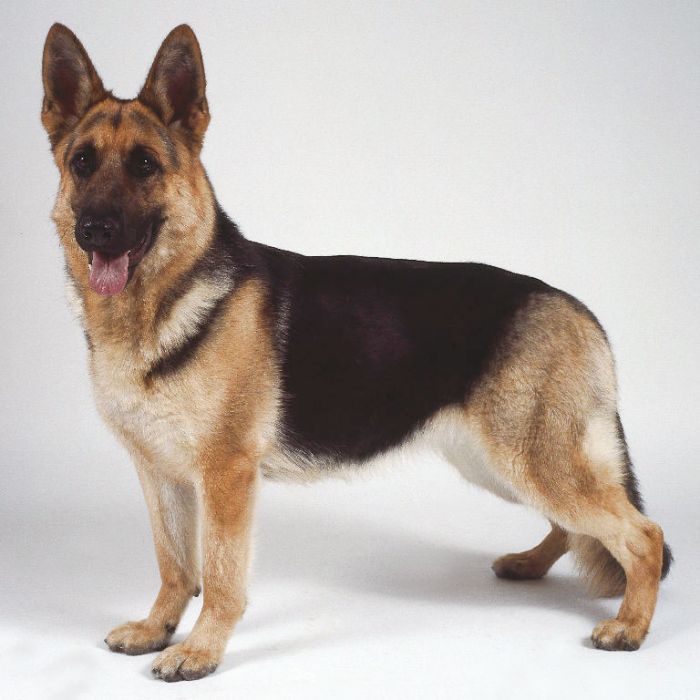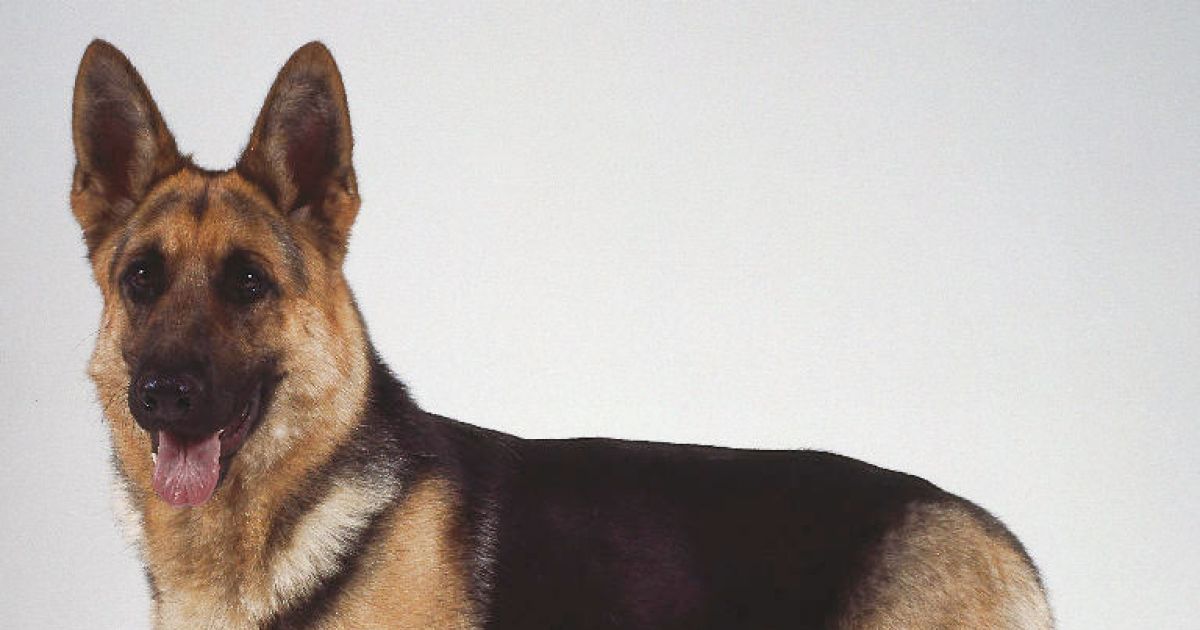
The German Shepherd has made a name for himself as a police & military dog, guide & assistance dog, search & rescue dog, & detector dog.
advertisement
The German Shepherd
is a breed of medium to large-sized working dog that originated in Germany. The breed's officially recognized name is German Shepherd Dog in the English language, sometimes abbreviated as "GSD", and was also formerly known as the Alsatian and Alsatian Wolf Dog in Britain. The German Shepherd is a relatively new breed of dog, with their origin dating to 1899.
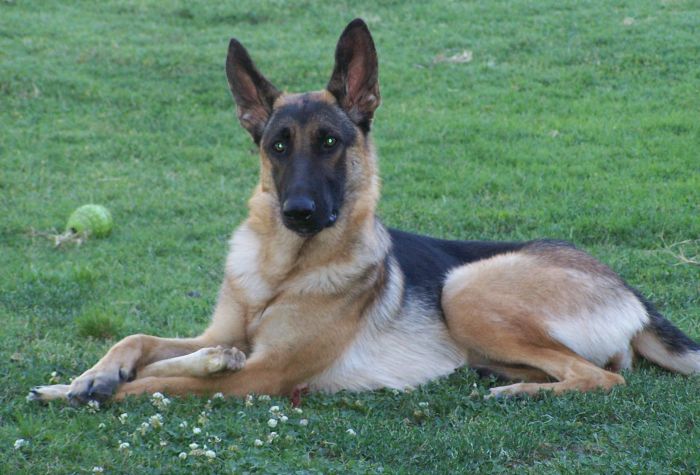
The German Shepherd Dog is a natural protector and so adaptable and intelligent that he has performed just about every job known to dog. If he had opposable thumbs, he would be unstoppable.
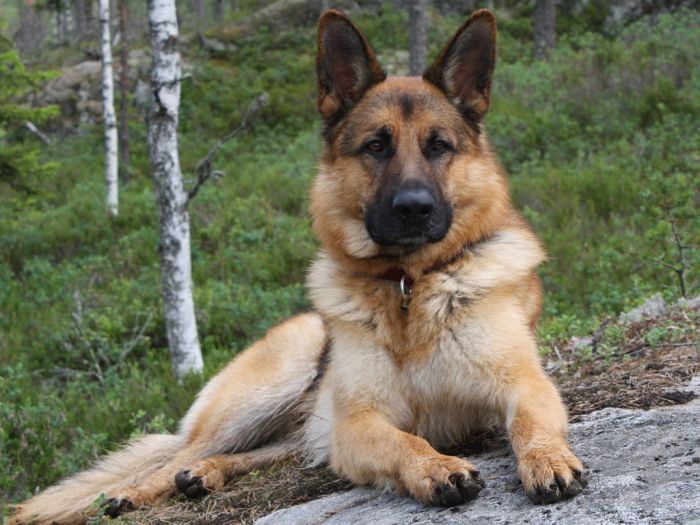
advertisement
Rin Tin Tin
a pup found in a World War I battle zone, became the world's first canine movie star, forever marking the German Shepherd Dog as one of the most easily recognized breeds. From his imposing size to his erect ears and dark, intelligent eyes, he has achieved legendary status as the ideal canine.
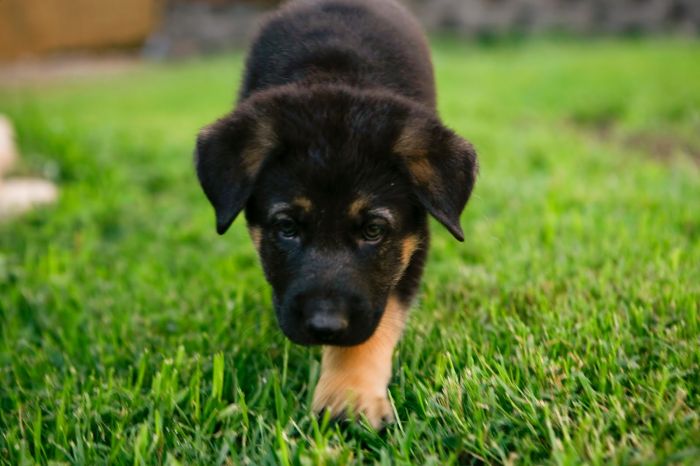
As part of the Herding Group,
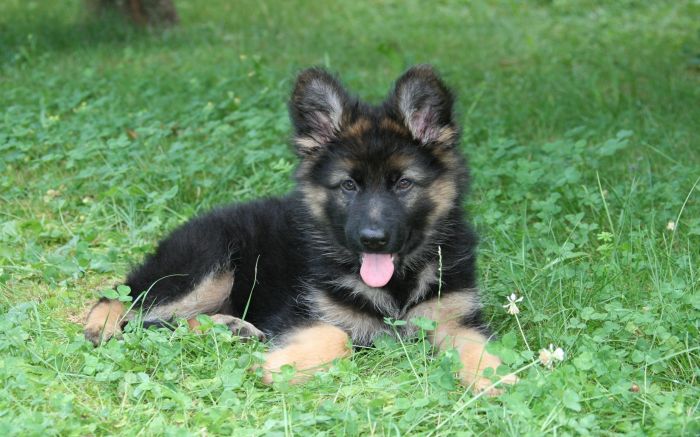
German Shepherds are working dogs developed originally for herding sheep. Since that time, however, because of their strength, intelligence, trainability and obedience, German Shepherds around the world are often the preferred breed for many types of work, including assistance, search-and-rescue, police and military roles, and even acting. The German Shepherd is the second-most popular breed of dog in the United States and fourth-most popular in the United Kingdom.
advertisement
The abilities of this breed go far beyond its origin as a herding dog.
The German Shepherd has made a name for himself as a police and military dog, guide and assistance dog, search and rescue dog, and detector dog. He has excelled in every canine sport, including agility, obedience, rally, tracking and, of course, herding. German Shepherds still work livestock on farms and ranches around the world, including the United States. If you have horses, they will trot alongside you while you ride and help you put the horses back in the barn when you're done.
advertisement
General Appearance
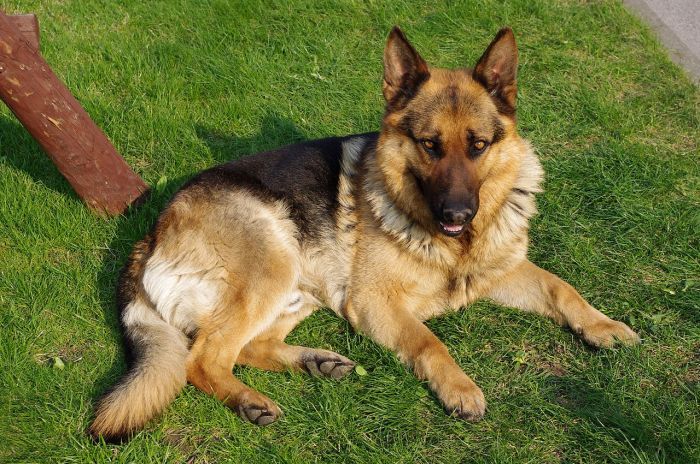
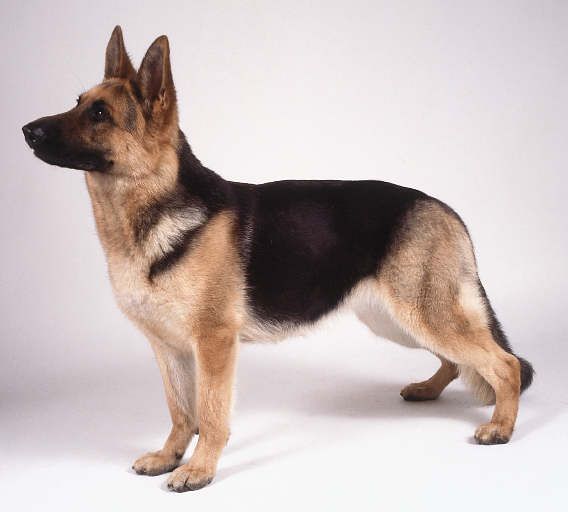
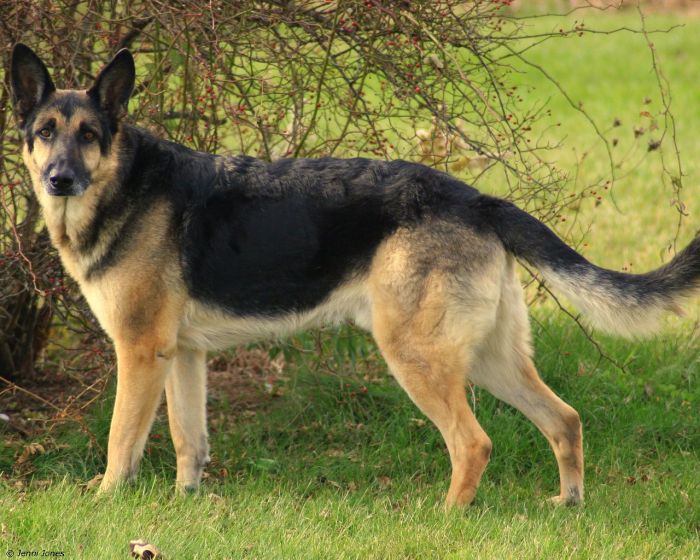
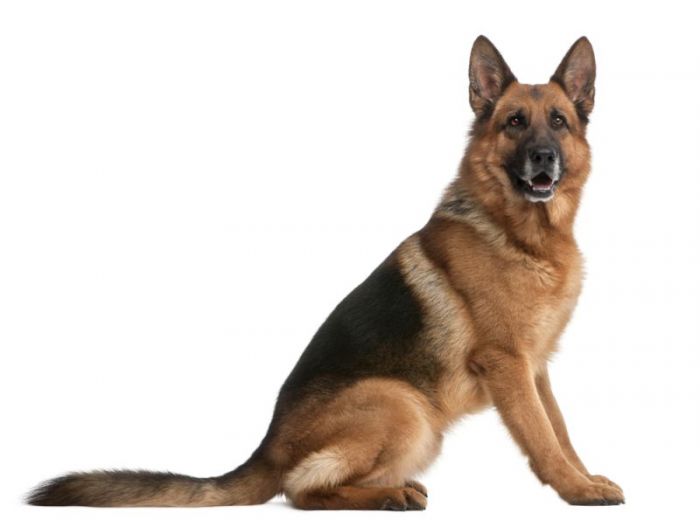
The first impression of a good German Shepherd Dog is that of a strong, agile, well muscled animal, alert and full of life. It is well balanced, with harmonious development of the forequarter and hindquarter. The dog is longer than tall, deep-bodied, and presents an outline of smooth curves rather than angles. It looks substantial and not spindly, giving the impression, both at rest and in motion, of muscular fitness and nimbleness without any look of clumsiness or soft living. The ideal dog is stamped with a look of quality and nobility - difficult to define, but unmistakable when present. Secondary sex characteristics are strongly marked, and every animal gives a definite impression of masculinity or femininity, according to its sex.
advertisement
The German Shepherd Dog is a very strong and alert breed.
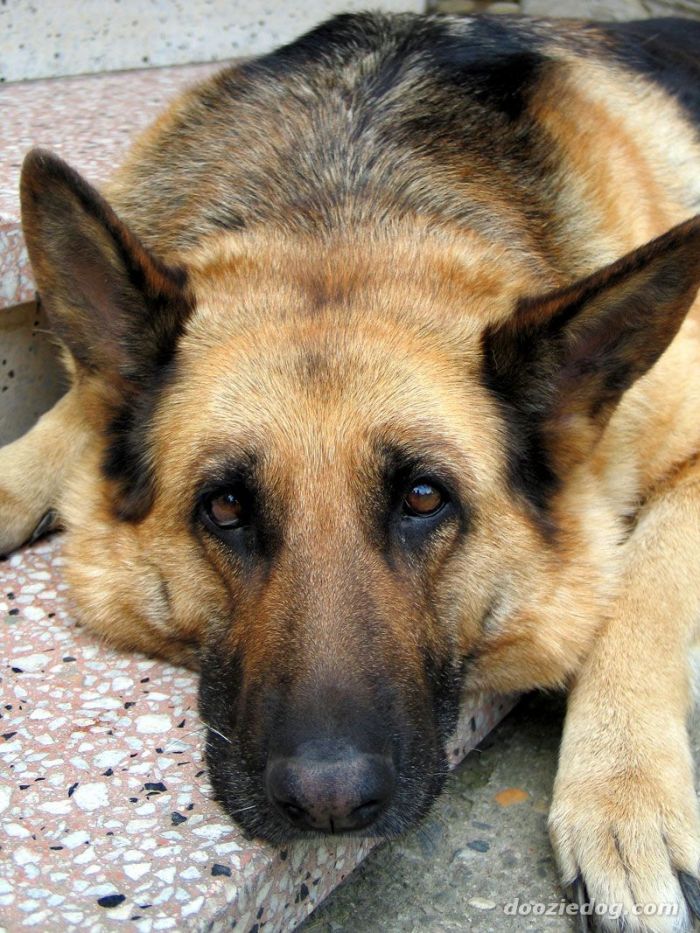
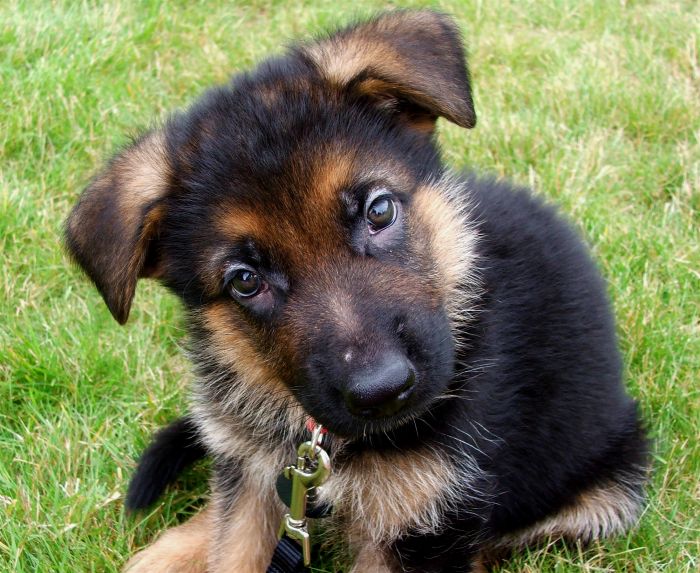
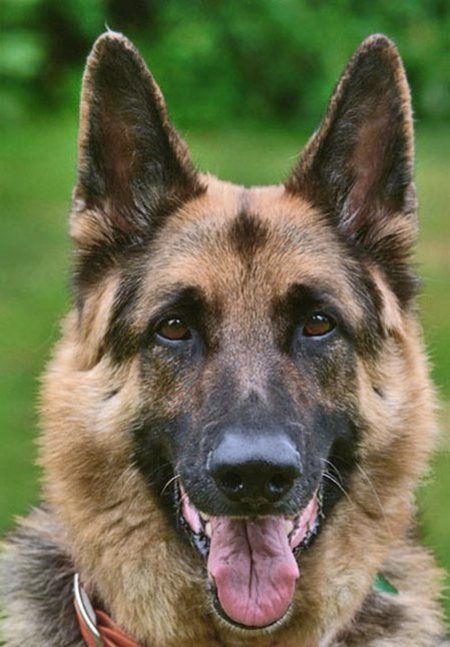
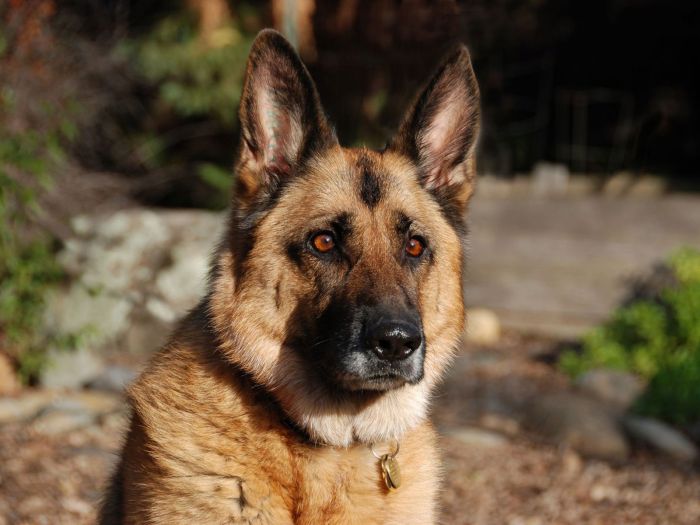
They have a noble appearance with a strong and chiseled head. They have medium sized eyes that are dark and almond shaped. Their ears are somewhat pointed and open toward the front. They stand very erect when at attention. Their skulls are sloped into a long wedge shaped muzzle. Their noses are black and they have strongly developed jaws with teeth that meet in a scissors bite.
advertisement
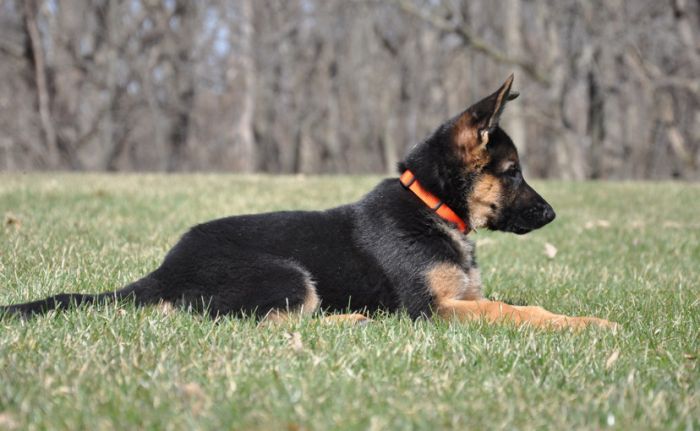
German Shepherd Dogs should always be longer than he is tall.
The German Shepherd dog has a strong neck that is muscular and long, but always in proportion to the rest of his body. Their chests are deep and filled out. Their legs are strong and muscular and their feet are short and compact.
German Shepherd Dogs should always be longer than he is tall. The most desirable proportion is 10 to 8 1/2 length in proportion to height. A female German Shepherd Dog should look decidedly female, and a male German Shepherd Dog should look decidedly male, particularly when you look at their heads.
advertisement
Today, there are German lines of this breed and American lines.
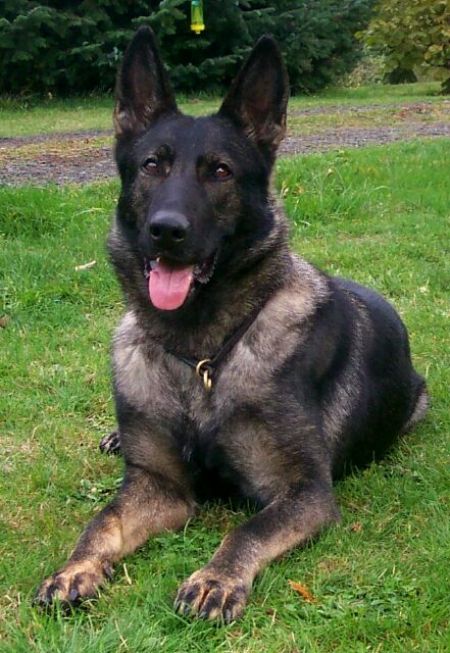
The German lines of the German Shepherd Dog tend to be larger dogs with a broader head and darker coat. Dogs with the American line are typically smaller and have less sloping in their hips, which is a traditional German Shepherd Dog characteristic. American lines also show more silver with black coat coloring, whereas the German lines are nearly always black and tan.
advertisement
Often used as working dogs
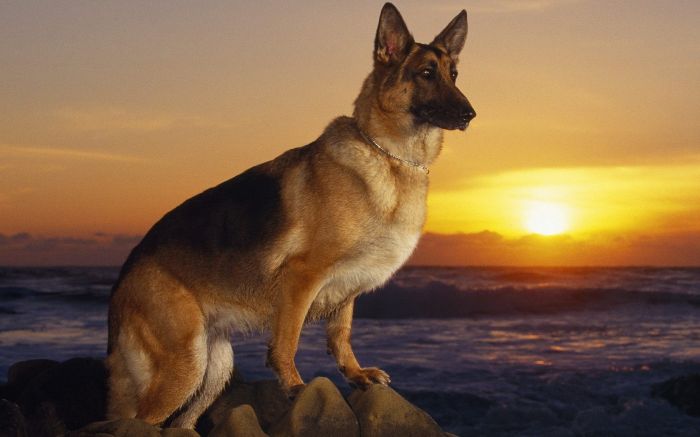
German Shepherds are courageous, keen, alert and fearless. Cheerful, obedient and eager to learn. Tranquil, confident, serious and clever. GSDs are extremely faithful, and brave. They will not think twice about giving their lives for their human pack. They have a high learning ability. German Shepherds love to be close to their families, but can be wary of strangers. This breed needs his people and should not be left isolated for long periods of time. They only bark when they feel it is necessary. Often used as police dogs, the German Shepherd has a very strong protective instinct, and is extremely loyal to its handler.
advertisement
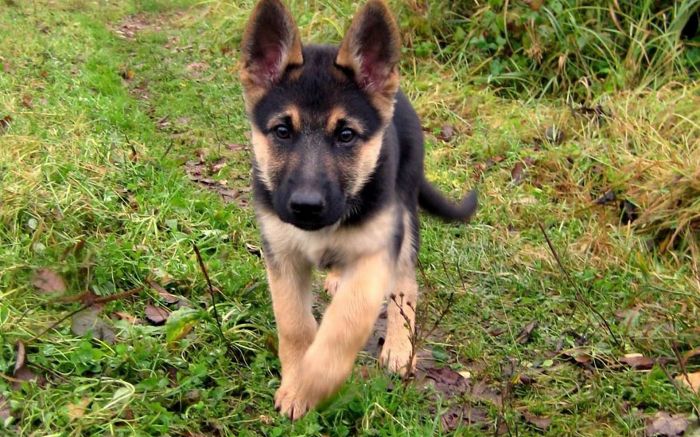
Socialize this breed well starting at puppyhood.
Aggression and attacks on people are due to poor handling and training. Problems arise when an owner allows the dog to believe he is pack leader over humans and/or does not give the dog the mental and physical daily exercise it needs to be stable. This breed needs owners who are naturally authoritative over the dog in a calm, but firm, confident and consistent way. A stable, well-adjusted, and trained dog is for the most part generally good with other pets and excellent with children in the family.
advertisement
They must be firmly trained in obedience from an early age.
German Shepherds with passive owners and/or whose instincts are not being met can become timid, skittish and may be prone to fear biting and develop a guarding issue. They should be trained and socialized from an early age. German Shepherds will not listen if they sense that they are stronger minded than their owner, however they will also not respond well to harsh discipline. Owners need to have an air of natural authority to their demeanor. Do not treat this dog as if he were human. Learn canine instincts and treat the dog accordingly.
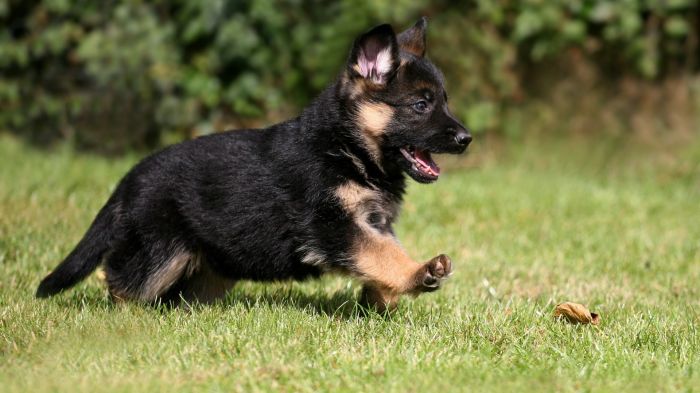
German Shepherds are one of the smartest and most trainable breeds
With this highly skilled working dog comes a drive to have a job and a task in life and a consistent pack leader to show them guidance. They need somewhere to channel their mental and physical energy. This is not a breed that will be happy simply lying around your living room or locked out in the backyard. The breed is so intelligent and learns so readily that it has been used as a sheepdog, guard dog, in police work, as a guide for the blind, in search and rescue service, and in the military.
advertisement
The History of the German Shepherd Dog
In 1889 Captain Max von Stephanitz began the standardization of the breed. It all started at a dog show in Karlsruhe in western Germany. A medium-sized yellow-and-gray wolflike dog caught his attention. The dog was of the primal canine type, supple and powerful, and possessed endurance, steadiness, and intelligence. He was a working sheepherder, requiring no training other than direction and finish to become proficient at the task. This dog, Hektor Linksrhein, was purchased by von Stephanitz, renamed Horand von Grafrath, and became the first registered German Shepherd Dog.
The modern German Shepherd breed
is criticized by some for straying away from von Stephanitz's original ideology for the breed: that German Shepherds should be bred primarily as working dogs and that breeding should be strictly controlled to eliminate defects quickly. He believed that, above all else, German Shepherds should be bred for intelligence and working ability. Although the show dogs have been bred for traits that do not help or even hurt their working abilities, and many pets have been misbred by irresponsible breeders who have caused many diseases for the breed, the working dogs, such as the ones used by police and militaries, have maintained their performance and stuck to the original intentions of the breed.
Some critics believe that careless breeding has promoted disease and other defects. Under the breeding programs overseen by von Stephanitz, defects were quickly bred out.
advertisement
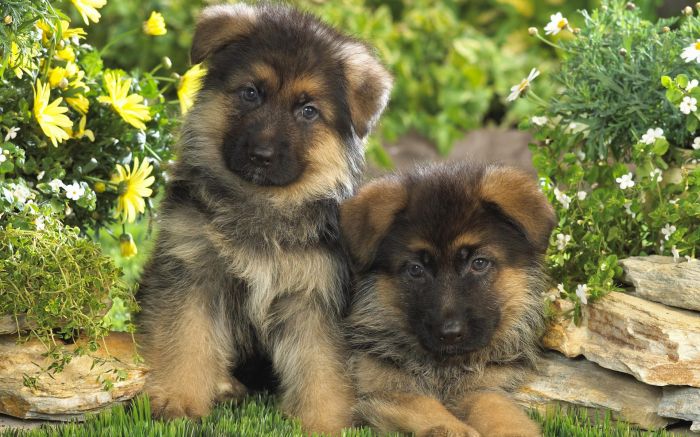
The ideal German Shepherd is direct, fearless and confident.
When he comes from parents who have good temperaments and has been socialized to become familiar with many different people, sights and sounds, he is an intelligent, easy to train, devoted, protective and fun-loving dog.
The German Shepherd is naturally protective of his home and property and will always alert you to strangers or intruders, but if you welcome someone into your home, your German Shepherd will accept them, too. He will also get along with other pets, especially if he is brought up with them from puppyhood. German Shepherds are smart and learn quickly that cats rule!
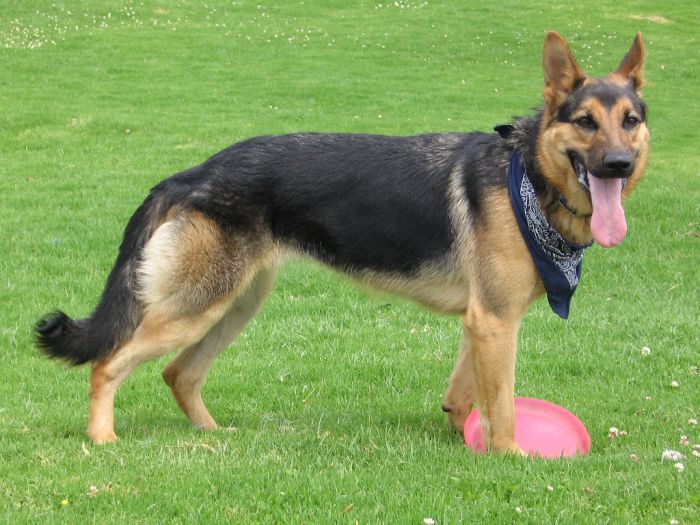
The German Shepherd needs a job.
While many German Shepherds are raised successfully in kennel situations, these are working dogs who have demanding and interesting tasks to do that give them the needed exercise and mental stimulation.
If your Shepherd is a family companion, he needs to live indoors with your family and receive opportunities to exercise his brain such as learning tricks, helping you around the house by picking things up and bringing them to you or serving the community as a therapy dog. He will enjoy going for walks or hikes, chasing a ball, or getting involved in a dog sport. He doesn't need to live in a large house with a yard, but if you live in an apartment or condo, you must be able to give him plenty of walks or other daily exercise and opportunities to relieve himself during the day. Otherwise, he'll be lonely, bored and destructive.
advertisement
Many people want a German Shepherd for purposes of protection.
But almost no one really needs a trained protection dog -- most people or families simply need a watchdog and a deterrent. The German Shepherd's size, body language, reputation and instinctive protectiveness are all that's needed to accomplish those goals, so don't get a "trained protection dog" that you don't need and probably can't handle. A socialized, well-mannered German Shepherd who lives with his family will protect them as part of his nature. A German Shepherd will always keep you within sight and sound. He might lie at your feet or he might position himself 15 or 20 feet away from you, but he will never let you go out of view. That's part of his heritage as a herding dog. If you don't want a dog who, well, dogs your footsteps, don't get a German Shepherd.
Among the most intelligent of breeds
the German shepherd dog is so intent on its mission whatever that may be that it is virtually unsurpassed in working versatility. It is utterly devoted and faithful. Aloof and suspicious toward strangers, it is protective of its home and family. It can be domineering. It can be aggressive toward other dogs, but it is usually good with other pets.
advertisement
Be aware that a German Shepherd’s temperament can vary depending on his background.
German Shepherds from working lines have an extremely strong drive to work and may be more dog than most people can or want to handle. If you want a family companion, a dog from a conformation breeder may be a better choice.