Underarms: Everyone has 'em, but nobody really likes to talk about 'em. Why not? Talking brings you knowledge, and knowledge is power, so let's discuss some of the common questions you have about your armpits. Here, four doctors have lots to say.

Health Warnings From Your Armpits You Need To Watch Out For
By
Editorial Staff in
Health and Fitness
On 30th April 2017
advertisement
#1
The axilla (also, armpit, underarm or oxter) is the area on the human body directly under the joint where the arm connects to the shoulder. It also provides the under-arm sweat gland.
In humans, the formation of body odor happens mostly in the axillary region. These odorant substances serve as pheromones which play a role related to mating. The underarm regions seem more important than the genital region for body odor which may be related to human bipedalism.

In short, underarms might seem silly and gross, but they do a lot of important stuff for the body. That’s why we have to keep an eye out for them!
What Is Your Armpit Trying To Say To You?
#2 Why do we sweat?
First off, there actually two different kinds of sweat glands that produce two different kinds of sweat, says Kenneth Howe, M.D. at Wexler Dermatology. "Most of the sweat glands on our skin are eccrine glands, which control our temperature and are present all over our body," Howe explains. "They produce a watery, odorless perspiration that evaporates on the surface of our skin, cooling our body when it's hot."
The other type of sweat glands are the apocrine glands, and its purpose is a little less clear. "Most scientists feel that the purpose of apocrine sweat is to act as a pheromone — that is, the smell they give off can act as a sexual attractant, territorial marker, or warning signal." Who knew your sweat was so smart?

advertisement
#3 Excessive Sweating
It’s normal to sweat a lot when you exercise, but you should be wary of excessive sweating that happens on an ordinary day.
Sweating excessively when you’re just sitting or walking at a measured pace isn’t normal; it’s actually called hyperhidrosis and it can be a symptom of some serious medical conditions.
This symptom might also show up as night sweats. If you’re soaking through your jammies at night, you should talk to your doctor about your hormone levels, because it can indicate that you’re going through the first stages of menopause.
No matter what, you need to work with a doctor to figure out what’s causing your excessive sweating.
#4 Extreme Odor
Body odor happens to everyone. As sweat builds up in the skin, bacteria starts to grow and multiply, causing a pretty awful smell. In most cases, a good scrub in the shower should help stop the problem. But extremely pungent body odor that seems to come out of nowhere can indicate a thyroid issue or a hormonal shift. It’s worth consulting with a medical professional.
Pay attention to body odor that has a sharp, sweet smell to it, such as rotting fruit or nail polish. This scent can be a sign of ketoacidosis, which means that your body isn’t breaking down sugar the way it should be. It can indicate symptoms of diabetes or pre-diabetes. If you notice this smell, seek medical attention.

advertisement
#5 Persistent Itching
If you notice that your pits just will not stop itching, you should take a closer look at the situation.
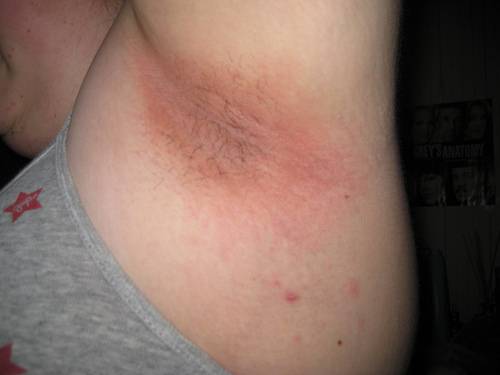
Itchy pits might indicate that you have irritated the skin. Likely culprits include razor rash from a close shave, or allergic reaction to a new deodorant or shaving cream.
Itching can also mean that a fungus or bacterial infection has set up shop in the warm, moist hollow.
If you have dense red splotches, itching, and possibly some whiteish-yellow overgrowth, you need to go to your primary care doctor, and possibly to a dermatologist as well.
advertisement
#6 Pain
If you experience underarm pain, it may be due to sore muscles. If you’ve been putting pressure on your arms through heavy lifting or exercise, you’ll most likely feel it the next day in the muscles under your arms and across your chest. Pain from sore muscles usually goes away on its own. If you have lingering pain and tenderness in your underarms, visit a doctor. It could be caused by swollen lymph nodes or inflammation in the area.

advertisement
#7 Rash
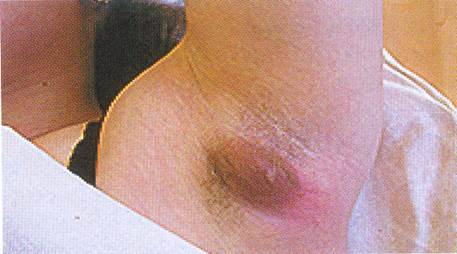
Your armpits are a hot spot for rashes because they are warm and damp, an environment where yeast infections prefer to grow. If you notice a rash combined with itching, redness, scaling or bumps, consult a doctor. It may be due to a yeast infection. Underarm rashes can also be caused be allergic reactions, excessive heat, sweating and chafing.
advertisement
#8 Lumps
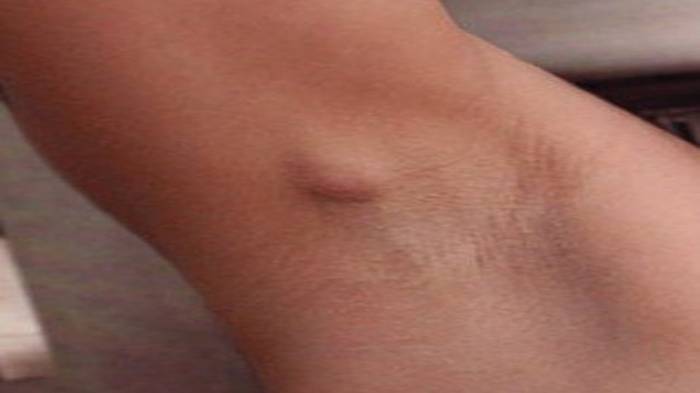
Lumps can be alarming, but you should take a deep breath before panicking over a lump in your pit.
We mentioned earlier that armpits are a hot spot for the lymphatic system. The whole area is packed full of tiny lymph nodes that aren’t noticeable, at least until they swell up.
Swollen lymph nodes can indicate that you are about to get sick, or that your body is fighting off a bug.
Lymph nodes that stay swollen for more than a week and lumps that don’t disappear on their own can be signs of serious conditions, including serious infections, or even some cancers.
advertisement
#9 Why is the skin on my underarms dark?
If you've noticed your underarm skin is a bit darker than the surrounding areas, you could be affected by acanthosis nigricans. "This condition can cause darkening in the body, including the underarms," explains San Diego dermatologic surgeon and RealSelf contributor Sabrina Fabi, M.D.. "It causes a thickening of skin, which makes the skin look darker, but it's not necessarily because the skin cells are darker." This is typically seen in patients who are overweight or pre-diabetic due to an increased presence of a hormone called insulin, which also stimulates the growth of skin cells. If you're experiencing underarm darkening and you're not overweight, Fabi adds that it can also be genetic and seen in patients who are totally within their ideal body weight.
Other possible causes for underarm darkening: Eczema, obesity, fungal infections, hormones, and certain medications can be to blame, says Green. "Excessive exposure to UV light can encourage melanocyte cells to produce the melanin that makes your skin darken, too," she adds.

advertisement
#10
When in doubt, call your primary care physician.
Your doctor can run blood work and other tests to make sure you aren’t showing abnormal levels of nutrients, hormones, or other chemicals that are key to good health.
Your PCP may also recommend a dermatologist, or help you find over-the-counter products that can help with your symptoms.
Be sure to SHARE this article and tag friends who might be interested to know the fascinating ins and outs of the armpits!