

What happens when you crack your knuckles? It may feel good, but one man cracked his knuckles in one hand for 60 years and not the other. Check out what he discovered.
Here's What Happens To Your Knuckles When You Crack Them
By
Editorial Staff in
Facts
On 19th March 2016
advertisement
#1 The Long-Held Myth That Makes You Cringe
There's a long-held myth that cracking your knuckles can damage your hands. The sound definitely might make people around you cringe, but what's making those noises, and is it actually bad for you?

#2 Popping A Joint Is Just Stretching Space And Releasing Fluid
There's a space in your joints filled with synovial fluid, a liquid that reduces the friction in your joints when you move. It contains gases like oxygen, nitrogen, and carbon dioxide.
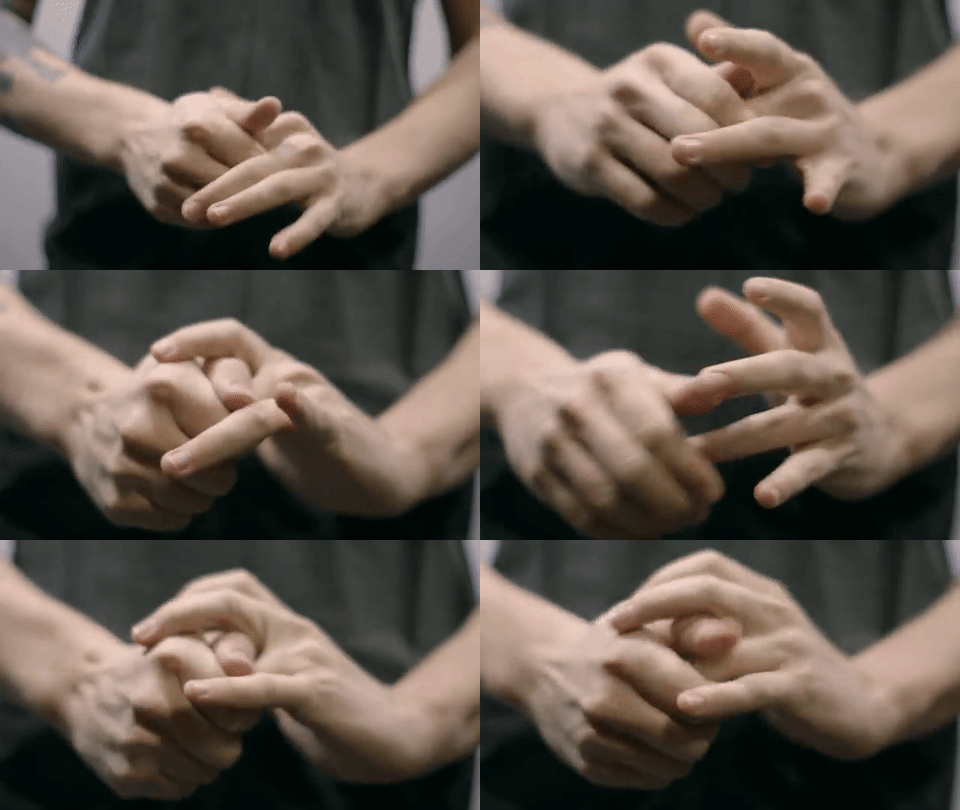
When you pop a joint, you stretch out that space between the bones. That expanding space creates negative pressure, like a vacuum, that sucks in the synovial fluid. It forms bubbles, which then collapse, and that's what you hear. It'snot actually a cracking sound, but a popping sound.
advertisement
#3 It Is Not The Same Thing As Cracking Joints
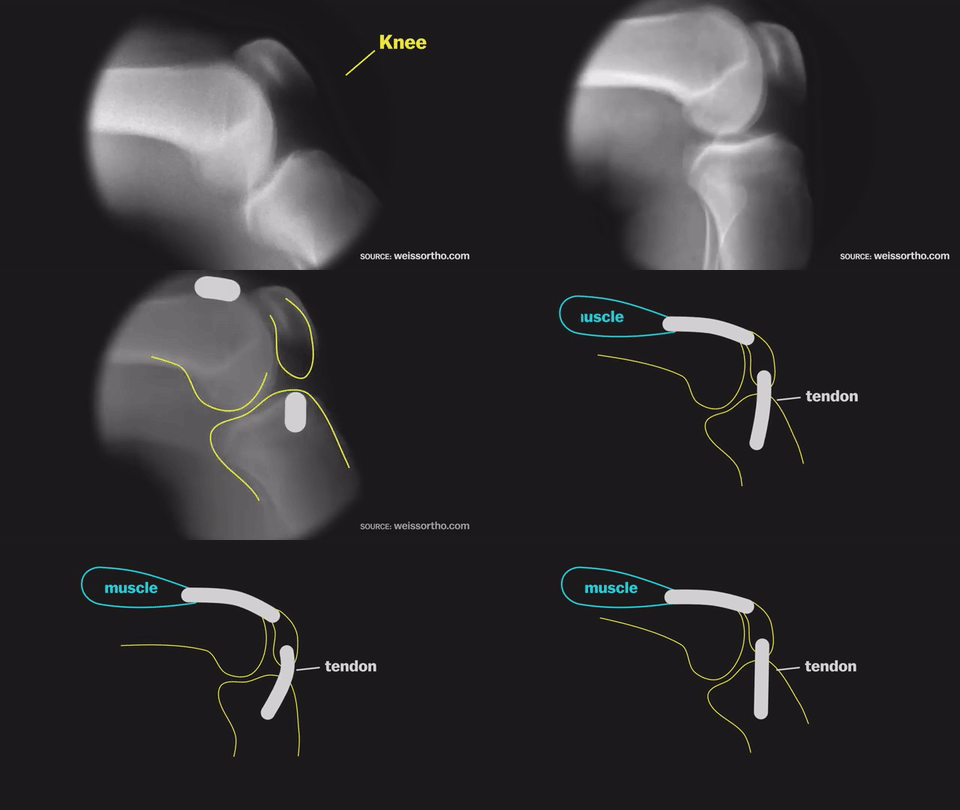
How is the crack of your knuckles different from the sound you may hear when you stand up too quickly? That sound is probably just tendons snapping over muscles or bones. When the joint moves, the tendon snaps quickly and it makes the popping sound. It's a bit different than cracking your knuckles because it's the sliding motion that produces the 'crack' and not the release of fluids or gases. Over time, this type of cracking can cause arthritis and wear down your joints and bones.
#4 Research Has Not Yet Determined Whether Cracking Knuckles Is Harmful
Now when it comes to the research and what it says about whether or not this practice is bad, most medical researchers agree that unless you are experiencing pain when you are popping or cracking your joints, you're probably OK to keep doing it. It actually feels good, which is why a lot of people keep doing it.
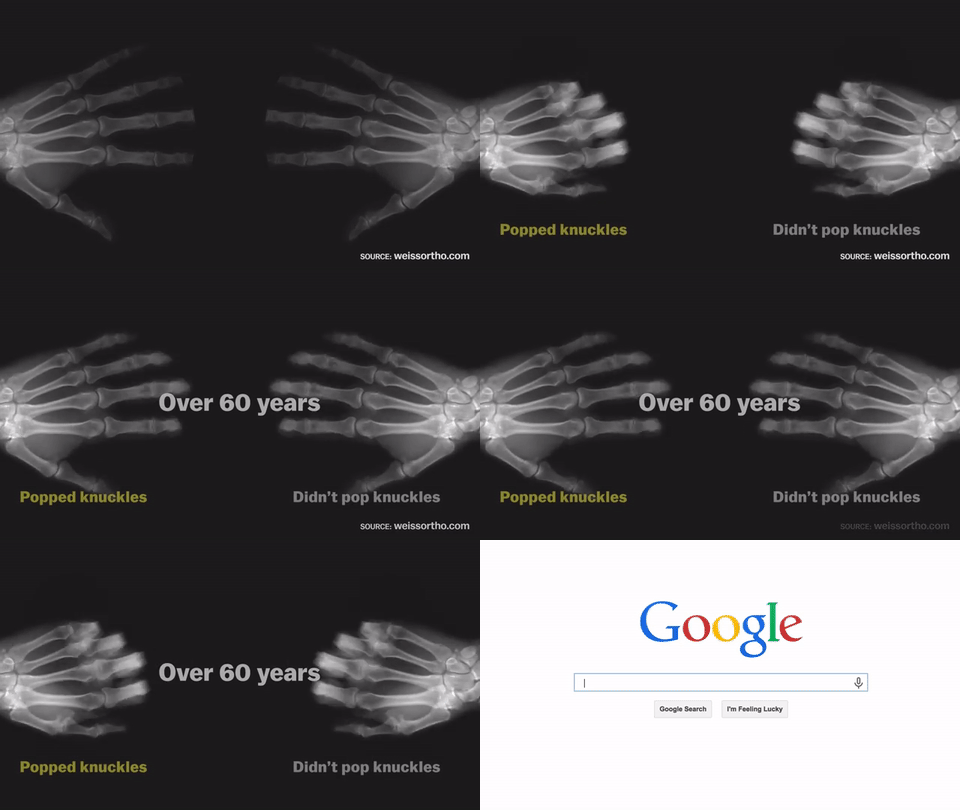
An interesting man by the name of Donald L. Unger decided to do some of his own research on this topic. He cracked his knuckles on just one hand for 60 years while leaving the other one alone and never cracked the knuckles on that hand. Doctors did not notice any more arthritis in the hand he cracked versus the one he didn't.
But, one study performed in 1990 found that cracking your knuckles over a long period of time could lead to hand swelling and decreased grip strength. This study was done on 300 people and has yet to see any research to debunk it.
advertisement