History has a funny way of repeating itself, especially when the people repeating it aren't exactly telling the full story. Indeed, many of the wholesome, historical stories you learned in grade school growing up would be completely ripped apart by a teacher's red pen nowadays. Here are a few historical lies that will make you rethink your entire education.
advertisement
#1 George Washington didn't chop down his dad's cherry tree
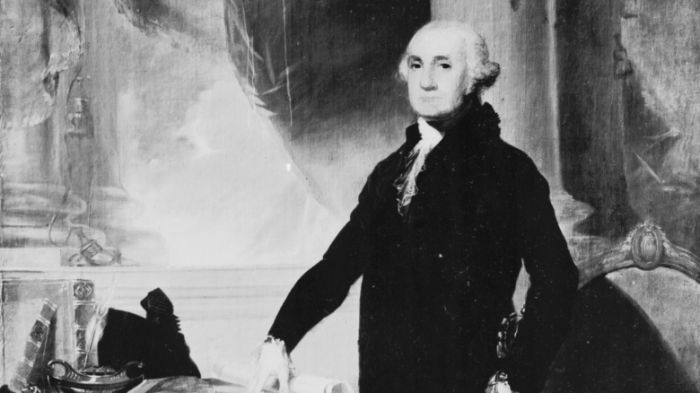
For decades, it seemed like every American classroom couldn't get through the Revolutionary War without teaching the story about how America's first president, George Washington, famously confessed to chopping down his father's cherry tree when he was just six years old. "I cannot tell a lie," allegedly said little G. W. Well, as it turns out, that story was itself a lie. Oh, the irony. The story has become such an infamous myth over the years that even the official website of the home of Washington, Mount Vernon, has squashed it once and for all, claiming the whole thing was made up by Washington biographer Mason Locke Weems in 1806. Among his alleged reasons for lying, according to the website: profits, the desire to look at Washington's private life, and the need to "present Washington as the perfect role model, especially for young Americans." Whatever the reason, the myth worked for centuries.
#2 Albert Einstein didn't actually fail a math class
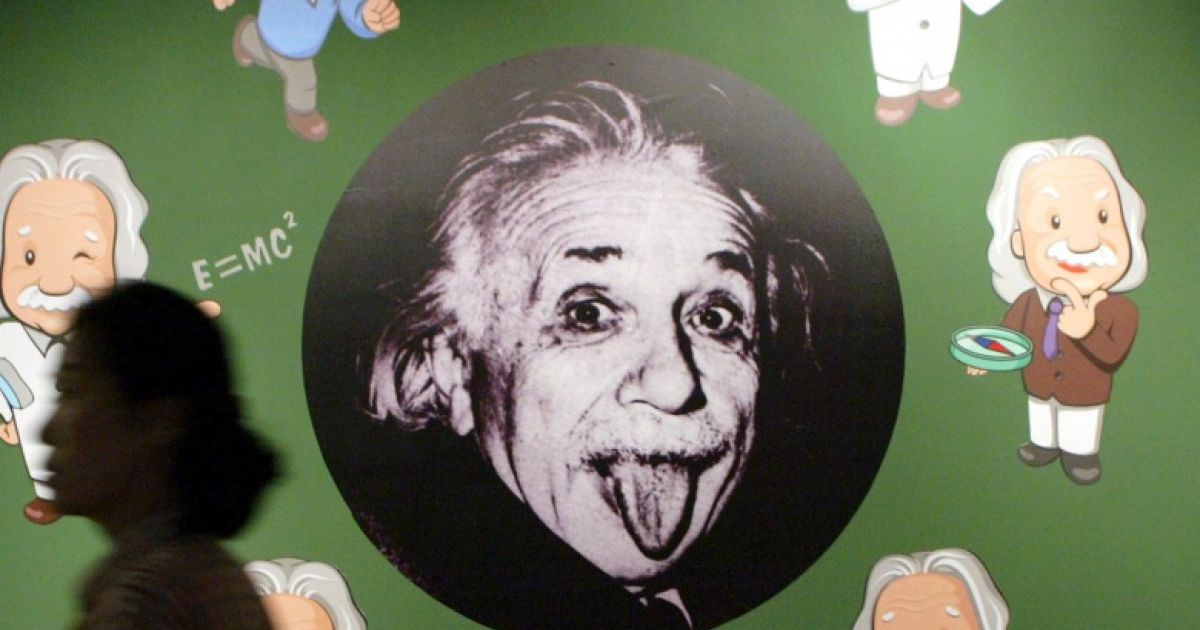
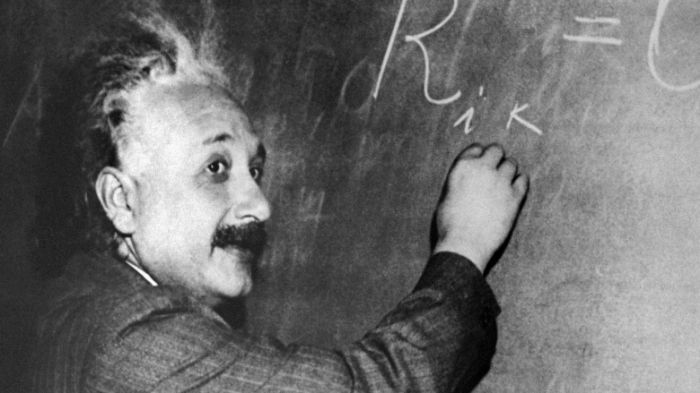
Remember when you'd get a test back in math class and panic because you failed it, then immediately sigh with relief when you remembered, "Hey, wait a minute, Albert Einstein totally failed a math class once"? Well, sorry dummy: Einstein totally never failed math. According to Time magazine, the myth inevitably became a popular one during the '30s, so popular that it made "Ripley's Believe It Or Not" column with the headline "Greatest living mathematician failed in mathematics." The headline was eventually shown to Einstein, who couldn't help but chuckle at it. "I never failed in mathematics," he responded (via Time). "Before I was 15 I had mastered differential and integral calculus." Considering we still haven't mastered differential and integrated calculusor, really, even know what that iswe're going to take Einstein's word on this one.
advertisement
#3 The Feminist movement didn't involve bra-burning
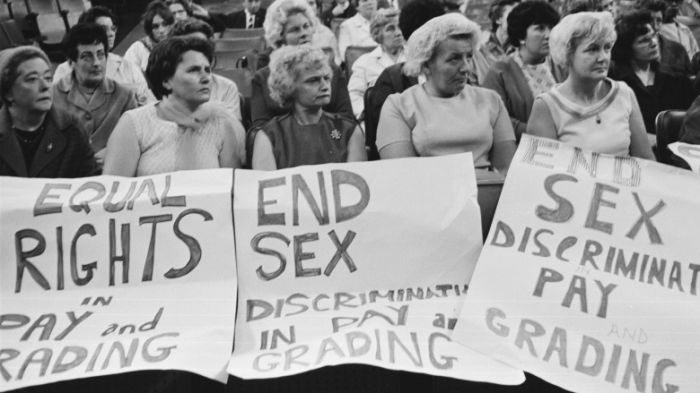
When classrooms gloss through the Women's Liberation Movement, one of the topics that almost always gets brought up is the Movement's protest of the 1968 Miss America pageant, in Atlantic City, New Jersey. According to history, we were told that a bunch of protesters at the event took off their bras and immediately set fire to them. Well, according to Carol Hanisch, one of the organizers of the protest, that's not exactly what went down. Truth be told: the women did want to burn their bras; Hanisch admitted that much to NPR in an interview 30 years after the protest took place. But because police wouldn't let them do that on a boardwalk, they were forced to throw a bunch of "instruments of female torture" like bras, girdles and Playboy magazines into a garbage can. It was inside that garbage in which the fire was ultimately lit. "The media picked up on the bra part," Hanisch told NPR, dispelling the "bra-burning" myth once and for all. "I often say that if they had called us 'girdle burners,' every woman in America would have run to join us."
#4 Paul Revere didn't yell "The British are coming!"
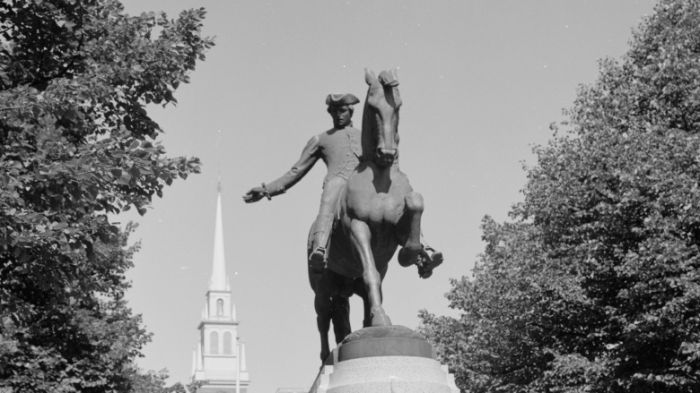
If your dusty old history books are to be believed, the build-up to the American Revolutionary War was pretty dramatic: a dude named Paul Revere rode through a bunch of towns on horseback screaming "The British are coming!" and everyone freaked out and got their guns and the war started the next day. As it turns out, that only sort-of happened. Revere was indeed ordered to Lexington, Massachusetts, to tell Samuel Adams and John Hancock that the British were coming. But the actual quote has since been misconstrued. According to the website for The Paul Revere House, a sentry at the house where Adams and Hancock were staying got all mad at Revere when he arrived because he was making too much noise. To which Revere replied dramatically: "Noise! You'll have noise long enough before. The regulars are coming out!" Sure, that may sound less like a movie moment and more like a bad regional theater production, but hey, facts are facts. And speaking of: the website goes on to say that Revere was joined by two additional riders, all of whom were arrested and released on their way to Concord. No word on whether they, too, had a catch phrase.
advertisement
#5 Napoleon reportedly wasn't that short
One of the bestokay, funniestparts about studying the French Revolution in social studies class was finding out that the famous French military leader, Napoleon Bonaparte, was actually super-short in height. Just how short, you ask? Well, according to teachers all over the country, Napoleon stood a measly 5'2". Granted, his alleged height didn't stop him from kicking ass during the war; however, it did become infamous enough to create the term the "Napoleon complex," used to describe people who make up for their short height by being totally strong and aggressive, socially. In any case, despite all of this, Napoleon's height has since been up for debate. According to the BBC, historians are now estimating that he was actually more along the lines of 5'6"or, more to the point, one inch taller than former President of France Nicolas Sarkozy. What happened? The BBC claims the height might have gotten lost in translation between French and British measurements. Which, if you really think about it, is a Napoleon complex in of itself.

advertisement
#6 An apple didn't fall on Issac Newton's head
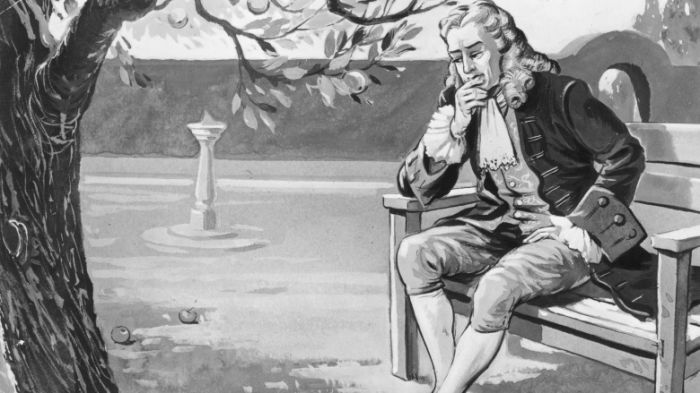
When the history of Isaac Newton is taught, many teachers quote the old story that the physicist and mathematician actually came up with his theory for gravity after an apple fell from a tree he was sitting under and hit him smack on the head. You probably believed it in part because, duh, it's an old story and, duh, Newton was really smart. But, again, this story is only sort-of true. While Newton did actually put two and two together by watching an apple fall, The Royal Society in London concluded in 2010 that the incident took place in his mother's garden and that there is "there is no evidence to suggest that it hit him on the head." That's a bit of a bummer. But, hey, he still came up with the theory of gravity, which is more than anyone reading this article can probably say.