Horror Characters That Are Based On Real Life People
By
Sughra Hafeez in
Facts
On 1st July 2017
American Horror Story is an amazing television show on FX created by the powerhouse team of Ryan Murphy and Brad Falchuck. The show finished up its sixth season last fall and viewers have been eagerly awaiting season seven, which is likely to air in September of this year.
Each season presents an entirely new story based around a theme. Each season has all new characters, though the show has a pretty solid main cast all of whom take one new the new characters each season.
The storyline is also contained within a single season, which makes the show particularly binge worthy. The seasons are between ten and thirteen episodes long and the viewers know that if they just keep pressing “Next Episode” on Netflix, they’ll get the whole story, maybe even in one sitting.
The first season focuses on a haunted house dubbed the “Murder House,” where characters who die there cannot leave and don’t necessarily know they’re dead. The second season focused on an old school mental institution and its patients, some of whom were supernatural. The third season was all about witches, as in the descendants of the Salem witches and the voodoo priestesses of New Orleans. Season four took on a traveling Freak Show, complete with a Killer Clown. Season five was all about a hotel where the dead took corporeal form and preyed on the guests. Season six found the show back at its ghostly beginnings with the spirits of America’s pioneers haunting its current residents.
Throughout the seasons, the stories of individual characters often seem familiar to true crime buffs. This is because the creators often draw on real life people to inspire their villains. Here are a few characters whose storylines were inspired by real people. Spoiler alert for anyone who hasn’t seen all the seasons of AHS.
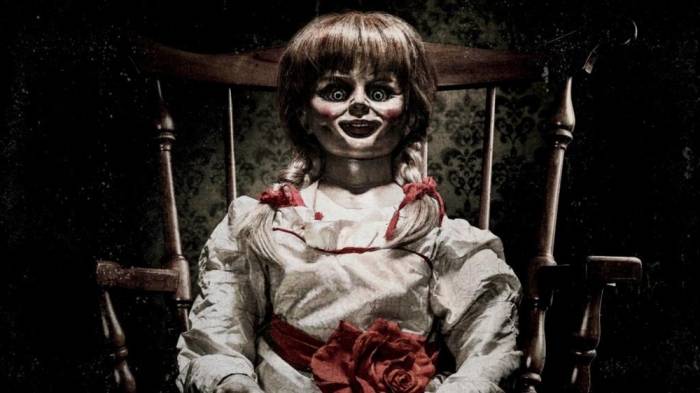
#1 Annabelle
There is something about possessed and evil dolls which holds a special place in the mind of the American consciousness. The creators of The Conjuring began to realize this after the attention that was paid to the Annabelle side–story in the first film. This led them to launch a franchise based on the doll, 2014’s Annabelle and the upcoming Annabelle: Creation. The spookiest aspect of the Annabelle story is that it, much like the plot of The Conjuring, is based on a true life investigation of Ed and Lorraine Warren. The real Annabelle is a Raggedy Ann doll that was given to a student nurse in 1970. A medium reportedly told the student that the doll was inhabited by the spirit of a dead girl named “Annabelle Higgins”, which the girls did not believe until it began to show extremely malicious behavior.
#2 Dr. Charles Montgomery from AHS: Murder House is Dr. Walter Bayley
The main villain of the first season of American Horror Story, AHS: Murder House, is Dr. Charles Montgomery. The good doctor performs procedures, mostly on women, out of the basement of his California house. Montgomery is a “doctor to the stars,” and he often secretly performed discrete procedures like plastic surgery and abortions. Unfortunately for his patients, more women died on his table than survived his procedures.
The real clue as to the inspiration for Dr. Charles Montgomery’s character is revealed when Montgomery becomes involved in the Black Dahlia murder. In the show, he’s not portrayed as the Black Dahlia killer, but after the crime occurs, he mutilates victims in a similar way.
One of the real life main suspects in the still unsolved Black Dahlia case was a doctor named Walter Bayley. Bayley was a gifted surgeon and his house was very close to the vacant lot where the body of Elizabeth Short, the woman who became known as the Black Dahlia, was dumped. Bayley was well known for performing illegal abortions, which is a striking similarity to Montgomery’s character.
It’s possible that Bayley was at least partially an inspiration for Dr. Montgomery in AHS: Murder House, but the connection hasn’t been confirmed by the show’s creators.
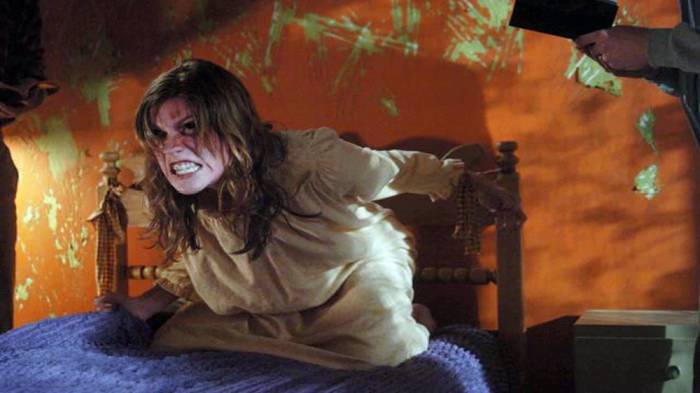
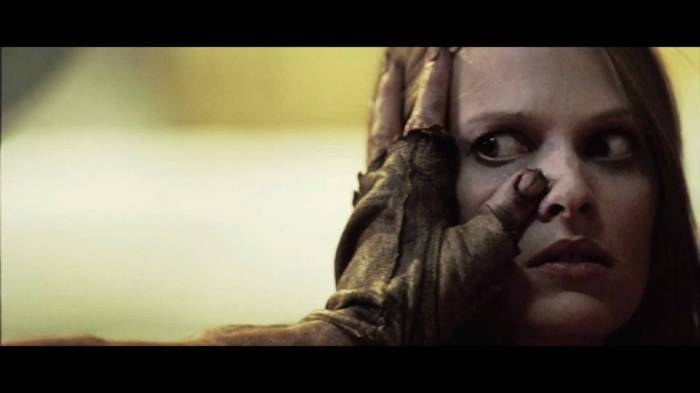
#3 The Exorcism Of Emily Rose
For whatever reason, movies about demonic possession have always managed to freak me out. As such, I was appalled when I learned that 2005’s The Exorcism of Emily Rose was based on a true story. The film is supposedly based on the possession of Anneliese Michel, a girl who was made famous by undergoing an almost year long exorcism procedure. The film borrows several aspects of Michel’s experience, including the fact that the girl being exorcised is being possessed by several demons. That is demons plural, as in more than one. It’s unclear just how closely this film follows the traumatic event of Michel, but its excellent written story makes it worth a watch regardless.
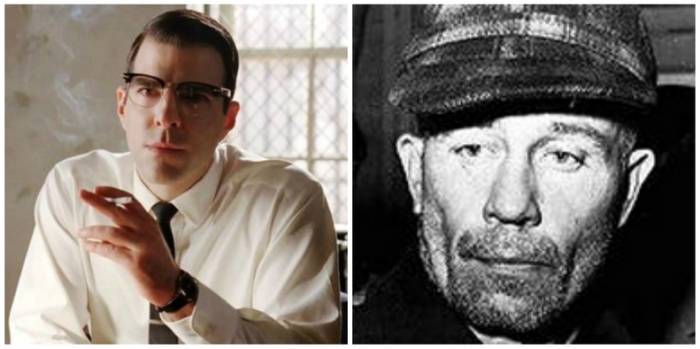
#4 Dr. Oliver Thredson from AHS: Asylum is Ed Gein
Ed Gein’s horrendous crimes have been the inspiration behind many fictional serial killers including Buffalo Bill from “Silence of the Lambs,” Norman Bates from “Psycho,” and Dr. Oliver Thredson from American Horror story’s second season, Asylum. Ed Gein is best known for his predilection for literally wearing his victims. Before he ever murdered anyone, he was a prolific grave robber. He would dig up bodies and take body parts as trophies. He would use the body parts, including skin, to make things including masks, lampshades, bowls, and belts.
Gein’s skin masks were clearly the inspiration for the masks made by Dr. Oliver Thredson in American Horror Story: Asylum. Dr. Thredson is a psychiatrist who gained access to the Asylum to assess a patient confined there. He begins to work with other patients there and eventually abducts one of the patients and takes her to his “Playroom.” There it’s revealed that Thredson is actually a serial killer known as Bloody Face who kidnaps women, murders them, and makes masks out of their skin.
Thredson’s back story is also similar to Gein’s in that they both involve a fixation on mothers. Gein suffered a mental break after the death of his mother, to whom he was creepily close, and began grave robbing after that. Thredson’s mother abandoned him and part of his motivation for murder is to find “a mother’s touch” which he seeks by wearing the skin of his female victims.
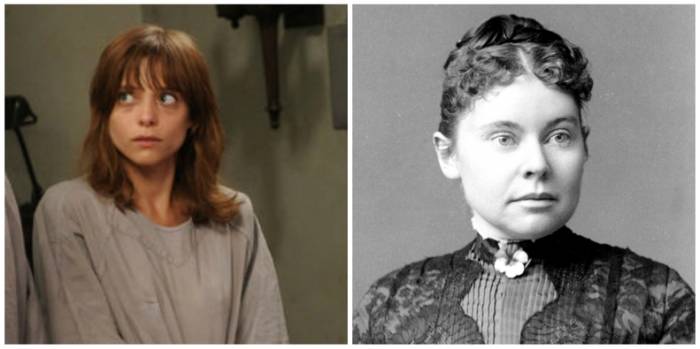
#5 Grace Bertrand from AHS: Asylum is Lizzie Borden
One of the patients in American Horror Story’s Asylum is a young woman named Grace Bertrand. Grace was committed to the Asylum after being convicted of killing her parents, with an axe. Early in the season, Grace insists that she is innocent and tells other patients various stories about how someone else killed her mother and stepfather. Later, Grace reveals that her stepfather had been molesting her for years and that her mother had done nothing to stop it. She then admits to killing her stepfather to stop the abuse and her mother as revenge for the fact that she never intervened.
There is, of course, another woman who was accused of killing her parents with an axe: Lizzie Borden. Lizzie lived in Massachusetts with her parents in the late 1800’s. When her parents were found hacked to death by an axe, Lizzie was the primary suspect. Eventually, she was acquitted, but it’s widely believed that she did, in fact, commit the murders.
The murders have become embedded in pop culture, with many dramatization of Lizzie’s story, including the homage to her that is Grace Bertrand.
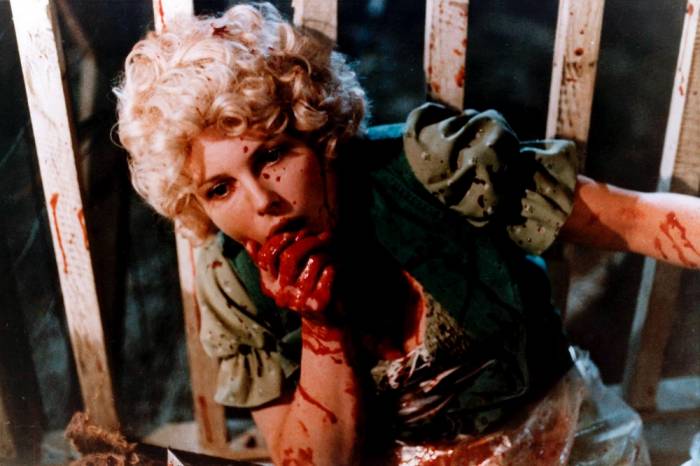
#6 Eaten Alive
From Tobe Hooper (the same guy behind Texas Chain Saw Massacre), Eaten Alive also takes place in Texas, where a hotel owner kills off anyone who stands in his way and then feeds them to a crocodile he keeps as a pet. A curious little slasher flick, it stars Neville Brand as the crazed hotel owner, who seems to get crazier and crazier as the movie progresses. It’s Hooper’s sophomore effort, following Chainsaw Massacre, and while it’s less well-known, the creepy hotel set and effects benefited from a larger budget.
And like Chainsaw Massacre, the film is actually loosely based on a real life serial killer – a Texas man named Joe Ball. Ball owned a bar in a very small Texas town with an alligator pit in the back. He definitely charged customers a fee to view the alligators eating live cats and dogs, but he also possibly used the alligators to dispose the bodies of 20 women he murdered. When authorities approached Ball about the women who had disappeared, he shot himself with a handgun. There’s no concrete evidence Ball fed his victims to an alligator, but a handyman who worked for Ball led officers to two bodies he claimed he help Ball dispose of.
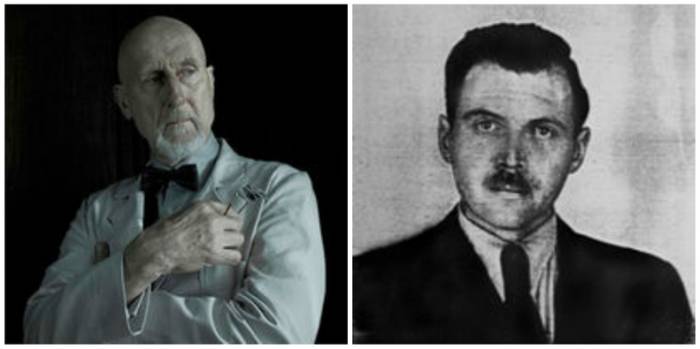
#7 Dr. Arden from AHS: Asylum is Josef Mengele
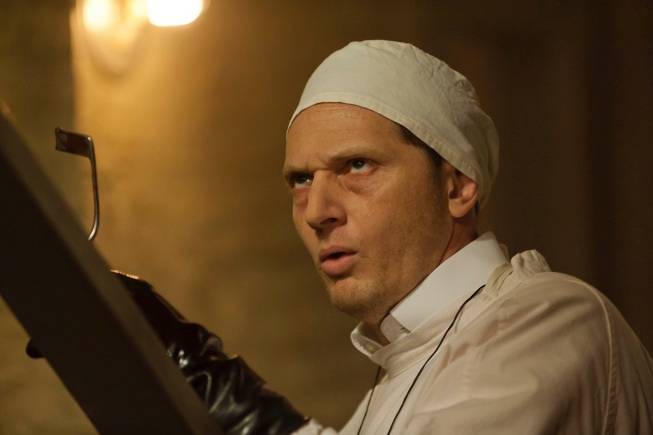
American Horror Story’s second season, Asylum, had quite a few characters that were inspired by real people. Another is Dr. Arden, the Asylums in-house physician. Dr. Arden lives in the Asylum under an assumed name because he is a Nazi War criminal. During the Holocaust, he was the head of a concentration camp and performed awful experiments on the people imprisoned in his camp. Arden continues his “research” at the Asylum, which pretty much consists of torturing the patients and creating disgusting animal/human hybrids that roam the grounds of the Asylum.
Dr. Arden is clearly based on the real-life German doctor Josef Mengele. Mengele was a member of the SS, the Nazi Special Forces. He was also a medical doctor. Early on in his Nazi career, he saw combat, but after being injured he returned to Germany and started working for the Nazis on Eugenics, a now debunked branch of science that believed in scientifically proving the inferiority of non-white races. Eventually, Mengele ended up at Auschwitz, where he became infamous for the cruel experiments he performed on the people imprisoned there.
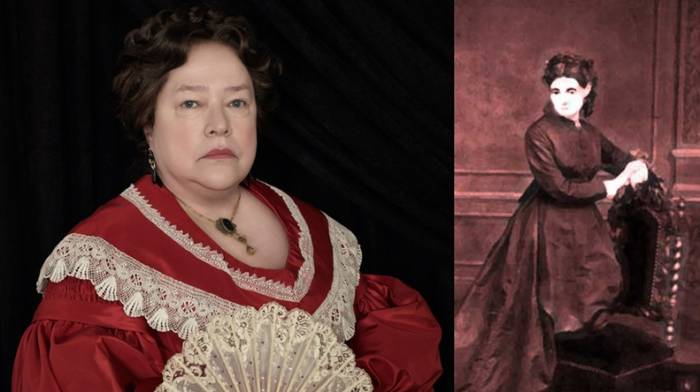
#8 Madame Delphine LaLaurie from AHS: Coven
In the previous seasons of American Horror Story, many characters were loose adaptations of real life villains. In the third season, AHS: Coven, the show’s creators started to use reincarnations of real life people as the show’s villains.
One of these reincarnations is Madame Delphine LaLaurie. In real life, Madame Delphine LaLaurie was a member of New Orleans’ high society in the mid-1800’s. When a fire broke out in her house in 1834, neighbors wondered why her slaves weren’t fleeing the building with her. She was known to have many slaves. When the house was examined after the fire the answer was discovered.
LaLaurie’s attic had been converted into a torture chamber where she would force her slaves to endure unspeakable horrors. The rumors of her cruelty have likely been exaggerated, but it is true that she regularly tortured the slaves who lived with her.
In American Horror Story: Coven, LaLaurie’s family was killed by the Voodoo Priestess Marie Laveau as retribution for the crimes LaLaurie committed against her slaves. Laveau also made her immortal so she’d have to live with her crimes forever. One of the witches of a local coven tracks down LaLaurie to learn the secret of immortality. LaLaurie’s portrayal in the show is intended to be a direct portrayal of the historical woman on whom she’s based.
#9 The Hills Have Eyes & Wrong Turn
Horror movie fans have likely noted the long history of inbred cannibal films which have pervaded American cinema. While these films differ in certain aspects, they all portray a member of ordinary society being pursued and eventually eaten by a ruffian family in some isolated location. The legacy of these films dates all the way back to 15th century England. There, a Scottish clan leader named Sawney Bean allegedly abducted and consumed hundreds of people with his family. Due to the “close-knit” nature of his family, by the time Bean was executed for his crimes the entire clan had suffered the consequences of decades of obvious inbreeding. It is easy to draw a connection between Bean and his clan and recent films like Wrong Turn and the Hills Have Eyes.
#10 The Axeman from AHS: Coven
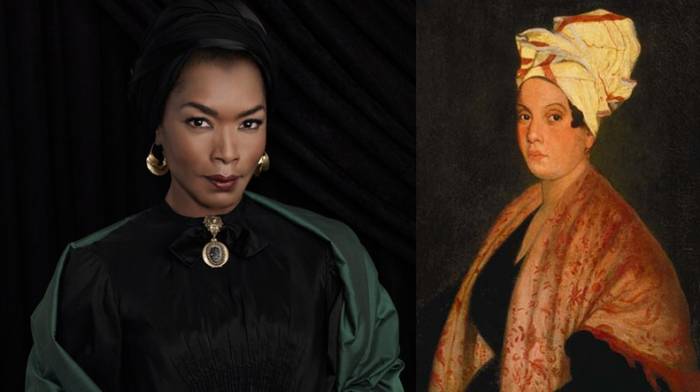
Another reincarnation in American Horror Story: Coven is Marie Laveau herself. In the show, Marie Laveau is a Voodoo priestess of the Haitian tradition who’s found the secret to immortality. She was a contemporary of Madame LaLaurie, and has survived to the modern day. The show portrays Laveau in modern times as a hairdresser/guru for New Orleans black community. She is still revered as a wise woman in the community and occasionally brews home remedies, which are really potions, for those who believe in her powers. The show pits her Voodoo magic against the magic of the Salem witches and much of the plot revolves around her centuries old vendetta against Madame LaLaurie.
In real life, Marie Laveau was a respected Creole woman who lived in New Orleans in the 1800’s. Like her AHS reincarnation, Laveau was a hairdresser who also dealt in Voodoo magics. She was a fortune teller and everyone sought her prophetic guidance. She also made potions and charms that were bought by every social class in the city.
Today the grave of the real-life Marie Laveau is a tourist attraction. People leave gifts on her grave hoping that she will grant them wishes.
#11 The Haunting In Connecticut
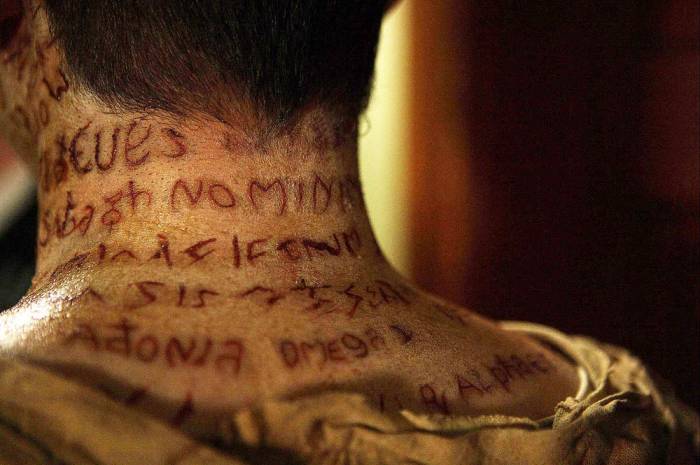
I’m surprised that more ghost movies don’t try to take elements from real life instances of paranormal activity in order to utilize the “based on a true story” label. One of the scariest haunting movies of the past ten years, The Haunting in Connecticut, did just that. The film’s creators based much of their story on the real life paranormal events which plagued Al and Carmen Snedeker, a couple who bought a home over a funeral parlor. While this part of the story was omitted from the film (because honestly, it’s hard to have sympathy for someone who’s stupid enough to buy an apartment over a funeral parlor), such elements as the writing on the young man’s skin were supposedly based on the experiences of the Snedeker family.
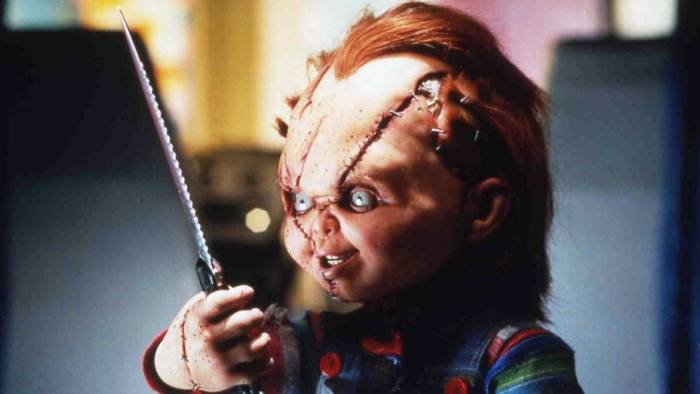
#12 Child's Play
A serial killer's soul possesses a toy doll and wreaks havoc.
In 1909, Key West painter and author Robert Eugene Otto claimed that one of his family's servants placed a voodoo curse on his childhood toy, Robert the Doll. Supposedly, the doll would mysteriously move from room to room, knocking furniture over, and conduct conversations with Otto. Robert the Doll was left in the attic until Otto's death in 1974 when new owners moved into his Florida home. The new family also claimed mysterious activities would happen in the house connected to the doll. Today, Robert the Doll is on display at the Custom House and Old Post Office in Key West, Florida.
#13 The Strangers
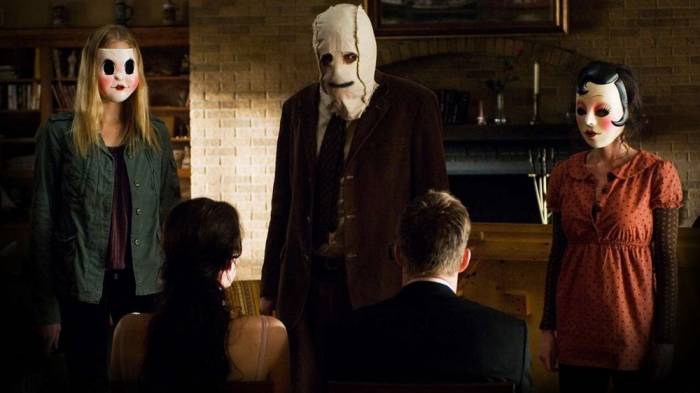
A movie about what happens when your romantic trip goes awry, The Strangers follows a young couple who are terrorized by three masked strangers while staying at a remote getaway. The unknown assailants destroy all means of escape and outside communication before the violent invasion, trapping the couple in the house. It’s a simple premise that could happen to anyone, so it makes sense that the trailer proclaimed it was inspired by true events.
However, the production notes for the film discredit the claim slightly by clarifying that the seeds of the story were sparked during Bryan Bertino’s youth: “That part of the story came to me from a childhood memory. As a kid, I lived in a house on a street in the middle of nowhere. One night, while our parents were out, somebody knocked on the front door and my little sister answered it. At the door were some people asking for somebody that didn’t live there. We later found out that these people were knocking on doors in the area and, if no one was home, breaking into the houses. In The Strangers, the fact that someone is at home does not deter the people who’ve knocked on the front door; it’s the reverse.” So, despite the “inspired by true events” claim, it’s almost entirely a work of fiction.
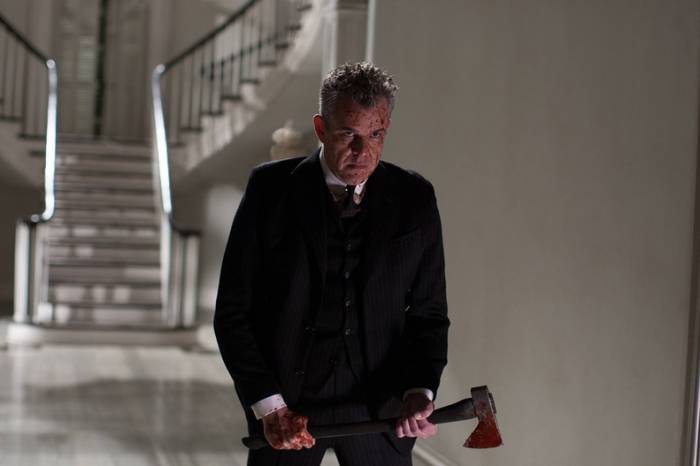
#14 The Axeman from AHS: Coven
In the 1910’s a serial killer terrorized the city of New Orleans. He was never caught and was known only as “The Cleaver,” later renamed “The Axeman.” The Axeman had strange taste in victims. He almost exclusively attacked Italian immigrants who owned businesses, specifically grocery stores.
Shortly after the murders began, a local paper published a letter they claimed was written by The Axeman. In the letter, the supposed Axeman said that he loved jazz music and that anyone playing jazz in their household would be safe from his ax. The homes of New Orleans filled with jazz after dark to ward off the mysterious and terrifying Axeman.
In American Horror Story: Coven, the Axeman becomes a central character, raised by the younger witches and romantically involved with one of the elder witches. Since the real Axeman was never discovered, the show’s creators were allowed to take liberties with the character’s backstory and they eliminated his preference for Italian grocers as victims. The Axeman on the show kills indiscriminately unless of course, the homeowners are playing jazz music. But there’s no question the character is based on the real-life murderer who terrorized New Orleans at the beginning of the 20th century.
#15 Zodiac
I’m amazed that people are still willing to see films based on the Zodiac killer, for the simple fact that we don’t actually know anything about this Northern California serial killer. The real Zodiac terrorized the sunshine state from the latter part of the 1960’s into the 70’s, with five confirmed victims and potentially twenty-three more unconfirmed. The killer gained notoriety by sending a series of taunting letters to the Bay Area press. These letters included four ciphers which to this day have never been fully solved. Despite his willingness to taunt law enforcement, the identity of the Zodiac killer has never been verified. Several movies have been made about these killings, including 2007’s Zodiac starring Jake Gyllenhaal.
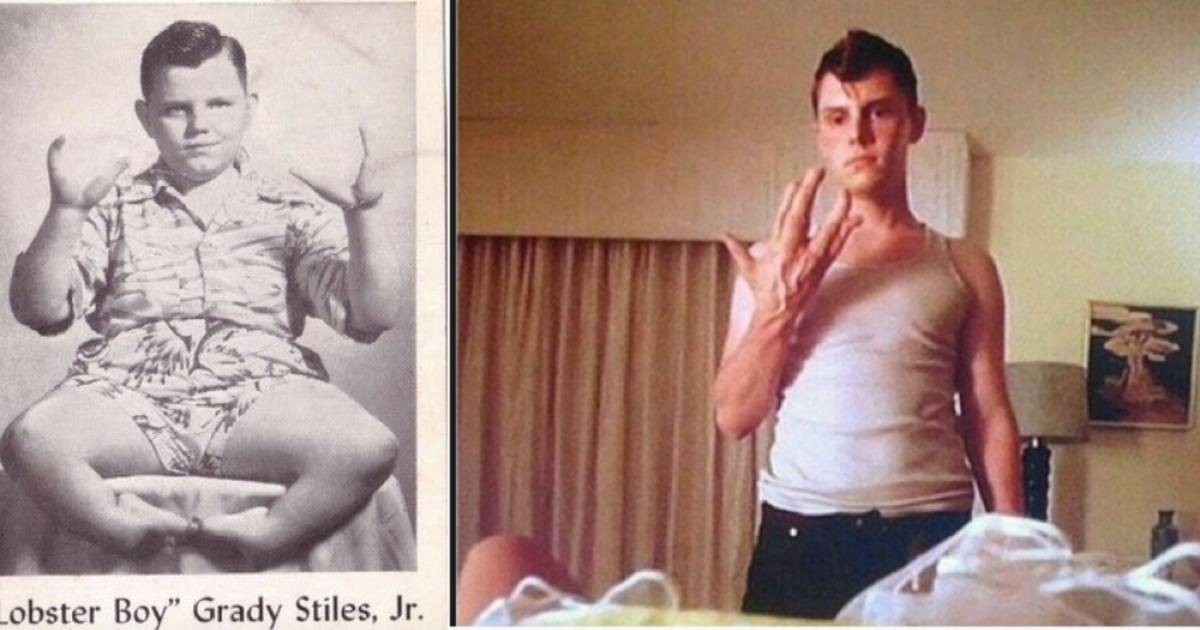
#16 Jimmy Darling from AHS: Freak Show is Grady Franklin Stiles, Jr.
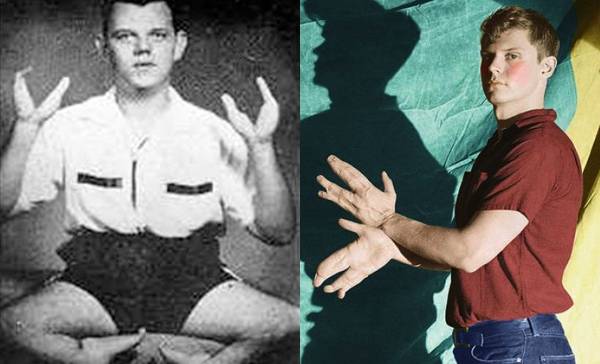
American Horror Story’s fourth season used the backdrop of a traveling circus, filled with freaks of nature that the show’s owner calls her “monsters.” One of those “monsters” is a young man whose hands are deformed. His fingers are fused together, creating the illusion that he has claws for hands. The character, Jimmy Darling, is often referred to as “Lobster Boy.”
The condition that causes Jimmy’s hands to appear like claws is a real condition called ectrodactyly. His character is loosely based on a real circus performer from the 1930’s named Grady Stiles Jr. Stiles Jr.’s father also had ectrodactyly and was known in the Freak Show circuit as Lobster Man, thus Stiles Jr. became Lobster Boy.
The deformity and the name are where the similarities between Jimmy Darling and Grady Stiles Jr. end. In fact, Stiles Jr.’s story is much more sordid than Darling’s. Stiles Jr. was an alcoholic who brutally abused his wife and children. It got so bad, that his wife hired someone to kill him. He was murdered by the hired killer.
Stiles Jr.’s alcoholism is hinted at in Jimmy Darling’s character, but Darling chooses to avoid the bottle because he’s seen his mother’s descent into alcoholism. Throughout the show, Darling is actually a pretty good guy, which is in sharp contrast with the man who inspired his character.
#17 The Possession
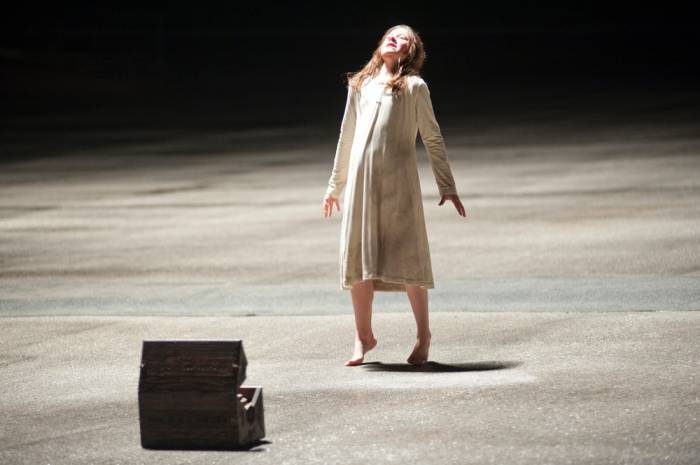
2012’s The Possession has become quite the cult classic in the five short years since it’s release. This film follows the family of a young girl as she is fundamentally altered by her relationship with an old wooden box engraved with Hebrew letters that her dad finds at a yard sale. The inspiration for this film comes from a story about an old dybbuk box. Numerous owners of the box have reported strange things happening to them, and Ebay has been busy with people warning about the boxes strange influence. In order to avoid legal troubles, the makers of the film have tried to undercut the influence of these dybbuk box stories, instead claiming that the film was mostly inspired by the original Exorcist film.
#18 Twisty the Clown from AHS: Freak Show is John Wayne Gacy
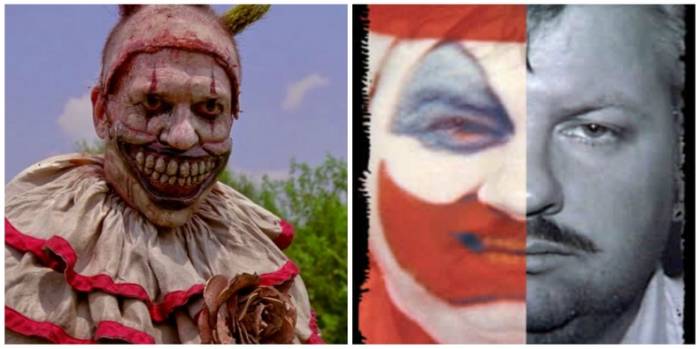
Of course, American Horror Story couldn’t do a season about a Freak Show without playing including the trope of the Killer Clown. In the show, a silent clown stalks the quiet town of Jupiter, Florida, abducting children and murdering families. It’s not until midway through the season that we discover his motives. He was a simple man who truly loved children and being a clown, but rumors that he was inappropriate with the children drove him out of the business. It’s revealed that he sought to abduct a captive (literally) audience that he could perform for, so he could be a clown again.
Like many other Killer Clowns in modern pop culture, AHS’s Twisty the Clown was inspired by a real life serial killer named John Wayne Gacy. Gacy was a pillar of his community and liked by his neighbors. He often dressed as a clown and performed at neighborhood children’s birthday parties. Gacy led a secret life, where he was tortured by his sexuality and his troubled past. He was accused multiple times of molesting young boys and even convicted once.
When a young boy from his neighborhood went missing, the police suspected Gacy and a search of his house revealed the bodies of twenty-seven boys buried in a crawlspace. Gacy later confessed to thirty-three murders and said that sometimes when he killed he would dress in the clown costume he used at birthday parties. He referred to the clown as his alter ego: Pogo the Clown. John Wayne Gacy became known as the first Killer Clown.
#19 The Conjuring
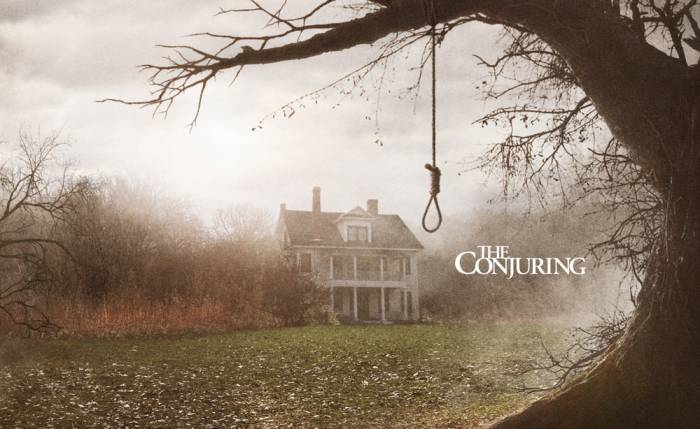
The first film of The Conjuring franchise introduced us to real life paranormal investigators Ed and Lorraine Warren. The plot of The Conjuring was based on just one investigation conducted by the Warrens, though it has been stated that facts from other cases were intermingled to supplement the story. The Conjuring was based so closely on real life, in fact, that it has led to several lawsuits being filed against the makers of the film. The current owners of the house shown in the film have claimed that several home break-ins have occurred as a result of the film’s popularity. Some of these intruders have even placed Satanic idols in the home, adding another scary chapter to this houses already lurid history.
#20 Texas Chainsaw Massacre
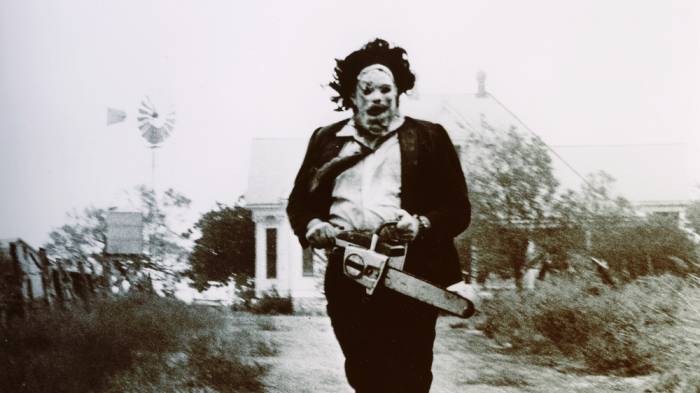
One of the first great slasher films, 1974’s Texas Chain Saw Massacre follows a group of teens who end up on a farm belonging to a family of cannibals. Leatherface (Gunnar Hansen) torments the teens, occasionally with a chainsaw, as he tries to off them, one-by-one. The popular franchise has spawned four sequels, a remake, and a prequel. The latest in the franchise, Leatherface, will be released next year, and it will follow the teen years of Jackson Sawyer – the boy who one day becomes the skin-wearing serial killer we all know and, uh… love?
When it came out in 1974, it was marketed as a “true story,” despite the fact that Leatherface didn’t actually exist and commit a series of murders in Texas. But while it might not be based on a true story, it was inspired by the real-life serial killer Ed Gein, who created a “woman suit” out of skins of exhumed female corpses and murdered at least two women. He similarly served as the inspiration for Norman Bates in Psycho and Buffalo Bill in The Silence of the Lambs.
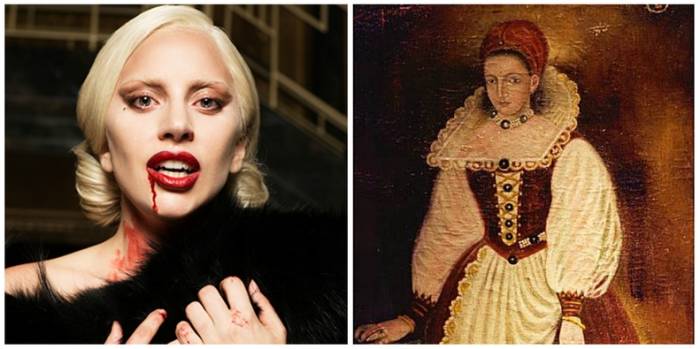
#21 The Countess from AHS: Hotel is Elizabeth Bathory
People completely lost it when they found out that Lady Gaga was slotted to star in American Horror Story’s fifth season. They lost it even more when they found out she would play a vampire, right at the height of the vampire craze that had taken over television and movies.
Lady Gaga’s vampire character, The Countess, rules the Hotel Cortez, where she and her paramour of the day lure their victims, slice them open, and drink their blood. In this interpretation of the vampiric tradition, there is no biting and no blood sucking. The Countess uses special gloves, with knife-sharp nails to slice open the throats of her victims. Why the deviance from traditional vampiric lore? Because the character is based on a real-life serial killer who sliced open her victims and consumed their blood.
Elizabeth Bathory was a Transylvanian noblewoman born in the mid-1500’s. She married a count when she was only fifteen years old and she asked him for a very odd wedding present: a torture chamber within his castle. Bathory believed that drinking the blood of young women would keep her eternally young, so she frequently tortured the female servants, draining them of their blood in the process. But her torture wasn’t exclusive to slicing and dicing. She was also known to cover young girls in honey and watch as insects stung them. Sometimes she forced her victims to eat parts of their own bodies.
Her crimes were suspected by the local government, but she was rich enough that her crimes were ignored. That is until she started murdering the daughters of noblemen. She was convicted of murder, but not sentenced to death. She lived out her remaining days in confinement in her castle.
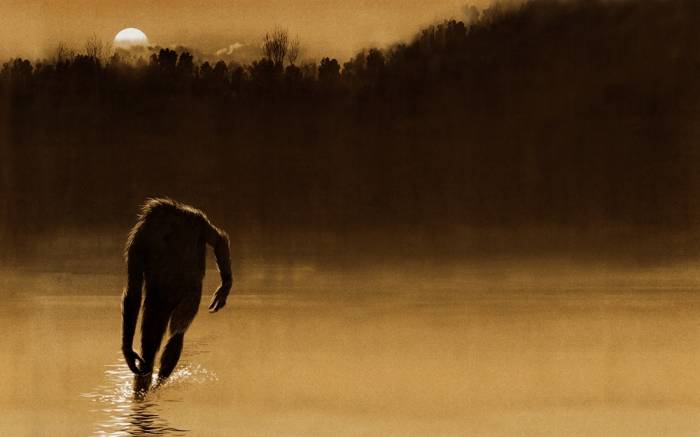
#22 The Legend Of Boggy Creek
Not all the entries on this list are about serial killers and demonic possession. In 1972, a docudrama about the Fouke Monster gained a lot of attention in the national press. This film, The Legend of Boggy Creek, is composed of staged interviews of locals who claim to have seen the beast, as well as dramatic reenactments of these encounters. Stories about this monster have been prevalent since the 1940s. Perhaps the most famous of these being the eyewitness account of one farmer who claims the beast stole two of his pigs, each weighing over two hundred pounds. This movie is also famous for its directional style, which is said to have influenced such films as The Blair Witch Project.
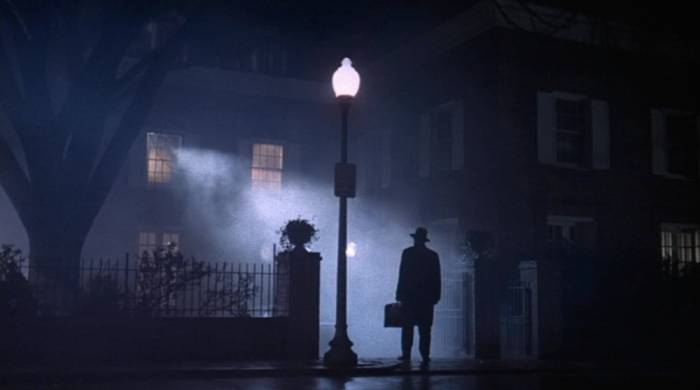
#23 The Exorcist
A real issue with the horror movie industry is that the films generally lack staying power. Something that was terrifying in the 1980s may simply be corny in the modern age, or vice versa. One film which is just as scary today as it was when it debuted is the original Exorcist film. The Exorcist is the film version of a book of the same name, but that book was based on a real-life exorcism which occurred in 1949. The boy on whom the exorcism was performed was called Roland Doe. The film is only loosely based as there are several facts from the film don’t match up with the real-life exorcism.
But we wouldn’t blame you if the movie is still even scarier to you after reading this blurb.
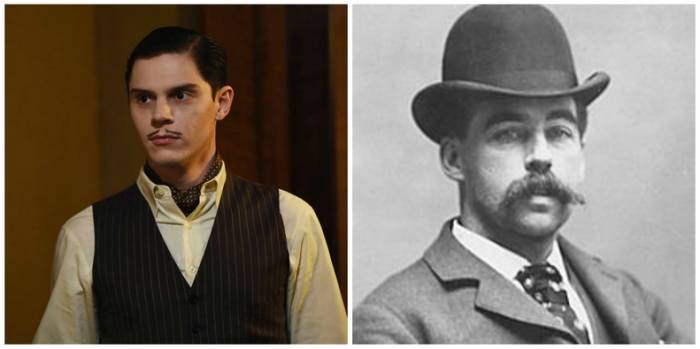
#24 James Patrick March from AHS: Hotel is H.H. Holmes
The ghostly proprietor of the Hotel Cortez, the setting of American Horror Story’s fifth season, is James Patrick March. It’s revealed a few episodes into the season that the hotel was originally built by March to serve as his very own murder house. The Hotel was built with hidden rooms, hallways to nowhere with doors that don’t open, and chutes that bodies could be dumped down. March is a maniacal killer who claims to have killed hundreds.
If you think the character sounds to evil to be true, you’d be wrong. James Patrick March is based on real life serial killer HH Holmes. Holmes moved to Chicago in the 1880’s and built a house that would become known as the “Murder Castle.” All the murder friendly features of the Hotel Cortez are based on the actual Murder Castle commissioned by HH Holmes.
Holmes was a pharmacist in Chicago and was well liked by pretty much everyone who knew him, even though he was a notorious con man. He was famous for life insurance scams. And people had a habit of disappearing after they met him.
When the World’s Fair came to Chicago, HH Holmes opened up the Murder Castle as a hotel, and let’s just say most of the people who checked in never checked out.
#25 The Amityville Horror
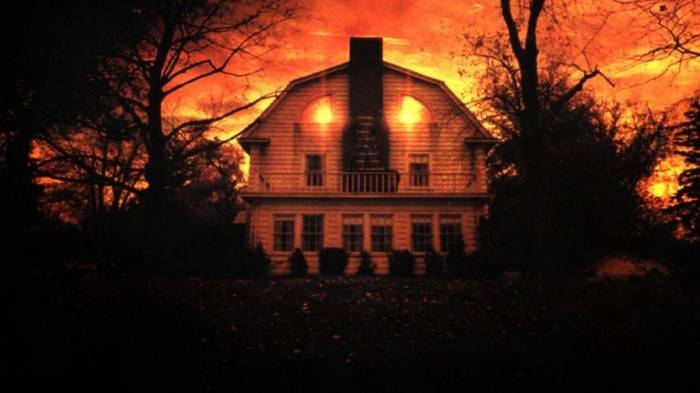
When the initial Amityville Horror movie debuted in 1979 it was the pinnacle of movie cinema. Its status was furthered by the fact that the movie is heavily based on true occurrences. The plot of the original Amityville film (which was preceded by a book on the subject) is based on the frightening sequence of events experienced by the Lutz family in 1975. They moved to Amityville in this year and began to experience the paranormal activities described in the film.
For you thrill seekers, the address of the house is 112 Ocean Avenue. The real family lasted a mere 28 days in the home with their sudden exit being the inspiration for the Jay Anson book and subsequent films.
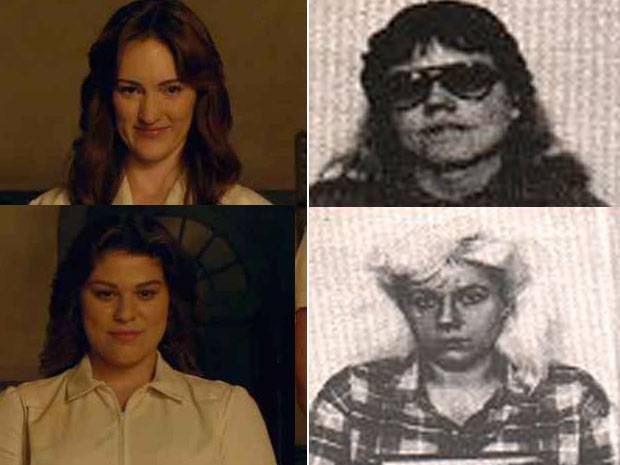
#26 Miranda and Bridget Jane from AHS: Roanoke is Catherine May Wood and Gwendolyn Gail Graham
Season six, the latest season of American Horror Story features two murderous sisters, who are also lovers. The sisters are nurses at a nursing home, who are driven out by accusations of murder. They leave town and head to North Carolina, where they find the Roanoke House that serves as the central location for the season’s story.
The sisters convert the house in to an assisted living facility and begin taking in patients. They ensure that the patients they’re taking in are loners, people who wouldn’t be missed if they were to suddenly go missing. The sisters engage in a murderous game, torturing and killing their patients. They document their murders by writing the names of their victims on the wall, with the first letter in each name used to spell the word “Murder.”
The serial killer sisters are based on a real-life crime couple from the 1980’s. Gwendolyn Graham and Catherine May Wood fell in love while they were both working as nurses at a nursing home. One of the women smothered an elderly patient and confessed her crime to the other. Instead of the confession ruining the relationship, it sparked a murder spree in which the women killed five people over a two-month period. The killings were described as a twisted “lover’s ritual.”
Often in this screwed up world, truth is stranger and more gruesome than fiction, so it’s not surprising that the creators of American Horror Story repeatedly draw inspiration for their characters from real life psychos. They always add their own twist to the characters, expanding their stories to flesh out the characters, but the inspiration is always apparent.
#27 Psycho
A secretary goes on the run after she steals $40,000, only to wind up in a motel where the innkeeper and his mother are more than they appear to be.
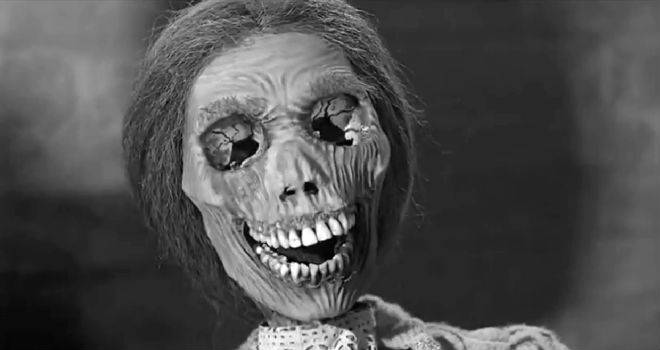
Psycho's Norman Bates is loosely based on convicted murderer and grave robber Ed Gein, who, during the late 1950s, killed women and unearthed corpses in Wisconsin. He also fashioned human skin into tiny keepsakes and knickknacks, such as face masks, belts, and chair coverings. Psycho's novelist Robert Bloch based Bates on Gein but changed the character from a grave robber and murderer into a serial killer who dressed like his mother. The Texas Chainsaw Massacre and The Silence of the Lambs also based their serial killers—Leatherface and Buffalo Bill, respectively—on Gein.
#28 The Blob
A mysterious alien life-form terrorizes a small town and consumes everything in its path as it grows bigger and bigger.
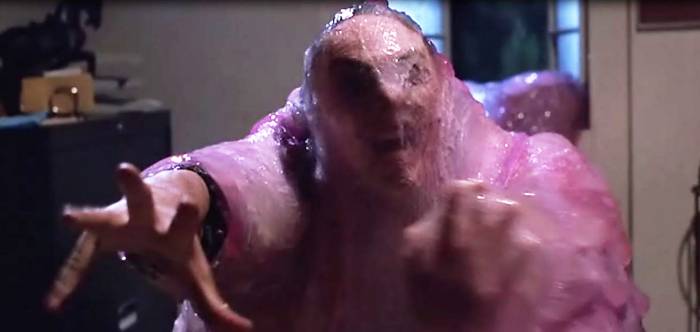
Believe it or not, The Blob is based on a New York Times article from 1950 titled, "A ‘Saucer’ Floats to Earth And a Theory Is Dished Up." The story followed four Philadelphia police officers who came into contact with a strange gooey material, which is now believed to be "Star Jelly," a transparent gelatinous substance. When one of the officers tried to move the goo, it started to dissolve and evaporate, so there was nothing to show the FBI when they arrived on the scene except a spot on the ground.
#29 Open Water (2003)
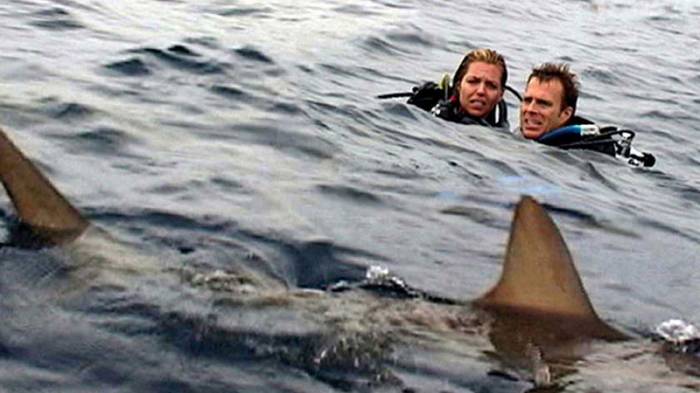
Scuba divers Daniel Kintner (Daniel Travis) and Susan Watkins (Blanchard Ryan) are stranded in shark-infested waters when they're left behind during a sea-bound excursion.
American tourists Tom and Eileen Lonergan disappeared near the Great Barrier Reef in January 1998 when a diving company left them behind after failing to take a headcount. Two days later, the company realized their mistake (sheesh) and manned a search, but the Lonergans were never found.
#30 The Girl Next Door
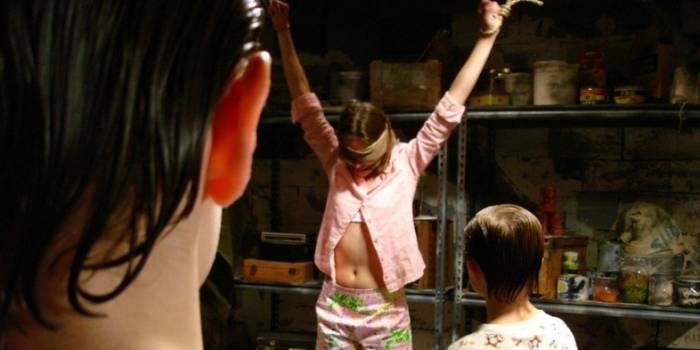
Based on Jack Ketchum’s 1989 novel of the same name, The Girl Next Door follows two young girls who must move into their aunt’s house after the death of their parents. Unfortunately, the aunt (Blanche Baker) is a sadistic psychopath and the neighborhood boys seem content to allow both girls to be tortured and sexually abused. It’s a movie so disturbing that you can’t get it out of your head, much less believe it could actually be real.
But it’s actually the fictionalized version of the torture and death of an Indiana teen named Sylvia Likens in 1965. She and her sister had been left in the care of family friend Gertrude Baniszewski, who soon began taking out her financial troubles on Likens. Her children and several other neighborhood children would beat Likens, tie her up, force feed her, and sexually abuse her. After being tied up in the basement, she died at the age of sixteen from shock, malnutrition, and a brain hemorrhage.
#31 Compliance
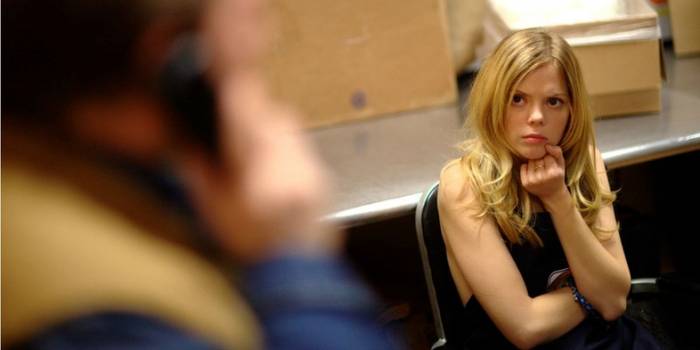
Compliance is the story of a fast-food worker subjected to sexual humiliation and psychological abuse at the hands of a prank-caller, who pretends to be a police officer and calls Sandra (Ann Dowd), the restaurant manager, to complain that Becky (Dreama Walker), an employee, stole from a customer. The film may be more thriller than horror movie, but once Sandra begins taking orders from the stranger, which begins with a humiliating strip search and gets worse from there. The resulting tale, a warning against blindly following authority, is downright chilling. What the film lacks in gore and sudden frights, it makes up for in emotional trauma and horror at how far some people will go to avoid conflict.
While watching it, it’s impossible to think anyone could possibly be so naive, yet the movie is actually inspired by a real incident that occurred at a McDonald’s in 2004. A prank-caller began calling various rural locations in over 30 states, pretending to be an officer and asking managers to conduct strip searches on female employees. During one such call, the manager of a New Hampshire McDonald’s detained 18-year-old Louise Ogborn for over three hours. During that time, she was stripped naked, forced to dance, and ordered to perform various crude acts by the prank-caller, all of which was caught on surveillance cameras.
#32 The Entity
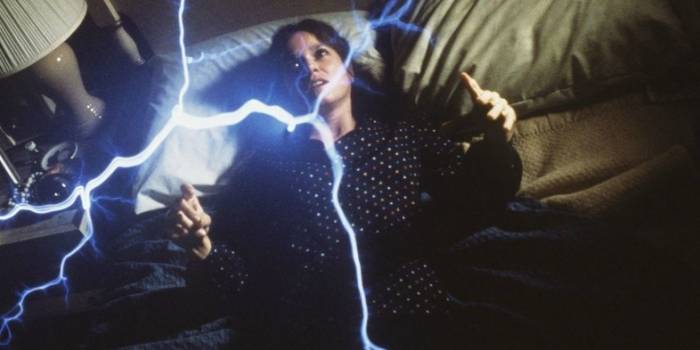
Another supernatural horror movie, The Entity follows Carla Moran as she is attacked by an invisible assailant. The film opens with her being violently raped, and the sexual and physical abuse continues for much of the film. Convinced by friends and family that she is losing her mind, she seeks help from parapsychologists, who discover there are supernatural forces at work.
The movie is based on the book of the same name by Frank De Felitta, which was inspired by the real story of Doris Bither who lived in California. She approached some parapsychologists after what she believed herself to be the victim of a “spectral rape.” At the time, there wasn’t any evidence, but she did occasionally develop bruises around her body and inner thighs. Of course, there’s no way to prove one way or the other whether Brother actually had a malevolent entity following her around. Some of her stories was corroborated by family and friends, including her eldest son, who said he was also thrown back by an invisible force after attempting to assist his mother.