Some candy names are pretty straightforward (we love you, SweeTARTS and JAWbreakers), while others are a bit more obscure. Here, we unwrap the name origins of a few delicious favorites.
How Did They Get Their Name? Why Are They Called M&M's?
By
Editorial Staff in
Facts
On 13th October 2015
advertisement
#1 M&M's (Mmmmm)
"They melt in your mouth, not in your hands."
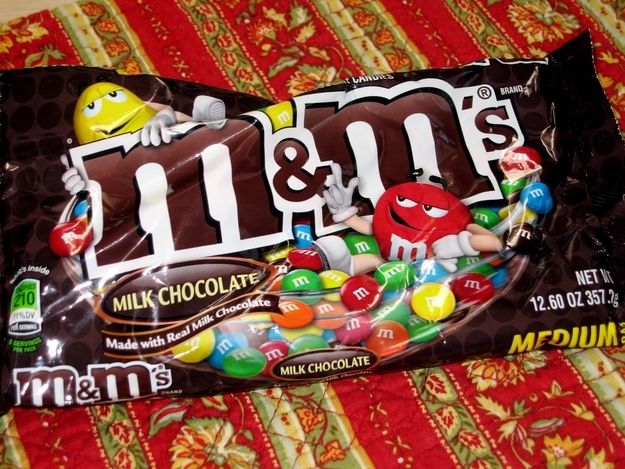
Forrest Mars developed M&Ms while in England during the 1930s, teaming with Hershey Chocolate owner Bill Murrie. Mars struck a deal with Murrie to make the candy, since Murrie had access to rationed chocolate during World War II.
After the war, the two split, leaving Mars the sole owner in the M's, and making Hershey and Mars forever rivals in the candy business.
#2 Sugar Daddy's
We all need a Sugar Daddy...
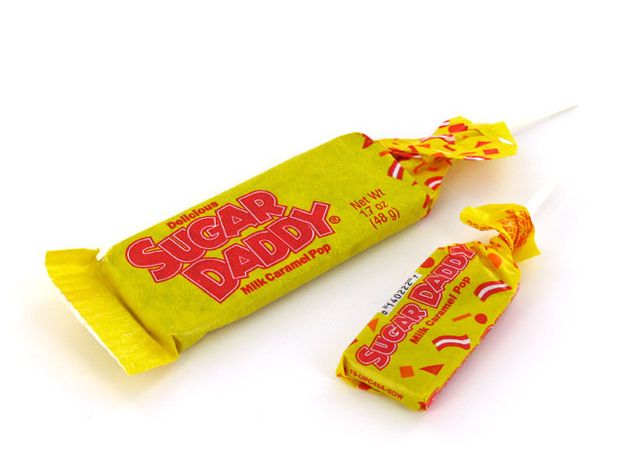
Originally called "Papa Sucker," it was changed to "Sugar Daddy" in 1932 since that was a more popular phrase at the time and evoked a "wealth of sweetness."
Today it's a term that means a girl who gets an older guy to buy her blinge.
advertisement
#3 Milk Dud's
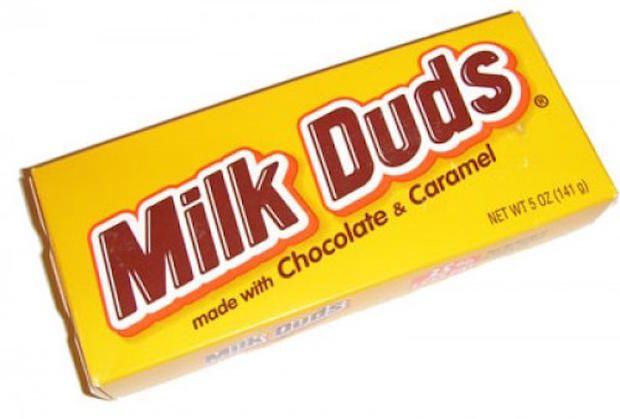
In 1926, F. Hoffman & Company of Chicago set out to make perfectly round chocolate-covered caramels. The manufacturing equipment didn't quite cooperate, however, and what came out were oval-shaped candies. A worker pronounced them "duds," but everyone agreed they still tasted good, so the company kept producing them under the playful name. Two years later, the Holloway Company bought out Hoffman and brought Milk Duds to the masses.
Today they are a movie goers favorite candy snack!
#4 Snicker's
"you're just not YOU when you don't eat your Snickers."
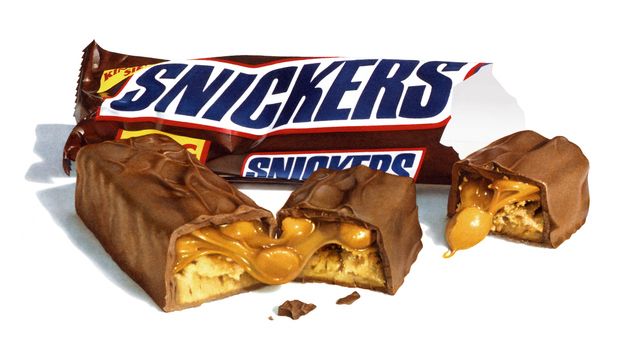
"Snickers" was the name of a favorite horse that the Mars family owned. This totally makes sense, because this is what you eat when you are as hungry as one. It came out in 1930 and was an immediate hit. According to the company, it's the best-selling candy bar of all time.
It was known as the Marathon Bar in the UK until the middle 1990's.
advertisement
#5 Kit Kat
"Break me off a piece of that Kit Kat bar!"
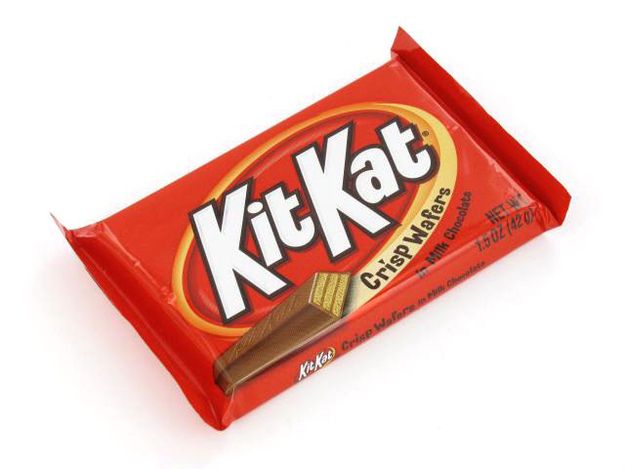
This is a weird one, so bear with me. These were named after a term for mutton pies in the early 18th century in England, which in turn were named after a political and literary club, which was named after the innkeeper where the club meetings were held. The innkeeper was named Christopher Catt, and since "Kit" is a nickname for Christopher Kit-Cat. Eventually, English confectionary company Rowntree's (who then created the candy) trademarked the names "Kit Cat" and "Kit Kat" in 1911, and the rest, as they say, is chocolate-y history.
advertisement
#6 Baby Ruth's
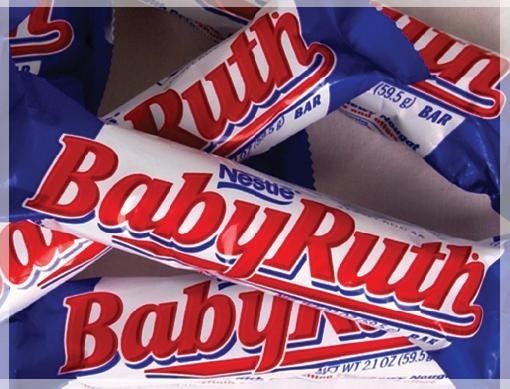
On first look, this candy bar is obviously named after legendary baseball player Babe Ruth, right? Yes and no. In 1921 the Curtiss Candy Company reshaped and renamed it's Kandy Kake to the Baby Ruth, claiming the name was in honor of President Grover Cleveland's deceased daughter, Ruth. However, at the same time Babe Ruth's fame was rising, leaving some to speculate that the name was a way to capitalize on his fame without paying him an endorsement deal.
In 1926, The Babe himself entered the candy business, and came out with "Ruth's Home Run Candy."
advertisement
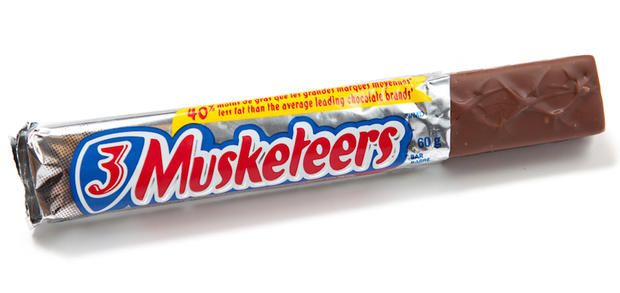
#7 3 Musketeer's
This one blew my mind because 3 MUSKETEERS used to have THREE flavors in each bar. That is where the '3' comes from in the name. Three separate pieces of chocolate, vanilla, and strawberry is what you got. But due to wartime rationing, it was replaced with just one chocolate bar, leaving the name to make no sense for eternity.
advertisement
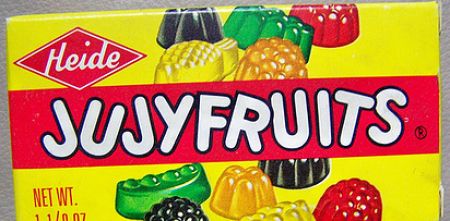
#8 Jujyfruits
I've never met anyone who actually purchased these, though they seem to be popular at the movies consession stand.
These filling-pullers get their name after their original main ingredient, ju-ju gum.
advertisement
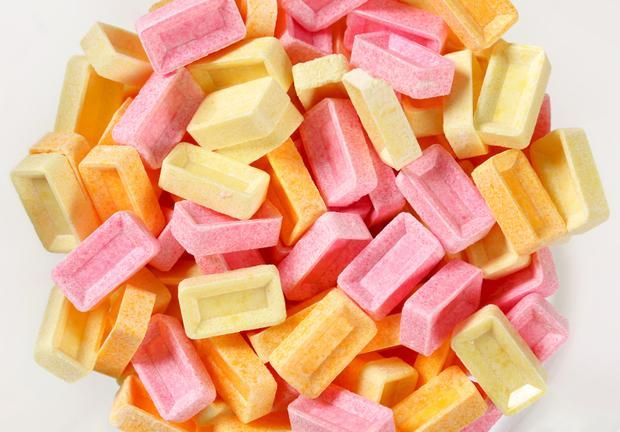
#9 PEZ
The name is a derivation of the German word for peppermint, which is pfefferminz, and the original flavor of the little block candies.
The first Pez mint dispensers, known as "regulars," were similar in shape to a cigarette lighter, and dispensed an adult breath mint marketed as an alternative to smoking.
1n 1958, in the US, the first PEZ dispenser with a head was created, making it a collectible item for over 60 years worldwide.
advertisement
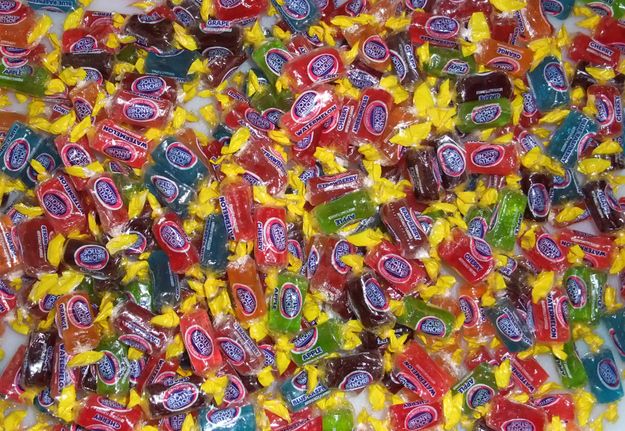
#10 Jolly Ranchers
Apparently, the name was chosen by it's Colorado-based creators in 1949 to "suggest a hospitable, western company".
advertisement
#11 Chick-O-Stick
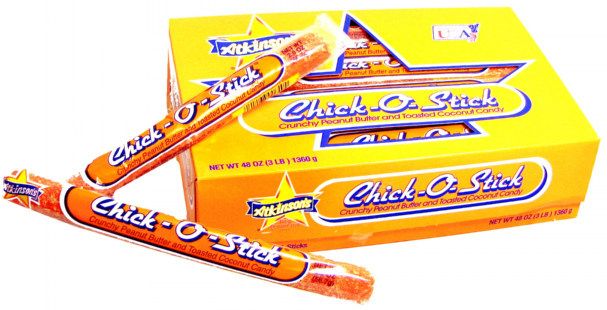
According to Erik Atkinson, president of Atkinson Candy Company, the name was a ""business decision" made by his grandfather, who started the company. But it's derived from "chicken bones," which is the name of the recipe that Chick-O-Sticks are based on.
Chick-O-Stick's original wrapper featured a stylized cartoon of a chicken wearing a cowboy hat and a badge in the shape of the Atkinson logo. The chicken is absent from the more recent wrapper; some commentators have indicated that it contributed to confusion over whether the Chick-O-Stick was candy or a chicken-flavored cracker. It's actually made of peanut butter, sugar and coconut.
advertisement
#12 Junior Mints
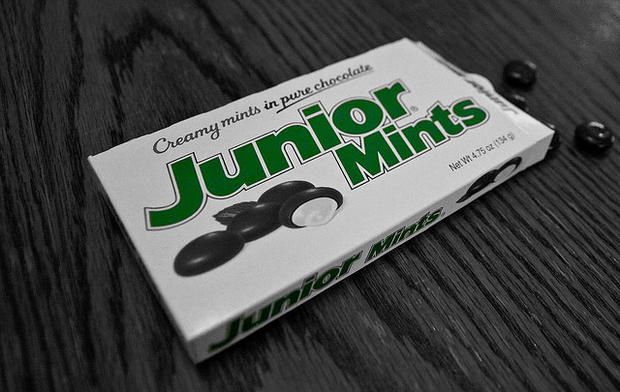
Like "Baby Ruth," Junior Mints were named after something popular at the time, but changed just enough in order to not pay royalties, in this case a play entitled Junior Miss, which was the favorite play and movie with Shirley Temple, of maker James Welch of the Welch Candy Company.
#13 Oh Henry!
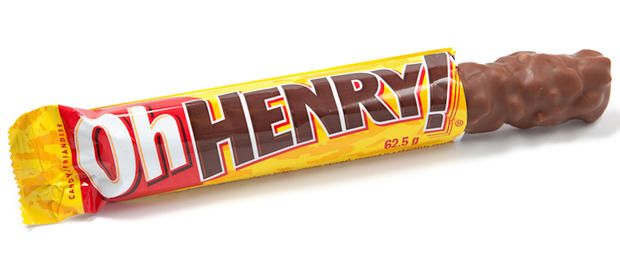
There's been much speculation about the origin of this one, from Hank Aaron to the writer O. Henry. According to Nestle, the name comes from a boy who used to visit George Williamson's candy shop in early 1900s Chicago. Young Henry stopped by often and became friendly with the ladies who worked in the store, who would frequently send him out on errands. "Oh Henry," they'd say before sending him off. Williamson took note of the name, and when the time came to name his new chocolate-covered peanut-and-caramel bar, he chose the unique title "Oh Henry!" Isn't that sweet?
advertisement
#14 Life Savers
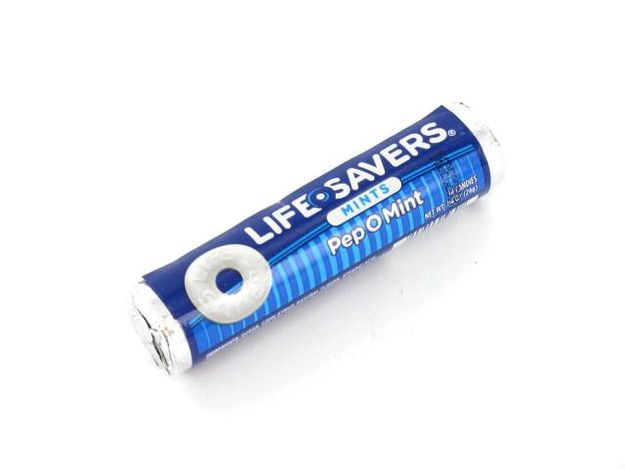
Since they look like "mini life preservers," they were named after the flotation devices in 1912. Also, the mint ones will save save your life when on a date or in an interview, FYI.
Its range of mints and artificial fruit-flavors is known for its distinctive packaging, coming in paper-wrapped aluminum foil rolls.
Candy manufacturer Clarence Crane invented the brand in 1912 as a "summer candy" that could withstand heat better than chocolate. After registering the trademark, Crane sold the rights to his Pep-O-Mint peppermint candy to Edward John Noble for $2,900.
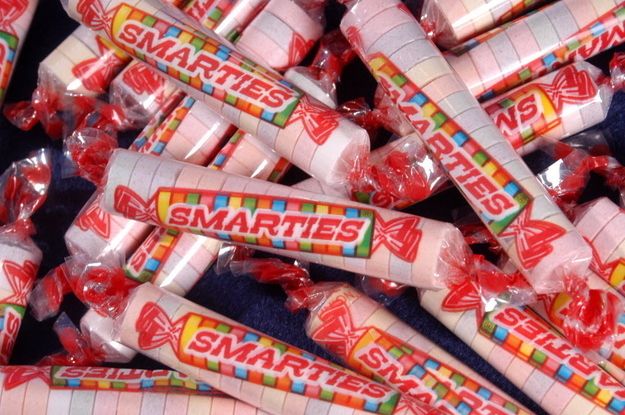
#15 Smarties
I must admit, these are my favorite candy!
Ever hear the phrase "That smarts"? It basically means "that hurt." Or, in this case, "that made my face pucker unexpectedly." Hence, Smarties.
They have been manufactured since 1937, originally by H.I. Rowntree & Company in the UK. They are currently produced by Nestlé, and a Halloween favorite.
advertisement
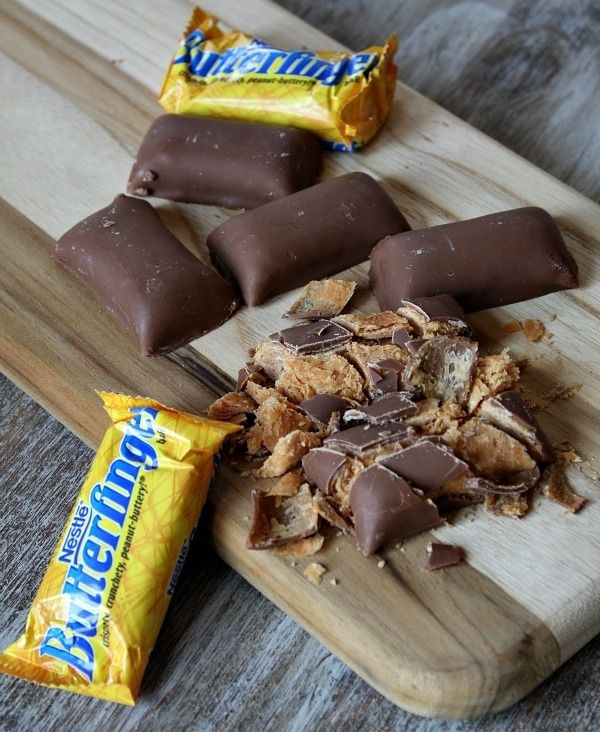
#16 Butterfinger's
"Nobody better lay a finger on my Butterfinger bar!" Bart Simpson's favorite candy, the Butterfinger was a name chosen by submissions to the Curtis Candy Company in Chicago. Today they are made and sold by Nestlé. The bar consists of a flaky, crisp, peanut butter-flavored center covered with compound chocolate.
#17 Tootsie Rolls
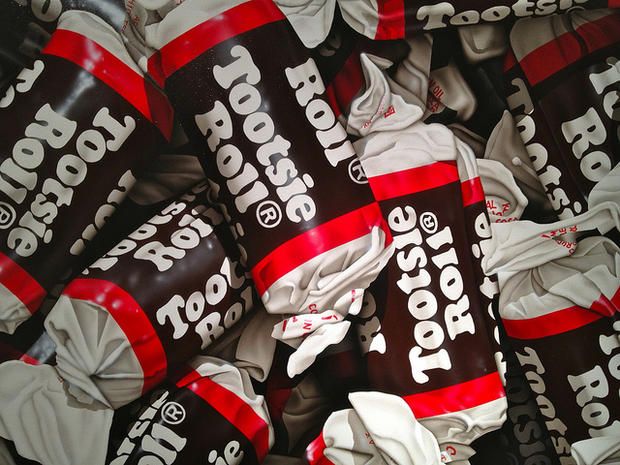
Leo Hirschfield, the inventor of the chewy, chocolatey candy, named them for his 5-year-old daughter, Clara, who he called "Tootsie." It was a popular nickname at the time, and appealed to penny-toting children who bought up Hirschfield's individually wrapped treats.